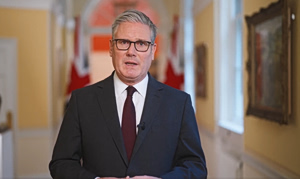
On Wednesday evening at Windsor Castle, beneath chandeliers and centuries of royal portraiture, Sir Keir Starmer and his wife, Lady Victoria, joined the King and Queen to honour carers from across the United Kingdom.
The setting was serene; the mood anything but. It was the first public appearance of the Prime Minister and King Charles together since US authorities released millions of documents linked to the late financier and convicted sex offender Jeffrey Epstein.
Both men are now navigating the political and constitutional aftershocks.
The King has expressed “profound concern” over allegations that his brother, Andrew Mountbatten-Windsor, shared confidential material with Epstein during his time as a trade envoy. Starmer, meanwhile, is fighting to preserve his authority.
In an extraordinary convergence, the Epstein disclosures have placed simultaneous pressure on Downing Street and Buckingham Palace – raising the prospect of a Prime Minister destabilised by an international scandal in which he had no personal involvement, while the monarchy faces renewed scrutiny of one of its own.
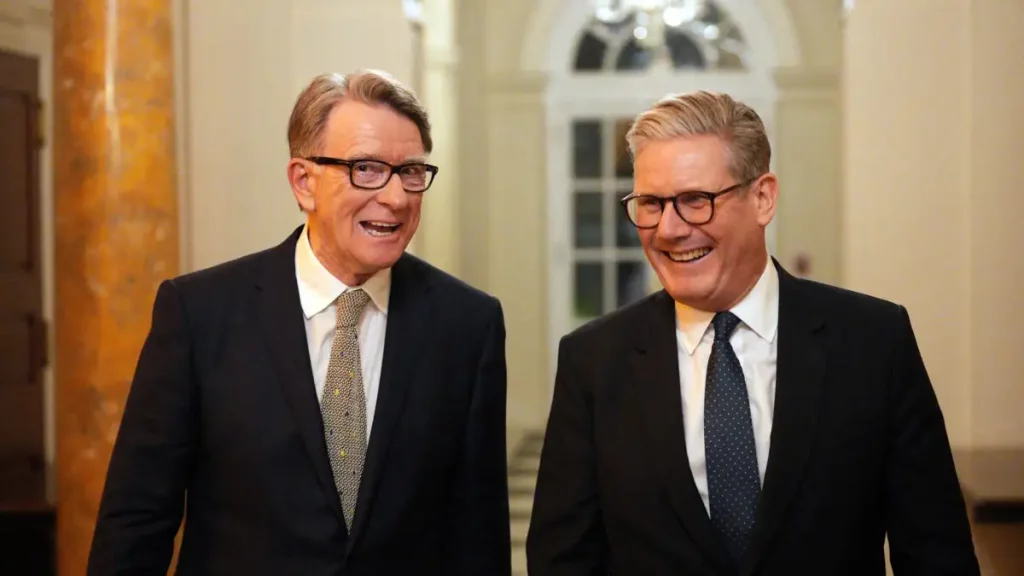
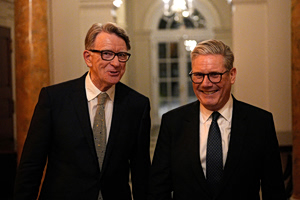
Lord Peter Mandelson, left, with UK PM Keir Starmer
Starmer Under Siege
The immediate trigger was the latest release of files by the US Department of Justice. The documents revealed further exchanges between Lord Peter Mandelson, a towering New Labour figure, and Epstein – including messages sent after Epstein’s 2008 conviction in Florida for felony solicitation of prostitution involving an underage girl.
Sir Keir appointed Mandelson as Britain’s ambassador to Washington in December 2024, calling it “a great honour”. The decision was controversial from the outset. Mandelson had twice resigned from government, in 1998 and 2001, over unrelated scandals.
In September, Starmer dismissed him after Downing Street said new information had emerged about the extent of his association with Epstein.
Last week’s files went further, prompting accusations that Mandelson shared market-sensitive government information with Epstein following the 2008 financial crisis. One exchange appeared to show advance notice of a €500 billion eurozone bank bailout in 2010.
In a statement, Mandelson apologised for maintaining contact with Epstein after his conviction. “I was not culpable, I was not knowledgeable for what he was doing, and I regret, and will regret to my dying day, the fact that powerless women were not given the protection they were entitled to expect,” he said.
Starmer has apologised to Epstein’s victims for believing what he called Mandelson’s “lies”. The political fallout has nonetheless intensified.
Chief of Staff Morgan McSweeney and Communications Director Tim Allan resigned in quick succession. Anas Sarwar, leader of Scottish Labour, publicly urged the Prime Minister to step aside. “The distraction needs to end and the leadership in Downing Street has to change,” Sarwar said.
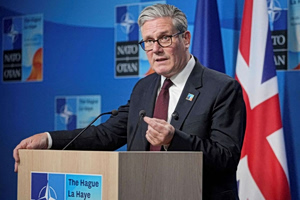
At a tense meeting with Labour MPs, Starmer reportedly insisted he was “not prepared to walk away”.
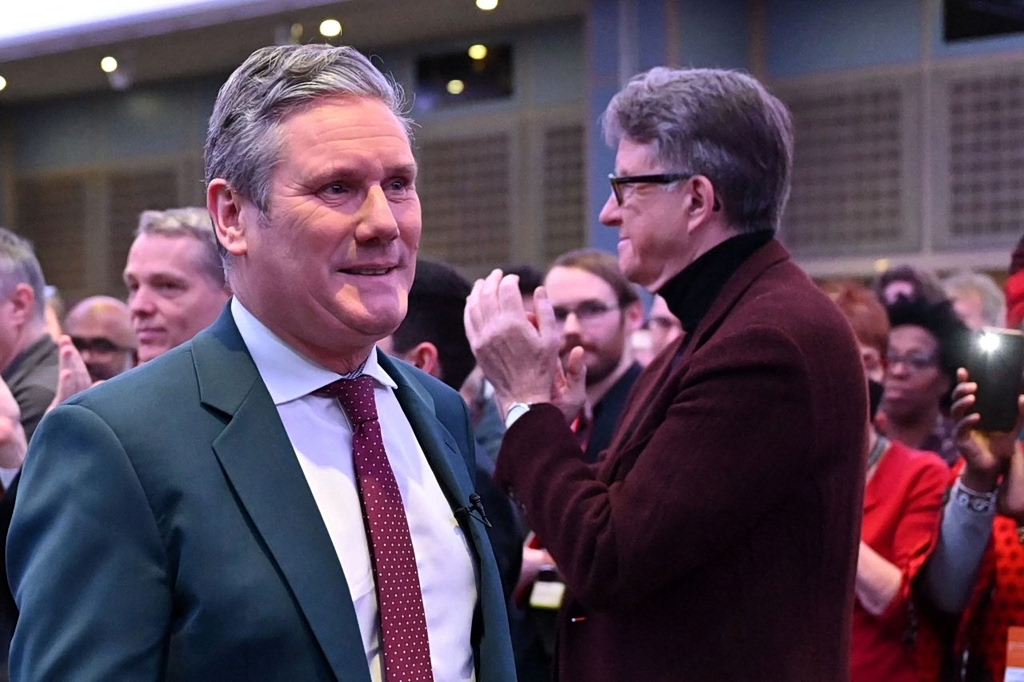
UK Prime Minister Keir Starmer, left, with Mandelson in the background.
Markets and the Mathematics of Survival
Financial markets briefly reflected the uncertainty. UK borrowing costs rose before easing as senior ministers rallied behind the Prime Minister. The benchmark 10-year gilt yield later fell to 4.496%, while the 30-year slipped to 5.309%.
“Uncertainty over Keir Starmer’s future is unhelpful for UK bond markets,” one analyst observed, noting expectations that inflation will fall and the Bank of England may cut interest rates as early as March.
Constitutionally, the issue is straightforward: does Starmer retain the confidence of the House of Commons? In practice, that means his party.
Tom Frost, Senior Lecturer in Law at Loughborough University, draws parallels with Boris Johnson’s resignation in 2022.
“Whilst the Epstein scandal may not directly relate to the UK government, Lord Mandelson was appointed as UK Ambassador to the USA despite his connections to Epstein being known,” he told TO VIMA. “As such, this political dispute calls into question the political judgment of the Prime Minister, just like it did with Boris Johnson.”
Frost adds: “If a government does not have enough ministers, or cannot fill its ministerial vacancies, the government cannot operate, and the Prime Minister will be forced to resign.”
For now, Labour’s instinct has been solidarity rather than revolt.
The Legal Hurdles for Mandelson
Opposition figures have called for Mandelson to be investigated for misconduct in public office, which carries a maximum sentence of life imprisonment. Frost cautions that conviction would be difficult.
“Misconduct in public office is committed when a public officer wilfully neglects to perform their duty or wilfully misconducts themselves, to such a degree as to amount to an abuse of the public’s trust, and without reasonable excuse or justification,” he explains. “Ministers of the Crown, as Peter Mandelson was, are public officials. However, the other three elements of the offence are much harder to pin down.”
He stresses the challenge of proving intent. “It would have to be proven that he deliberately knew his actions were wrong, or that he was reckless and did not care about the lawfulness of his actions. If a jury thought his behaviour was wrong, but not wrong enough to ‘abuse the public’s trust’ – and the term is not defined – no offence will be proved.”
Chance, Timing and the Absence of an Heir
Dr Martin Farr, Senior Lecturer in Contemporary British History at Newcastle University, argues that survival often hinges on contingency.
“Luck and timing plays an enormous part in it,” he told TO VIMA. “Had any cabinet minister resigned within half an hour of Anas Sarwar’s announcement on Tuesday, then there’s a good chance that Starmer would have been forced out. So chance is enormously important.”
Unlike Harold Wilson in 1968 or Gordon Brown in 2009, Starmer has “no obvious alternative”, Farr notes. “All the candidates to replace him are Andy Burnham, who’s not in Parliament, Angela Rayner, who has her tax scandal… and Wes Streeting, who’s implicated in the Mandelson affair.”
Labour, he observes, is “much more sentimental, much more collectivist” than the Conservatives. “It doesn’t do this sort of thing.” Yet he warns that Starmer’s authority has been “continually eroded” and that by-election or local election results could reopen the question.
“The first 48 hours of his post-McSweeney experience have been encouraging for him,” Farr says. “Others say without McSweeney, he will be broken… We don’t know yet.”
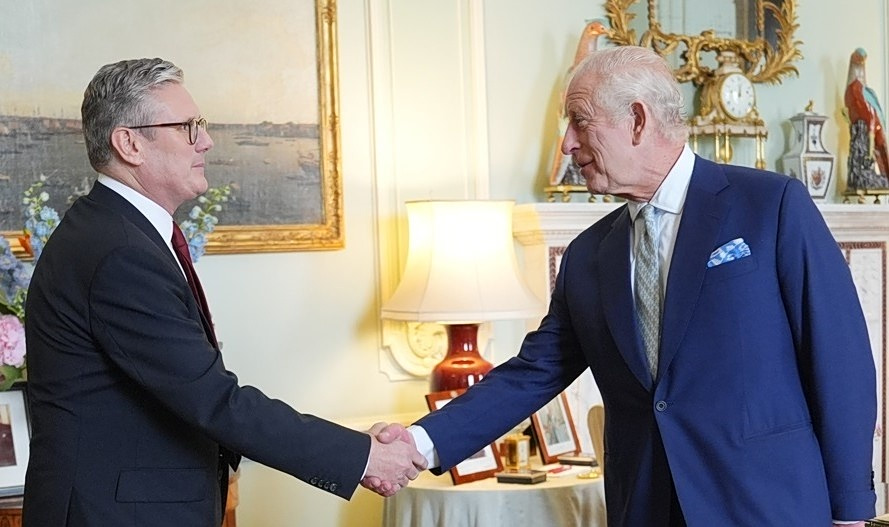
UK Prime Minister Keir Starmer, left, shaking hands with King Charles shortly after being sworn-in.
The Royal Reckoning
Buckingham Palace faces its own reckoning.
Richard Fitzwilliams, royal commentator, rejects comparisons with the Abdication Crisis or the aftermath of Diana’s death. “I don’t see the direct comparison,” he says. But Andrew Mountbatten-Windsor is “clearly guilty in the eyes of the public”, and there is “a highly significant security aspect” amid reports of possible intelligence links.
“There are numerous other damning allegations in the Epstein files, which may mean further investigation,” Fitzwilliams says.
Andrew has been stripped of titles and patronages, and evicted from Royal Lodge. The Palace has expressed sympathy for Epstein’s victims, but, Fitzwilliams notes, “as head of the judiciary King Charles cannot apologise for him without prejudicing any subsequent trial”.
Republican sentiment is growing, particularly among younger Britons. Yet Fitzwilliams points to “the enormous popularity of the Prince and Princess of Wales” as the monarchy’s “future hope”.
For now, Prime Minister and monarch remain in place – projecting continuity as questions swirl around them. Whether this moment proves decisive or merely another chapter in Britain’s turbulent politics may depend, as Farr suggests, on timing, alignment – and chance.
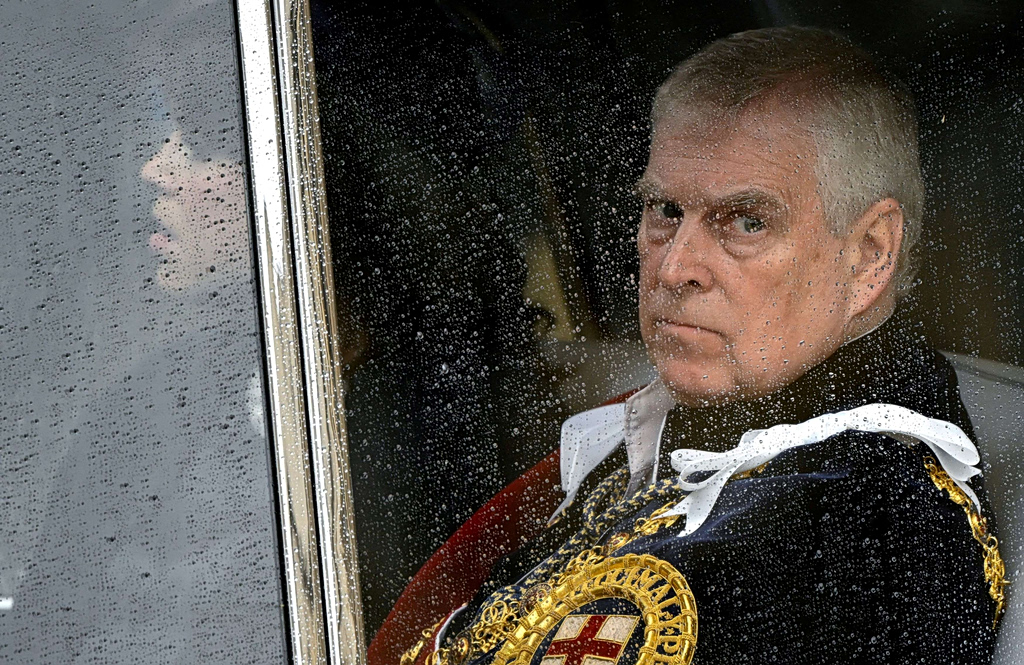
The now former prince Andrew, now known as Andrew Mountbatten-Windsor.