A bipartisan group of US lawmakers is urging the Trump administration to make the Great Sea Interconnector (GSI) a strategic priority in the eastern Mediterranean, arguing that the ambitious project serves US interests by strengthening regional partners, diversifying energy routes and supporting the India-Middle East-Europe Economic Corridor (IMEC) endeavor.
The initiative is spearheaded by Democratic Rep. Brad Schneider of Illinois and Republican Rep. Gus Bilirakis of Florida, who sent a letter to US Secretary of State Marco Rubio and US International Development Finance Corporation CEO Ben Black.
Reps. Jake Auchincloss, Dan Goldman, Craig Goldman and Haley Stevens also signed the letter.
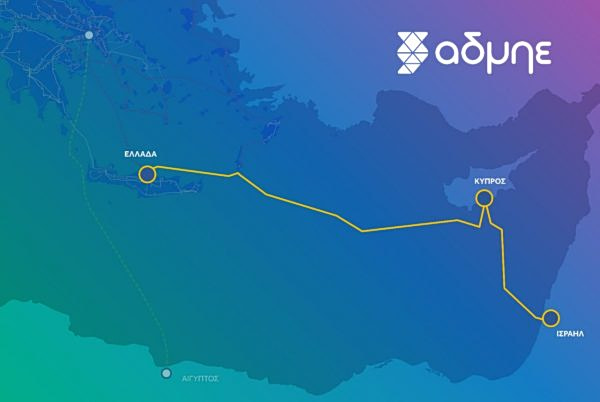
The lawmakers stressed that the eastern Mediterranean will be an important gateway to IMEC and described the GSI as strategic infrastructure central to the corridor. They argued that the project, which is designed initially to link the electricity grids of Greece and Cyprus and eventually Israel, would help end Cyprus’ isolation from the European electricity transmission system, strengthen Israel’s security of electricity supply and enable reliable, bidirectional electricity flows between Europe and the eastern Mediterranean.
The appeal comes shortly after French investment group Meridiam entered the GSI project as a majority shareholder in an agreement signed in Athens last week. The move has provided fresh momentum to a project that has faced delays over financing, regulatory issues and geopolitical complications.
The GSI is planned as a 1,208-kilometer undersea power link with a transmission capacity of 1,000 megawatts, reaching depths of up to 3,000 meters. The Greece-Cyprus section, connecting Crete with Cyprus, has received 657 million euros in European Union funding through the Connecting Europe Facility.
The project has remained politically sensitive, however, as its implementation schedule was revised earlier this year after cable manufacturer Nexans rescheduled activities, while Greece and Cyprus subsequently sought additional European financing. The European Investment Bank (EIB) has been asked to assess financing for the project as Athens and Nicosia seek to move it toward implementation.
The congressional initiative is closely linked to the bipartisan Eastern Mediterranean Gateway Act, introduced by Schneider and Bilirakis in May 2025. The legislation identifies the GSI, the proposed Greece-Egypt electricity interconnection, the Greece-Bulgaria gas interconnector and eastern Mediterranean LNG infrastructure as projects that could support European energy security and the broader IMEC framework.
The US House Foreign Affairs Committee advanced the legislation in January, followed by approval by the Senate Foreign Relations Committee in June. It has not, however, become US law as yet.
In their letter, the lawmakers also requested a classified briefing on the geopolitical challenges facing completion of the interconnector, signaling that Washington’s interest extends beyond the project’s energy and economic value to the wider strategic balance in the eastern Mediterranean.