 Μake us preferred on Google
 Europe’s farming sector faces a growing crisis as thousands of farmers retire each year while too few young people take their place. The resulting decline threatens food production, increases reliance on imports, and risks the gradual collapse of rural communities across the EU.
To address this, European Commissioner for Agriculture, Christophe Hansen, recently unveiled the EU Strategy for Generational Renewal in Agriculture. The plan aims to encourage young people to enter farming and prevent them from abandoning the sector before even starting.
The Demands of Young Farmers
Young farmers across Europe, including 25-year-old Peter Middendorp, president of the European Council of Young Farmers (CEJA), have been calling on policymakers for over a decade to make farming a viable career. Middendorpsplits his time between managing his family farm in the Netherlands and lobbying in Brussels.
“The big question is whether all these proposals can become reality without proper funding,” he said, stressing the need for financial support alongside regulatory changes.
The European Commission hopes member states will dedicate 6% of the Common Agricultural Policy (CAP) budget to generational renewal—double the current level. If achieved, this could provide over €17 billion between 2028 and 2034 to support young farmers.
Barriers to Entry
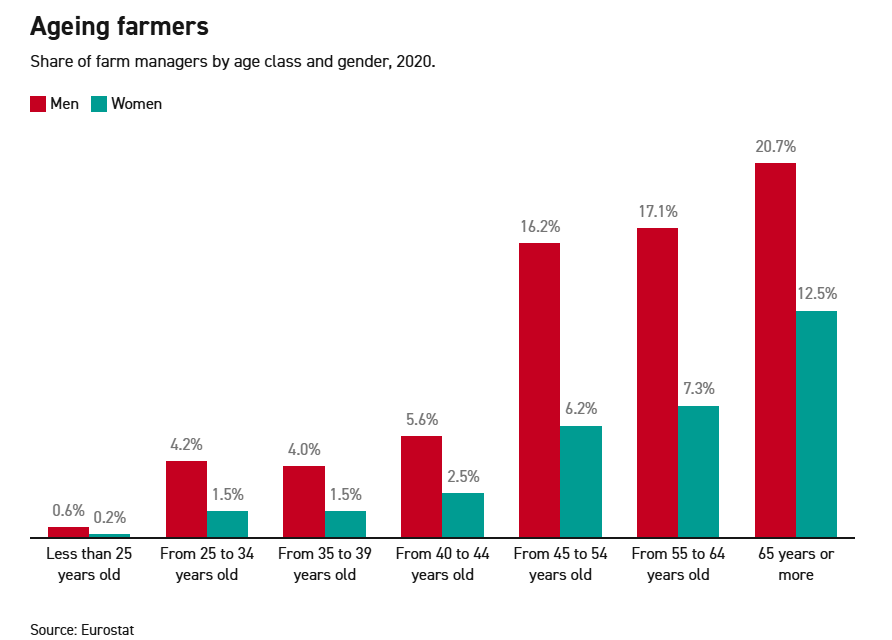
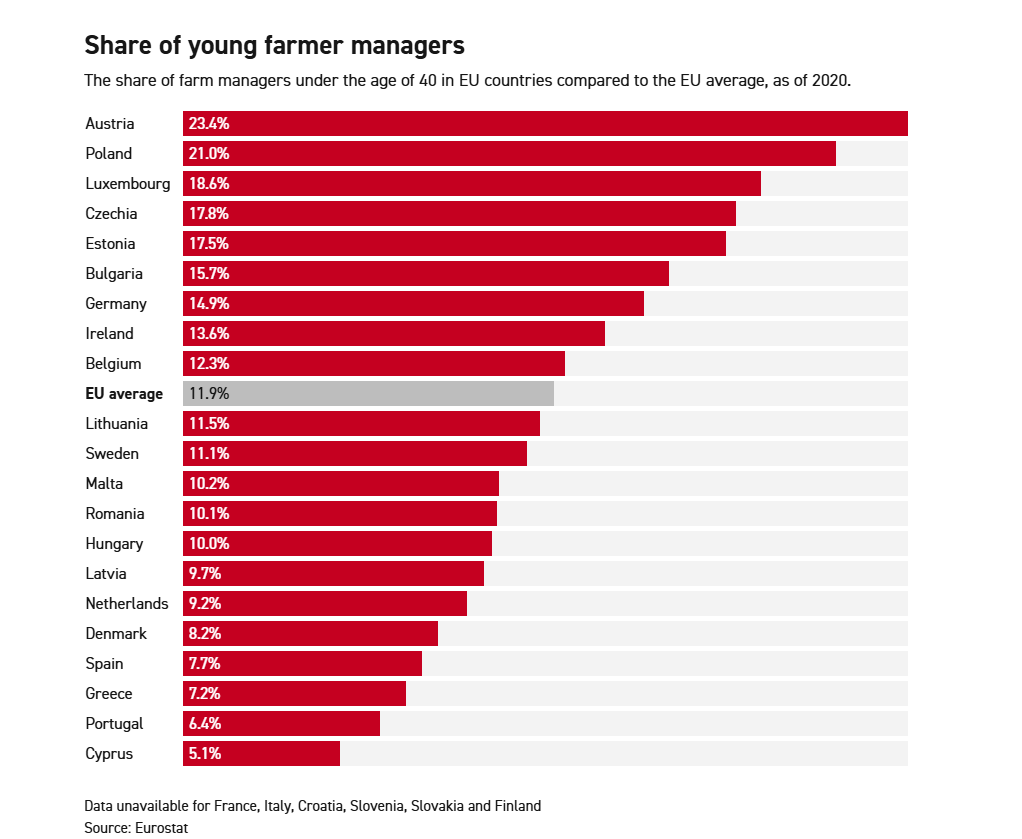
Currently, more than a third of European farm managers are over 65, while less than one in eight are under 40. Young farmers face obstacles including high land prices, restrictive bank lending, and lack of access to affordable farmland.
In the Netherlands, for example, the average price of arable land has risen from €56,000 per hectare a decade ago to over €90,000 today. “Banks see young farmers as a risk,” said Roy Meyer, president of the Dutch Young Farmers Association (NAJK). “If you’re 25 and want to buy land, forget it.”
Despite these challenges, young farmers are not nostalgic—they view agriculture as a business that must be reinvented. Many embrace innovation, using drones, data, and artificial intelligence to modernize operations. What they need, they say, is predictability and stable rules to invest confidently in their farms.
EU Strategy and Funding Challenges
For decades, the EU has tried to attract young farmers through CAP programs, currently allocating just 3% of its agricultural budget to these initiatives. The new strategy seeks to double that to 6%, while also offering loans up to €300,000 for young entrants and adjusting tax and land management policies to make farming more appealing.
Yet young farmers remain cautious. “The fact that no specific funds are guaranteed sends a message,” Middendorp said. There are concerns that the generational renewal agenda could compete with other EU funding priorities and that success will depend more on CAP reforms than on good intentions.
Commission officials maintain that the new “starter package” and CAP restructuring will provide multiple funding streams for young farmers, redirecting resources from large producers to smaller, younger operations. However, the debate continues over whether this ambitious plan can effectively reverse Europe’s farming decline.