
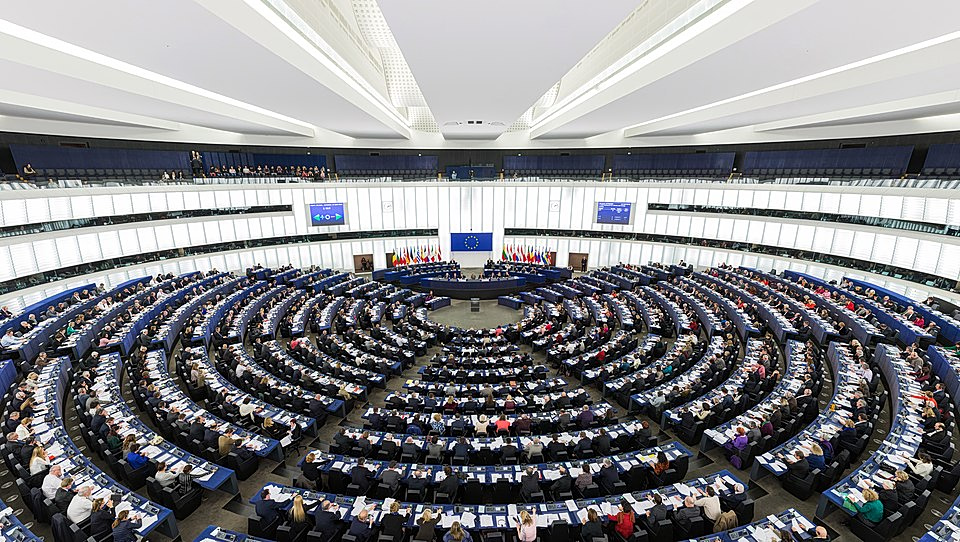
The European Parliament on Thursday defeated legislation that would have permitted technology companies to monitor online platforms for child sexual abuse material (CSAM), a decision that immediately provoked sharp criticism from senior officials.
The vote rejected an extension of a temporary regulation that had enabled digital platforms to scan their services for such content. With the regulation set to lapse the following Friday, the practice will be outlawed across the EU from that point forward.
In casting this vote, MEPs pushed back against pressure applied in recent weeks by German Chancellor Friedrich Merz, four members of the European Commission, major technology corporations including Meta, Google, and Microsoft, as well as a number of organizations dedicated to protecting children.
Home Affairs Commissioner Magnus Brunner expressed his bewilderment at the outcome, telling journalists that as both a parent and a policymaker, he struggled to comprehend the decision. He warned that the result would leave a vast number of victims unseen and unprotected, pointing out that Europe is the world’s leading host of child sexual abuse content.
Kerry Smith, head of the Internet Watch Foundation, described the vote as a catastrophic setback for child protection efforts within the EU.
The final tally saw 311 legislators vote against the Commission’s extension proposal, while 228 supported it and 92 chose to abstain.
The vote came at the end of a turbulent few weeks during which national governments urged Parliament to set aside its concerns about privacy in order to quickly secure an extension of the scanning framework. Negotiators representing Parliament, the Council of the EU, and the Commission had already failed on two separate occasions this month to broker a political agreement.
Those who opposed the rules argued that the temporary framework handed tech companies far too much latitude to conduct large-scale surveillance of private user communications. Czech MEP Markéta Gregorová of the Greens group argued that the scanning of millions of innocent people’s private messages had gone on for years under the guise of child protection, without producing sufficient results.
The center-right European People’s Party made a final attempt to salvage the scanning rules by proposing an amendment that would have brought Parliament’s stance into line with that of member state capitals. This too was rejected, widening the divide between those prioritizing privacy and those focused on children’s rights.
On Wednesday, four European Commissioners wrote to the leaders of Parliament’s political groups, urging them to find a resolution and encouraging members to vote independently from their group positions. Chancellor Merz also publicly called for an extension of the law before his own national parliament that same day.
Several of the largest digital platforms, including Meta (the parent company of WhatsApp, Facebook, and Instagram), TikTok, Snapchat, Google, Microsoft, and LinkedIn, issued a joint statement the previous week condemning the EU’s failure to reach a decision as reckless.
The companies warned that without legislative clarity, the legal foundation that had allowed them to voluntarily detect and flag known CSAM in private communications for nearly two decades would be undermined.
Children’s advocacy groups and technology firms had both long lobbied lawmakers to allow scanning operations to continue.
A representative for Cyprus, which currently holds the rotating presidency of the Council of the EU on behalf of member state governments, acknowledged that a deal had proven out of reach, while reaffirming the Council’s commitment to eventually securing a lasting policy framework to address online child sexual abuse.
The legislation that was rejected this week had itself served as a stopgap measure to enable platforms to identify CSAM while a more comprehensive, permanent law was being negotiated. However, that longer-term legislative process has also been plagued by disagreements and stalled progress over the past several years.