European leaders will use the G7 summit in France to urge U.S. President Donald Trump to secure a stronger Iran agreement and reconsider his approach to ending the war in Ukraine, officials said on Tuesday.
The June 15-17 meeting in Evian-les-Bains brings together leaders from France, Britain, Canada, Germany, Italy, Japan and the United States, along with the European Union.
Trump arrived at the summit after Washington and Tehran agreed on a preliminary deal aimed at ending their wider conflict, with a formal signing expected on Friday.
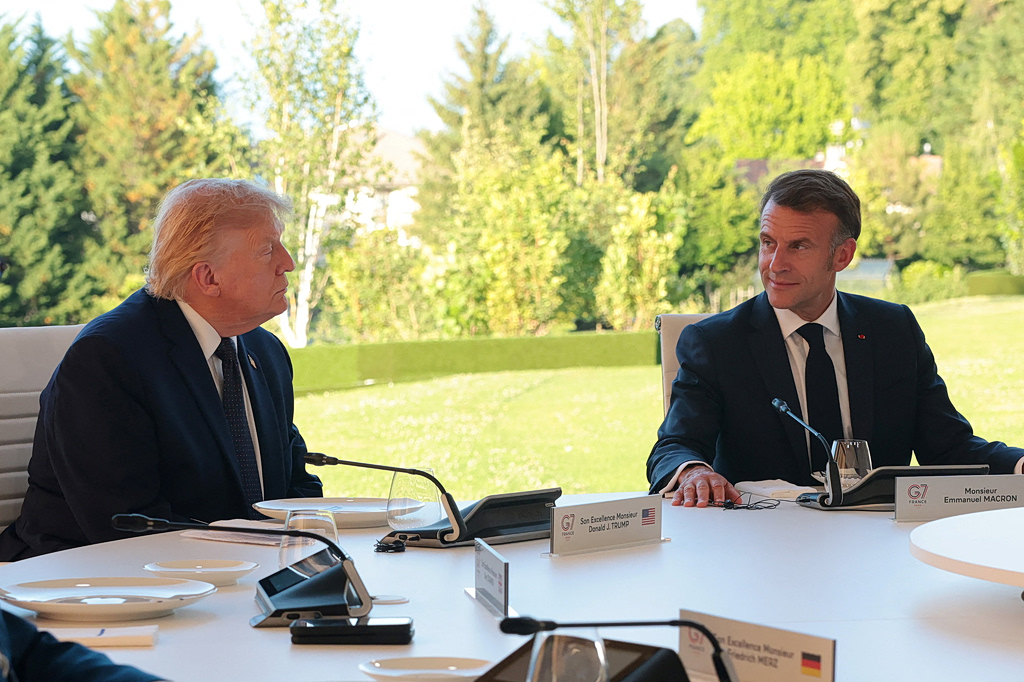
U.S. President Donald Trump and French President Emmanuel Macron participate in a G7 leaders’ working dinner during the G7 summit at Hotel Royal Evian on June 15, 2026, in Evian-les-Bains, France. Anna Moneymaker/Pool via REUTERS
Europe seeks stronger Iran agreement
European leaders are expected to warn Trump that a limited interim deal with Iran could leave Tehran’s nuclear and ballistic missile programs unresolved.
The preliminary agreement is set to open a 60-day period of technical negotiations focused on issues including Iran’s highly enriched uranium and possible sanctions relief.
French President Emmanuel Macron said the priority was reaching a “solid, serious agreement” that would be finalized.
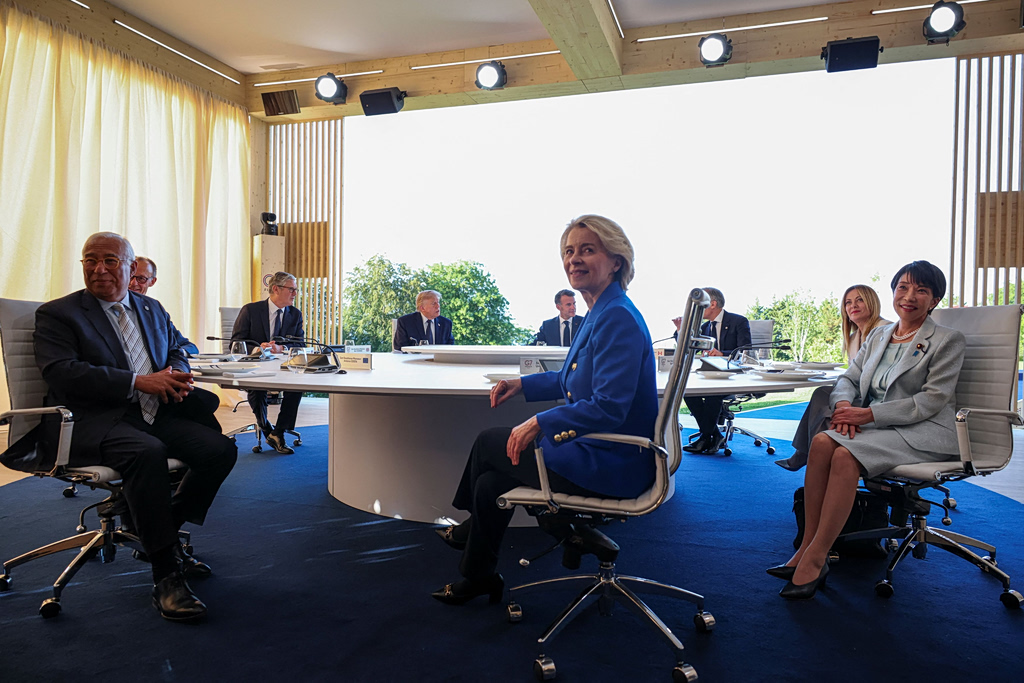
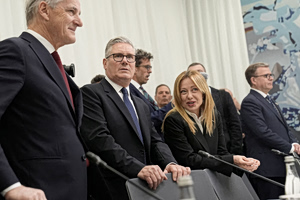
U.S. President Donald Trump, French President Emmanuel Macron, Germany’s Chancellor Friedrich Merz, Japan’s Prime Minister Sanae Takaichi, Italy’s Prime Minister Giorgia Meloni, Britain’s Prime Minister Keir Starmer, Canadian Prime Minister Mark Carney, European Commission President Ursula von der Leyen and European Council President Antonio Costa attend a working leader’s dinner during the G7 summit in Evian-les-Bains, France, June 15, 2026. REUTERS/Isabel Infantes/Pool
The summit will also address the reopening of the Strait of Hormuz, a key route for global energy supplies. Trump has said the waterway will be fully reopened on Friday, while discussions are expected to include maritime security and alternative energy routes.
Leaders from the United Arab Emirates, Qatar and Egypt are also expected to attend talks on Iran, although they are not expected to take part in detailed discussions about the nuclear program.
France, Britain and Germany want a larger role in the next phase of negotiations after being left out of recent discussions. The three European countries previously worked with Iran on nuclear talks and later helped negotiate the 2015 agreement that exchanged limits on Tehran’s nuclear program for sanctions relief.
Trump has criticized that agreement, which he withdrew the United States from during his first presidency.
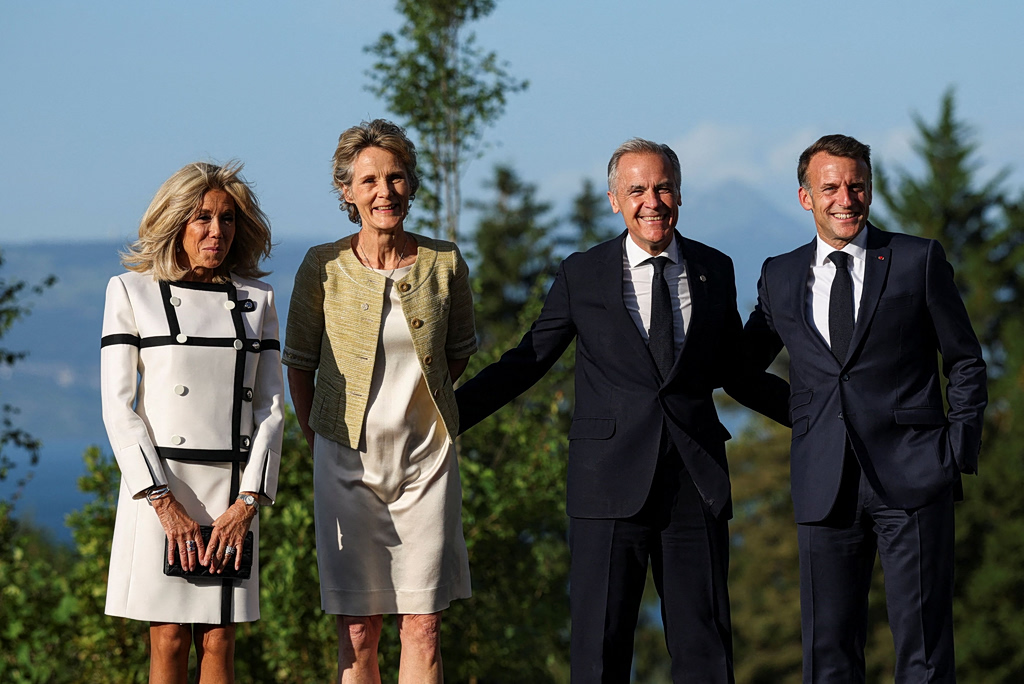
French President Emmanuel Macron and his wife Brigitte Macron pose with Canadian Prime Minister Mark Carney and his wife Diana Fox Carney during the G7 summit in Evian-les-Bains, France, June 15, 2026. REUTERS/Isabel Infantes/Pool
Ukraine war also high on G7 agenda
European leaders are also expected to push Trump to adjust his strategy on Russia’s war in Ukraine, arguing that previous U.S. proposals have been too favorable to Moscow.
They want to show they are willing to support negotiations with Russian President Vladimir Putin while continuing sanctions against Russia and strengthening support for Ukraine.
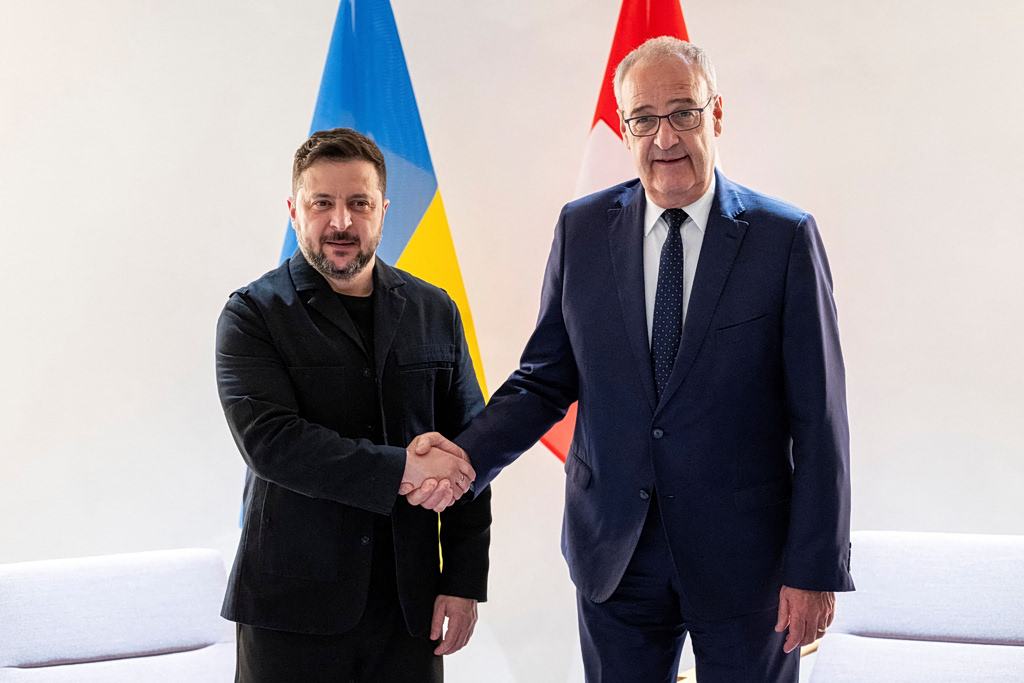
Swiss Federal President Guy Parmelin shakes hands with Ukraine’s President Volodymyr Zelenskiy prior to a bilateral meeting on the sidelines of the Evian G7 summit in Geneva Airport, Switzerland, Monday, June 15, 2026. MARTIAL TREZZINI/Pool via REUTERS
Ukrainian President Volodymyr Zelenskiy will join the first G7 session focused on peace efforts in Ukraine and is expected to discuss the conflict directly with Trump.
Zelenskiy has said he wants renewed momentum in talks and a greater European role, claiming he offered to meet Putin at the summit but that the Russian leader was not ready.
European Commission President Ursula von der Leyen said Ukraine has strengthened its military capabilities, including the ability to strike strategic targets deep inside Russia, while arguing that Russia is facing increasing economic pressure from sanctions.
Zelenskiy has also expressed concern that the conflict involving Iran has shifted U.S. attention away from Ukraine, as battlefield dynamics continue to change.
The Kremlin has said intensified Ukrainian strikes on Russian targets will not alter the situation on the battlefield.