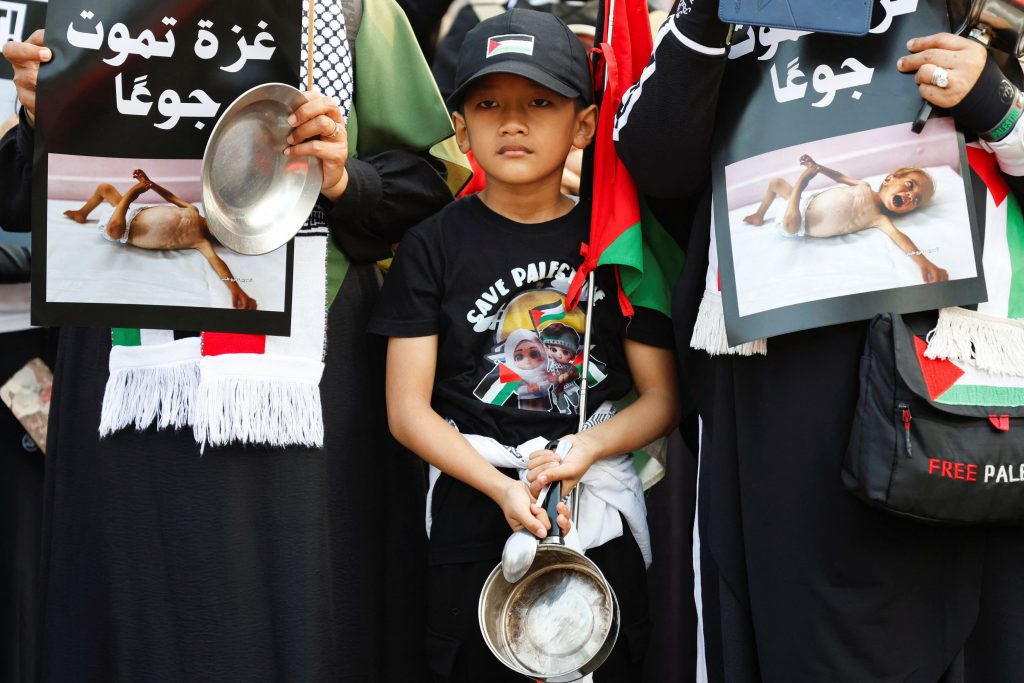
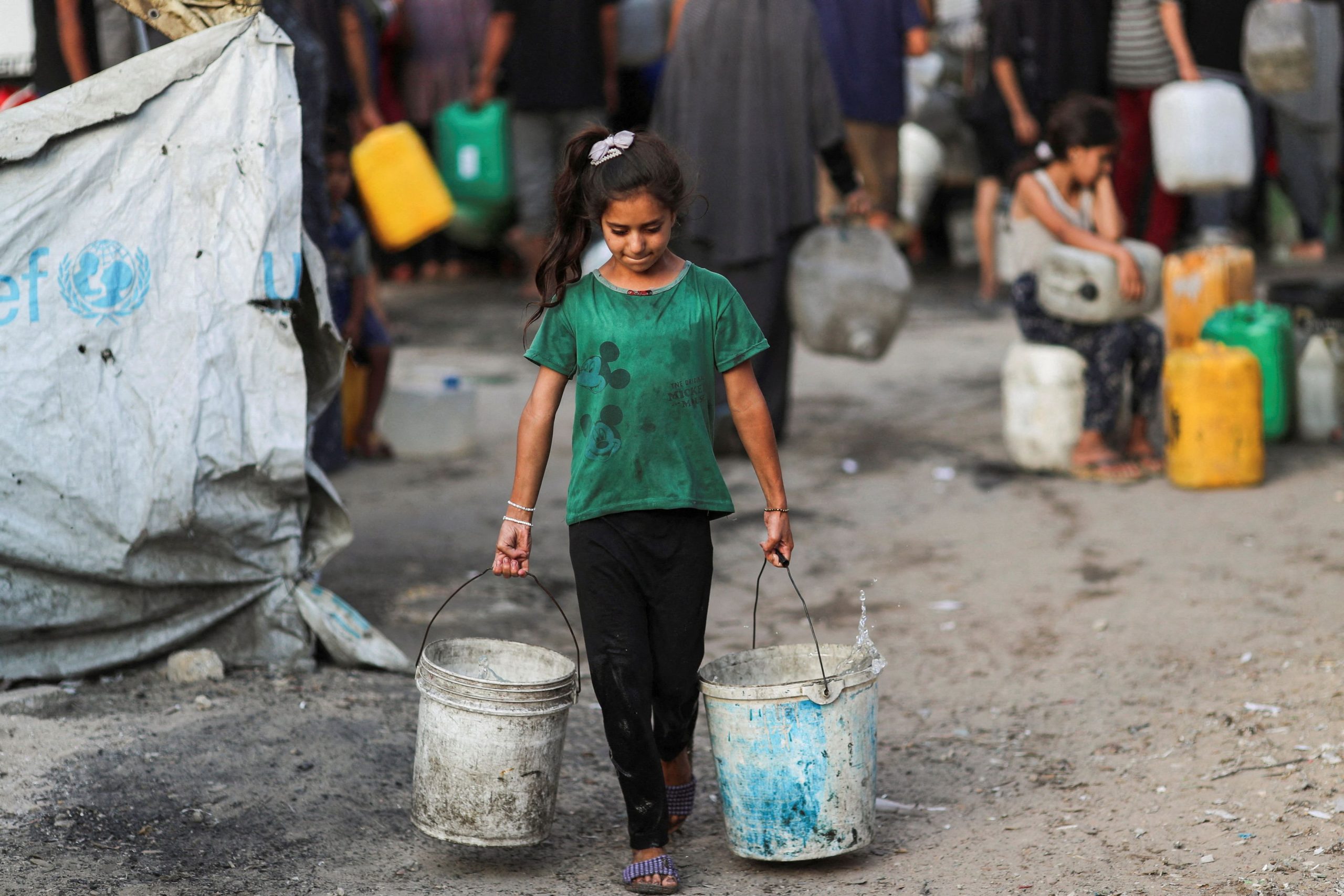
As Gaza’s population grapples with widespread hunger, a parallel crisis is escalating: a desperate shortage of clean water. Aid agencies warn that access to safe drinking water in the war-torn territory is now critically below emergency levels, with many Gazans forced to walk long distances just to fetch small amounts of contaminated water.
Years of conflict, now intensified by 22 months of Israeli military operations, have destroyed much of Gaza’s water infrastructure. Aquifers have become polluted with sewage and chemicals, while the few remaining pumps often rely on fuel-starved generators.
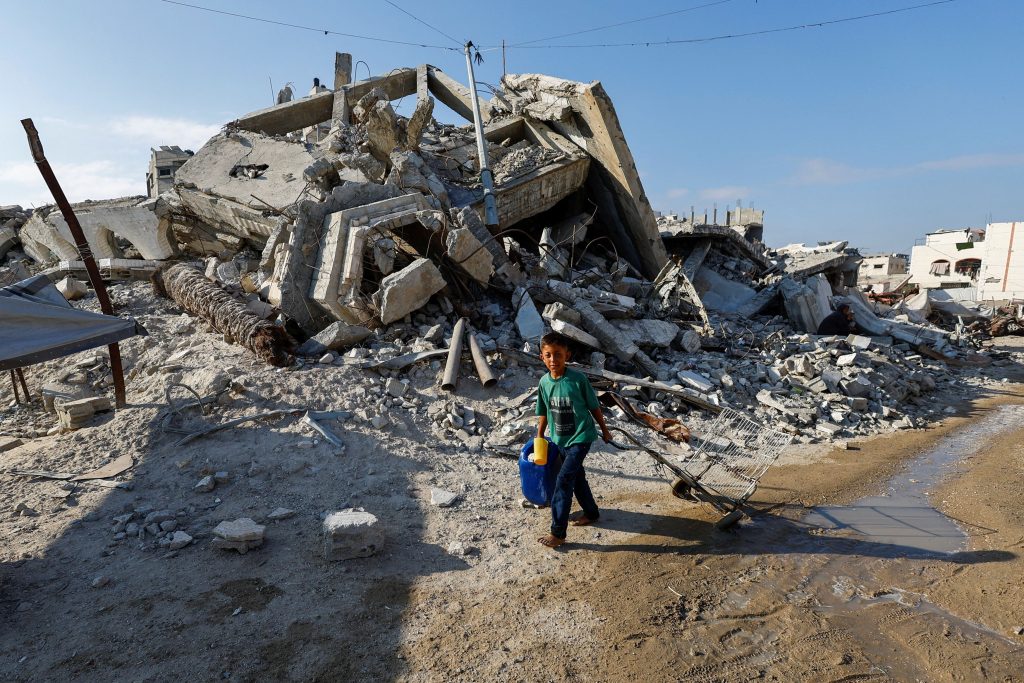
A Palestinian boy walks with a container of water amid shortages, in Gaza City August 6, 2025. REUTERS/Mahmoud Issa
Daily Struggle for Basic Survival
As reported in Reuters, Moaz Mukhaimar, a 23-year-old student from Deir al-Balah, said he walks a kilometre and waits two hours to fill up canisters. He often makes the trip three times a day, hauling the heavy load over broken ground. “How long will we have to stay like this?” he asked.
His mother, Umm Moaz, said their family of 20 depends on the water he collects. “The children keep coming and going and it is hot. They keep wanting to drink,” she said.
Across Gaza, children have become the main water collectors while parents search for food. “The children have lost their childhood,” said Munther Salem, head of water resources at Gaza’s Water and Environment Quality Authority.

A boy pushes a trolley with containers as Palestinians wait to collect water amid shortages, in Gaza City August 6, 2025. REUTERS/Mahmoud Issa
Only a Fraction of Minimum Needs
According to the United Nations, a person needs at least 15 litres of water per day for drinking, cooking, and hygiene. But in Gaza, the average consumption is just 3 to 5 litres per day. By contrast, in Israel, it averages around 247 litres per person per day, according to Israeli rights group B’Tselem.
Oxfam reports a 150% surge in waterborne illnesses such as diarrhoea and hepatitis over the last three months. “Preventable and treatable water-borne diseases are ripping through Gaza,” said Bushra Khalidi, Oxfam’s humanitarian policy lead in the region.

A Palestinian boy drags containers of water amid shortages, at a distribution point in Deir al-Balah in the central Gaza Strip August 5, 2025. REUTERS/Ramadan Abed
Infrastructure in Ruins
COGAT, the Israeli military agency overseeing aid to Gaza, says it operates two pipelines supplying millions of litres of water daily. However, Palestinian officials say those pipelines have recently stopped working. While Israel resumed limited water and electricity supplies after cutting them early in the war, the pipeline network inside Gaza remains severely damaged.
COGAT stated that coordination with aid organisations has allowed equipment into Gaza to help maintain water infrastructure, but fuel shortages and widespread destruction continue to hamper efforts.

Palestinians gather to collect water amid shortages, at a distribution point in Deir al-Balah in the central Gaza Strip August 5, 2025. REUTERS/Ramadan Abed
Aid Plans Offer Limited Relief
In an attempt to ease the crisis, the United Arab Emirates is funding a new water pipeline from a desalination plant in Egypt to serve 600,000 people in southern Gaza. But the connection could take weeks, and aid agencies say this will only meet a fraction of the need.
“Water scarcity is definitely increasing very much each day,” said Danish Malik of the Norwegian Refugee Council, adding that people are forced to choose between drinking and hygiene.
Call for Immediate Action
UNICEF spokesperson James Elder warned that the prolonged deprivation is deadly: “Starvation and dehydration are no longer side effects of this conflict. They are very much frontline effects.”
Oxfam’s Khalidi stressed that only a ceasefire and full access for humanitarian aid can prevent more deaths. “Otherwise we will see people dying from the most preventable diseases in Gaza – which is already happening before our eyes.”