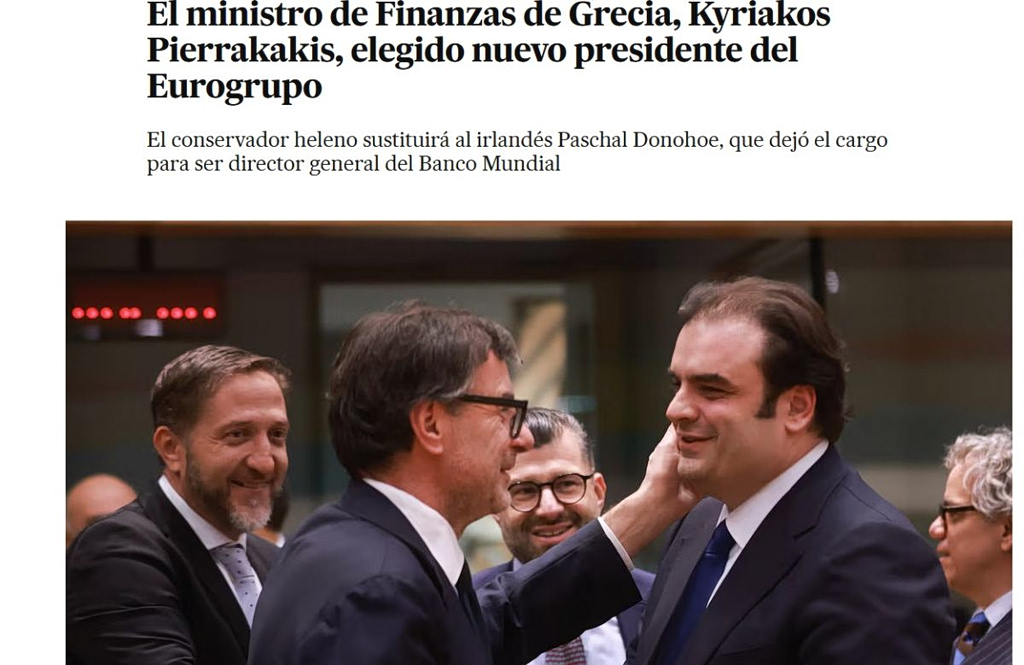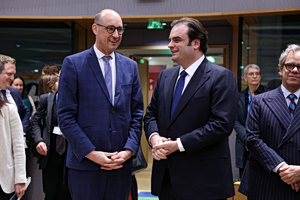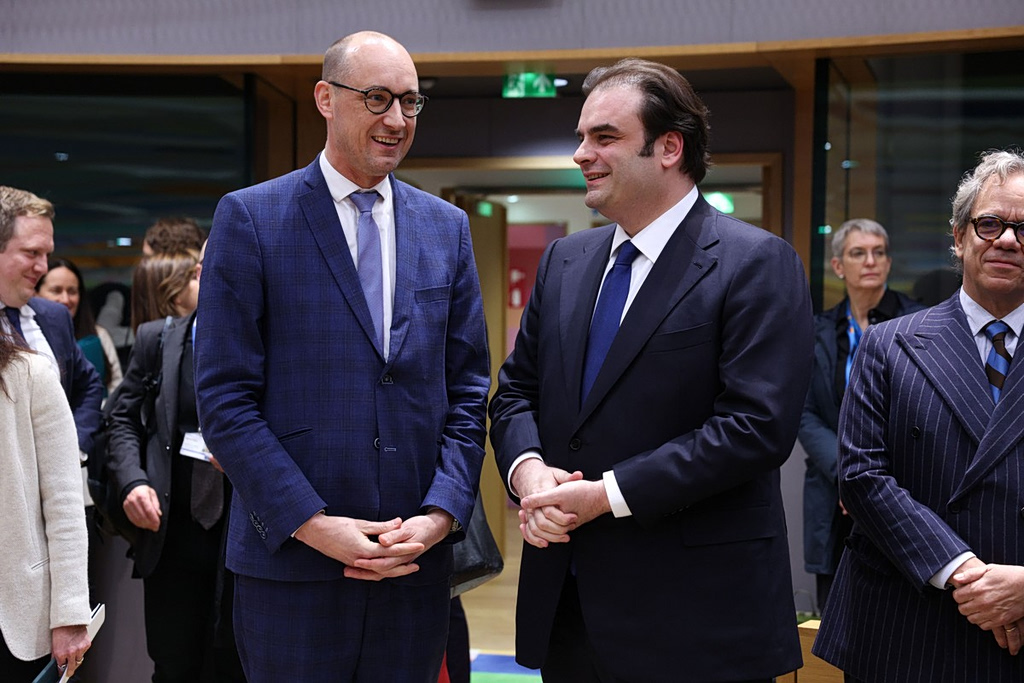
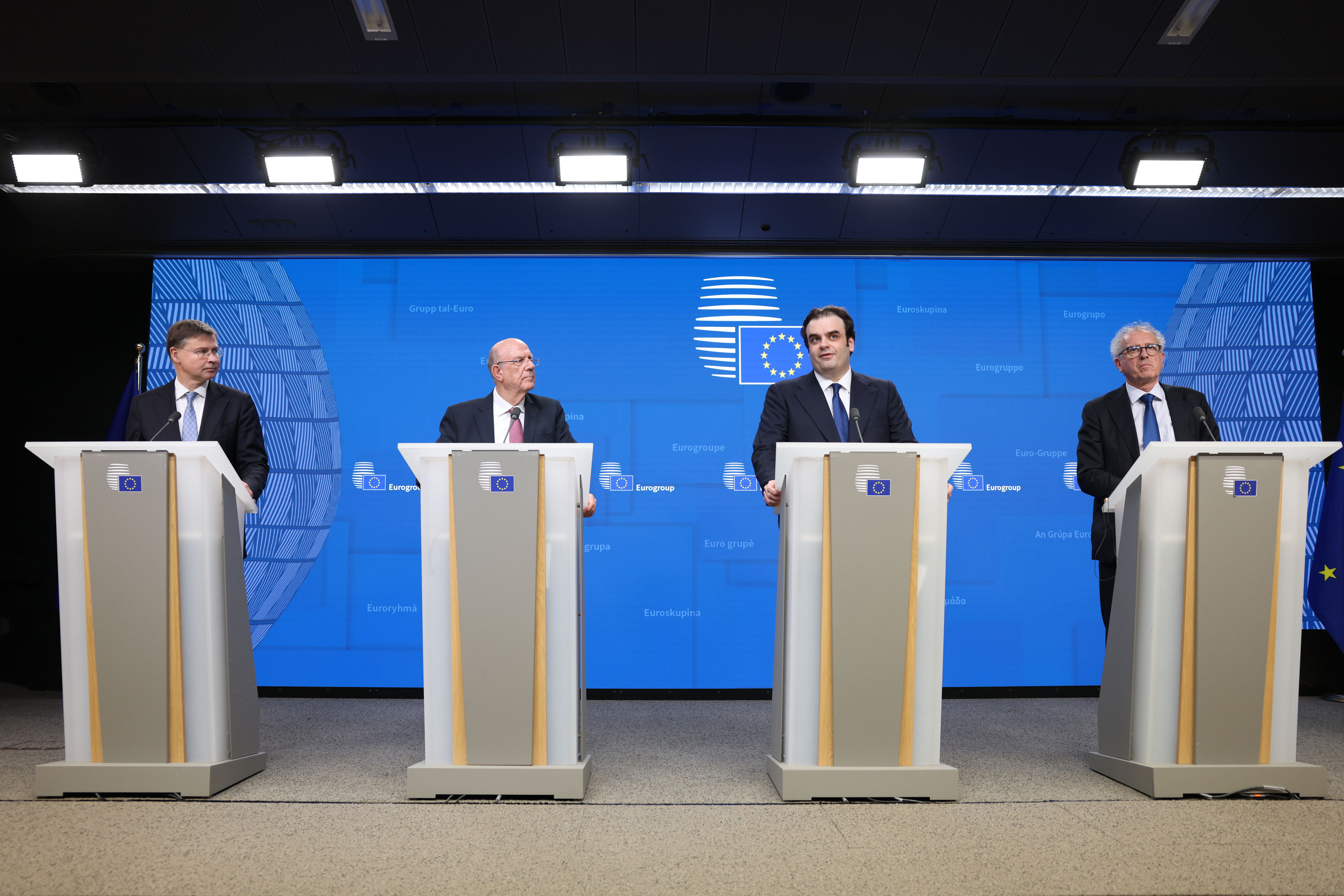
Kyriakos Pierrakakis’ election as the new president of the Eurogroup has drawn wide international attention, with major foreign media framing the development as a striking symbol of Greece’s political and economic comeback. Several outlets described the moment as a form of “vindication” for a country that, ten years ago, came close to being pushed out of the eurozone.
Politico captured this sentiment with the headline: “From Grexit to the head of the Eurogroup: Greece’s recovery story.” The publication noted that the nation once at risk of expulsion now finds itself leading the very body that helped steer it away from bankruptcy.
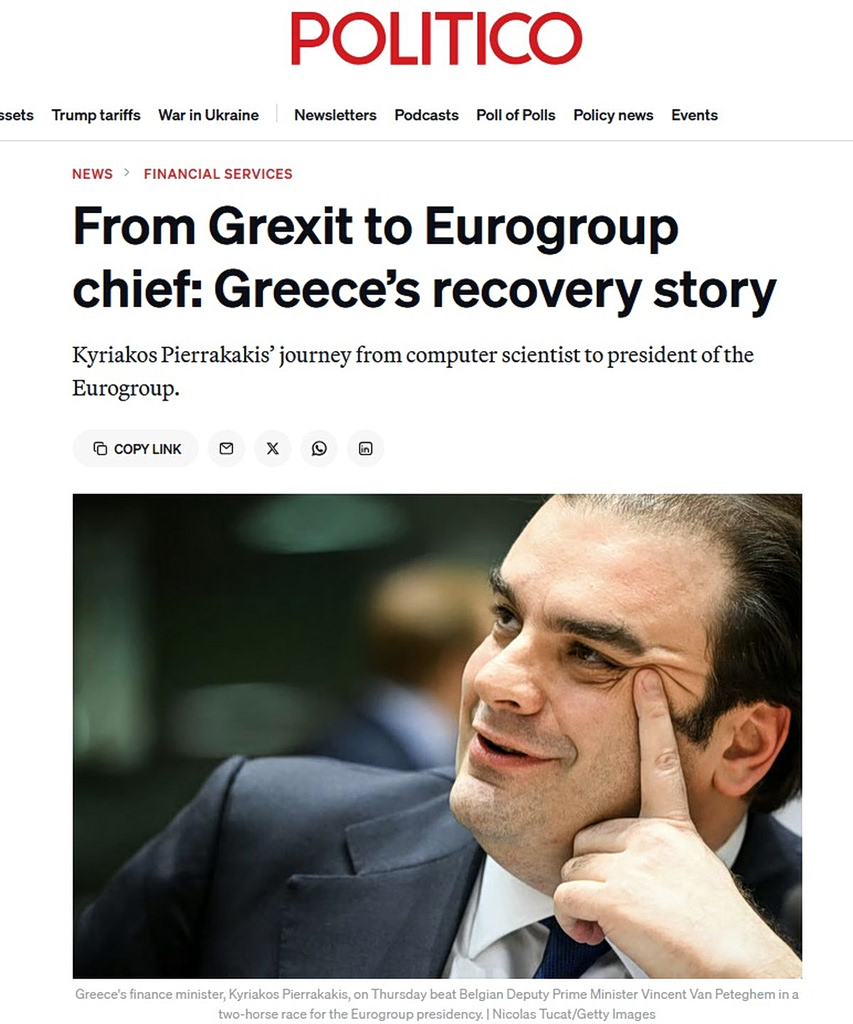
The outlet also highlighted the surprise surrounding the result, pointing out that few diplomats initially expected the 42-year-old computer scientist and political economist to win the race, particularly after the abrupt resignation of his predecessor, Paschal Donohoe. Belgian candidate Vincent Van Peteghem had been considered the early favorite due to his experience and standing within the eurozone.
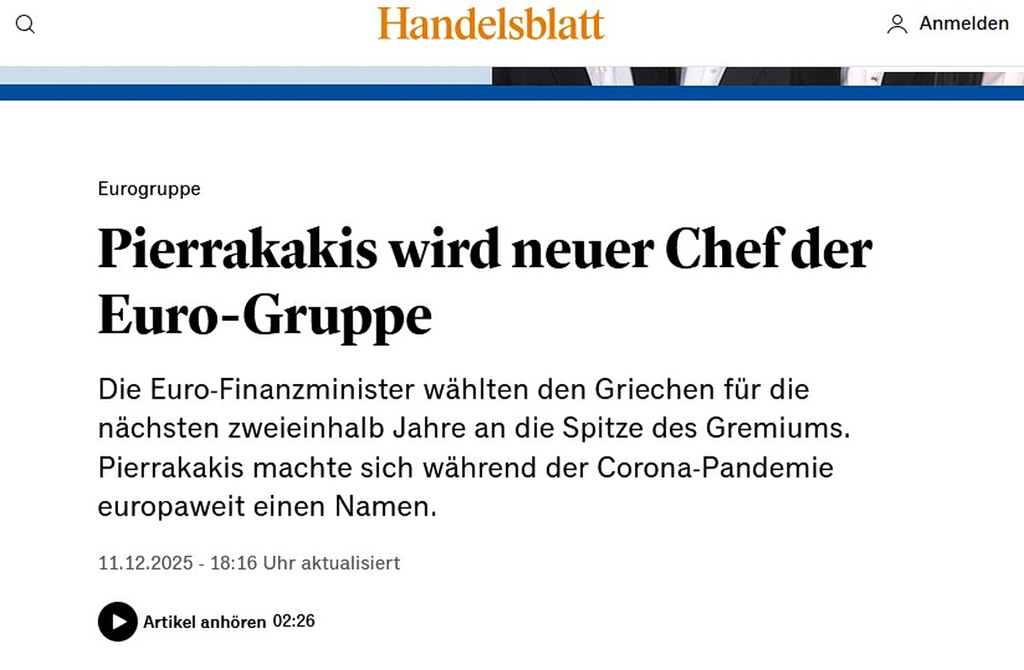
German financial newspaper Handelsblatt described Pierrakakis as the “architect” of Greece’s push to reduce bureaucracy and advance digital reforms. It emphasized that he takes on the role at a time when Greece is still marked by the memory of its decade-long debt crisis, which placed the country under strict European support programs.
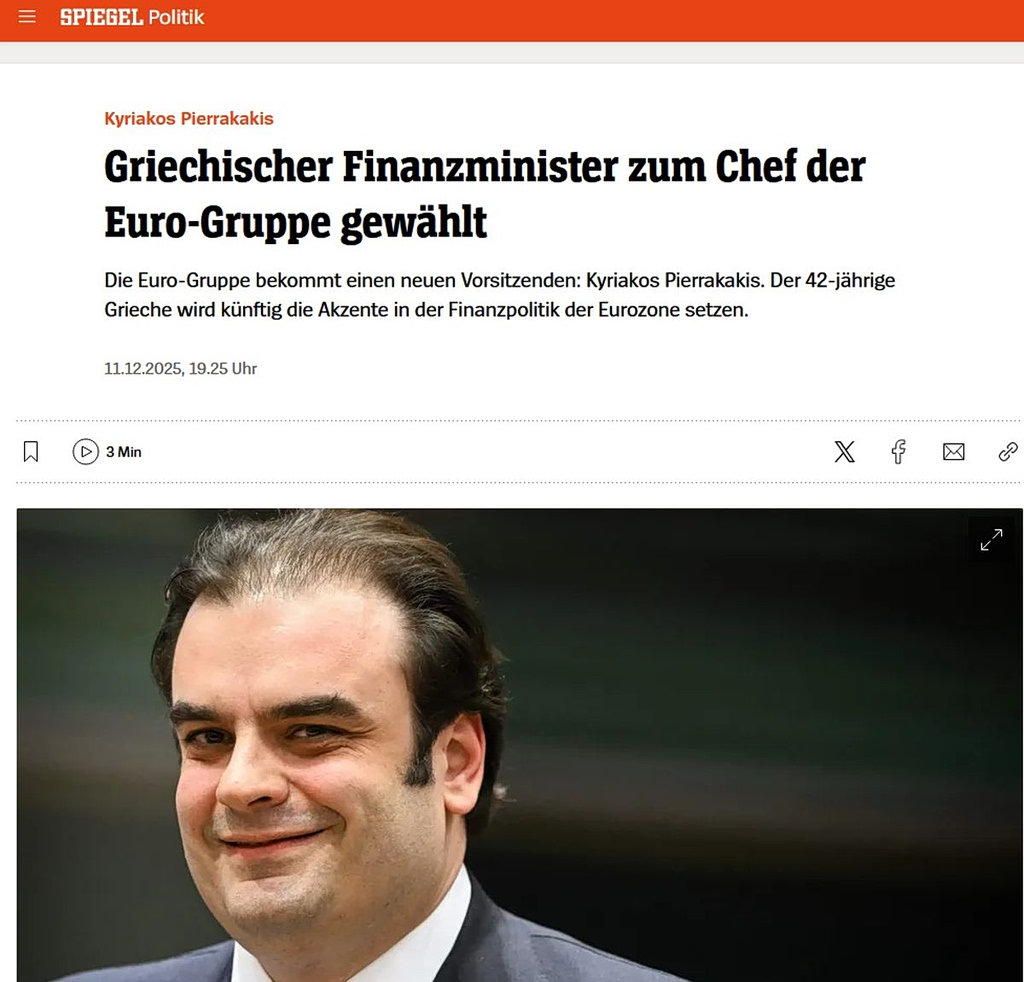
Der Spiegel reported on his election with the headline: “The Greek finance minister is elected head of the Eurogroup.” The magazine pointed to Greece’s recent return to budget surpluses and stronger economic growth compared with many EU countries, crediting years of reforms and fiscal adjustments.
Pierrakakis’ role in modernizing Greece’s public services and organizing the country’s COVID-19 vaccination program was also widely noted. Several outlets characterized him as an energetic and influential force behind Greece’s digital transformation.
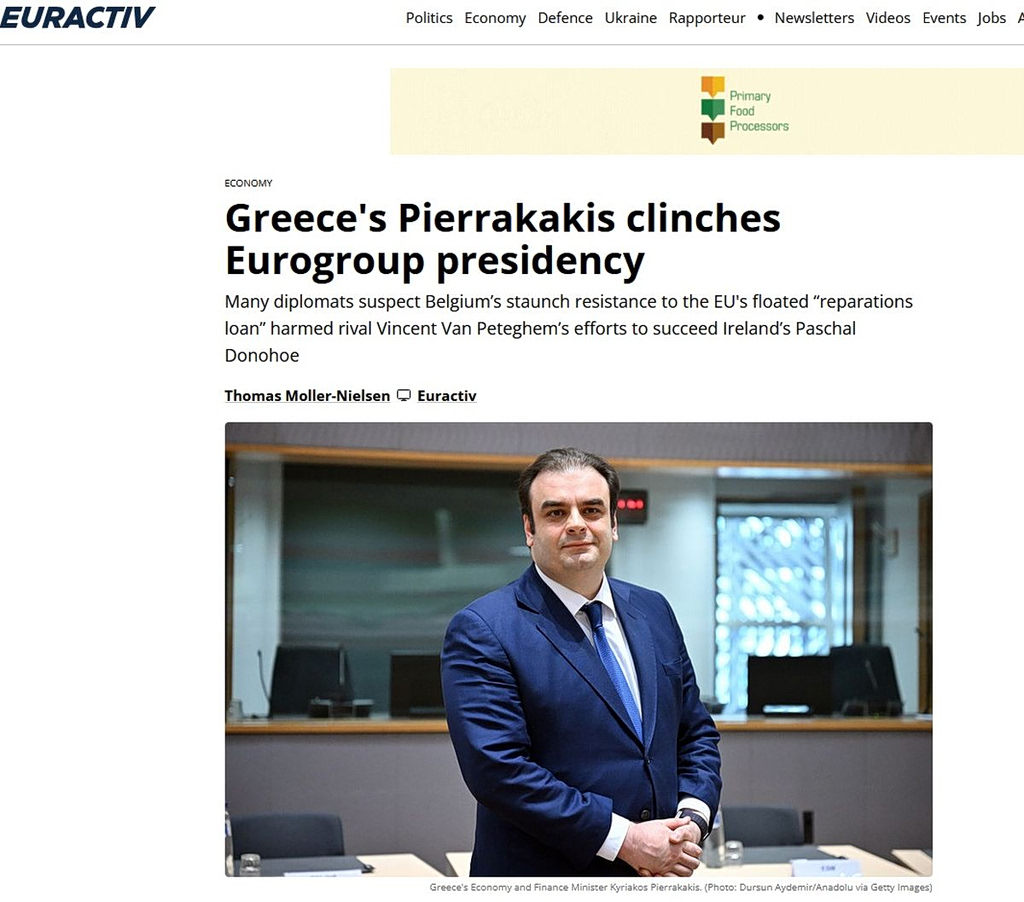
Euractiv headlined its coverage: “Greece’s Pierrakakis secures the Eurogroup presidency,” describing him as a more dynamic and spontaneous participant in Eurogroup discussions than his Belgian rival.
Bloomberg underscored the historical weight of the election, calling him the first Greek president of the Eurogroup and stressing how far the country has come. The outlet highlighted Greece’s regained investment grade, strong economic performance and rare budget surpluses within the EU.
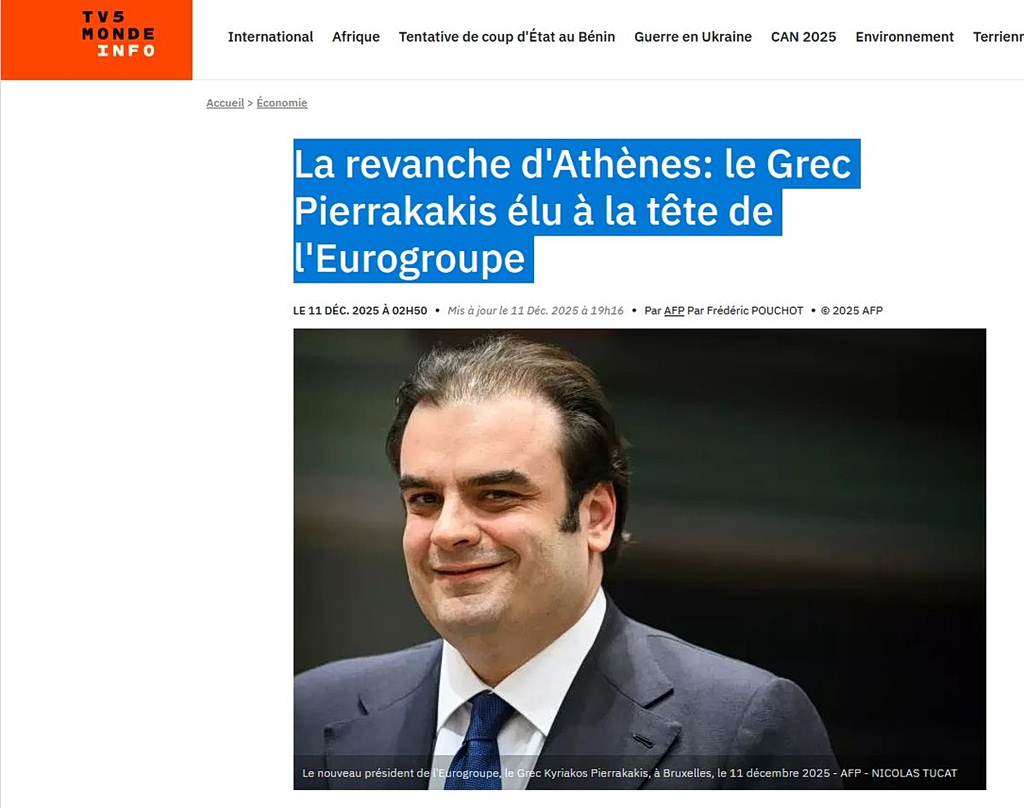
French broadcaster TV5Monde described the outcome as “Athens’ counterattack,” adding that “ten years after nearly exiting the eurozone, Greece takes its revenge.” It pointed to the symbolism of a Greek finance minister now leading the body that once imposed tough conditions on his country.
Spanish newspaper El País echoed this view, stressing the “symbolic significance” of the result. It noted that the Eurogroup had been the institution enforcing stringent fiscal rules on Greece during its three bailout programs. Fifteen years after the first rescue package, the presidency now returns to a Greek official—a shift seen by many as closing a difficult chapter in Europe’s economic history.