 Μake us preferred on Google
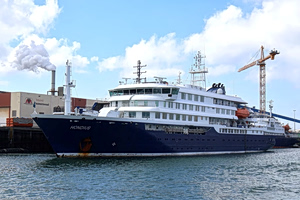
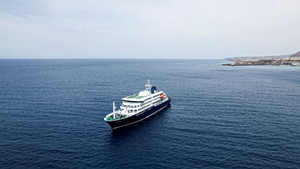
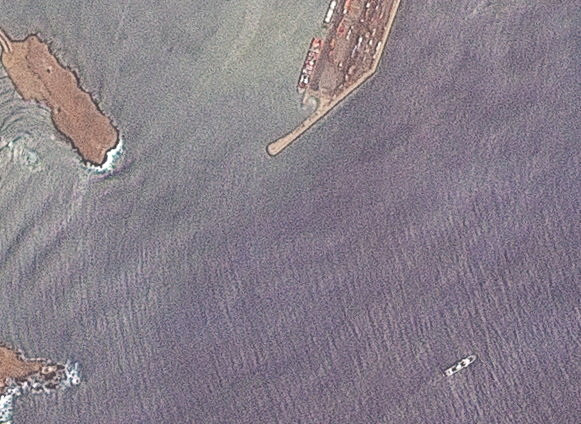
 What began as a premium Antarctic expedition has turned into a public health crisis at sea, with the Hantavirus being the most likely culprit. As a result, roughly 150 people have been stranded aboard the cruise ship M/V Hondius, now anchored off the coast of Cape Verde after being denied entry to port.
The voyage, operated by Oceanwide Expeditions, departed from Ushuaia in southern Argentina in March. Marketed as a remote-wilderness nature cruise, tickets cost between €14,000 and €22,000 per berth. The ship toured some of the planet’s most isolated destinations — Antarctica, the Falkland Islands, South Georgia, Nightingale Island, Tristan da Cunha, St. Helena, and Ascension Island — before arriving in Cape Verdean waters on May 3.
The first death occurred as far back as April 11, when a Dutch male passenger died while the ship was en route to Tristan da Cunha. His body stayed aboard until April 24, when it was taken off at St. Helena, with his wife traveling alongside for the repatriation. Within days, she too fell seriously ill and later died at a hospital near Johannesburg’s airport, where she had collapsed while attempting to fly home. Dutch authorities confirmed she had tested positive for hantavirus. A British passenger who became gravely ill was medically evacuated to South Africa, where he also tested positive. Then on May 2, a German passenger died on board, with the cause of death still under investigation but being treated as a suspected case. It has also been confirmed that a Greek is onboard the ship, although whether or not they are afflicted by the virus is unknown.
The ship’s atmosphere in the days leading up to the quarantine was strikingly normal — at least on the surface. On May 1, the vessel’s chef posted a cheerful video of himself and crewmates jumping into the ocean from a rubber dinghy. A day later, passenger Jake Rosmarin was still sharing footage of cows he’d spotted on a remote Atlantic island. That same evening, however, after news of the quarantine broke, Rosmarin acknowledged he was on the ship, saying he preferred not to elaborate out of respect for those affected. By the following day, visibly shaken, he addressed the camera directly: “We’re not just headlines. We’re people with families, with lives, with people waiting for us at home. All we want is to feel safe and to get home.”
Cape Verdean health authorities had not yet authorized a medical evacuation or passenger screening as of the time of the report. The ship’s operator said it was exploring the possibility of sailing to Las Palmas or Tenerife in Spain’s Canary Islands, where medical assessments could be conducted. Two crew members — one British, one Dutch — were also showing acute respiratory symptoms requiring urgent care, and the Netherlands was preparing specialized medical aircraft to evacuate them.
The WHO has confirmed seven cases so far, two confirmed and five suspected. Health officials on both sides of the Atlantic emphasized that hantavirus — primarily a rodent-borne illness, but capable of very rare person-to-person transmission in one variant — poses no broader public threat. Cape Verde authorities noted that since the vessel had remained at anchor offshore, there was no risk to people on land.