 Μake us preferred on Google
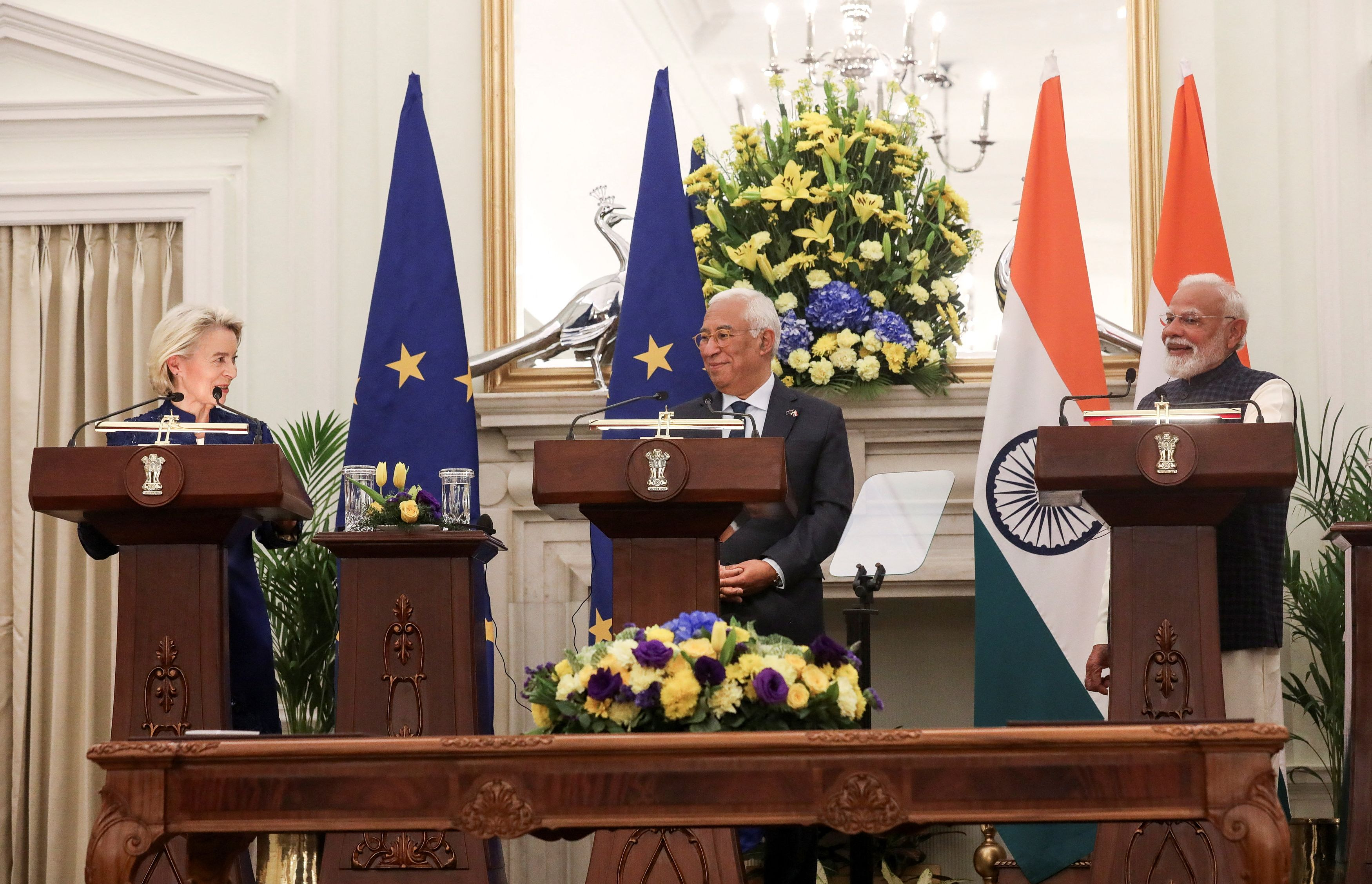
 India and the European Union have finalized a landmark trade deal that significantly reduces tariffs on a wide range of goods, both sides announced on Tuesday, in a move expected to reshape trade ties and hedge against uncertain relations with the United States.
The deal will eliminate or lower tariffs on 96.6% of traded goods by value, potentially doubling EU exports to India by 2032. European companies are projected to save around 4 billion euros ($4.75 billion) in duties, the EU said.
Under the agreement, India will slash tariffs on cars to 10% over five years from rates as high as 110%, benefiting automakers including Volkswagen, Renault, Mercedes-Benz, and BMW. Tariffs on alcoholic beverages such as wine will fall immediately from 150% to 75% and gradually drop to 20%, while spirits tariffs will decrease to 40%.
EU tariffs on Indian goods will also be eased, covering products like marine goods, leather, textiles, chemicals, rubber, base metals, and gems and jewelry. Over seven years, 99.5% of EU-imported goods to India will see reduced duties.
“This is only the beginning,” European Commission President Ursula von der Leyen said, highlighting the historic nature of the deal. Indian Prime Minister Narendra Modi called it “the mother of all deals,” emphasizing the opportunities for both India’s 1.4 billion people and European consumers and businesses.
The formal signing of the agreement will follow legal vetting, expected to take five to six months, with implementation anticipated within a year. The pact comes amid a flurry of global trade agreements, including recent EU deals with Mercosur, Indonesia, Mexico, and Switzerland, and India’s agreements with Britain, New Zealand, and Oman.
Experts say the deal gives immediate price advantages for EU goods in India while boosting Indian exports in labor-intensive sectors, partly offsetting the impact of previous U.S. tariffs.