In the final months of 1978, millions of Iranians poured into the streets to bring down a monarchy they no longer believed in. By January 1979 the Shah was in exile. Nearly half a century later, their children and grandchildren are confronting a radically different system that has reached a similar point of moral and economic exhaustion. The slogans have changed, but the demand is hauntingly familiar: a life free from fear, repression, poverty, humiliation and state control.
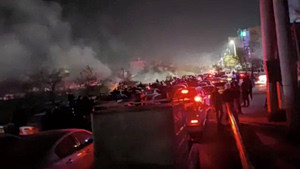
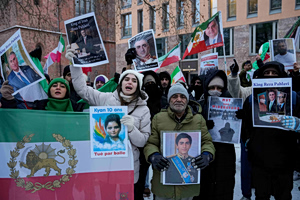
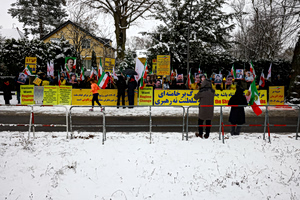
Over the past two weeks, protests have swept across Iran, from Tehran to Mashhad and dozens of smaller cities, according to videos and reports published by BBC Persian and other Persian-language outlets outside the country. Demonstrators have chanted “death to the dictator,” a reference to Supreme Leader Ali Khamenei, while others have called for the departure of the clerics who have ruled Iran since the 1979 Islamic Revolution. Some crowds have even revived pro-monarchy slogans such as “Long live the Shah”, a startling reversal in a country founded on the overthrow of royal rule, as reported by Le Monde.
Large anti-regime protests continued in Tehran today despite reports of mass casualties and an internet and telephone blackout. pic.twitter.com/MDe4mdveUa
— Karim Sadjadpour (@ksadjadpour) January 11, 2026
One chant heard repeatedly across the country, also reported by Le Monde, captures the deeper rupture now under way: “Not Gaza, not Lebanon, my life is for Iran.” It reflects not just economic desperation, but a growing rejection of a political order that has poured national wealth into foreign wars and ideological projects while ordinary Iranians struggle to survive at home.
A crackdown behind closed networks
As the protests intensified, Iranian authorities shut down internet access on Thursday night, sharply reducing what can be verified from inside the country. What is emerging through that digital blackout is grim.
The Center for Human Rights in Iran, which works with activists inside the country, said it has received eyewitness accounts and what it described as credible reports that hundreds of protesters have been killed since the shutdown began. The Human Rights Activists News Agency reported that 490 demonstrators have been killed since the protests started.
The Center for Human Rights in Iran said hospitals are “overwhelmed,” blood supplies are critically low and bodies are “being piled up.” It reported that many protesters have been shot in the eyes, noting that Iranian security forces have previously used metal pellets and rubber bullets to deliberately blind demonstrators. Witnesses cited by the center also reported the use of snipers, military rifles and surveillance drones.
BBC Persian, citing informed sources at hospitals, reported that at least 110 bodies were transferred to medical facilities in Tehran and the northern city of Rasht. Doctors told the outlet that many of the victims had been shot in the head, neck and eyes.
14th day of anti-establishment protests in Iran
Video, said to have been received via Starlink amidst the internet outage, shows a group of protesters in Tehran.
Loc: 35.76846, 51.47342@GeoConfirmed
pic.twitter.com/rjQDBd4iDG— Ghoncheh Habibiazad | غنچه (@GhonchehAzad) January 10, 2026
Iranian officials deny responsibility. President Masoud Pezeshkian has blamed Iran’s enemies, accusing them of training “terrorists.” An Iranian diplomat, speaking anonymously to Washington Post, accused Israeli intelligence of infiltrating the protests and fomenting violence, without offering any evidence to support his claim.
When the economy broke the middle class
The immediate spark for the uprising was economic, but the fuel had been accumulating for years.
By the end of last year, it took about 1.4 million rials to buy a single U.S. dollar, according to Le Monde. That collapse has devastated household budgets. In just nine months, the price of cheese rose 140%, sangak bread 250%, milk 50% in two months and ground meat 20% in one month. Many families now buy basic food on credit through online platforms such as Snapp Market, the newspaper reported.
These figures match a broader collapse. Inflation exceeds 50% overall and 70% for food. Over the past year alone, Iran’s currency has lost more than 80% of its value. In 1979, one dollar was worth 70 rials; today it is worth about 1.47 million.
Ahmad Naghibzadeh, a retired political science professor at the University of Tehran, and former department director at Science Po told Euronews that Iran has been transformed into “a mafia-style system,” dominated by rent-seeking and monopolies that control everything from cigarettes to milk and yogurt. He said the political moment now resembles “the final days of Shah (Reza Pahlavi’s) rule.”
For sociologist Azadeh Kian, the defining feature of this protest wave is who is taking part. “This is no longer just a revolt of a segment of the elite,” she told Le Monde. “It is the beating heart of Iran’s economy that is protesting.”
The unfinished revolt of 2022
The current unrest is not a continuation of the 2022 uprising, but it is part of a longer pattern that has defined Iranian politics for more than a decade.
Iran has experienced repeated waves of nationwide protest: over disputed elections in 2009, rising food prices in 2018, fuel hikes in 2019, the “Woman, Life, Freedom” movement in 2022, and now the currency collapse and inflation shock of 2025–26. Each has been crushed by force and none has produced substantive reforms.
The 2022 “Woman, Life, Freedom” protests, triggered by the death of Jina Mahsa Amini after her arrest by the morality police, marked the most radical social revolt of that cycle, according to the UN Human Rights Office. Her death ignited months of nationwide protests that were met with mass arrests, torture and killings.
As Le Monde noted in its editorial on the current unrest, every round of repression has further undermined the regime’s credibility, making it appear increasingly hostile to its own people and increasingly detached from their suffering.
Women’s Rights
A report by the UN’s independent international fact-finding mission to the Human Rights Council found that women and girls continue to face systematic discrimination “in law and in practice,” particularly through the enforcement of mandatory hijab laws. Despite President Pezeshkian’s campaign promises to relax enforcement, the state expanded surveillance and policing.
In April 2024, police launched the so-called “Noor” plan to confront women and girls accused of appearing without hijab. The IRGC deployed “ambassadors of kindness” a euphemism for civilian hijab enforcers, in parks, markets and public transport to monitor compliance. At least 618 women were arrested under this campaign in 2024, the UN mission reported.
The judiciary reinforced it. Women were summoned to criminal and revolutionary courts and sentenced based on police photographs and security reports. In November 2024, Roshnak Alishah was lashed 14 times for “disturbing public chastity.” In March 2025, the singer Mehdi Yarrahi was flogged 74 times for writing a protest song.
Teenage girls were not spared. In late 2024, a state body announced the opening of a “clinic” for girls to undergo psychological “treatment” for removing their hijab.
Executions also surged. The UN recorded between 938 and 973 executions only in 2024, a threefold increase from 2021 and the highest level since 2015. Many cases violated international law.
The fact-finding mission documented torture, prolonged solitary confinement and mock executions, including firing-squad simulations, in IRGC and intelligence detention centers. Victims included children.
A state ruling through fear
Repression has extended far beyond women’s rights.
Amnesty International and Human Rights Watch said that in the aftermath of the 12-day war between Iran and Israel, and specifically between June and early September 2025, Iranian authorities arrested more than 20,000 people, including dissidents, journalists, social-media users, families of protest victims and members of ethnic and religious minorities such as Baluchis, Kurds, Baha’is, Christians and Jews. Security forces killed civilians at checkpoints, including a 3-year-old girl, the groups reported.
Judiciary chief Gholamhossein Mohseni Eje’i warned publicly that those accused of cooperating with Israel would face heavy punishment, including the death penalty.
This machinery of fear is what today’s protesters are confronting.
Why this time feels different
In an analysis for The Atlantic, Karim Sadjadpour and Jack A. Goldstone argue that Iran now meets nearly all the historical conditions associated with successful revolutions.
The first is fiscal collapse: inflation, currency free fall, water shortages and blackouts. The second is elite decay: the Islamic Republic has shrunk into what they call “a one-man party” around Khamenei, hollowed out by corruption and negative selection. The third is a broad opposition, uniting women, minorities, workers and bazaar merchants. The fourth is a unifying narrative, captured by nationalist slogans demanding a “normal life” and rejecting costly foreign wars. The fifth is international isolation: Iran’s regional allies have been weakened, its military exposed in the June war, and its economy squeezed by sanctions and discounted oil sales.
What remains uncertain is whether the security forces will continue to kill for a regime that can no longer provide prosperity, ideology or security.
“The Islamic Republic is today a zombie regime,” Sadjadpour and Goldstone write, hollowed out and sustained by violence alone.
For now, Iran’s future is being decided in its streets, its prisons and its morgues. History suggests that when economic collapse meets moral exhaustion, even the most brutal systems eventually reach their limit.