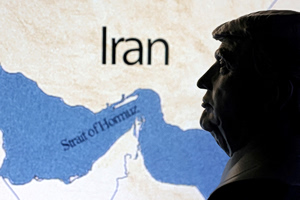
Iran partially shut parts of the Strait of Hormuz on Tuesday as it entered indirect nuclear talks with the United States in Geneva, heightening tensions in one of the world’s most strategically important waterways.
Iran’s semi-official Fars news agency reported that sections of the strait would close for several hours due to “security precautions” while the elite Revolutionary Guards conducted military drills. The Strait of Hormuz is a crucial oil export route through which roughly a fifth of global oil flows. Tehran has previously threatened to block commercial shipping there if attacked.
The move came just hours after negotiations began between U.S. and Iranian officials, mediated by Oman. U.S. envoys Steve Witkoff and Jared Kushner are participating alongside Iranian Foreign Minister Abbas Araqchi, according to a source briefed on the talks.
U.S. President Donald Trump said he would be involved “indirectly” in the Geneva discussions and suggested Tehran was motivated to reach an agreement. “I don’t think they want the consequences of not making a deal,” Trump told reporters aboard Air Force One, referencing last year’s U.S. B-2 bomber strikes on Iranian nuclear facilities.
Shortly after the talks started, Iranian media cited Supreme Leader Ali Khamenei as warning that U.S. efforts to depose his government would fail. “The strongest army in the world can sometimes be slapped so hard it cannot get up,” he said.
The negotiations unfold under the shadow of previous military action. In June last year, Israel launched a bombing campaign against Iran that was later joined by U.S. B-2 bombers targeting nuclear sites. Tehran says it has since halted uranium enrichment activity.
The U.S. has deployed a battle force to the region and is preparing for the possibility of extended military operations if ordered, according to two U.S. officials. Iran, meanwhile, conducted drills in the Strait of Hormuz earlier this week, reinforcing the sense of brinkmanship surrounding the talks.
Washington and its ally Israel believe Iran seeks to develop a nuclear weapon, a claim Tehran denies, insisting its program is peaceful. Iran is a signatory to the Nuclear Non-Proliferation Treaty, which allows civilian nuclear energy in exchange for renouncing atomic weapons and cooperating with the International Atomic Energy Agency.
Iranian officials say the success of the Geneva talks depends on the United States lifting sanctions and avoiding what they describe as unrealistic demands. Tehran has made clear it will only discuss limits on its nuclear program in exchange for sanctions relief and will not agree to end uranium enrichment entirely or negotiate over its missile capabilities.