 Μake us preferred on Google
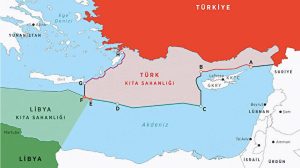
Libya’s eastern-based parliament voted unanimously on Tuesday to approve a 2019 maritime agreement with Turkey that Greece has long opposed, reversing its previous rejection of the deal and a decision to sever political relations with Ankara. The vote marks a substantial shift in the position of eastern Libya’s political leadership, which had rejected the agreement signed between Turkey and the former, internationally recognized Government of National Accord (GNA) in Tripoli.
In a statement issued in Benghazi on Oct. 20, Libya’s House of Representatives said lawmakers had approved the memorandum of understanding establishing maritime boundaries between Turkey and Libya in the Mediterranean Sea. Parliament also unanimously repealed two resolutions adopted in 2020. Resolution No. 1 rejected the ratification of two memorandums signed between Ankara and the Tripoli-based government, while Resolution No. 6 called for the severing of political relations with Turkey.
The decision concerns an agreement that has been at the center of a dispute involving Greece, Turkey and Libya since November 2019. Athens has consistently opposed the maritime boundaries outlined in the memorandum, arguing that they infringe on Greek maritime rights in the eastern Mediterranean. Egypt also rejected the agreement. The European Union has also challenged the deal’s legality. In June 2025, the European Council reaffirmed its position that the memorandum infringes on the sovereign rights of third countries, does not comply with the international law of the sea and cannot produce legal consequences for third countries.
Although the Libyan parliament has now approved the memorandum, the vote does not, in itself, settle questions about its validity under international law.
A Reversal in Eastern Libya’s Position
The parliamentary vote comes amid Turkey’s efforts to strengthen relations with eastern Libya, which is under the influence of military commander Khalifa Haftar. Libya remains divided between rival eastern and western administrations. Turkey had previously been a major supporter of the internationally recognized GNA in Tripoli, while the eastern authorities opposed the maritime and security agreements signed with Ankara.
In 2020, the eastern-based parliament formally rejected the agreements and voted to cut political ties with Turkey. Five years later, in 2025, lawmakers established a technical committee to examine the maritime memorandum, reopening discussions over the agreement.
Two Libyan lawmakers confirmed Tuesday’s decision to Reuters. Tarek al-Jeroushi said the agreement would strengthen Libya’s position as a political, military and economic partner to major powers. “Some countries may be upset by this agreement, but what matters to us is our national interest,” he told Reuters.
Lawmaker Aisha al-Tabalqi said the vote followed a detailed presentation of the agreement’s provisions by specialized parliamentary committees.
Maritime Claims and Energy Exploration
Turkey and Libya have since expanded their cooperation into energy exploration. In 2022, Ankara and Tripoli signed a separate memorandum on hydrocarbon exploration, providing a framework for Turkish companies to conduct seismic surveys and drilling operations. In June 2025, the Turkish Petroleum Corporation (TPAO) signed an agreement with Libya’s National Oil Corporation to conduct seismic surveys in four offshore blocks in Libyan waters. According to Turkish newspaper Daily Sabah, the surveys cover approximately 10,000 square kilometers, with the collected data to be processed within nine months.
With information from Reuters, Daily Sabah, TO BHMA