The Louvre Museum has reopened its historic Apollo Gallery to visitors, nine months after a high-profile robbery exposed security weaknesses at the world’s most-visited museum.
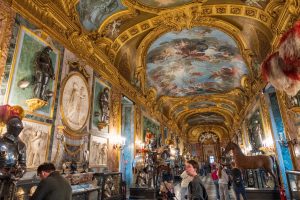
Although visitors can once again admire the gallery’s ornate 17th-century interiors, no jewels are currently on display. The museum has relocated its jewelry collection to a more secure area of the Louvre, according to museum director Christophe Leribault.
The Apollo Gallery, created during the reign of the young King Louis XIV, is one of the Louvre’s most celebrated spaces. Designed by architect Louis Le Vau and decorated by painter Charles Le Brun, the gallery’s sun-themed design later inspired the iconic Hall of Mirrors at the Palace of Versailles.
The reopening comes after the October 2025 theft of French crown jewels valued at $102 million, one of the most audacious museum robberies in recent history.
According to authorities, two men used a movers’ lift parked outside the Louvre in broad daylight to reach a second-floor window, which they smashed before breaking into display cases with angle grinders. They then escaped on scooters driven by two accomplices. The entire operation lasted less than seven minutes.
French authorities have charged and detained four people suspected of direct involvement in the robbery.
Most of the stolen treasures remain missing. The only item recovered so far is a crown belonging to Empress Eugénie, the wife of Napoleon III, which was found damaged near the museum and is currently undergoing restoration.
French Culture Minister Catherine Pegard described the gallery’s reopening as “the symbol of a new beginning” following what she called “a trauma for the whole world.” She also pledged to strengthen security measures at museums across France.
The robbery sparked widespread criticism of the Louvre’s security policies. In February, then-director Laurence des Cars resigned after facing intense scrutiny over the theft, as well as staff strikes related to pay and working conditions.
The museum has also been criticized by the state auditors’ office and other observers for spending relatively little on security and infrastructure maintenance while investing heavily in new artwork acquisitions and post-pandemic projects. Critics also noted that only around a quarter of the museum’s collection is on public display.