
 Μake us preferred on Google
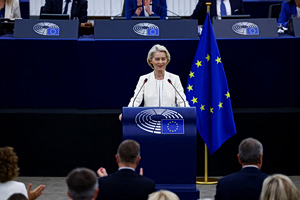
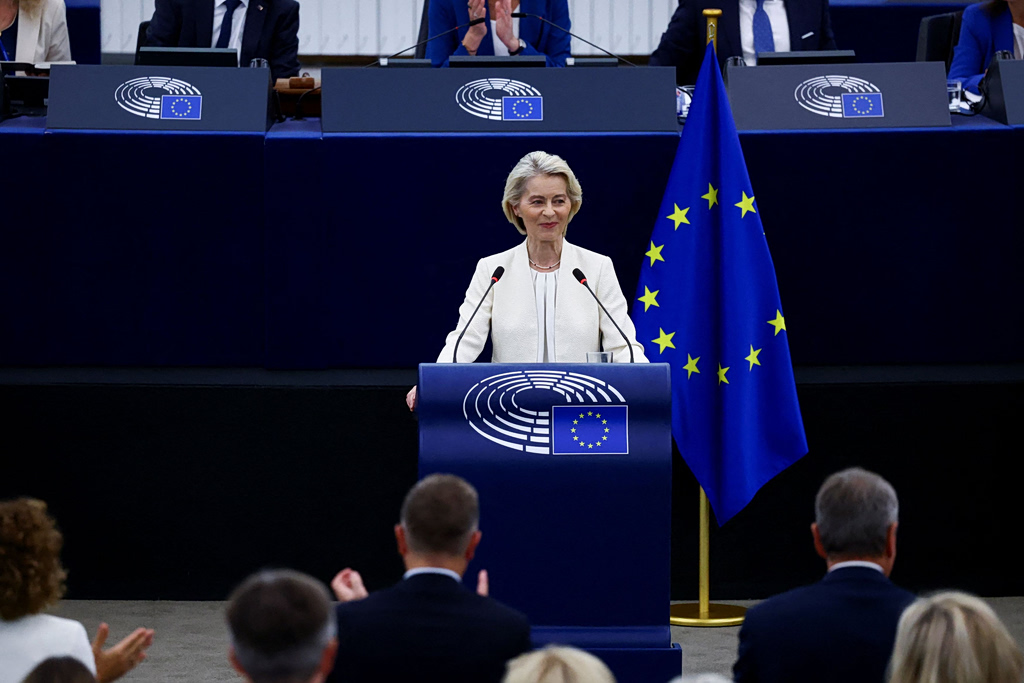
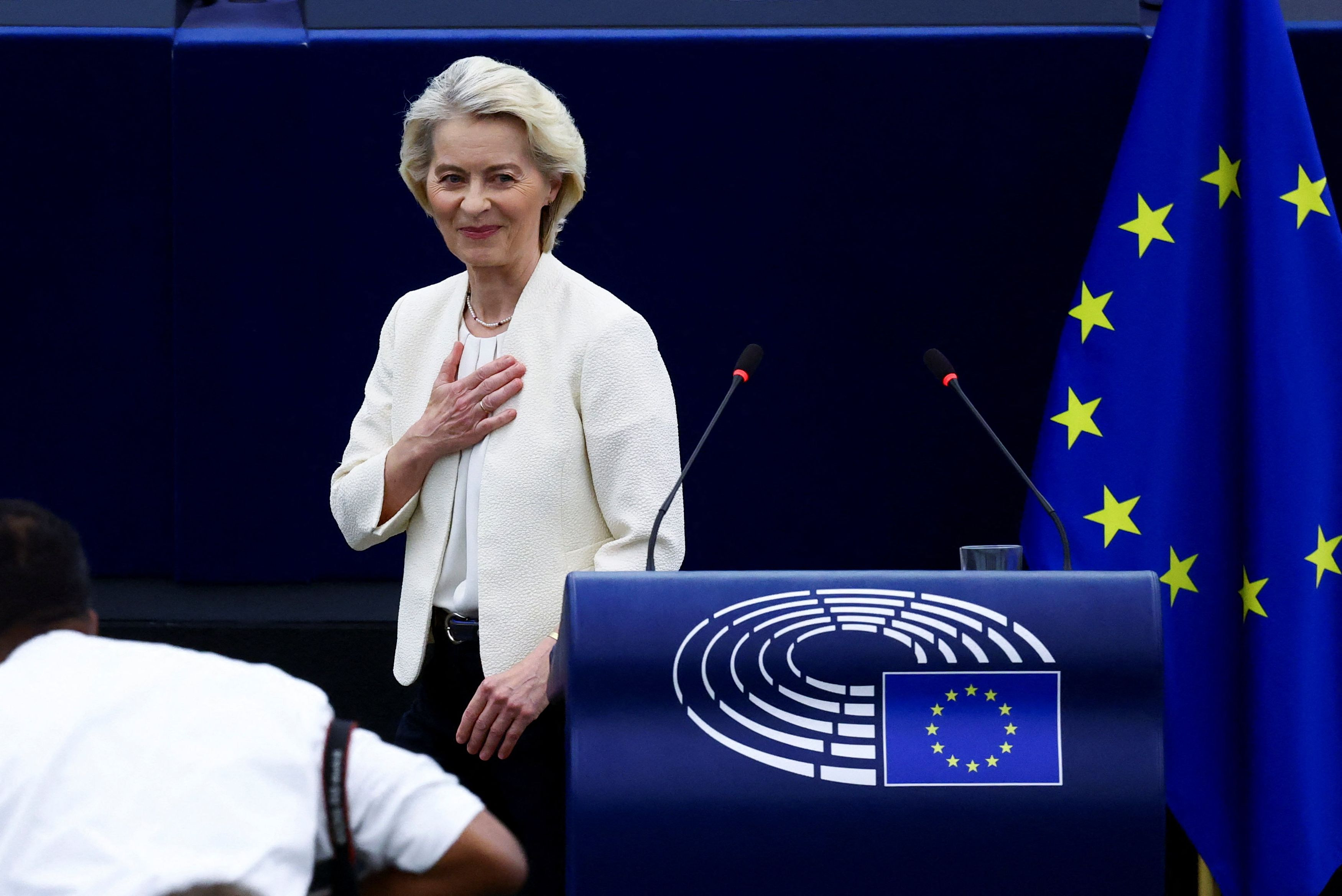
 European Commission President Ursula von der Leyen said on Wednesday she wants to explore making Canada the European Union’s first ever “associate member,” part of a broader effort to strengthen ties with allies at a time she described as “an openly hostile world.”
The idea drew a standing ovation from EU lawmakers, after which von der Leyen crossed the chamber to embrace Canadian Prime Minister Mark Carney, who had traveled to the European Parliament to hear her annual State of the Union address.
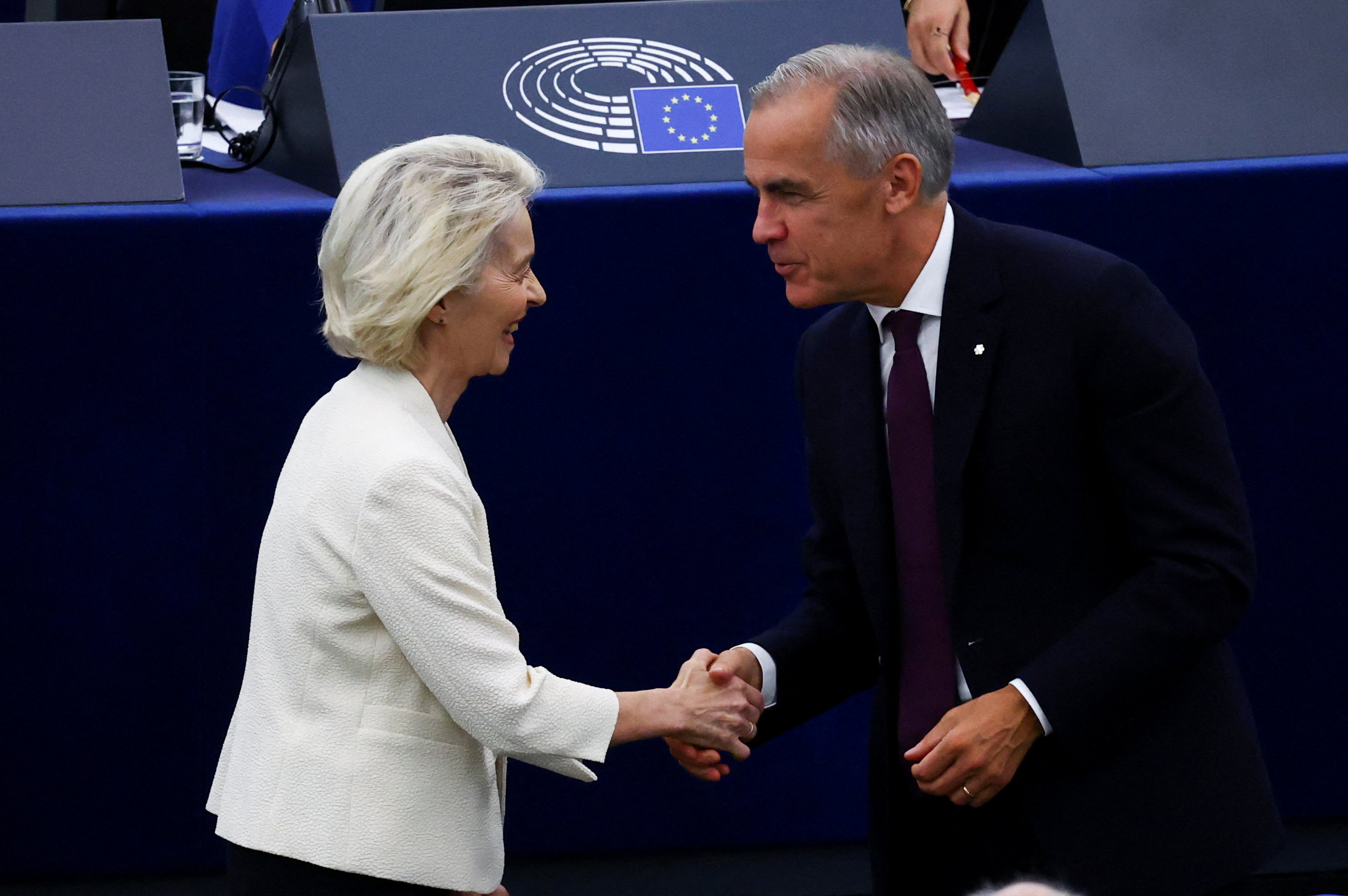
Canadian Prime Minister Mark Carney shakes hands with European Commission President Ursula von der Leyen as he attends her State of the European Union address (SOTEU) to the European Parliament, in Strasbourg, France, September 16, 2026. REUTERS/Yves Herman
Speaking to the assembly in Strasbourg, von der Leyen said new kinds of partnerships were necessary given “the cold fragility of today’s world.” The 27-member bloc is grappling with war on its eastern border because of Russia’s invasion of Ukraine, while both the EU and Canada face growing economic pressure from the Trump administration’s trade policies and from an increasingly assertive China.
“Europe and Canada believe in democracy”
“I said we must urgently reimagine our partnerships. So I would like to work with you on opening the door for Canada to be the first associate member of the EU,” von der Leyen told lawmakers.
She said the EU and Canada share a common outlook on major global issues, from artificial intelligence and climate change to Arctic policy and geopolitics more broadly, and pointed to existing cooperation on Ukraine, defense, raw materials, and supply chains. “But above all,” she said, “Europe and Canada believe in democracy.”
Whether the plan actually moves forward depends on the EU’s member states, not on von der Leyen alone. The bloc has traditionally been wary of loose partnership arrangements that carry no formal legal standing, and member states responded coolly earlier this year when Germany floated the idea of associate membership for Ukraine as a possible step toward full EU accession.
One EU diplomat said the proposal caught many off guard, noting that its practical meaning remains unclear, and voiced concern that the Commission president “is overpromising and won’t be able to deliver.” In the run-up to the speech, seven EU diplomats in both Canada and Europe told Reuters that while talks on trade, defense, and digital security cooperation were already underway, no high-level plan for a broader EU-Canada relationship had yet been discussed.
Real obstacles to expanding trade remain. Mark Manger, a political economy professor at the University of Toronto, has noted that EU officials are frustrated by Canada’s continued protection of its telecommunications and dairy sectors, both shielded at considerable cost.
A “unique alliance”
Carney himself said earlier in the week that Canada is looking for a “unique alliance” with the EU rather than formal membership of any kind. He is scheduled to address the European Parliament directly on Thursday.
His visit to Europe comes on the heels of a major rupture in Canada-U.S. relations, after trade negotiations broke down last month and triggered a round of retaliatory tariffs between the two countries. Carney has committed to doubling Canada’s trade with partners outside the U.S. over the next decade as the country works to reduce its economic dependence on its southern neighbor amid the worsening trade dispute.
He said Tuesday that more substantive discussions would take place at the Canada-EU summit planned for Montreal in late October. Canadian Foreign Minister Anita Anand told Reuters that the relationship with the EU “has become increasingly close, especially over the past year and a half.”
In her address, von der Leyen outlined several areas of planned cooperation: “We will work on intelligent manufacturing. We will create a tech alliance. We will integrate defence industrial bases. We will make the Arctic a flagship joint project.”
She added that partnerships are “a strategic choice for Europe” but also a response to the erosion of the international rules-based order, and stressed that the initiative was “not against anyone else.”
EU Capitals Blindsided by the Associate Membership Idea
According to POLITICO, von der Leyen’s proposal caught EU member states off guard, and several governments are now uneasy about what closer ties with Canada might actually require. Granting any form of EU membership formally falls to the European Council, and no framework for “associate membership” currently exists, so national capitals were never consulted before the announcement.
One diplomat involved in recent talks on EU-Canada relations said member states have been trying to manage expectations, adding that while there’s real goodwill toward Ottawa, no one yet knows what such a status would actually entail. A second diplomat was more direct, suggesting Canada might realistically be offered something similar to the EU’s Deep and Comprehensive Free Trade Area arrangement already extended to Georgia, Moldova, and Ukraine, but said there’s little appetite among member states for anything beyond that on the economic or political front. A third diplomat noted that true associate membership would require amending the EU’s founding treaties, something considered politically unworkable given the lack of support.
If talks did go further, diplomats pointed to a number of sensitive issues that could surface: Canada’s “Made in Canada” procurement preferences, which could clash with EU single market rules; competition between Canadian and European steel producers; EU tariffs on car exports; Canadian restrictions on European alcohol imports; and differing standards on genetically modified crops.
The idea of associate membership isn’t new. German Chancellor Friedrich Merz had previously proposed something similar as a way to bring Ukraine closer to the EU, but that plan was turned down by Kyiv and failed to gain traction among other EU leaders.
Even so, ambassadors from across the bloc, including from right-leaning governments typically wary of provoking Washington, reached broad agreement last week on pursuing closer relations with Canada, in meetings with the Commission and Council. Ireland’s European affairs minister, Thomas Byrne, welcomed the move, saying that expanding the union to include full and possibly associate members serves the EU’s strategic interests.
Not everyone in the European Parliament was as receptive. Left MEP Manon Aubry directly challenged von der Leyen on the chamber floor, questioning where she had gotten a democratic mandate to pursue the plan.
Carney’s Strasbourg visit, first reported by POLITICO, comes as he pushes to reduce Canada’s reliance on the United States and build a coalition of pro-free-trade democracies amid mounting trade and political pressure from Washington. A senior EU official said the trip was meant to signal both sides’ ambition to elevate the relationship. Carney is expected to lay out his own vision for the EU-Canada relationship in an address to the European Parliament on Thursday.