 Μake us preferred on Google
 School: unbearable at times, beloved at others. It is rare to meet someone who cannot tell a funny or touching story from their school years. And if they genuinely have none, perhaps something truly terrible happened to their soul.
School is officially the place where we first learn to socialize in earnest. Many of us may have gone to preschool first, but in Greece in the 1980s and ’90s, few children left home before kindergarten. Most of us took our first real plunge into life at five or five and a half.
And the favorite moment for all those little—and later, not-so-little—students was recess. That liberating ring of the bell, which silenced the teachers and gave us permission to race into the schoolyard and let the air fill our lungs, was always a glorious thing.
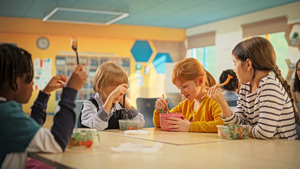
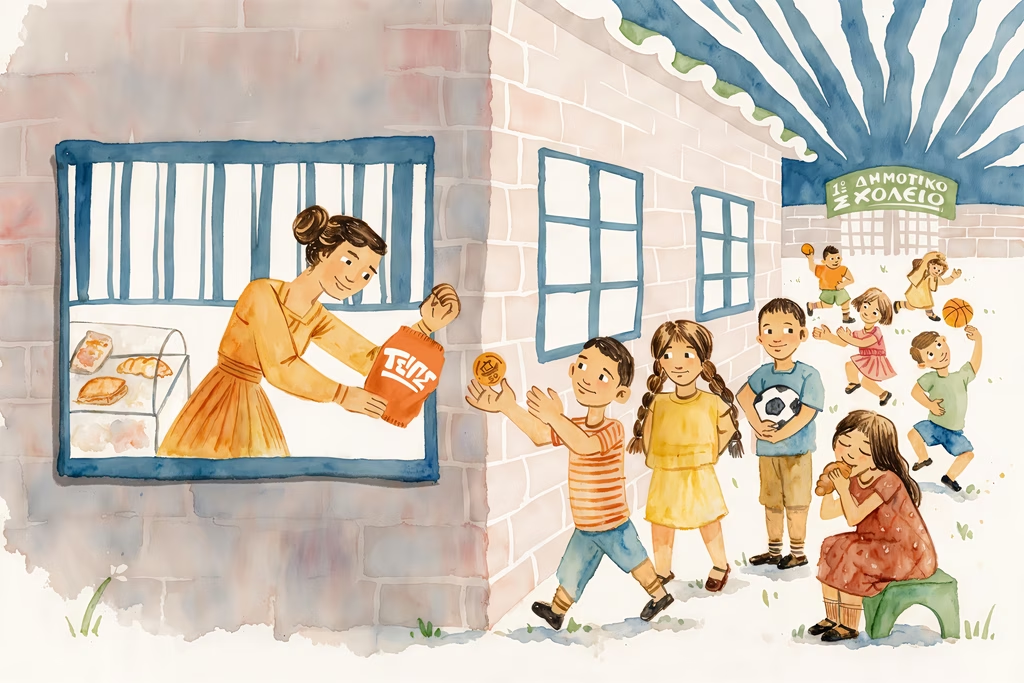
After class, the liberating sound of the bell sent students straight to the school canteen.
A central part of recess, a meeting place for students from every grade and a beloved spot where all the treats were gathered, was the kylikeio, the Greek school canteen.
At the canteen, the revolution of “No more snacks from home!” took place. It led us to guiltily throw our mothers’ sandwiches into the trash and surrender, without a second thought, to the greasy deliciousness of frozen puff pastry—a pastry that left telltale stains of guilt all over our clothes. It was at the canteen that our first crush bought us an orange soda. It was there that the first little conspiracies were hatched, leading to school occupations and student protests.
The canteen was always about much more than food. Yet its basic job was always to fill our stomachs.
And this is where we need to remember how school food began, in an era when a daily snack was not merely something children could take for granted—it seemed more like a midsummer night’s dream. These were difficult times, when students could not concentrate in class or sometimes even attend school because their stomachs were empty and their minds were fixed on a single question: How will I find something to eat?
School meals for students
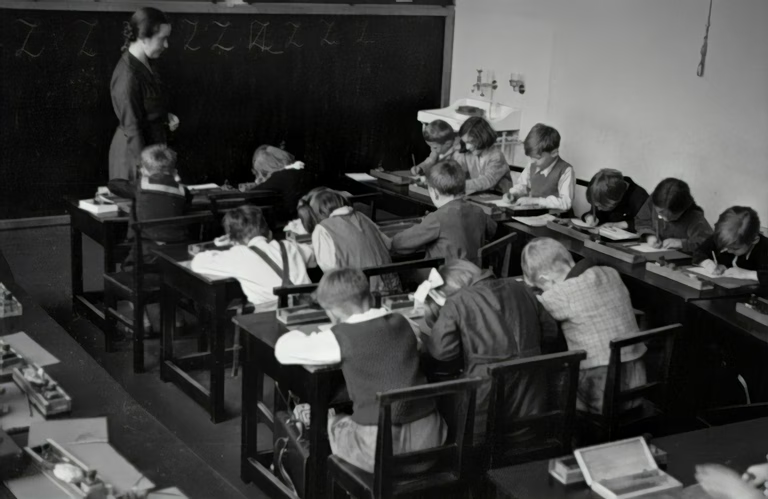
School meals during the dictatorship of Ioannis Metaxas.
The history of school meals follows the modern history of Greece. Interwar poverty, the famine during the German occupation, the difficult postwar reconstruction, economic growth and, decades later, the new wave of poverty brought by the financial crisis are the main reasons authorities repeatedly deemed it necessary to provide food to schoolchildren.
The food and the way it was distributed may have changed, but every such effort has rested on the same basic principle: no child should go hungry, and no hungry child can properly follow a lesson.
The beginning, before the occupation
Although there had been smaller initiatives to provide food to students, 1931 is considered a landmark year on the issue.
Under Education Minister Georgios Papandreou, the Greek state began organizing and funding school meal programs more systematically, allocating two million drachmas. Additional resources came from school funds, fundraising drives, municipalities, local communities, associations and private donations. In September of that same year, schools began distributing stafidopsomo, a traditional Greek raisin bread.
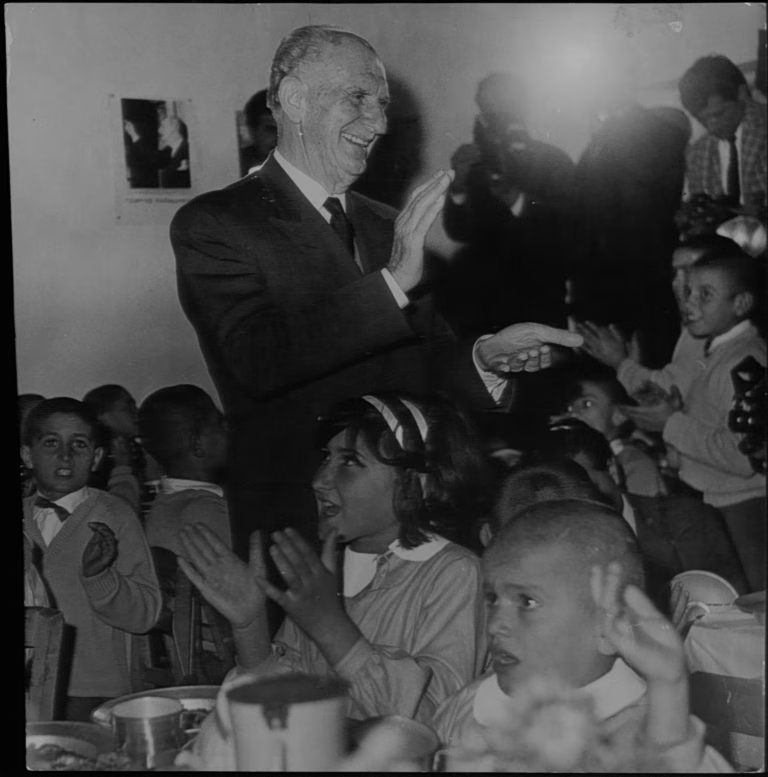
School meal programs were organized systematically under Education Minister Georgios Papandreou.
This was not simply an act of charity. It was directly connected to school hygiene, tuberculosis prevention and improving children’s academic performance. Priority was given to students from poor families, orphans, children showing signs of malnutrition or living in difficult family circumstances, and, naturally, children who lived far from school. In those days, many students walked for miles simply to make it to the classroom.
So what did these school meals consist of?
Nothing spectacular—but nothing insignificant, either.
They could include a morning drink such as milk with bread, cocoa or tea, as well as soup with rice or vermicelli, rice pudding, cheese, jam and fruit. Where the necessary facilities existed, cooked meals were served, including legumes, pasta, vegetables, potatoes, meat or cod.
Don’t picture generous portions, or even perfect consistency. It was whatever could be provided at the time: a little bread and milk, or watery soup with a piece of meat—just enough to fool hunger and keep children from collapsing beneath their desks.
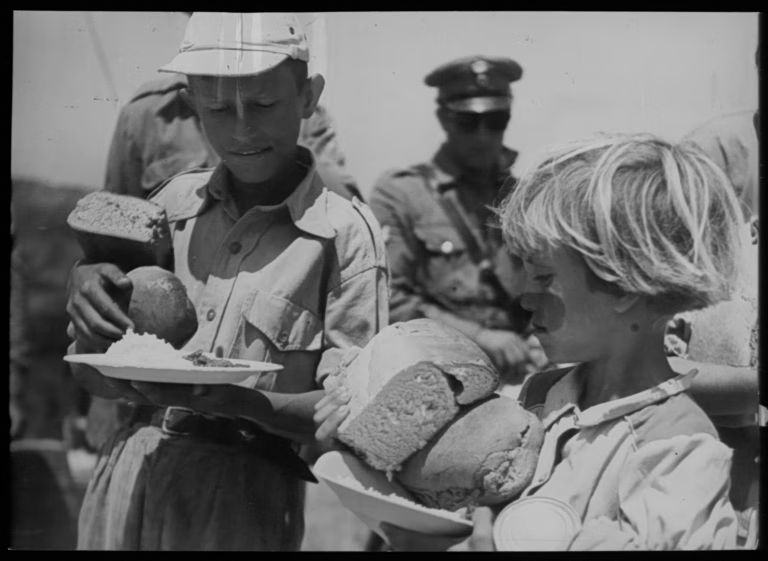
A little bread and whatever else was available, just enough to fill the students’ empty stomachs—and often those of their families, too.
In 1939, the system acquired a more organized structure with the establishment of the Central Committee for Student Meals. During the 1939-40 school year, meal programs operated in 2,484 elementary schools, serving 97,134 students—nearly 20% of the children attending those schools.
The numbers offer a glimpse of the country’s economic devastation: deprivation was making not only progress but basic survival difficult.
The metal mess tins of the occupation
The war disrupted the organized operation of the school meal system. Very soon, however, the need returned on a vastly greater scale.
Food requisitions, the Allied blockade, the collapse of transportation and runaway inflation led to the Great Famine of Greece. Particularly during the winter of 1941-42, children arrived at school exhausted, fainted in classrooms or abandoned their education altogether.
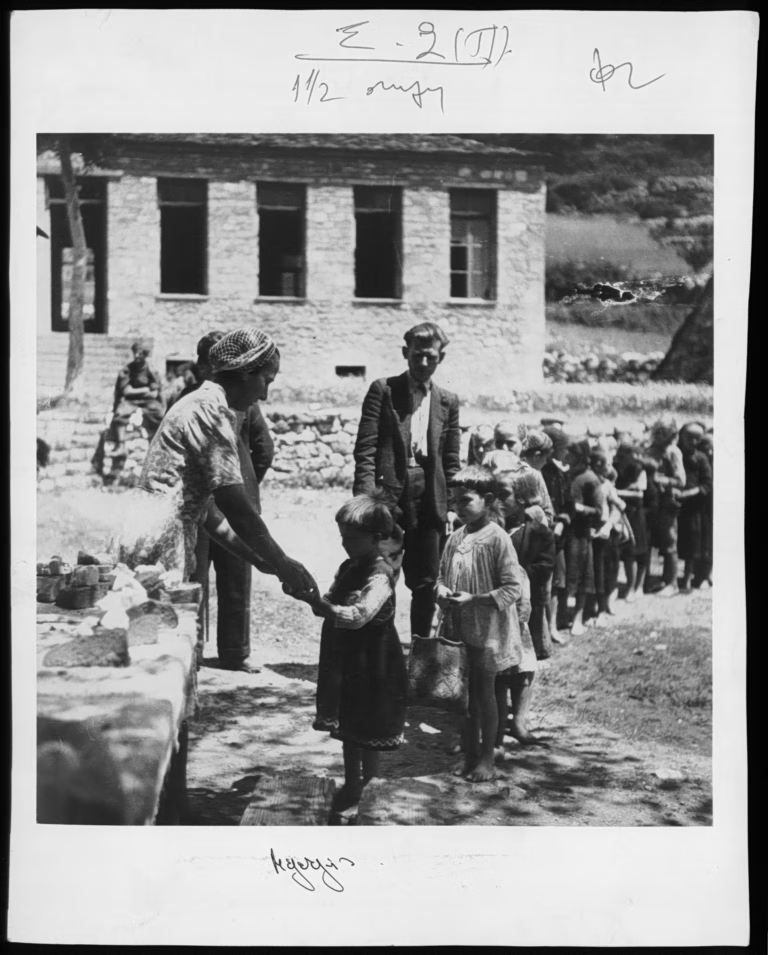
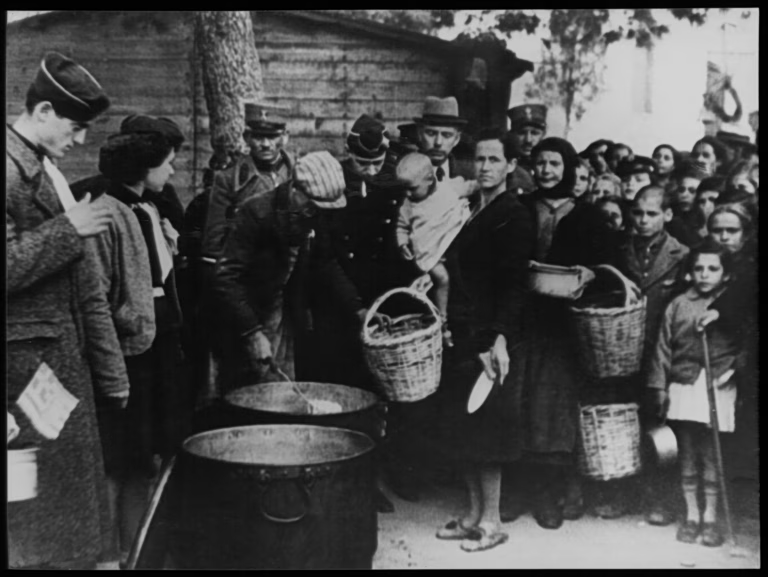
School meals during the German occupation.
Their feeding was organized through a network that included the Hellenic and International Red Cross, municipalities, parishes, teachers, local committees and volunteers. Schools became places where food was prepared and distributed.
Children waited holding a tin can, a small cooking pot or a karavana—a metal mess tin used for receiving food—to collect a little soup, legumes, cornmeal, milk, raisins or glucose, whatever supplies happened to make available.
Many children did not eat their portion at school. Instead, they carried it home to share with their parents and siblings.
The school meal became one of the main reasons some children continued showing up in class, keeping schools themselves barely alive. Learning had become secondary. What mattered was keeping children on their feet and helping them emerge from the enormous black hole that had swallowed everything resembling normal life.
The postwar generation: powdered milk and yellow cheese
Liberation did not automatically bring an end to hunger.
Greece emerged from the war with destroyed infrastructure, limited production and thousands of families without adequate incomes. In 1946, school meals once again acquired an institutional framework. At first, the main offering was a morning drink. In 1947-48, cheese was added, followed by raisin bread in 1949.
International aid brought powdered milk, butter, yellow cheese and flour into Greek schools—foods that would become indelibly associated with the memories of an entire generation.
Teachers, school cleaners, volunteer mothers and often the children themselves prepared the milk in huge pots. Some carried water and firewood; others lit the fire, stirred the milk in enormous cauldrons or distributed the bread.
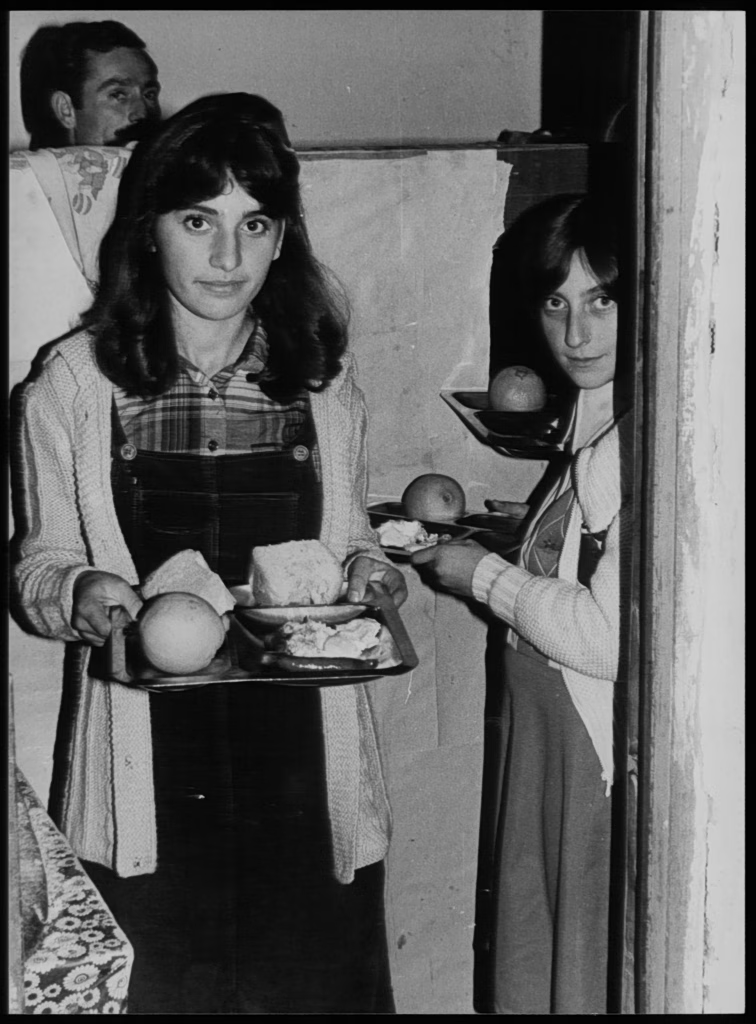
Over the years, after Liberation and the country’s reconstruction, school meals became more varied.
In 1964, a plan was drawn up to provide free food to hundreds of thousands of children, and by 1966 school meal programs had expanded to almost all elementary schools, though not always in the same form. In some places, cooked meals were served; elsewhere, food was distributed or families received a small financial allowance.
As living conditions improved, traditional school meal programs gradually lost their mass character. By the mid-1970s, the cooking cauldron and metal cup had largely disappeared from the everyday life of most schools.
The return of school meals
The issue of child hunger returned in the early 2010s.
The economic crisis, unemployment and the steep decline in household incomes once again confronted teachers with children arriving at school on empty stomachs. Municipalities, social organizations and charitable foundations developed feeding programs before government intervention took on a more systematic form.
The modern School Meals program was established in 2017, and since 2018 its administration has been assigned to OPEKA, Greece’s Organization for Welfare Benefits and Social Solidarity.
This time, there were no giant cauldrons. Instead, children received hot meals in individual packages, prepared and transported by catering companies selected through public tenders.
During the 2025-26 school year, the program covers 1,918 elementary schools in 153 municipalities and provides 231,062 hot meals every school day. According to Greece’s Ministry of Social Cohesion and Family, that represents approximately 45% of the country’s elementary schools and 47% of elementary-school students.
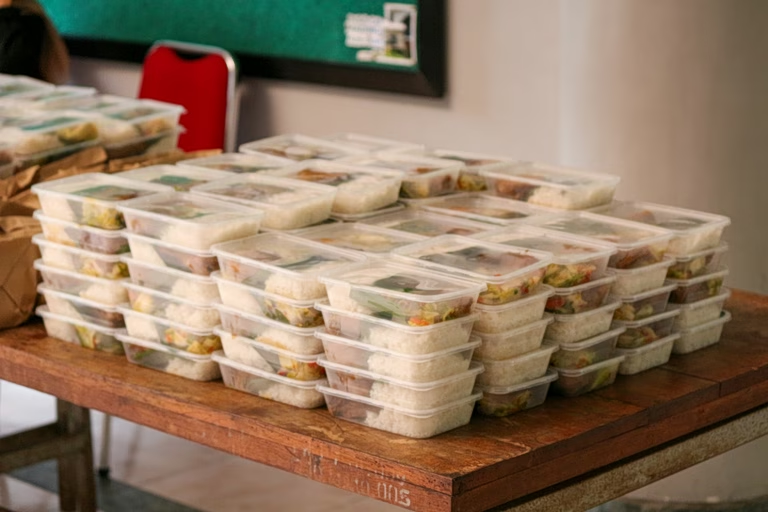
The meals now served in schools follow the principles of the Mediterranean diet.
At participating schools, food is provided to all students whose parents consent. This means children from financially struggling families are not singled out, reducing the risk of stigma.
The menu follows the basic principles of the Mediterranean diet and includes legumes, vegetables, pasta or rice, chicken, meat and fish.
This brief journey through history makes one thing clear: food was—and remains—a basic prerequisite for every child to be able to attend class, concentrate and stand on equal footing with their classmates.
For some of us, hunger is an unfamiliar word. Something that has never touched us.
But if we open our eyes and look around, we discover that it has never disappeared.
And even if some children are no longer going hungry, we cannot claim that all children have access to good-quality ingredients, healthy choices or food that nourishes both body and mind.
Enter the school canteen
The school canteen, of course, was not created to combat hunger, nor did it appear in a particular year following a government decree.
It gradually became part of school life as Greek families themselves changed.
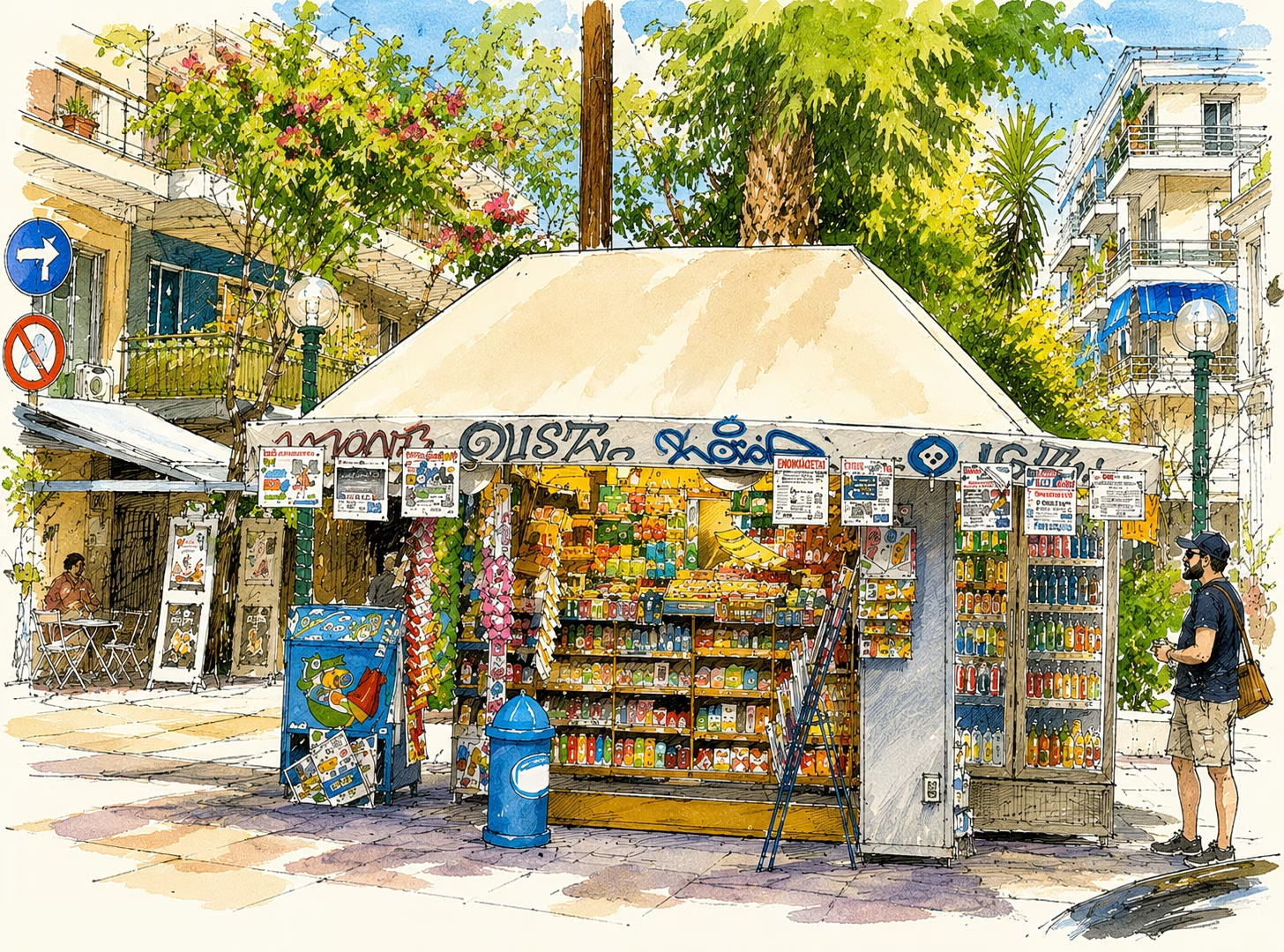
Children began receiving their first small allowance. Schools grew larger. Cities filled with students. And somewhere in that beloved schoolyard, a little window opened, initially selling koulouri—the ring-shaped sesame bread associated with Thessaloniki—along with cheese, milk, raisin bread, chocolate bars and nuts such as roasted pumpkin seeds and stragalia, crunchy roasted chickpeas.
At first, it wasn’t even a canteen in the form we know today.
In large schools, secondary schools, boarding schools and private educational institutions, it might be a table in a hallway, a makeshift shop or even a cupboard whose keys were held by someone who opened it at recess.
From the 1960s and ’70s onward, however, things began changing quickly.
Large school complexes multiplied, traditional school meal programs receded, and the Greek market filled with soft drinks, cookies, chocolates and individually packaged foods. The “cupboard” began transforming into a proper little shop.
Not everywhere, though.
Many small schools in rural areas never had a canteen, either because there was no space or because their small student populations could not financially support such a business. Even today, it cannot be assumed that every school has a canteen.
The cheese pie of the ’80s
And so we arrive at the canteen remembered by those who were children in the 1980s.
By today’s standards, it offered a rather limited selection. In our eyes, though, it was thrilling.
Koulouri Thessalonikis, cold sandwiches with cheese or salami, toast and, of course, the undisputed queen of recess: the tyropita, or Greek cheese pie.
That square, greasy puff pastry could single-handedly destroy any attempt by our mothers to send us to school with a respectable homemade snack.
The cheese pie was the great discovery of childhood.
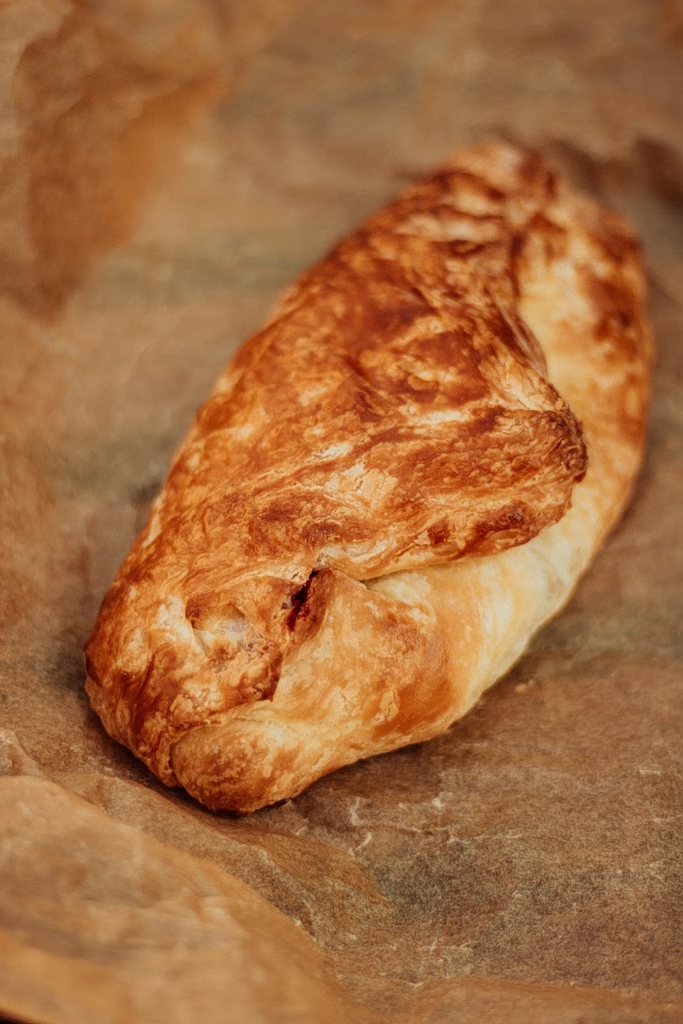
The cheese pie—the snack that always accompanied our school recesses.
Alongside it were juices, chocolate milk, lemonade and, naturally, the sweet kingdom of pocket money: candies, chewing gum, wafer bars, cookies and chocolate.
Potato chips and garidakia, Greece’s puffed corn snacks, had already begun appearing, but they had not yet conquered every available inch of the display case.
But who was actually running these canteens?
Most often, the job fell to the school cleaners, who also served as school caretakers. In some schools, they were even provided with a small home on the premises so they could live there with their families and keep an eye on the school at all times.
These people, with their many responsibilities, were members of the school community and an integral part of our student lives.
They knew many students by their first names. They learned their habits. They could tell when someone didn’t have money that day to buy something and would quietly give them a snack anyway, keeping a little notebook to record what was owed—a notebook they did not always bother to check.
Perhaps that is why so many of us have such a sweet memory of the school canteen.
Because we knew that we would find there not only delicious little indulgences that made us happy, but also a grown-up we could turn to whenever we needed one.
The glorious school canteen of the ’90s
This is where things really got out of hand—and those of us who lived through it know exactly what that means.
In 1990s Greece, the country was enthusiastically discovering the excesses of consumer culture, and the school canteen could hardly remain untouched.
The modest display case exploded with colors, bags and brightly packaged products.
Alongside the cheese pie came ham-and-cheese pies, sausage pies, pizzas, chocolate croissants, cakes, doughnuts, wafer bars, cookies, chocolates and ice cream.
Potato chips and puffed corn snacks practically became a food group of their own, while the refrigerators filled with soft drinks and the schoolyard filled with children endlessly sucking carbonation through plastic straws.
We didn’t go to the canteen because we were hungry. We went because we were desperate for a treat.
And, of course, behind all that excess and abandon was the television, whose advertisements encouraged us to try every brightly colored piece of junk food that caught our eye.
Everything seemed to point toward childhood obesity and poor nutrition that would eventually damage our health.
But nobody seemed particularly bothered.
After all, our parents were also at the mercy of overconsumption, fast food and snacks that had arrived to expertly patch the small and large emotional holes in their lives.
When the other bells started ringing
Eventually, though, the time came to pay the bill.
Childhood obesity and the excessive consumption of sugar, salt and processed foods opened a major debate about what all these products were doing inside schools.
From the 2000s onward, the rules began to tighten. In 2013, legislation significantly restricted many of the products that students had until then regarded as practically an inalienable right.
Water, fruit, dairy products, koulouri, simple baked goods and more carefully prepared sandwiches began gaining institutional ground against excessively sweet, salty and fatty snacks.
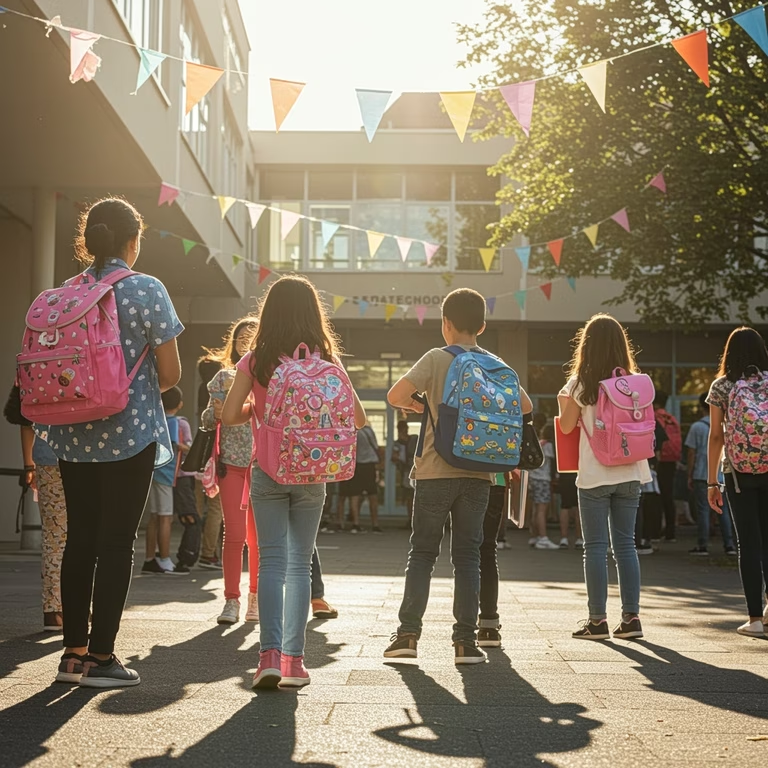
The new school year begins with specific rules governing foods sold in school canteens.
And beginning with the current 2026-27 school year, the rules are becoming even more specific.
It is no longer enough to determine whether a food is, for example, a cereal bar or a baked product. There are now specific limits for portion size, sugars, total fat, saturated and trans fats, and sodium.
What does that mean in practice?
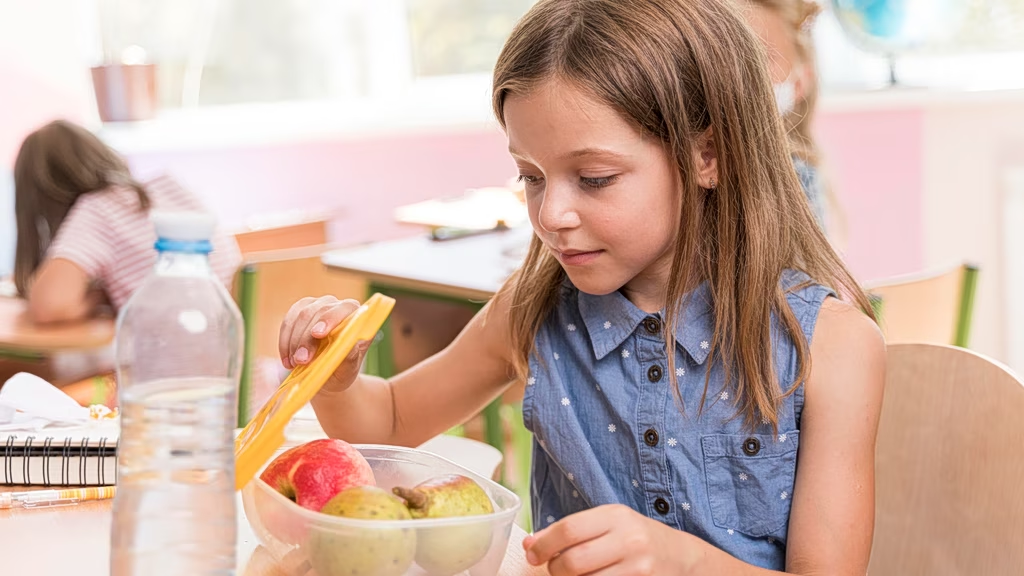
Today’s school canteen can offer fruit and fruit salads, milk, yogurt, kefir, rice pudding, koulouri, raisin bread, moustokoulouro (a traditional Greek cookie made with grape must), pasteli (a sesame-and-honey bar), certain types of cookies, cheese pie, vegetable pie, pizza without processed meats, and sandwiches containing cheese, egg, tuna, chicken or vegetables.
But say goodbye to soft drinks, energy drinks, potato chips and puffed corn snacks, chocolates, candies, chewing gum, ice cream and frozen fruit slushies.
Processed meats, sausage pies, ham-and-cheese pies, and pizzas topped with ham and bacon are also off the list.
If a 1990s student were suddenly teleported into a 2026 school canteen, they would probably assume they had been sent there as punishment.
The school canteen today
Today’s school canteen, however, is not simply a “healthier” version of the old one.
The entire perception of its role has changed.
A child spends a very large part of the day at school. Whatever they see every day, whatever they can easily buy and whatever their friends are eating inevitably becomes part of their food education.
Of course, let’s not kid ourselves.
No child is going to fall in love with an apple simply because the government has decided it is better than a chocolate bar.
And healthy eating is not taught through prohibitions.
If we want children to make better choices, those choices have to be tasty, fresh, affordable and appealing enough for children to choose them themselves.
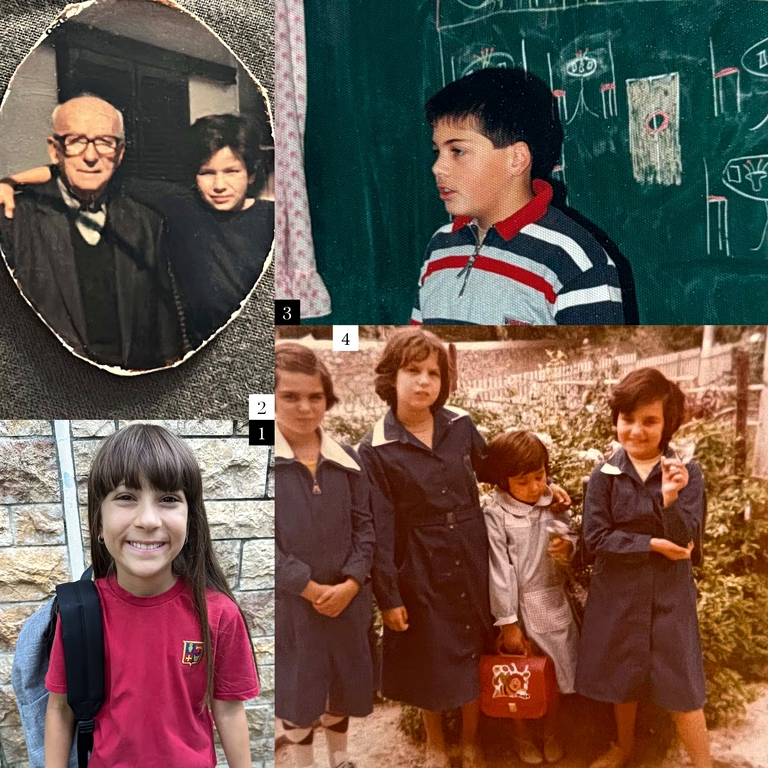
1. Mariza Gezerli 2. Marios Anagnostopoulos with his “sponsor” and grandfather, Thomas 3. Vassilis Galopoulos 4. The Mastora sisters on the right and the Morfoniou cousins on the left
Perhaps this is where the real role of the modern school canteen lies.
It should not erase the joy of recess or turn snack time into a compulsory nutrition lesson.
The pocket money tucked into a little wallet, the line at the counter, the “I’m buying” and the bite of food split between two friends are all pieces of school life—and it is worth keeping them.
After all, the memories we have of school canteens are wonderful. They are always a subject of conversation that brings happiness and laughter.
And school, always and forever, should exist not only for education, but for joy as well.
To close, we wanted to share some of our own feelings, memories and… mischief from the school canteens of our childhood.
So we asked people our age, as well as those older and younger than us, to see how much the relationship between students and their canteen snacks has changed over the years.
“My mother, Kyriaki Charalambous, ran the canteen at a school in Holargos [a northern suburb of Athens]. I remember that she sold everything from chocolates to roasted chickpeas. She even kept a notebook for credit purchases and always made sure to set something aside for anyone who didn’t have pocket money to buy a snack,” recalls my mother, Evangelia Mastora (photo 7).
As for us, sisters Dora and Dimitra Mastora (pictured in photo 4 with our cousins), we did not often buy anything from the canteen because Mom insisted on giving us a snack from home.
Many times, though, we threw it in the trash and used our pocket money to indulge in our little sins!
One such “sin” remains unforgettable to Vassilis Galopoulos (photo 3):
“Nothing could compare with the dirty [vrómiko] food at the canteen in Drama. Lagana bread, sausage and fried potatoes with plenty of oregano. It was magical.”
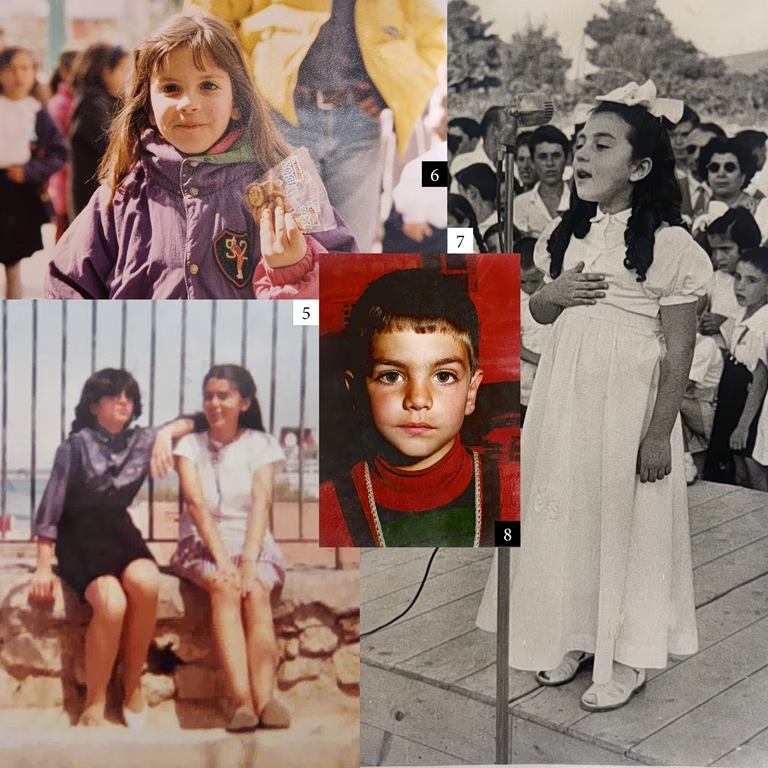
5. Lena Igoumenaki with her friend Chara Afentaki 6. Despoina Dima 7. Evangelia Mastora 8. Lavrentis Choraitis
In Crete, where Lena Igoumenaki grew up (pictured in photo 5 with her friend Chara), the village bakery did the job of the school canteen.
“At the elementary school in Apostoloi Pediados, where I grew up, we didn’t have a canteen. We brought olives or cheese from home and went to the bakery during recess. Mrs. Despinio would sell us slices of bread that she baked especially for the schoolchildren.”
In Gargalianoi, where Lavrentis Choraitis grew up (photo 8), the mischief happened with the neighbor’s blessing.
“At the school in Gargalianoi, where I grew up, there was no canteen. But a neighbor in the backyard would open her window and sell us puffed corn snacks and potato chips through it.”
Marios Anagnostopoulos (photo 2), meanwhile, relied on his muscles to make sure he had enough money for snacks.
“In elementary school in Kypseli [a neighborhood of Athens], I used to arm-wrestle with the other kids. I knew I was stronger, so I would take their money and use it to buy more things from the canteen. When my mother found out, there was hell to pay at home.”
For Despoina Dima (photo 6), the canteen remains an unfulfilled childhood desire. As she confessed to us, she always wanted to buy something, but she was short and other children would cut in front of her in line.
Finally, the youngest member of the group, Mariza Gezerli, gave us the perspective of a student today, navigating the healthier choices offered by modern school canteens:
“We have a nice canteen at school, but I don’t buy anything because I don’t want to waste recess time. Except during strawberry season, when they have lots of fresh ones.”