 Μake us preferred on Google
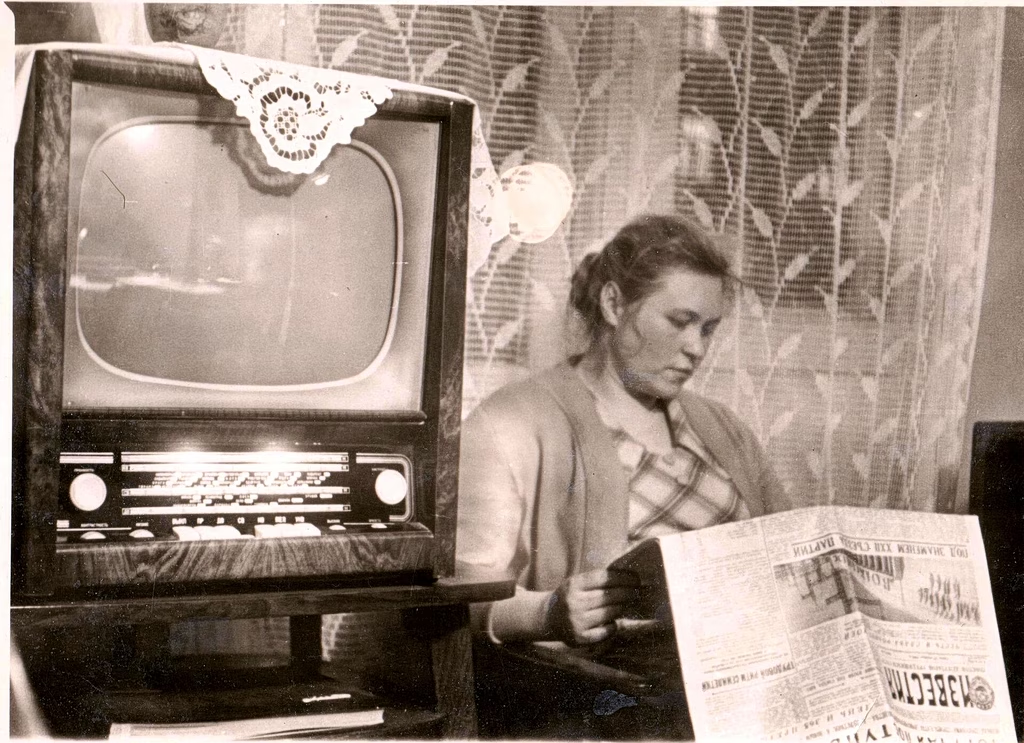
 When Soviet citizens turned on their televisions and found the Swan Lake ballet playing on an endless loop, or heard classical music on the radio, they already knew that the country’s history was shifting behind the closed doors of the Kremlin.
The sudden disappearance of regular programming was the unofficial signal that official news had frozen.
In a country where the state tightly controlled the flow of information, the gap between an event and its official announcement was filled by the institutional hush of string instruments.
It might have been the death of a leader. It might have been an internal power struggle. In August 1991, it was a coup.
Classical music lent the necessary gravity to the crisis while buying time for the Politburo, allowing the leadership to settle internal power balances before handing the official line to TASS, the Soviet Union’s state news agency.
Reports in the historical archives of “ΤΟ ΒΗΜΑ” and “TA NEA” generally focus on regular programming being replaced by classical music.
However, as the historical record shows, the specific choice of Swan Lake had a very practical basis. Tchaikovsky’s ballet was especially useful because it was a ready made, pre-recorded Bolshoi production lasting nearly three hours, which could be played on a continuous loop. This let the television channel fill hours of airtime without needing a live news feed, journalistic commentary, or technicians in the control room.
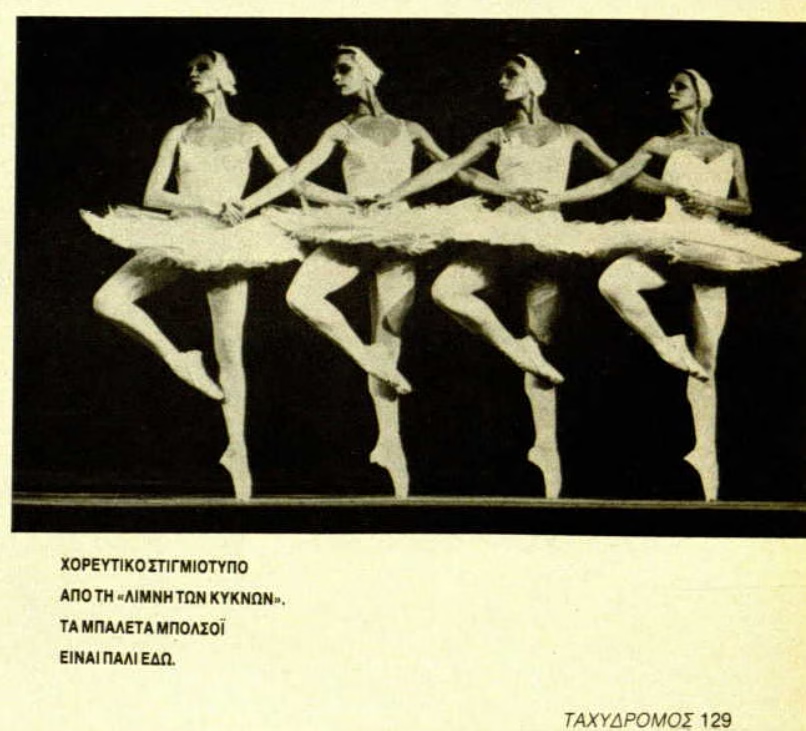
Caption reads: “Snapshot of dancers from “Swan Lake”, The Bolshoi Theatre shows are here once again”. Source: “TACHYDROMOS,” 6.27.1991, Historical Archive “TO VIMA” | “TA NEA”
A familiar pattern
In the early 1980s, a period that became known as the “era of gerontocracy,” the Soviet Union was marked by the deaths of three leaders in succession.
By March 1985, the pattern was so familiar that foreign correspondents in Moscow no longer even waited for the official announcement.
A telling example is a report from “TA NEA” dated March 11, 1985:
“American officials confirmed yesterday the sudden interruption of a high level Soviet delegation’s visit to the United States, while in Moscow, radio stations began broadcasting classical music in the early morning hours instead of their scheduled programs. In the past, such changes to radio programming had occurred just hours before the deaths of Soviet leaders.”
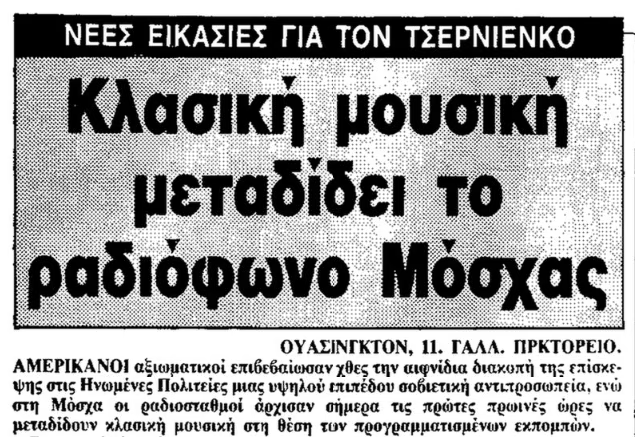
Title Reads: “The Moscow radio is transmitting classical music”. Subtitle: “American officers confirmed yesterday the sudden interruption to the visit of the United States of a high-level Soviet delegation, while today in Moscow the radio stations began to transmit classical music in place of scheduled broadcasts in the early morning hours. Source: TA NEA,” 3.11.1985, Historical Archive “TO VIMA” | “TA NEA
The following day, the newspaper wrote:
“In Moscow, overcast yesterday with temperatures six degrees below zero, the ‘shock’ began in the morning for those who turned on the radio and heard classical music instead of the usual programming. Western correspondents in the Soviet capital, drawing on past experience, began wiring this first sign to their agencies and newspapers.”
Konstantin Chernenko was 73 at the time, seriously ill, and had made very few public appearances in the preceding months.
Before any official announcement, the movements of Soviet officials and the sudden change in radio programming had already fueled speculation in Washington. One American official went so far as to say, speaking anonymously, that the delegation’s sudden return suggested Chernenko was already dead or about to die within hours.
A string of leaders’ deaths
This familiar scenario had begun two leaders earlier, with the death of Leonid Brezhnev in November 1982.
The mood described by “TA NEA” on November 12 was that of a state that had moved entirely into mourning:
“In a heavy atmosphere of mourning, but with confidence in the stability of the political direction set by the new Brezhnev era leadership, the Soviet Union has been bidding farewell to Leonid Ilyich Brezhnev since yesterday with displays of grief, flags at half mast draped in black ribbons on every public building, and feverish preparations for his funeral, to be held Monday in Red Square.”
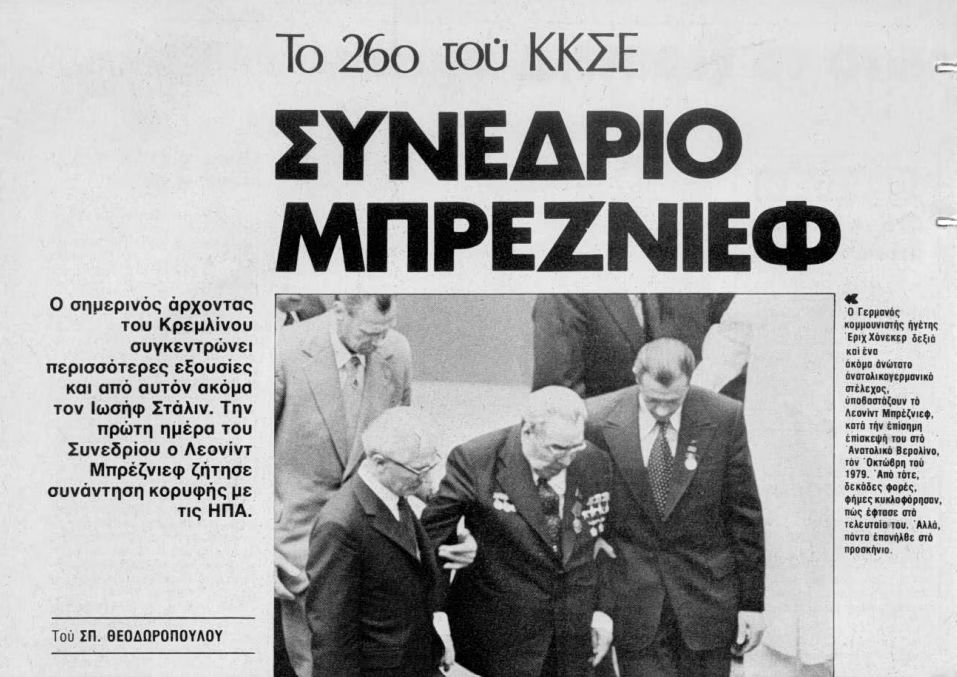
Title reads: “The 26th Brezhnev Congress of the USSR. Left paragraph reads: “The present master of the Kremlin has gathered to himself more powers than even those of Joseph Stalin. During the first day of the congress, Leonid Brezhnev asked for a summit with the US. Source: “TACHYDROMOS,” 2.26.1981, Historical Archive “TO VIMA” | “TA NEA”. “TACHYDROMOS,” 2.26.1981, Historical Archive “TO VIMA” | “TA NEA”
The announcement of his death came the next day. Brezhnev had died at 8:19 in the morning on a Wednesday, and the Central Committee officially announced his death on Thursday.
In a system where information about the leadership’s condition remained tightly controlled, the gap before the official announcement carried its own weight.
A delayed announcement of death
Fifteen months later, his successor, Yuri Andropov, also died.
“TA NEA” of February 11, 1984, reported:
“On Tuesday the Soviet people will bury, amid nationwide mourning, their leader Yuri Vladimirovich Andropov. […] A four day period of mourning has been declared across the USSR, and the process to select a new leader has already begun. The standard procedure first involves choosing, and formally ‘recommending,’ the new leader from among the 13 members of the Politburo, followed by an emergency plenary session of the Central Committee to approve the nominee.
Fifteen months ago, following Brezhnev’s death, this process was completed 48 hours after his death was announced. It is possible, however, that part of the selection process and the related maneuvering had already taken place during the 22 hours between Andropov’s death and its announcement, or even within the current 24 hour period.”
On the streets of Moscow, though, his health was not exactly a secret.
“He hadn’t appeared on television in a long time, and anyone could guess what was about to happen,” one Muscovite told foreign journalists.
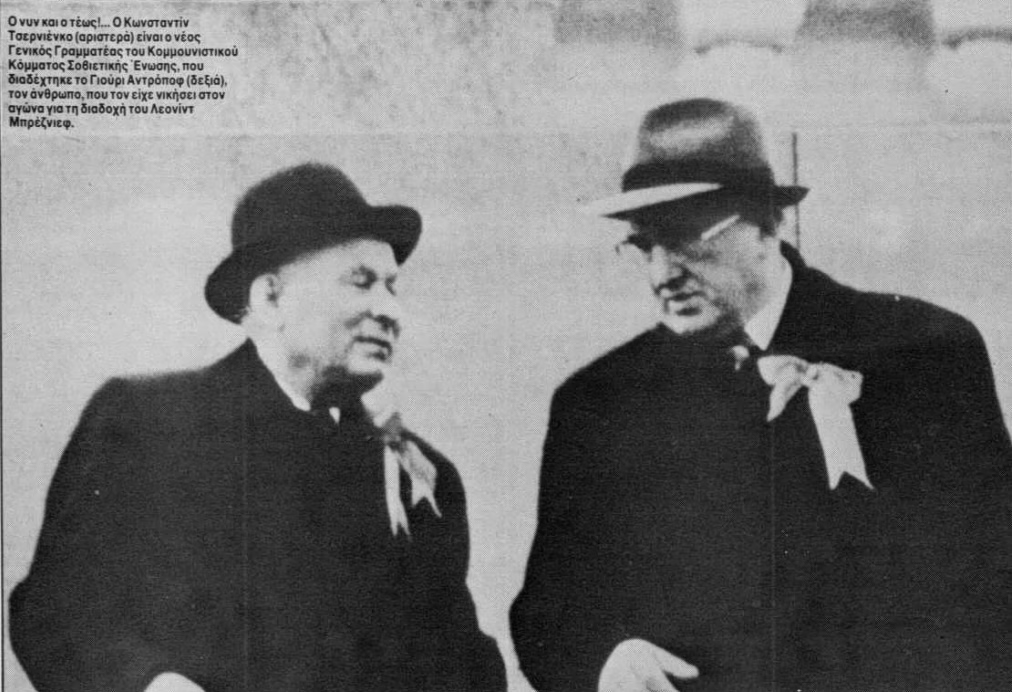
Caption reads: The former and the current!… Konstantine Chernenko (left) is the new General Secretary of the Communist Party of the Soviet Union, who succeeded Yuri Andropov (right), the man who won the succession struggle after Leonid Brezhnev’s death. Source: “TACHYDROMOS,” 2.16.1984, Historical Archive “TO VIMA” | “TA NEA”
From leaders’ deaths to a coup
Six years later, in August 1991, the ballet routine returned suddenly. Only this time, no Soviet leader had died.
On August 19, a group of senior officials attempted to overthrow Mikhail Gorbachev. The Soviet president was isolated in Crimea, and the self proclaimed “State Committee for the State of Emergency” seized power, placing the news under tight control.
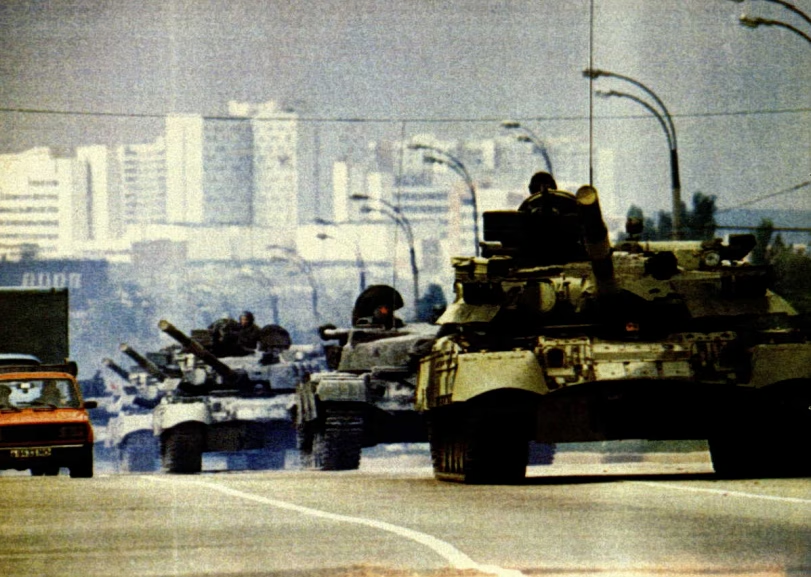
“Tanks in the streets of Moscow.” Source: “TACHYDROMOS,” 8.21.1991, Historical Archive “TO VIMA” | “TA NEA”
A report in “TA NEA” on August 21, 1991, captured what television viewers were seeing:
“Ballet and classical music were on the Soviet channel on the first day of the coup! Puppet shows were on the second! Things are improving…”
Ballet and classical symphonies had been called into service again, this time against a different political backdrop. Their function, though, remained familiar. The country was in a historic crisis, and real news coverage was being restricted.
The mention of “puppet shows” on the coup’s second day, however, captures just how surreal those days had become. The State Committee for the State of Emergency appeared to be losing control, and television censorship started to break down, shifting from the rigid solemnity of classical music to bizarre choices of entertainment programming.
Trade unions demanded that Gorbachev himself appear on television and address the people. If that did not happen, they warned they would declare his removal unconstitutional.
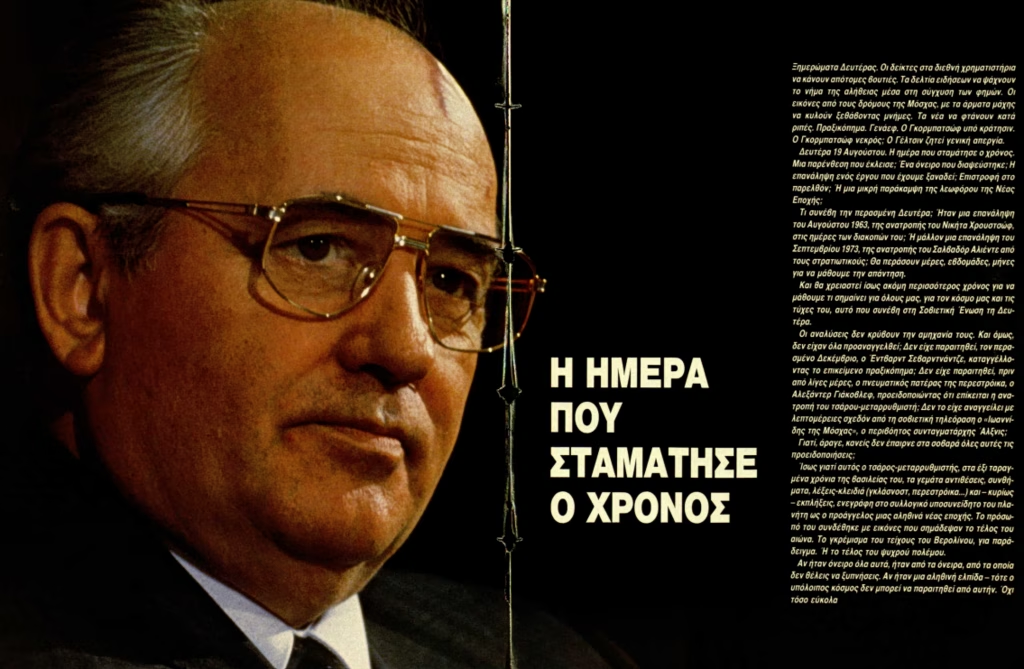
Title reads: “The day that time stopped”. Source: “TACHYDROMOS,” 8.21.1991, Historical Archive “TO VIMA” | “TA NEA”
At the same time, despite the tight grip on the media, information about the clashes and the first deaths was spreading. Makeshift information points appeared in Moscow, illegal newspaper sheets circulated, and the radio station Echo of Moscow broadcast continuously from the building of the Russian Parliament.
When the news came back
Within three days, the coup had collapsed.
At 4 p.m. on August 21, 1991, according to the “TA NEA” timeline, “censorship is abolished and the bans on publishing newspapers are lifted.”
Shortly after: “the banned television and radio stations resumed broadcasting their programs, which had been suspended due to the coup plotters’ ban. Moscow television immediately abandoned the official line it had followed until then and began broadcasting the stunning developments minute by minute. With a broad smile and making no effort to hide his joy, the announcer, having just read out a statement branding the coup plotters as dangerous, said: ‘Forgive me, comrades, but I am very moved.'”
On the night the coup began, ballet and classical music had signaled the freezing of regular news coverage. With its collapse, the news came back. And with it, if only for that moment, came the ability to say on television what was actually happening.