 Μake us preferred on Google
 Morocco plans to increase its hotel capacity by 60,000 beds ahead of the 2030 FIFA World Cup, boosting accommodation availability by around one-fifth as the country prepares to co-host the tournament with Spain and Portugal.
Tourism Minister Fatim-Zahra Ammor said the expansion is part of a broader strategy to use the World Cup as a catalyst for long-term development rather than a one-off event.
“We see the 2030 FIFA World Cup as an accelerator, not an end in itself,” Ammor told Reuters.
Morocco currently has just over 300,000 hotel beds, having added 45,000 over the past four years, according to official data. The planned increase would bring significant additional capacity as the country seeks to attract more international visitors.
NEWSLETTER TABLE TALK
Never miss a story.
Subscribe now.
The most important news & topics every week in your inbox.
The government is investing more than 190 billion dirhams (around $20 billion) in infrastructure projects linked to the tournament, including railways, roads, airports, stadiums and urban developments.
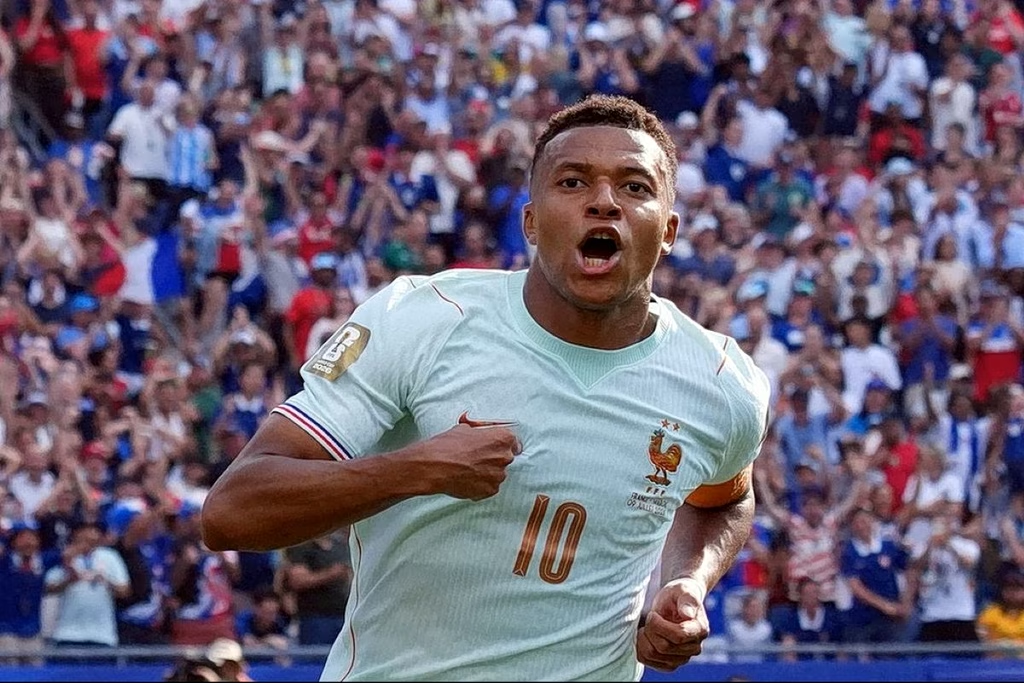
The country has gained international attention following its strong football performances, including becoming the first African and Arab team to reach the World Cup semi-finals in Qatar four years ago. Morocco’s recent quarter-final run has further boosted interest in the country.
Tourism has become a key part of Morocco’s economy, employing hundreds of thousands of people and contributing around 7% of gross domestic product.
Morocco welcomed nearly 20 million tourists last year, making it Africa’s most visited destination, and aims to reach 26 million visitors by 2030.
The government is also seeking to broaden the tourism sector by attracting more visitors from China, the United States and the Middle East through improved air connections.
While destinations such as Marrakech and Agadir remain major tourism centres, officials are looking to promote other cities, including the capital Rabat, as destinations for cultural events, sports and business travel.
“We need to make investments that create lasting value for Moroccan tourism,” Ammor said.
Morocco’s central bank expects tourism revenue to reach a record 161 billion dirhams in 2027, up from 138 billion dirhams in 2025, as the sector continues to expand.