 Μake us preferred on Google
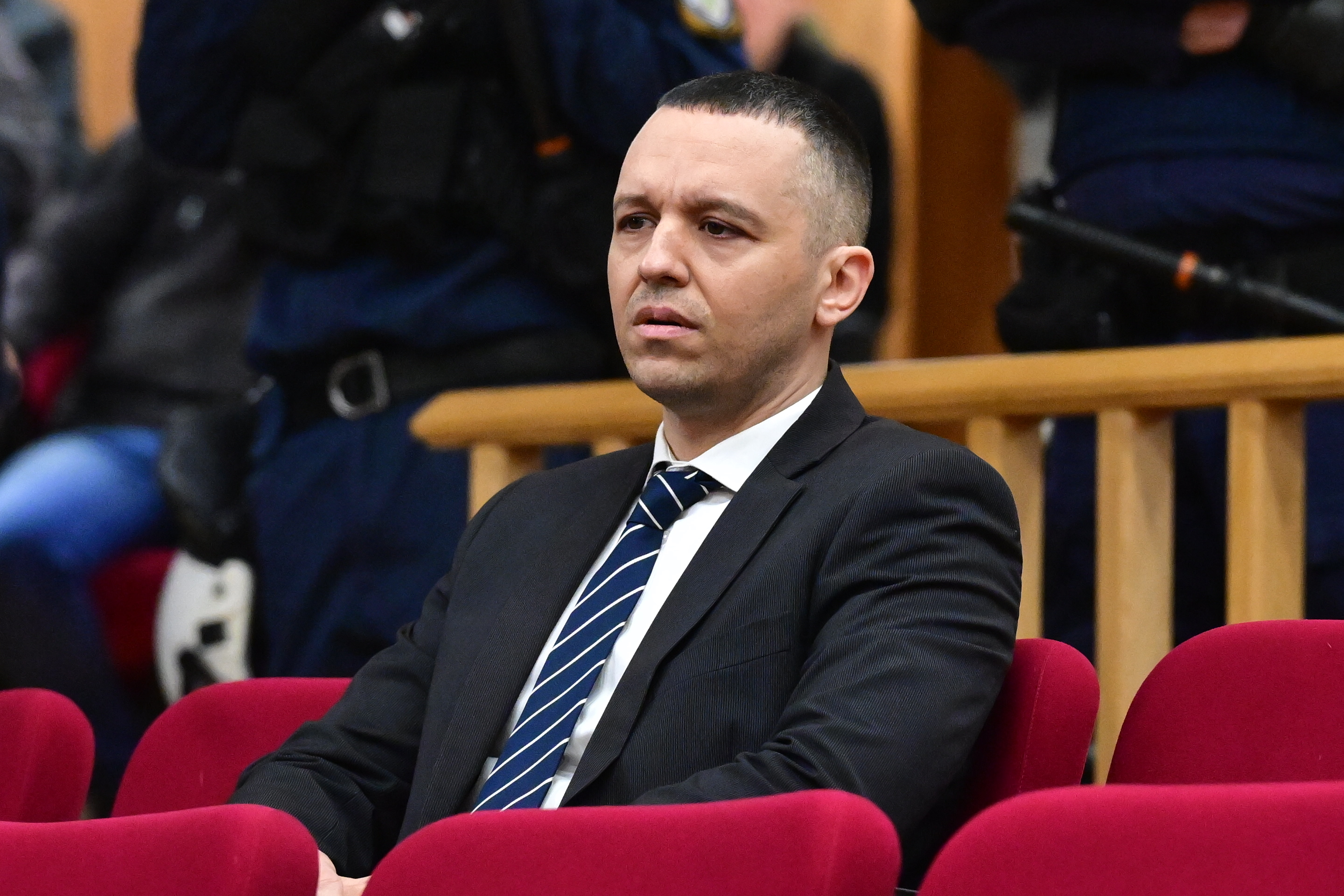
 On Monday morning, Kasidiaris announced his support for Symmaxia Ellinon (Alliance of Greeks), a party whose legal representative is Ioannis Dimitrokallis, a sitting independent MP. In a video posted to YouTube, Kasidiaris said the party was founded in 2025 and that its charter has already been submitted to the Supreme Court, and he claimed it already has an active parliamentary group, a status he argued shields it from being excluded from the elections.
On whether he himself will appear on a ballot, Kasidiaris was noncommittal. He said whether he runs on the party’s list, as an independent candidate in a single district, or through some other arrangement would only become clear once candidacies are formally filed with the Supreme Court. “You’ll find out whether I’m running once the candidate lists are filed,” he said.
The arrangement echoes the one that got the Spartans into Parliament in 2023, a formal leader who is not Kasidiaris, and a public endorsement from Kasidiaris himself. Dimitrokallis is no stranger to that playbook. He was elected to Parliament with the Spartans in 2023. According to reporting he had already taken steps last August to file with the Supreme Court to establish a new party with himself named as its legal representative. Dimitrokallis ties to Kasidiaris run deeper still, dating back to when Kasidiaris was an Athens city councilor. In addition after winning his seat with the Spartans in 2023, he appointed Kasidiaris’s brother as his parliamentary aide.
Why the court is watching so closely this time
Katerina Chondrorizou, a vice president of Greece’s Supreme Court, is already preparing for the task of certifying party lists ahead of the next election, working through every aspect of the relevant legislation. According to judicial sources who spoke to TO BHMA, the review her panel carries out before the next elections will be unlike any before it. Kasidiaris’s move to return to politics, combined with a separate criminal case involving MEP Afroditi Latinopoulou and the possibility that other parties may draw similar scrutiny, has made this round of vetting especially consequential.
What the law allows, and what it does not
Kasidiaris was released from Domokos Prison on September 15, almost 13 years to the day of the 2013 murder of anti fascist rapper Pavlos Fyssas, a killing that led to the criminal case against Golden Dawn. The convicetd far-right leader had said publicly that he intends to run again, pointing to what he described as a broader European shift toward far right politics.
According to Supreme Court sources, the 2023 law governing candidate eligibility, together with the Supreme Court’s own 2023 rulings on that year’s elections, still bars Kasidiaris from two things: forming a party outright, and directing one from behind the scenes while someone else holds the formal title. Either arrangement would have to be established during the court’s pre election review, the sources said, not afterward.
The law, however, does not preclude Kasidiaris from running as an independent, since he retains his full political rights, meaning the right to vote and the right to stand for office. According to reporting by TO BHMA sources were clear that no legal mechanism exists to strip those rights in his case. So the real question raised by the Symmaxia Ellinon announcement is whether that arrangement, or whatever path he ultimately takes, survives the Supreme Court’s review without being found to be exactly the hidden leadership structure the law forbids.
Why the Spartans still haunt the court
The precedent working against him is well known inside the judiciary. In the 2023 elections, a previously obscure party called the Spartans flew under the Supreme Court’s radar and entered Parliament, despite Kasidiaris publicly declaring his support for the party immediately after it cleared the court’s review. Later legal challenges, both criminal proceedings and a case before Greece’s Electoral Court, failed to remove the Spartans from Parliament. The Electoral Court explicitly found that Kasidiaris had been behind the party, but the only consequence was the loss of three parliamentary seats tied to formal objections that had been filed.
It is a precedent, judicial sources said, that no one at the Supreme Court wants to see repeated. That is part of why this round of certification is expected to be so exacting.
A parallel case: the Latinopoulou investigation
The court’s heightened scrutiny will not be limited to Kasidiaris. Sources said particular attention will go to any new parties that emerge before the election, as well as to parties that have already filed founding documents with the Supreme Court, all of which will be examined closely for any hidden involvement by Kasidiaris or anyone else barred from running.
Also under the microscope will be irregularities within party formations generally, a concern sharpened by the case of Afroditi Latinopoulou, an MEP and leader of the far right populist party Foni Logikis. The European Parliament voted this month to waive Latinopoulou’s immunity, clearing the way for Greek prosecutors to pursue allegations that a significant number of the signatures submitted when Foni Logikis was founded were forged or fictitious, in violation of a Greek law requiring at least 200 verified signatures to establish a political party. If those allegations hold up, prosecutors have argued, the public funding Foni Logikis received and its participation in the 2023 national elections and the 2024 European elections would have been unlawful. The Athens Prosecutor’s Office is now handling the case directly, and Latinopoulou is expected to be questioned. Judicial sources believe that if she is referred to trial, the case is unlikely to be resolved before the next national elections, though those same sources do not consider it likely that a pending case would by itself disqualify her from running again. As with Kasidiaris, the final word rests with the Supreme Court.
A wider net for every party
Judicial sources, talking to TO BHMA, emphasized one further change that expands the scope of the court’s review considerably. Under the 2023 law, any party, whether long established or newly formed, can now submit evidence to the Supreme Court concerning a rival party’s eligibility, and the court itself can open an investigation on its own initiative without waiting for a complaint. The practical effect, as the sources put it, is a far finer sieve than the one that let the Spartans through in 2023.
Source: TO BHMA