 Μake us preferred on Google
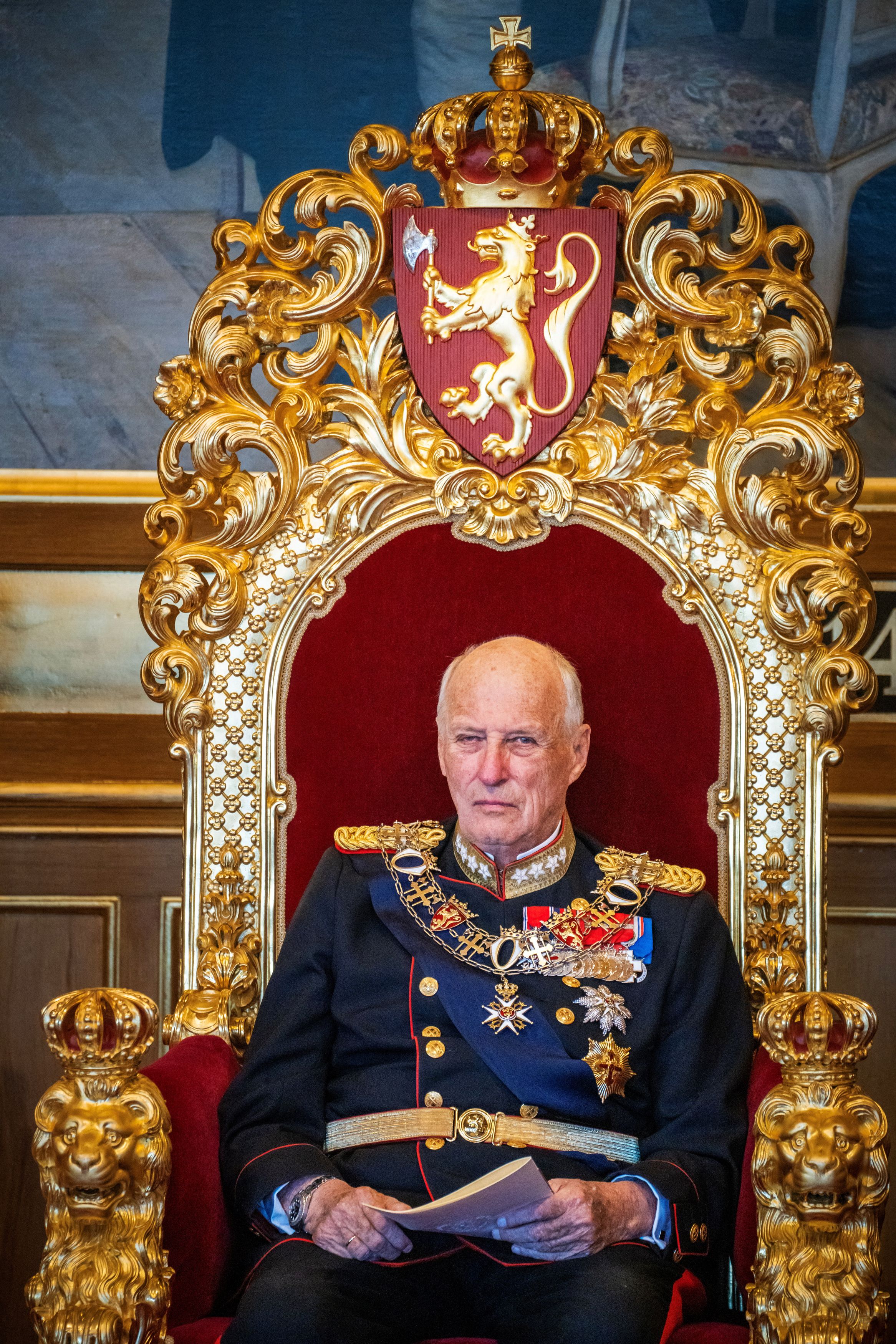
 Norway’s King Harald V has died at 89, roughly a week after being hospitalized for a rare blood disorder. The royal palace in Oslo said he passed away peacefully early Friday morning at the national hospital, and the palace’s flag has been lowered to half-mast. In the day before his death, royal family members visited him, and members of the public gathered at the palace to lay flowers. Harald, the first Norwegian-born king since the 14th century, is succeeded by his son, now King Haakon.

Oslo 20260828. Several people have laid flowers in front of the Royal Palace Square, in connection with the king’s health condition having worsened, on the day of the death of King Harald V, in Oslo, Norway. Ole Berg-Rusten/NTB/via REUTERS
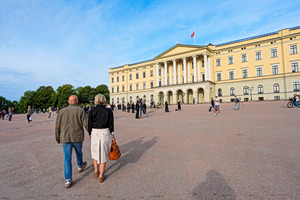
Oslo 20260828. The royal flag at the Palace is flown at half-mast following the death of King Harald V, in Oslo, Norway. Lise Aserud/NTB/via REUTERS
Over 35 years on the throne, Harald built a reputation as a popular, reform-minded monarch who modernized the institution, broke royal tradition by marrying a commoner, and served as a steadying presence during the country’s hardest moments. Royal watchers describe him as approachable and widely respected, often calling him the nation’s “grandfather” or “the people’s king,” a nickname also carried by his father, King Olav V.
After the 2011 Oslo bombing and Utøya island attacks, Harald urged Norwegians to stand together and resist letting fear take hold. In more recent years, the royal family weathered health struggles and scandal, including revelations about daughter-in-law Crown Princess Mette-Marit’s ties to Jeffrey Epstein and the rape conviction of her son, Marius Borg Høiby.
Early Life and an Unconventional Marriage
Born in February 1937 near Oslo, Harald was just three years old when Nazi Germany invaded Norway. His mother fled with the children to Sweden and later to the United States at President Franklin D. Roosevelt’s invitation. The family returned to Norway after the war, and Harald became crown prince in 1957, later studying at Oxford’s Balliol College.
He met Sonja Haraldsen, a businessman’s daughter, at a party, but had to wait nine years to marry her because his father hoped he’d wed a European princess instead. Harald eventually told his father he’d remain unmarried if he couldn’t marry Sonja, and Olav ultimately relented.
The couple married in Oslo Cathedral in August 1968, a decision that later paved the way for Harald’s own children to marry commoners as well, something royal expert Caroline Vagle credits with helping end the monarchy’s male-dominated era. She described Harald as someone unafraid to show emotion or vulnerability, which made him relatable to the public.
Ascending the Throne
Harald became regent when his father fell ill in 1990 and took the throne after Olav’s death in January 1991. Historian Trond Norén Isaksen says the king truly came into his own around 2000, evolving from a reserved, shy figure into someone far more open and empathetic.
His greatest test came in July 2011, when a far-right extremist killed eight people with a car bomb in Oslo, then shot and killed 69 more, mostly teenagers, at a youth camp on Utøya. Harald addressed the nation the next day, and weeks later, delivered a speech in which his voice broke with emotion as he expressed solidarity with victims’ families as a father, grandfather, husband, and king.
Historian Ole-Jørgen Schulsrud-Hansen said that moment remains etched in the national memory as a model of what a monarchy should be. In 2016, Harald drew attention again with a speech celebrating Norway’s diversity of religion, ethnicity, and sexual orientation, describing citizens with origins ranging from Afghanistan to Syria and relationships of every kind.
An avid sailor, Harald competed for Norway in the Olympics three times and helped found the Norwegian branch of the World Wildlife Fund, serving as its president for two decades. He retired from competitive sailing in 2022.
Family, Scandal, and Succession
When Haakon married Mette-Marit in 2001, Harald and Sonja welcomed her young son, Marius Borg Høiby, as part of the family, though the royal house later clarified he held no royal status. Harald’s daughter, Princess Märtha Louise, drew controversy in 2024 by remarrying an American self-described shaman, a relationship whose business dealings eventually led her to step back from royal duties. Vagle said that despite friction over family choices, Harald consistently favored dialogue over harsh discipline.
Harald scaled back public appearances in April 2024 as his health declined, and was later treated with cortisone for hemolytic anemia, a rare blood condition. He was hospitalized on August 17, with Haakon stepping in as regent.
This year brought a wave of difficulty for the royal family: Høiby’s rape trial, which concluded with a four-year sentence he is now appealing, weighed on the monarchy for months; he was at Harald’s bedside shortly before the king’s death.
Just before that trial began, documents surfaced detailing Mette-Marit’s past contact with Epstein, prompting her to apologize to Harald and Sonja and acknowledge “poor judgment.” Two days after her son’s trial ended, she underwent a lung transplant tied to a rare form of pulmonary fibrosis diagnosed eight years earlier; doctors won’t consider her stable until a year post-transplant.
These controversies have dented the monarchy’s popularity, with one Aftenposten poll showing support falling from 72% in 2024 to 54%, and other surveys suggesting nearly half of Norwegians doubt Mette-Marit should become queen, though Haakon appears likely to insist she will. Even so, Vagle said criticism rarely touched Harald personally, leaving her with the sense that “everyone has loved King Harald.” As Isaksen put it, when things go wrong in the royal family, people tend to blame anyone but the king.
Haakon now faces the challenge of stepping into the throne while continuing to support his wife and navigate lingering questions about the turmoil in his household. Royal watchers say the family’s strategy of distancing itself from Høiby’s trial has largely worked, and while further scrutiny over the Epstein connection may follow, the immediate focus in Norway will be mourning a deeply loved king and supporting his successor.