More than two millennia ago, Pericles described Athens as a power defined by its command of the sea. That power rested not only on land, but on control of maritime routes.
Today, as conflict in the Middle East once again threatens global shipping lanes and energy flows, that logic is resurfacing in modern form. In Washington, some analysts increasingly see Greece not at the margins of Europe’s energy map, but at its center.
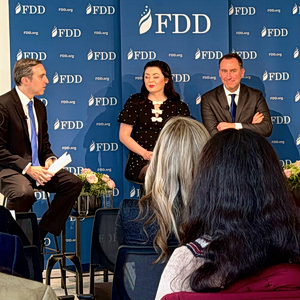
Among them is Richard Goldberg, a senior adviser at the Foundation for Defense of Democracies and a former White House National Security Council official who worked on countering Iran’s weapons of mass destruction. Speaking in an interview, he offered a striking assessment.
“This is yet another chapter where Greece could enter the history books and become Donald Trump’s favorite country in the world,” Mr. Goldberg said.
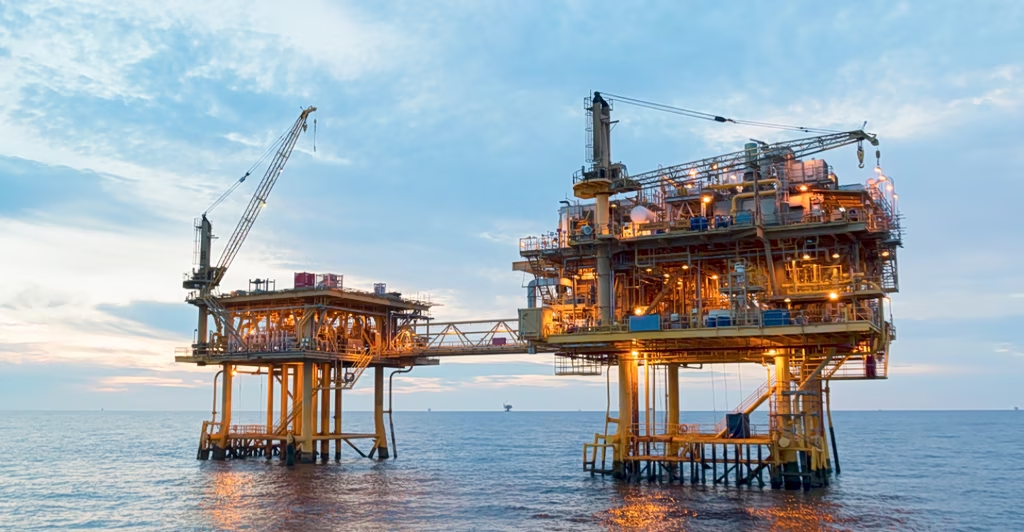
At the core of that argument is shipping. With maritime routes under strain, Mr. Goldberg said the United States would need commercial partners willing to move energy supplies through higher risk environments, backed by government guarantees.
“We need shippers who are willing to partner with the U.S. to get tankers moving. We will provide sovereign-backed insurance and tanker escorts from the U.S. military, we can even reflag U.S. if it makes someone feel better. It’s high risk, but much higher reward, and I think if anyone has the guts to do it, it will be the Greek shipping industry.”
His remarks reflect a broader reassessment in Washington, where Greece is increasingly viewed as a central node in global energy logistics, linking supply routes across Europe, the Eastern Mediterranean and the Middle East.
That shift carries implications for Europe’s continued reliance on Russian natural gas, which Mr. Goldberg said could undermine emerging alternatives such as the Vertical Corridor, a network designed to move gas north from Greece into Central and Eastern Europe.
“Well, I certainly think that there need to be strict conditions to compel the transition away from Russian gas toward alternative supplies, mainly American gas via the Vertical Corridor,” Mr. Goldberg stated. “There are going to have to be credible steps demonstrating that investments are being made, that offtake agreements are being concluded, and that regasification infrastructure steps are being taken, if necessary, to demonstrate that there is a path with a clear date by which that country will get off Russian gas.”
He warned that without clear benchmarks, some governments could continue relying on Russian gas despite stated efforts to diversify.
“Without that being very clear and strict, we could end up in a situation where some European governments unfortunately continue to dance with Russian gas at the expense of the Vertical Corridor. It is an American interest to make this happen, and it is a European interest from a security perspective as well.”
He pointed to past U.S. sanctions on Iran as a model, where countries were granted temporary waivers only if they made measurable progress in reducing imports.
“Many years ago, countries like Japan, South Korea, India, and China were importing large volumes of crude from Iran. When our sanctions on Iran’s central bank went into place in late 2011, we allowed for exceptions every six months so long as those countries demonstrated very concrete and credible steps to significantly reduce their imports from Iran during each period.”
He said such a framework could allow for flexibility while maintaining pressure on countries to reduce dependence on sanctioned energy sources.
“We should try to stick to a deadline if we can. If everybody can get off by the deadline, we should make that happen. If, for some reason, there is a credible justification for needing more time simply because of infrastructure or market realities, then on a case by case basis, so long as we see credible steps being taken and a timetable for implementation, we could consider temporary exemptions to delay.”
Mr. Goldberg described Greece’s evolution from a country once defined by financial crisis into a central energy hub as “one of the most dramatic and phenomenal turnaround stories in the world today.”
As he explained, “this may be one of the most dramatic and phenomenal turnaround stories in the world today. Just in a number of years, going from the ward of the European Union, and a bankrupt economy, to the central artery of energy security for Europe, and the economy coming back alive because of it.”
He said Greece’s role now extends beyond a single corridor, encompassing multiple regional energy and infrastructure projects.
“So, we look at Greece today as one of the most important nodes for the flow of energy in the world. Not just north south for the vertical corridor, but east to west as we look at infrastructure plans to complete the Great Sea Interconnector in the Eastern Mediterranean, to the Middle East, and on to the rest of the IMEC corridor.”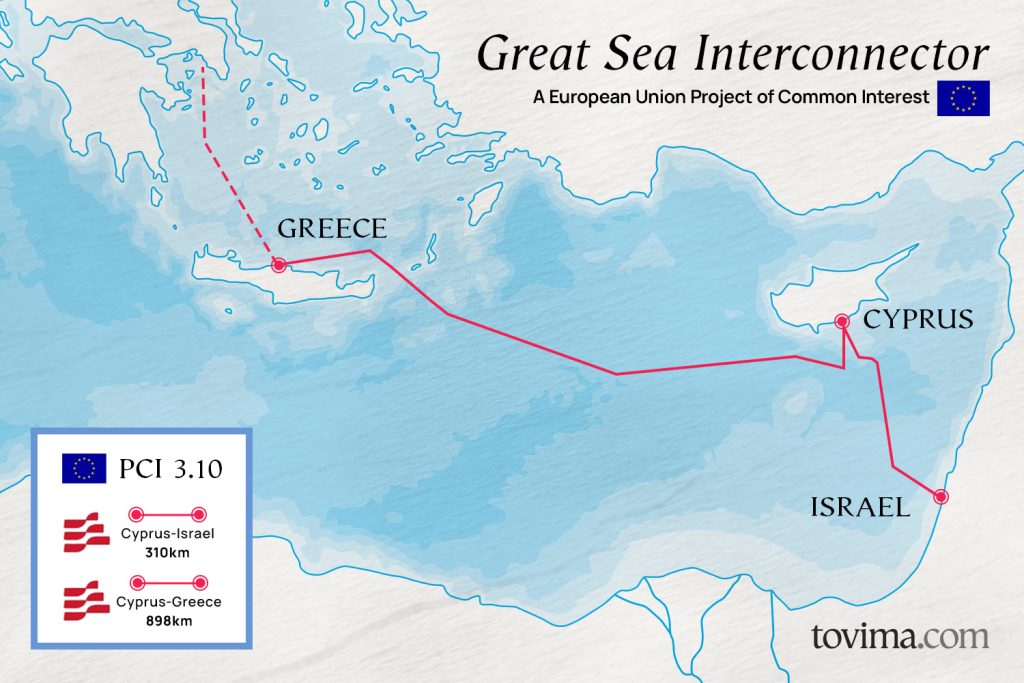
Among those projects is the proposed Greece, Cyprus, and Israel electricity interconnector, known as the Great Sea Interconnector, which has drawn growing international interest alongside regional opposition.
On the project, Mr. Goldberg said support is expanding among regional stakeholders.
“I do see sustained support. There is a growing number of stakeholders who have not spoken up in the past, and either publicly or behind closed doors are saying this is a good thing for regional infrastructure.”
He also emphasized the need for broader international involvement to strengthen the project.
“I think we need to get more American involvement in the project from the private sector. I think this should not just be a local project. I think we should have international, multinational companies or investors who can provide added value involved, so we increase confidence in the project and that, in the end, the Turks know that they cannot really interfere with this, that this is something that is going to happen.”
He was skeptical of reports suggesting that alternative routes could bypass Israel by running through Syria.
“I read that report and I thought to myself, really? Cyprus is going to put their entire electricity grid in the hands of Turkish controlled Syria. Seems unlikely to me.”
On reports of a potential U.S. Turkey energy arrangement linked to Ankara’s interest in acquiring F-35 fighter jets, Mr. Goldberg said energy cooperation should not be viewed as a zero-sum equation.
“I do think that there are energy projects that are in the U.S. interest that could run through Turkey.”
He said such projects could align with broader U.S. strategic interests.
“I do not know that we should see this as zero sum. Because, again, I feel like the theme of energy dominance is the prism through which Washington is looking at this. What is beneficial to the United States in these energy infrastructure developments.”
He added that such dynamics could shape Turkey’s posture toward regional projects.
“And it actually increases our leverage over Erdogan to say, look, how much is going on to benefit Turkey in energy infrastructure development. Why on earth would you ever stand to confront Chevron in the Eastern Mediterranean? Why would you ever stand in opposition to the GSI that we support?”
Still, he emphasized that the F-35 issue remains separate, tied to longstanding U.S. security concerns.
“The issue of the F-35 is a broader security concern with respect to Russian radar systems in the country and how they can coexist. And those are separate national security concerns that the United States has to address for its own security.”
Taken together, Mr. Goldberg’s assessment reflects a broader reassessment in Washington’s view of the Eastern Mediterranean, where energy infrastructure, shipping and geopolitical competition are becoming increasingly intertwined.