
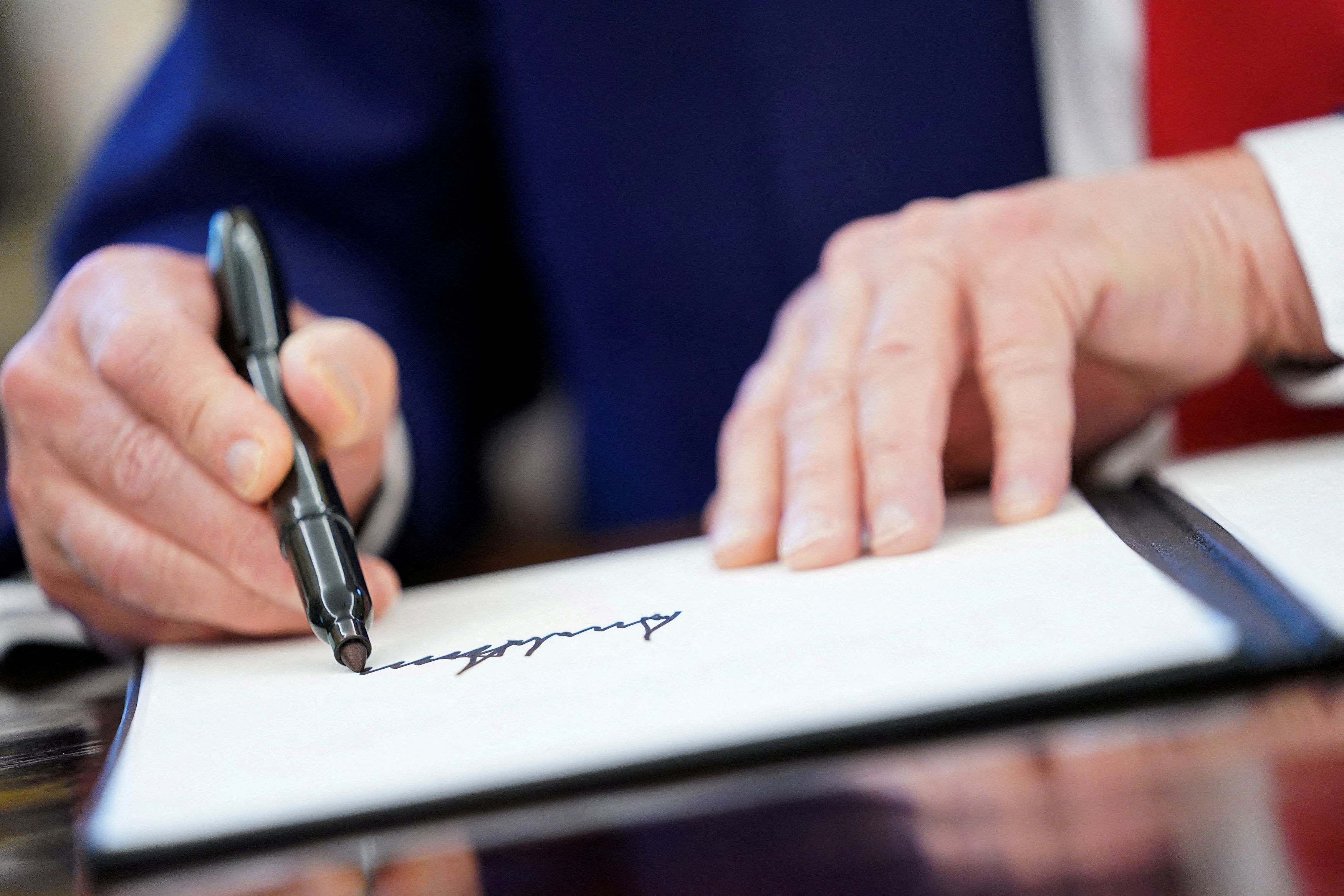
The United States is set to break with more than a century and a half of tradition, as President Donald Trump’s signature will begin appearing on paper currency for the first time.
The U.S. Treasury Department announced that redesigned banknotes—starting with the $100 bill—will carry Trump’s signature beginning in June, part of commemorations marking the 250th anniversary of American independence.
Historic shift in currency design
The move represents a significant departure from long-standing practice. Since 1861, U.S. currency has consistently included the signature of the U.S. treasurer. Under the new design, that signature will be removed entirely—ending a 165-year tradition.
The updated bills will instead feature the signatures of Trump and Treasury Secretary Scott Bessent. Printing is set to begin in June, with the new notes expected to enter circulation in the weeks that follow.
The Treasury is continuing to produce existing notes bearing the signatures of former Treasury Secretary Janet Yellen and former U.S. Treasurer Lynn Malerba during the transition period.
Part of broader branding push
The currency change is the latest in a series of efforts by the Trump administration to place the president’s name on public assets and symbols, including buildings, programs, ships and commemorative coins.
A federal arts panel recently approved a design for a gold coin bearing Trump’s image, though a proposal for a circulating $1 coin was blocked by laws prohibiting depictions of living individuals on U.S. coins.
Limited design changes overall
Treasury officials said the overall design of U.S. banknotes will remain unchanged, aside from replacing the treasurer’s signature with Trump’s. Existing legal requirements—including the use of certain inscriptions and portraits of deceased individuals—will still apply.