The White House has unveiled a set of provocative plaques beneath portraits on President Donald Trump’s newly created “Presidential Walk of Fame,” targeting his Democratic predecessors and even former Republican leaders.

A plaque dedicated to U.S. President Donald Trump at the “Presidential Walk of Fame” at the White House, in Washington, D.C., U.S., December 17, 2025. REUTERS/Aaron Schwartz
Plaques Criticize Biden and Obama
Beneath President Joe Biden’s photo, the plaque reads: “Sleepy Joe Biden was, by far, the worst President in American history,” falsely claiming he won the “most corrupt election ever” and made “unprecedented use of the autopen,” a device that replicates signatures. Biden is represented not by a portrait but by a photo of the autopen itself.
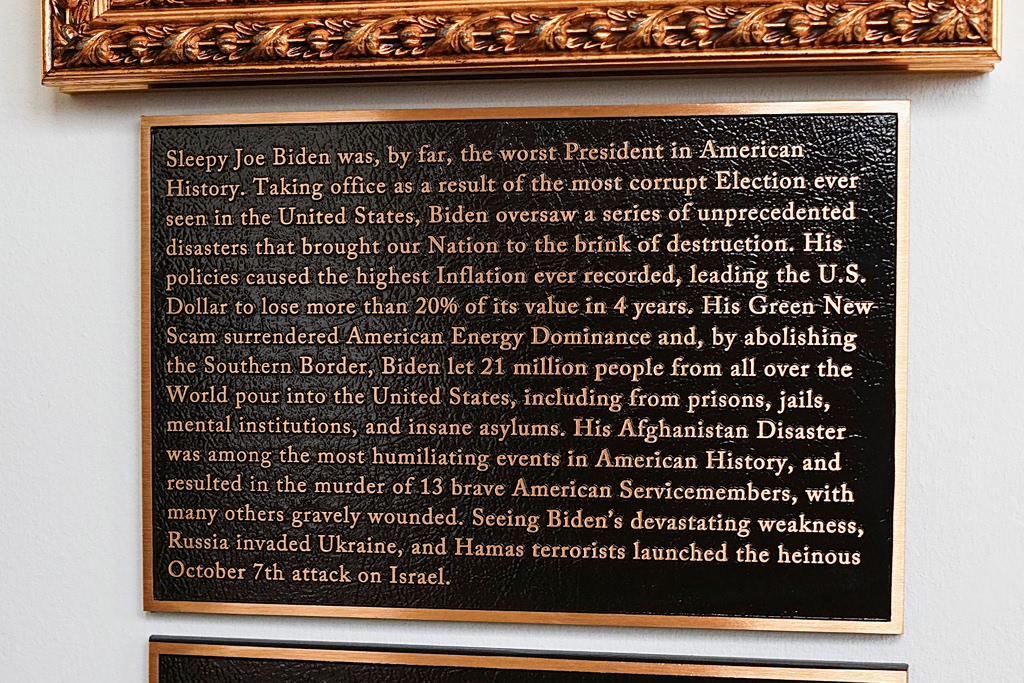
A plaque dedicated to former U.S. President Joe Biden at the “Presidential Walk of Fame” at the White House, in Washington, D.C., U.S., December 17, 2025. REUTERS/Aaron Schwartz
The plaque under Barack Obama’s portrait refers to him by his full name, “Barack Hussein Obama,” labeling him “one of the most divisive political figures in American history,” highlighting Trump’s ongoing criticisms of his predecessors.
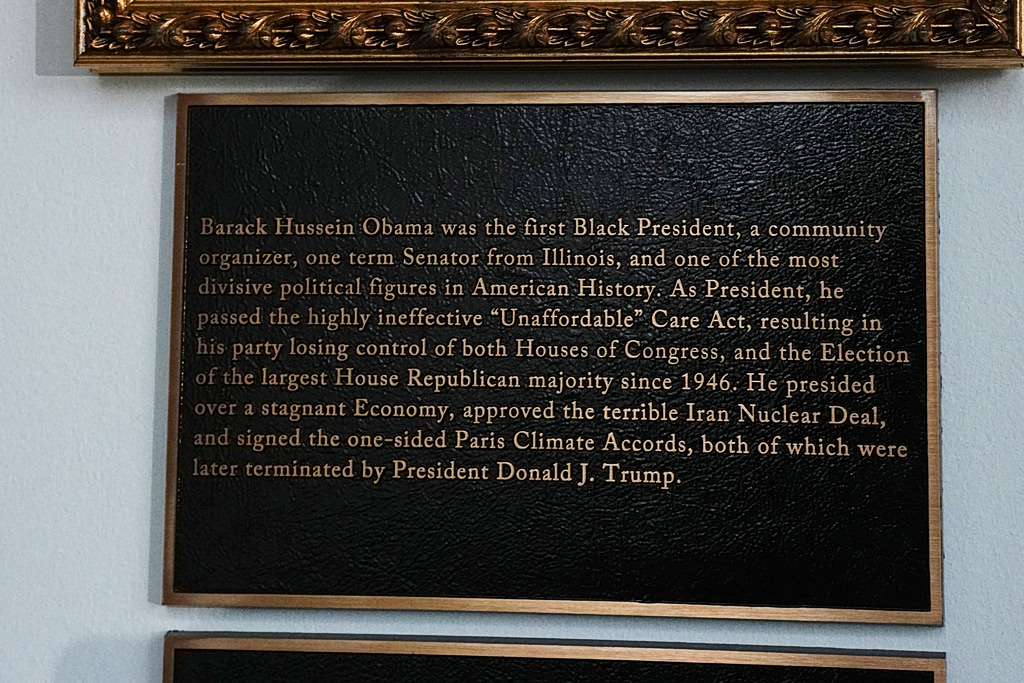
A plaque dedicated to former U.S. President Barack Obama at the “Presidential Walk of Fame” at the White House, in Washington, D.C., U.S., December 17, 2025. REUTERS/Aaron Schwartz
Criticism Extends Across the Aisle
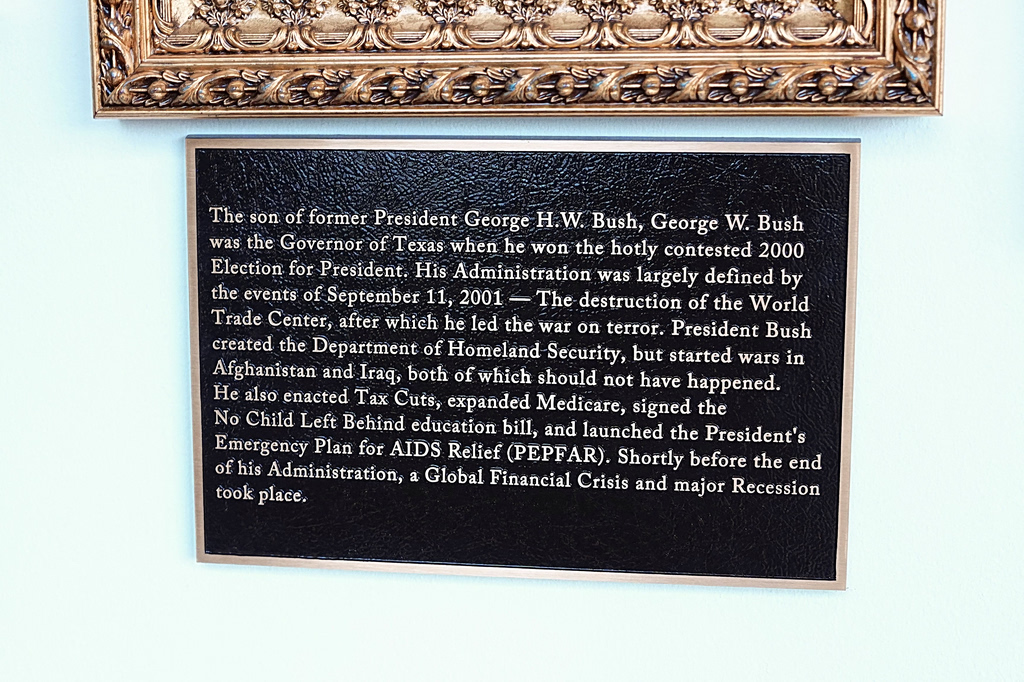
Even former President George W. Bush, a fellow Republican, is not spared. His plaque reads that he started the wars in Afghanistan and Iraq, “both of which should not have happened.” Bill Clinton also faces critique, with a plaque noting: “In 2016, President Clinton’s wife, Hillary Clinton, lost the Presidency to President Donald J. Trump!”
Historians note that Trump’s approach to these displays continues his pattern of polarizing rhetoric, rewriting historical narratives, and using the White House as a platform for personal political statements.
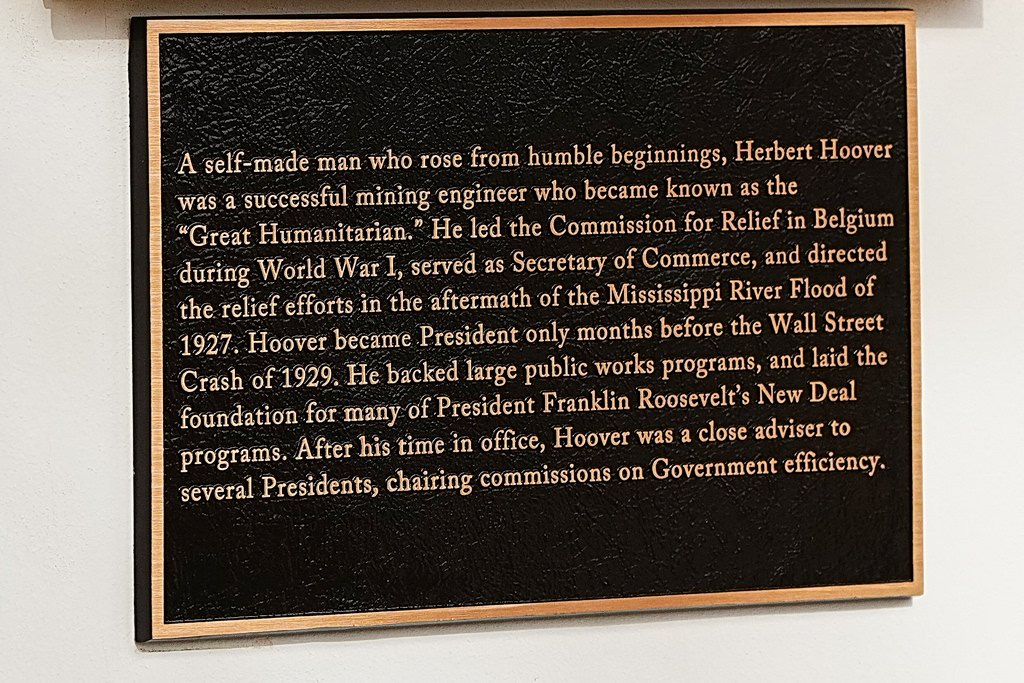
A plaque dedicated to former U.S. President Herbert Hoover at the “Presidential Walk of Fame” at the White House, in Washington, D.C., U.S., December 17, 2025. REUTERS/Aaron Schwartz
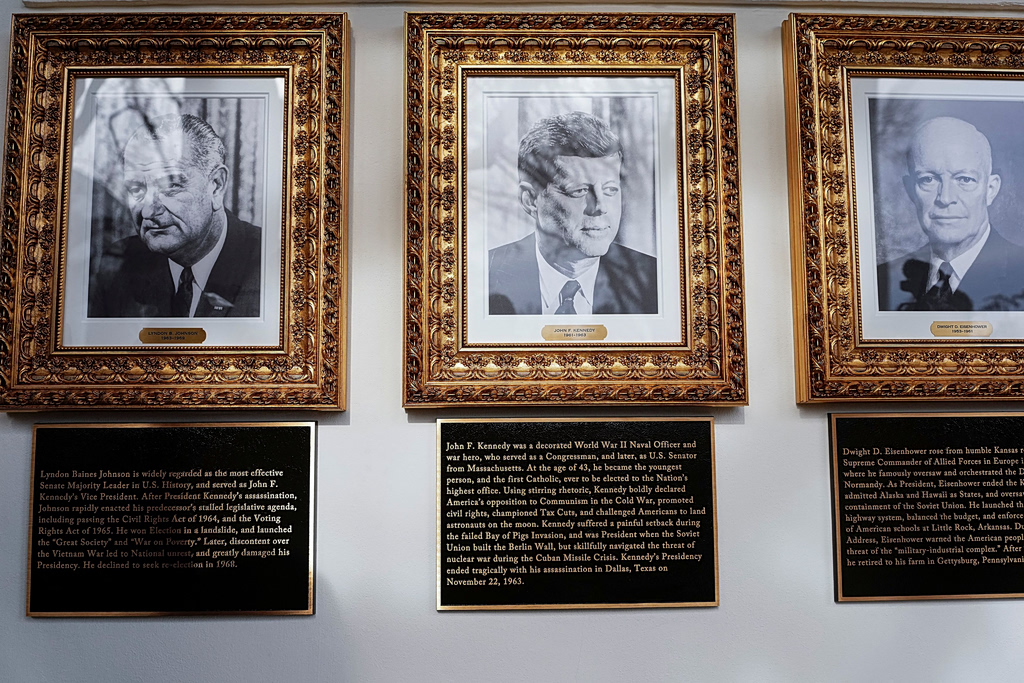
Portraits and plaques dedicated to former U.S. Presidents Lyndon B. Johnson, John F. Kennedy and Dwight D. Eisenhower at the “Presidential Walk of Fame” at the White House, in Washington, D.C., U.S., December 17, 2025. REUTERS/Aaron Schwartz
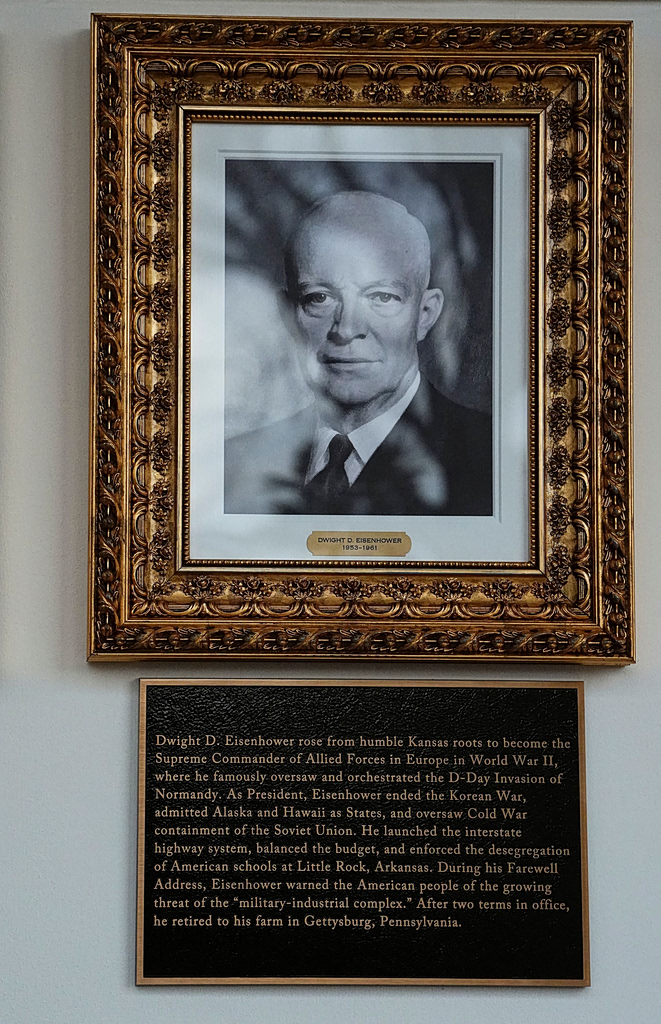
A portrait and plaque dedicated to former U.S. President Dwight D. Eisenhower at the “Presidential Walk of Fame” at the White House, in Washington, D.C., U.S., December 17, 2025. REUTERS/Aaron Schwartz
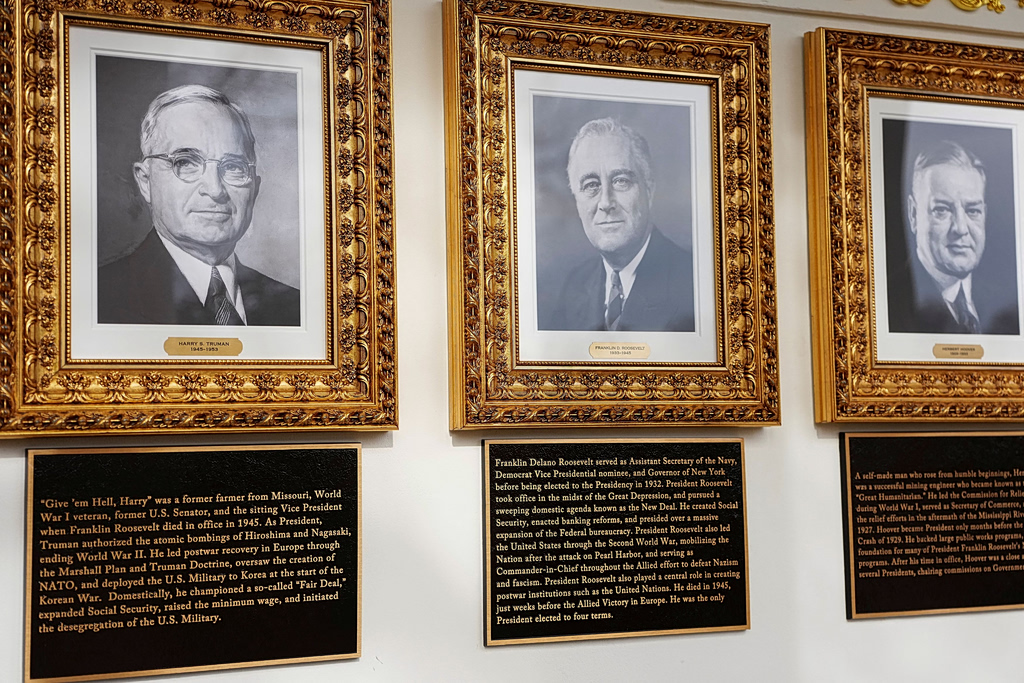
Portraits and plaques dedicated to former U.S. Presidents Harry S. Truman, Franklin D. Roosevelt and Herbert Hoover at the “Presidential Walk of Fame” at the White House, in Washington, D.C., U.S., December 17, 2025. REUTERS/Aaron Schwartz
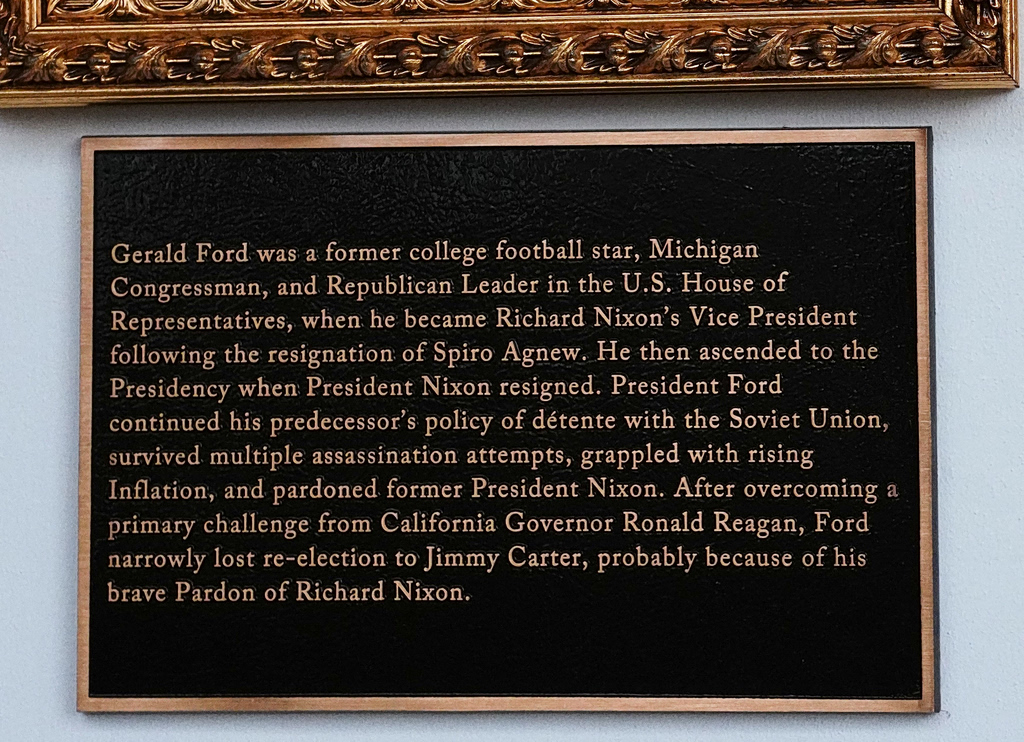
A plaque dedicated to former U.S. President Gerald Ford at the “Presidential Walk of Fame” at the White House, in Washington, D.C., U.S., December 17, 2025. REUTERS/Aaron Schwartz
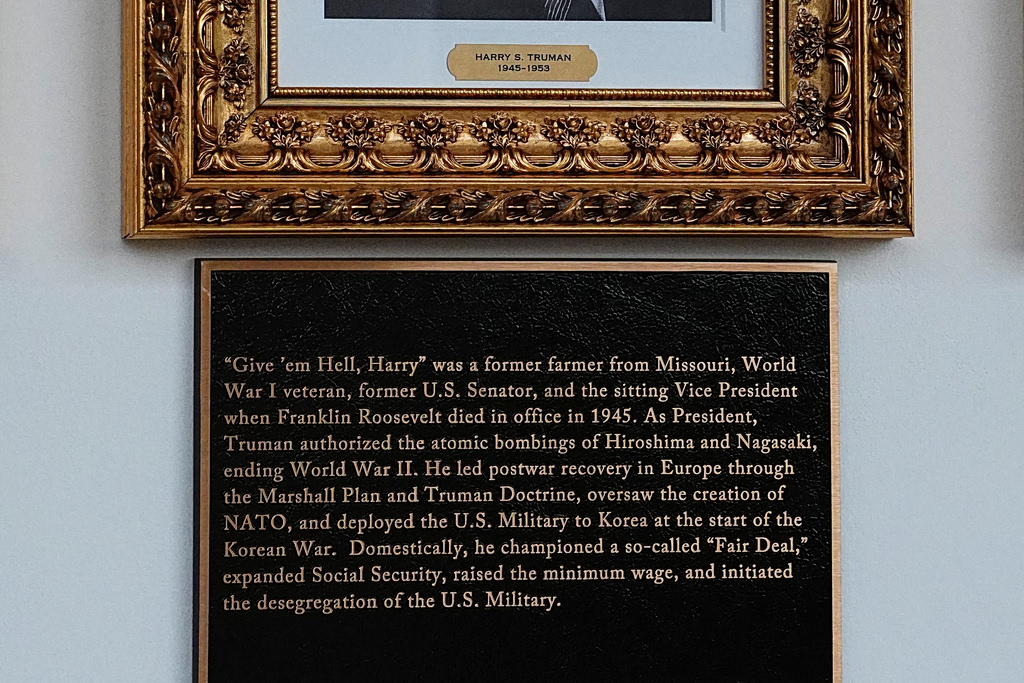
A plaque dedicated to former U.S. President Harry S. Truman at the “Presidential Walk of Fame” at the White House, in Washington, D.C., U.S., December 17, 2025. REUTERS/Aaron Schwartz
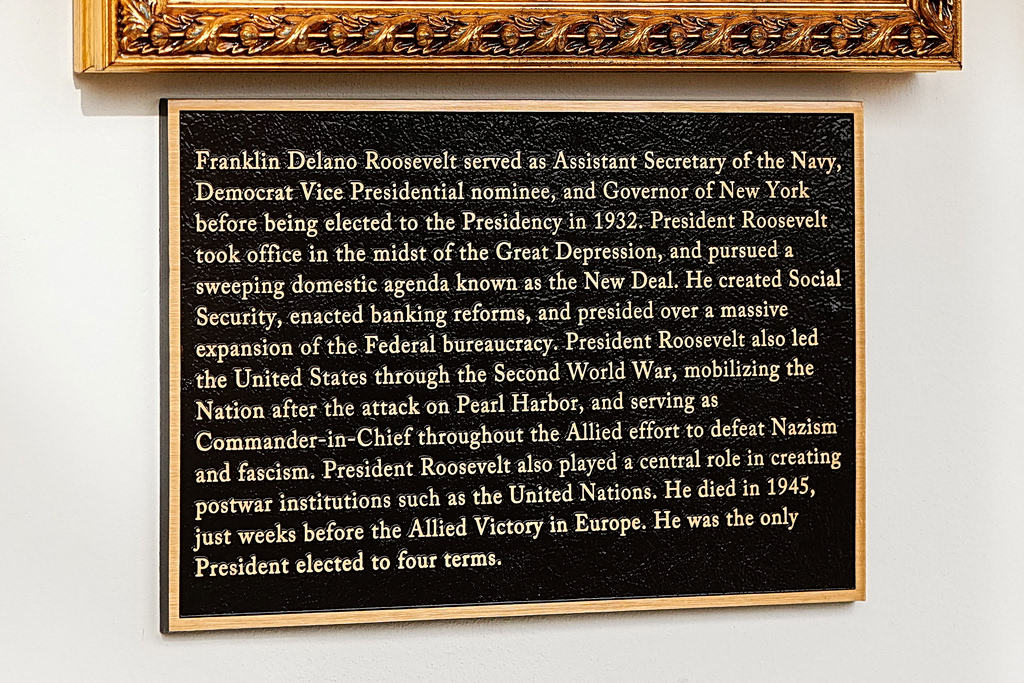
A plaque dedicated to former U.S. President Franklin Roosevelt at the “Presidential Walk of Fame” at the White House, in Washington, D.C., U.S., December 17, 2025. REUTERS/Aaron Schwartz
White House Response and Decor Changes
White House Press Secretary Karoline Leavitt defended the plaques, calling them “eloquent” summaries of each president’s legacy, adding that many were written by Trump himself.
These additions form part of a broader redesign under Trump, including gold-colored accents and gilded fixtures reminiscent of Trump Tower and Mar-a-Lago, reflecting his personal aesthetic.
The “Presidential Walk of Fame” now stands as a striking and controversial symbol of how Trump continues to blend politics, personal branding, and historical interpretation within the nation’s most historic residence.