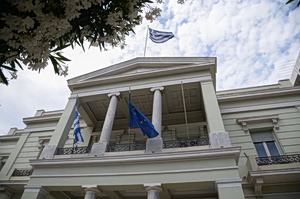
Turkey on Wednesday, as widely expected, rejected a latest European Parliament report that reiterated that the country’s stalled bid to join the European Union could not be revived under current conditions, accusing EU lawmakers of relying on “baseless allegations and disinformation” and attempting to undermine improving ties between Ankara and the bloc.
In a statement issued after the European Parliament adopted its annual report on Turkey, the Turkish foreign ministry said the document sought to overshadow a “positive agenda” at a time when the strategic importance of EU-Turkey relations was steadily increasing. It also accused the European Parliament of providing a platform to “terrorist organizations and anti-Turkey circles,” arguing that the report demonstrated a lack of strategic vision for the future of relations between Ankara and the bloc.
The Turkish side said it “categorically rejects” what it described as the misrepresentation of legal proceedings conducted by Turkey’s independent judiciary, as well as criticism directed at Justice Minister Akin Gurlek.
The European Parliament earlier approved the report on Turkey by a majority vote, reaffirming that the country’s EU accession process remains effectively frozen because of persistent shortcomings in democracy, the rule of law and fundamental freedoms. During the debate preceding the vote, rapporteur Nacho Sanchez Amor said accession negotiations could not resume without substantial reforms and accused the Turkish government of showing little willingness to align with European democratic standards.
Sanchez Amor also pointed to the detention and imprisonment of political opponents, including Istanbul Mayor Ekrem Imamoglu, arguing that prosecutions targeting opposition figures and activists were incompatible with progress toward EU membership. At the same time, he stressed that many Turkish citizens continued to support democracy and closer ties with Europe.
The Spanish lawmaker also referred to Turkey’s relations with Greece and Cyprus, saying a workable framework for coexistence remained essential because both issues are integral to broader EU-Turkey relations. He said security and defense cooperation remained important but warned that significant trust deficits and disputes over good-neighborly relations persisted.
EU Enlargement Commissioner Marta Kos told European lawmakers that Turkey remained a key partner, NATO ally and candidate country, but said there had been no tangible progress on the rule of law and fundamental rights. She noted that concerns over judicial independence, political freedoms and the imprisonment of politicians, journalists and business figures continued to weigh on relations.
The debate comes as the European Union and Turkey seek closer cooperation in areas including migration management, trade and regional security.
Over the past year, discussions between Brussels and Ankara have increasingly focused on pragmatic cooperation, while longstanding disputes involving Greece and Cyprus, as well as concerns over democratic standards in Turkey, have continued to complicate any prospect of reviving accession talks.