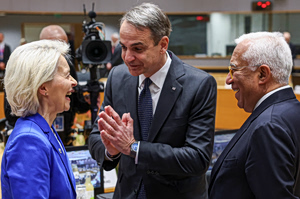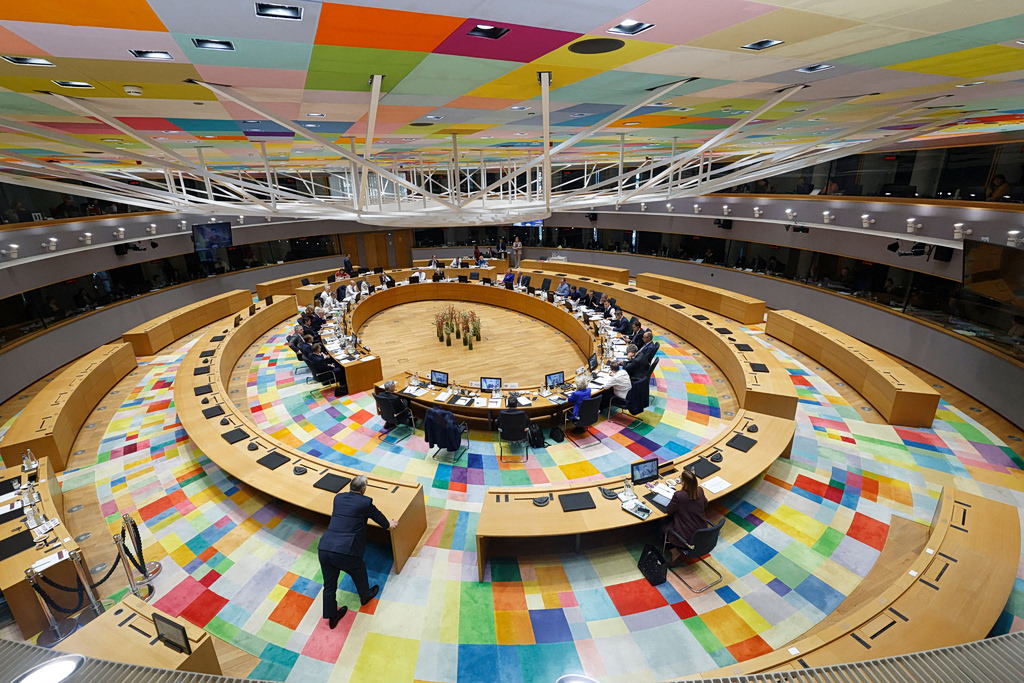
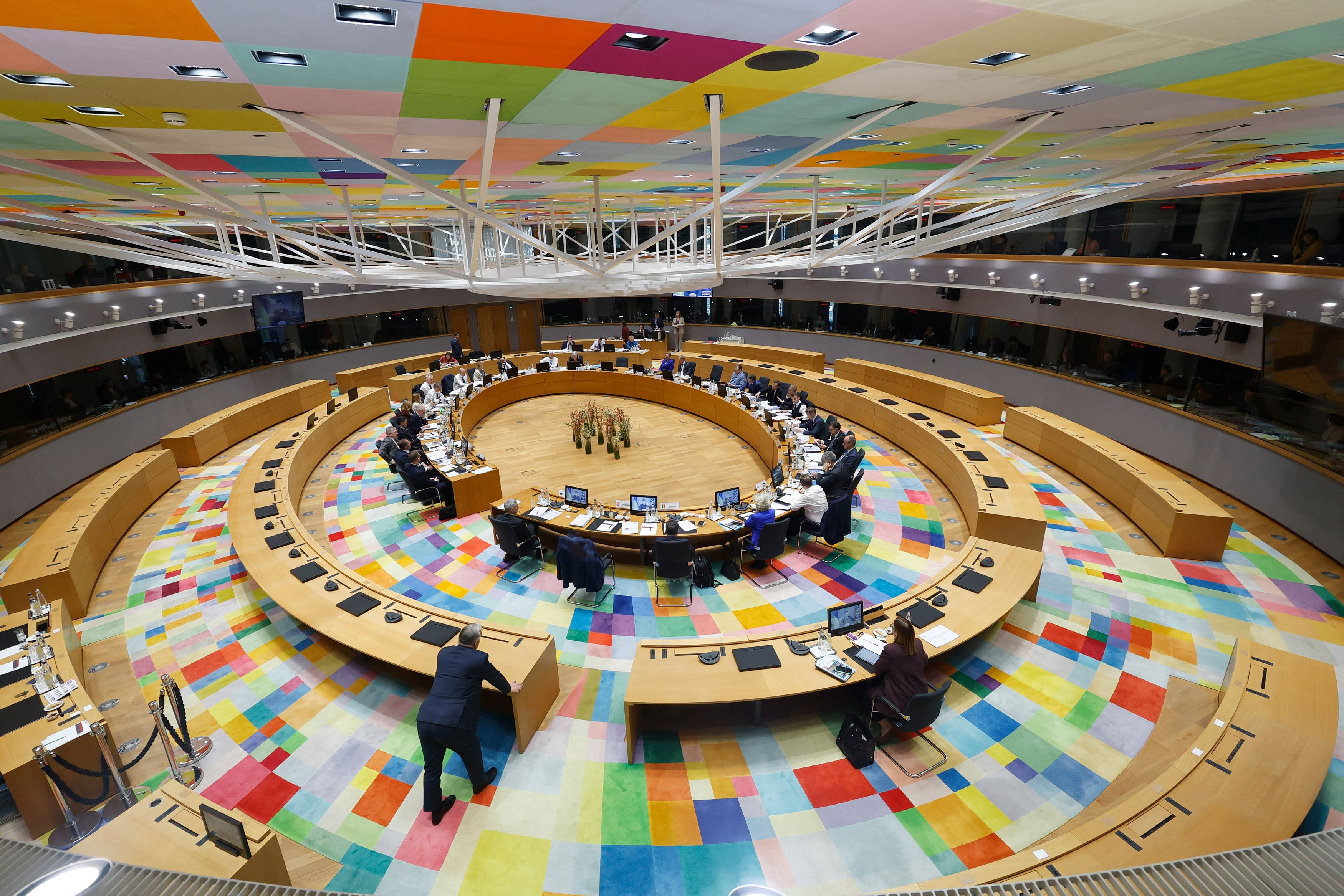
Belgium’s Prime Minister Bart De Wever apparently has a gift for jokes. Standing at yet another EU summit this week, he observed that the European Union “is starting to resemble Belgium.” For anyone unfamiliar with Belgian politics, where forming a government can take months or even years, this was not a compliment.
However, it was an apt comparison.
After 12 hours of deliberation in Brussels on Thursday, the bloc’s 27 leaders wrapped up with a joint statement heavy on “de-escalation” and “restraint,” a pledge to revisit the €90 billion Ukraine loan at next month’s summit, and a quiet acknowledgment that Europe, for all its combined economic weight, is not sure what role it plays in a world actively on fire
Paralysis by Design
There is something almost theatrical about the EU’s inability to act decisively. Three of the world’s ten largest economies — Germany, France, and Italy — sat in the same room as Qatar’s LNG supply was being severely disrupted, Ukrainian cities were being bombed, and Iranian ballistic missiles were landing on U.S.-allied infrastructure. What emerged was, as one EU official bluntly described it to Politico: “what we always do” — writing “nice statements.”
European Council President Antonio Costa tried to hold the line publicly. “Nobody can blackmail the European Council, no one can blackmail the European Union,” he told reporters. And yet, Hungarian Prime Minister Viktor Orban — alone among the 27 — has done exactly that, blocking a loan to Kyiv for months over a bilateral dispute about a damaged Russian oil pipeline running through Ukrainian territory to Hungary.
On Thursday, Orban held firm. He even found an unlikely sympathizer in Italian Prime Minister Giorgia Meloni, who told fellow leaders she understood his position. Swedish Prime Minister Ulf Kristersson, leaving the room during a break, told reporters he had “never heard such hard-hitting criticism of anyone, ever,” describing the fury directed at Orban. German Chancellor Friedrich Merz said leaders were “deeply upset” and that “this will leave a lasting mark.” Orban was unmoved.
The conclusion on Ukraine — a conflict where, as Politico noted, there genuinely is political will to act — was that leaders would “revert to this issue in the next meeting.” It’s a sentence that, by now, has been uttered so many times.
The EU is now essentially waiting for Hungary’s upcoming elections. If Orban loses, the loan goes through. If he wins, leaders hope — with the notable optimism that chronic frustration breeds — that he will return to Brussels in a more cooperative mood. “Otherwise,” said a European diplomat according to Le Monde, “it will be time to resort to threats.”
Not Europe’s War — And That’s Actually Something
If Ukraine exposed the EU’s internal fault lines, the Middle East crisis exposed something more fundamental: Europe’s uncertainty about its own role in a new world order that is being rewritten without it. Even as Qatar warned Thursday that it could no longer honor its liquefied natural gas contracts with Belgium and Italy — Iranian strikes having knocked out nearly a fifth of its export capacity — leaders spent hours debating the bloc’s carbon permit scheme. “To say ETS is the biggest issue when big gas fields are burning is a bit weird,” one EU official told Politico. Unsurprisingly European leaders are good at finding agreement on the margins when the bigger questions are too hard. And they did reach a deal on ETS — a request for the European Commission to review the system by July 2026, aimed at reducing carbon price volatility and its knock-on effect on electricity costs.
Beyond that, the summit’s final conclusions were a study in careful language. The EU called for “a moratorium on strikes against energy and water facilities,” deplored civilian casualties, and pledged to monitor economic fallout. Von der Leyen announced a package of emergency energy measures she described as “temporary, tailored and targeted.” Macron indicated that an “exploratory process” on a possible naval mission near Hormuz was ongoing. The statement committed to nothing new or consequential.
If there is one thing that stands out from an otherwise dispiriting summit, it is Europe’s flat refusal to be dragged into the war itself. Trump had spent the week pressing allies to commit military forces to reopen the Strait of Hormuz — effectively asking Europe to join a conflict launched without consulting them and outside any legal framework they recognized. The answer, from London to Berlin to Athens, was unambiguous. “We are not a party to the conflict,” Macron said. EU foreign policy chief Kaja Kallas warned leaders that “starting war is like a love affair — it’s easy to get in and difficult to get out.” Greek Prime Minister Kyriakos Mitsotakis, speaking earlier this week at a Bloomberg conference, was characteristically direct: “The simple answer is no. Greece is not going to participate in any operation around the theater of current operations.”
As French journalist Sylvie Kauffmann argued in Le Monde, this refusal is not as passive as it looks. For Europe to collectively rebuff a direct American request for military participation is, in the postwar transatlantic order, genuinely unprecedented — and in Washington, it landed that way. For a continent that has spent the past year lurching between fear, denial, and reluctant attemts at self-reliance, it may not be much. But in Brussels, right now, it passes for progress.
This article draws on reporting by Politico, and analysis by Sylvie Kauffmann published in Le Monde, as well as official European Council Meeting conclusions.