
Iranian Kurdish militias have held discussions with the United States in recent days about whether, and how, to launch attacks on Iran’s security forces in the country’s west, according to three sources familiar with the matter.
The coalition of Iranian Kurdish groups, based along the Iran-Iraq border in the semiautonomous region of Iraqi Kurdistan, has reportedly been training for a potential offensive aimed at weakening Iran’s military. The consultations come as the United States and Israel continue striking Iranian targets with bombs and missiles.
According to two sources, the proposed operation would seek to create space for opponents of the Islamic regime to rise up, following the deaths of Supreme Leader Ali Khamenei and other senior officials since the U.S.-Israeli assault began on Saturday.
No final decision has been made regarding the timing or execution of any operation, the sources said, speaking on condition of anonymity due to the sensitivity of the discussions. The Kurdish groups have requested U.S. military support, and Iraqi leaders in Erbil and Baghdad have been in contact with the Trump administration. Two sources said the forces were also in talks with Washington about possible CIA assistance in supplying weapons.
CNN first reported on the CIA’s involvement and the potential ground operation, while Axios said President Trump had held a phone call with two top Iraqi Kurdistan leaders. Reuters could not independently confirm the extent of any CIA role, whether weapons had been provided, or whether U.S. forces would enter Iran alongside Kurdish fighters. The CIA declined to comment, and the White House and Pentagon did not immediately respond to requests for comment. The Kurdish Regional Government also did not comment.
Any cross-border operation would likely require significant U.S. military and intelligence backing. The Pentagon has previously said that U.S. bases in Erbil support the international coalition fighting Islamic State militants. Kurdish groups in Iraqi Kurdistan have a long history of cooperation with Washington, including during the Iraq War and the campaign against ISIS, although shifting allegiances have at times strained relations.
It remains unclear how effective Iranian Kurdish fighters would be in sustained combat inside Iran, as their battlefield experience varies. One source cited by CNN described a plan in which Kurdish armed forces would engage Iranian security forces to facilitate unrest among unarmed civilians in urban areas.
Regional reaction to such a move is uncertain. An armed uprising by Iranian Kurds could destabilize Iran further and potentially embolden separatist movements, including among the ethnic Baluch minority, which maintains ties with separatists in Pakistan’s Baluchistan province. Islamabad is unlikely to tolerate any push toward Baluch independence.
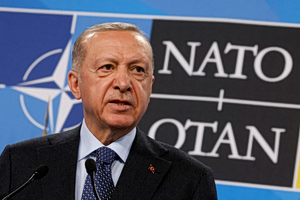
Turkey’s position may also be pivotal. Ankara, which has supported Syrian President Ahmed al-Sharaa and views Kurdish integration into the Syrian state as essential to restoring authority, has previously threatened military action against the Syrian Kurdish Democratic Forces if they resisted central control. Turkey is also advancing efforts to secure peace with the outlawed Kurdistan Workers Party (PKK) and is unlikely to support the arming of Kurdish groups near its borders.