The United Arab Emirates is accelerating plans to dramatically expand its oil export capacity outside the Strait of Hormuz, as ongoing conflict with Iran continues to threaten one of the world’s most critical energy chokepoints.
Abu Dhabi announced that construction of the new West-East Pipeline project will be fast-tracked, with the goal of doubling export capacity through the port of Fujairah by 2027. The move is aimed at strengthening the country’s ability to ship crude oil without relying on the Strait of Hormuz, where tensions have escalated sharply since the outbreak of the Iran war.
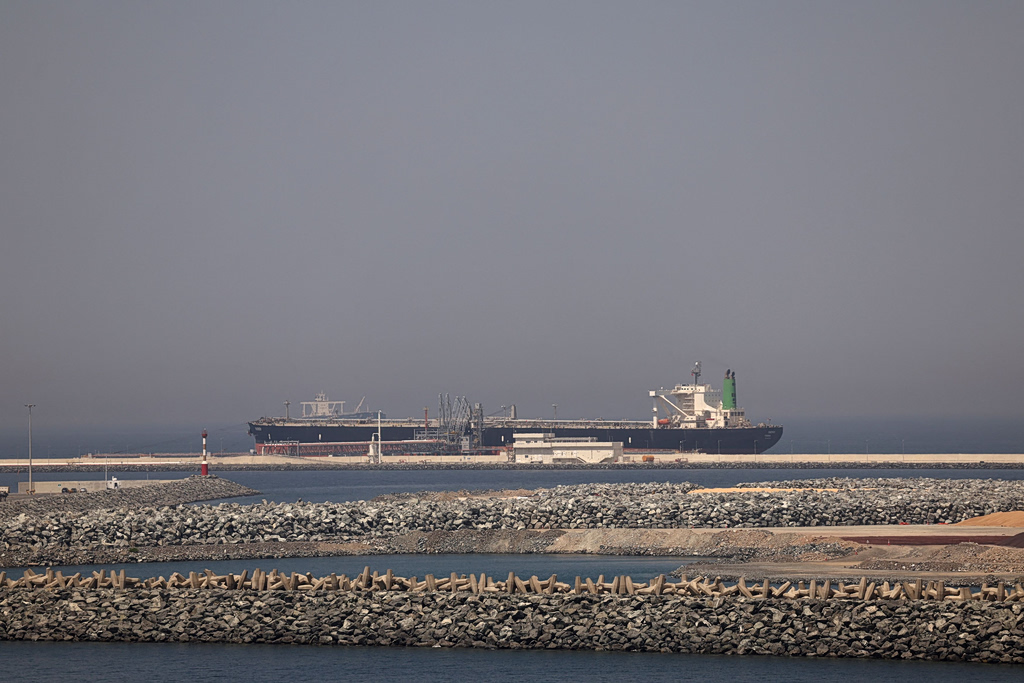
A cargo ship docked at the Port of Fujairah, as the U.S.-Israel conflict with Iran limits marine traffic in the Strait of Hormuz, in Fujairah, United Arab Emirates, May 6, 2026. REUTERS/Amr Alfiky
The decision was directed by Abu Dhabi Crown Prince Sheikh Khaled bin Mohamed bin Zayed during an executive committee meeting, according to the Abu Dhabi Media Office. The pipeline is already under construction and is expected to begin operations next year.
The expansion comes as Iran broadens the maritime zone it claims to control around the strait. Earlier this month, Iran’s Revolutionary Guard Navy published a map extending its claimed operational area across much of the UAE’s Gulf of Oman coastline. Days later, Iranian authorities announced a further expansion stretching up to 300 miles wide.
The UAE has accused Iran of carrying out attacks on energy infrastructure, including a drone strike on an ADNOC tanker and attacks on Fujairah’s oil zone. Abu Dhabi described the incidents as “economic blackmail” and an “unacceptable transgression.”
The Strait of Hormuz has effectively been shut since U.S. and Israeli strikes on Iran began on February 28, disrupting roughly one-fifth of global oil supplies. The fallout has sent energy prices soaring, triggered fuel rationing in some countries and intensified fears of rising inflation and a broader economic slowdown.
The existing Abu Dhabi Crude Oil Pipeline, known as ADCOP, currently transports up to 1.8 million barrels per day from inland oil fields to Fujairah on the Gulf of Oman, bypassing the strait entirely. The new project is expected to significantly increase that capacity.
The UAE and Saudi Arabia remain the only Gulf producers with major pipelines capable of exporting crude oil outside the Strait of Hormuz. Countries including Kuwait, Iraq, Qatar and Bahrain remain heavily dependent on the waterway for energy shipments.
The UAE’s push to secure alternative export routes comes shortly after its exit from OPEC, a move that frees Abu Dhabi from production quotas. ADNOC is targeting production capacity of 5 million barrels per day by next year, while officials have said the country could increase output further if needed.
Meanwhile, India and the UAE signed a series of new defense and energy agreements during Indian Prime Minister Narendra Modi’s visit to Abu Dhabi on Friday.
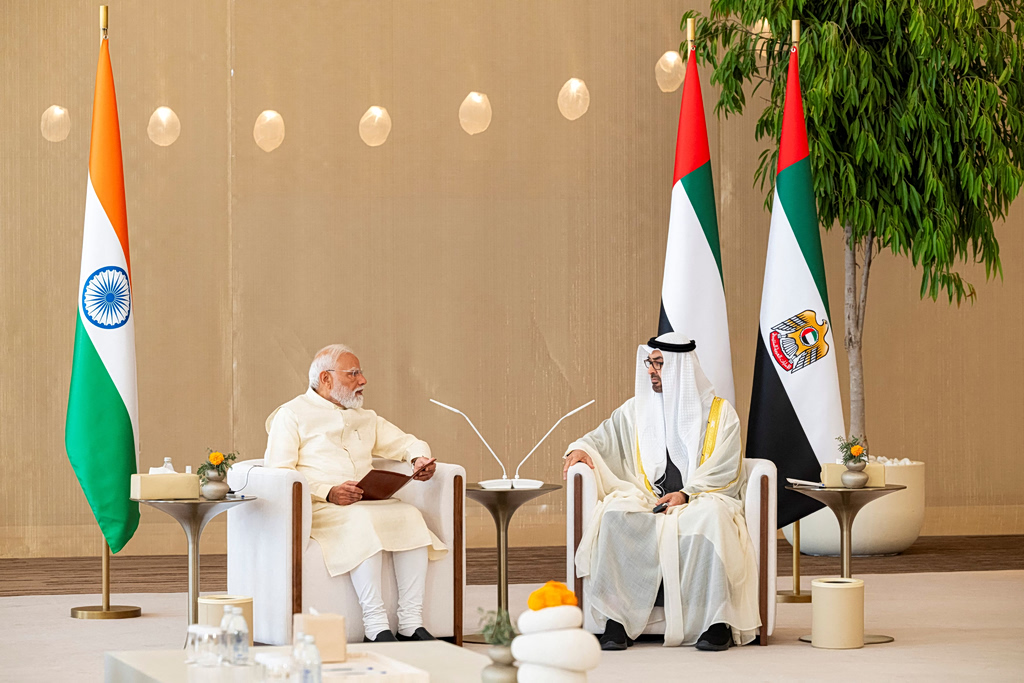
President of the United Arab Emirates, Mohamed bin Zayed Al Nahyan, meets Indian Prime Minister Narendra Modi during an official visit reception, in Abu Dhabi, United Arab Emirates, May 15, 2026. Mohamed Al Hammadi / UAE Presidential Court /Handout via REUTERS THIS IMAGE HAS BEEN SUPPLIED BY A THIRD PARTY
The two countries agreed on the framework for a strategic defense partnership that includes cooperation on defense technology, maritime security, cyber defense, training and intelligence sharing.
They also signed agreements covering strategic petroleum reserves and liquefied petroleum gas supplies. ADNOC said the partnership could expand crude storage in India by up to 30 million barrels while also exploring storage opportunities in Fujairah as part of India’s strategic reserves.
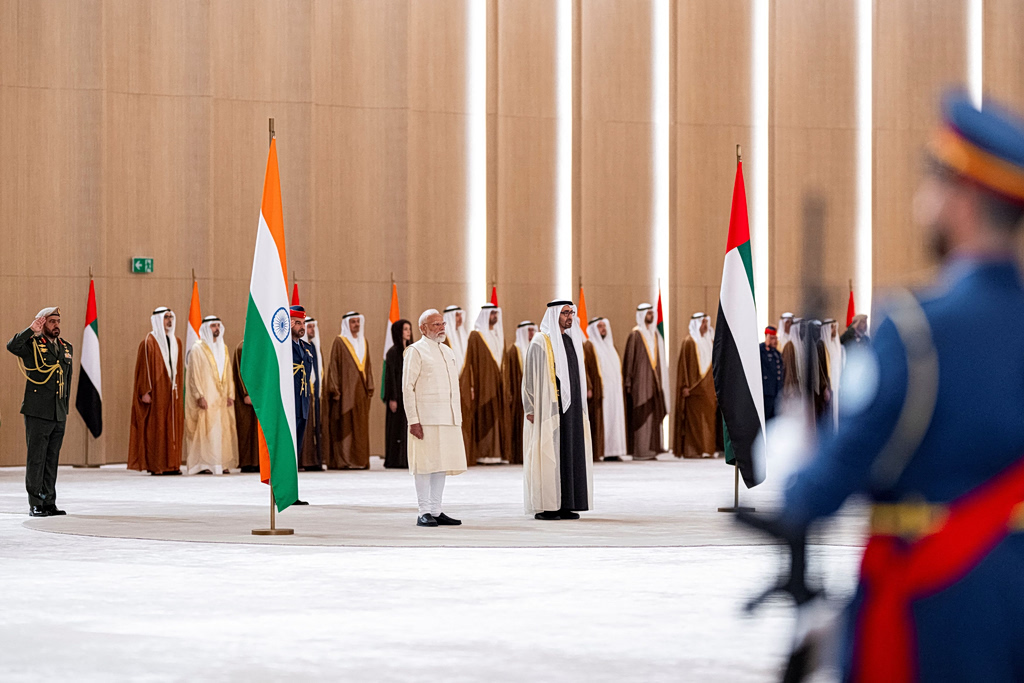
Indian Prime Minister Narendra Modi and Sheikh Mohamed bin Zayed Al Nahyan, President of the United Arab Emirates, stand for the national anthem during an official visit in Abu Dhabi, United Arab Emirates, May 15, 2026. Abdulla Al Bedwawi/ UAE Presidential Court /Handout via REUTERS THIS IMAGE HAS BEEN SUPPLIED BY A THIRD PARTY
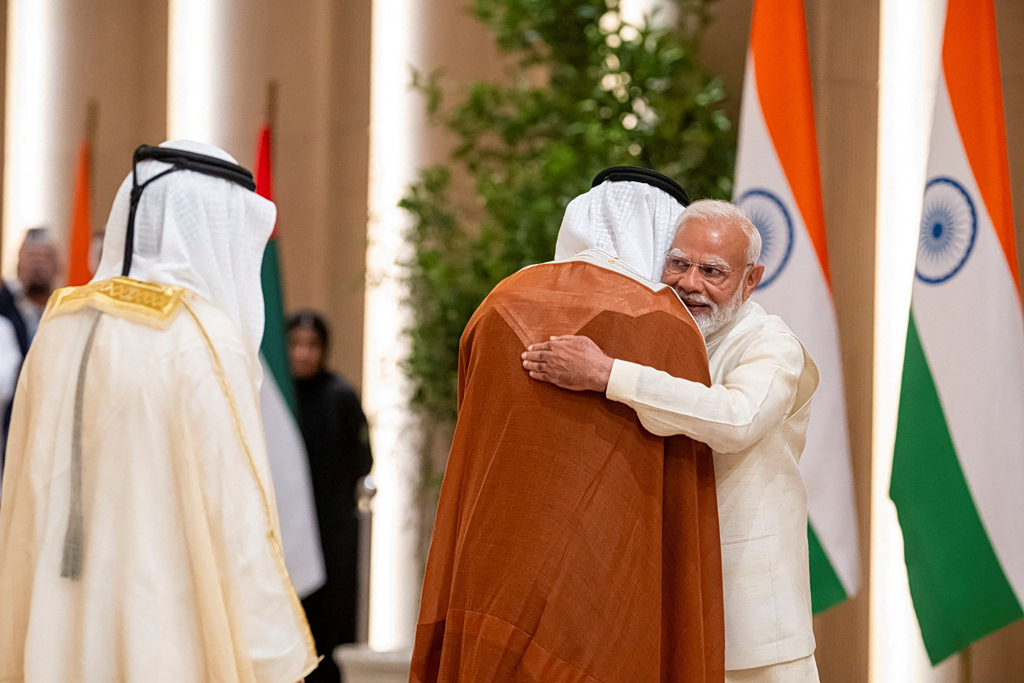
Indian Prime Minister Narendra Modi greets Sheikh Khaled bin Mohamed bin Zayed Al Nahyan, Crown Prince of Abu Dhabi, upon arriving in Abu Dhabi, United Arab Emirates, May 15, 2026. Abdulla Al Neyadi/ UAE Presidential Court /Handout via REUTERS THIS IMAGE HAS BEEN SUPPLIED BY A THIRD PARTY
The agreements come as India seeks to strengthen long-term energy security amid continued instability in the Gulf. The UAE’s growing production ambitions following its departure from OPEC are expected to make it an increasingly important supplier for major importers such as India.
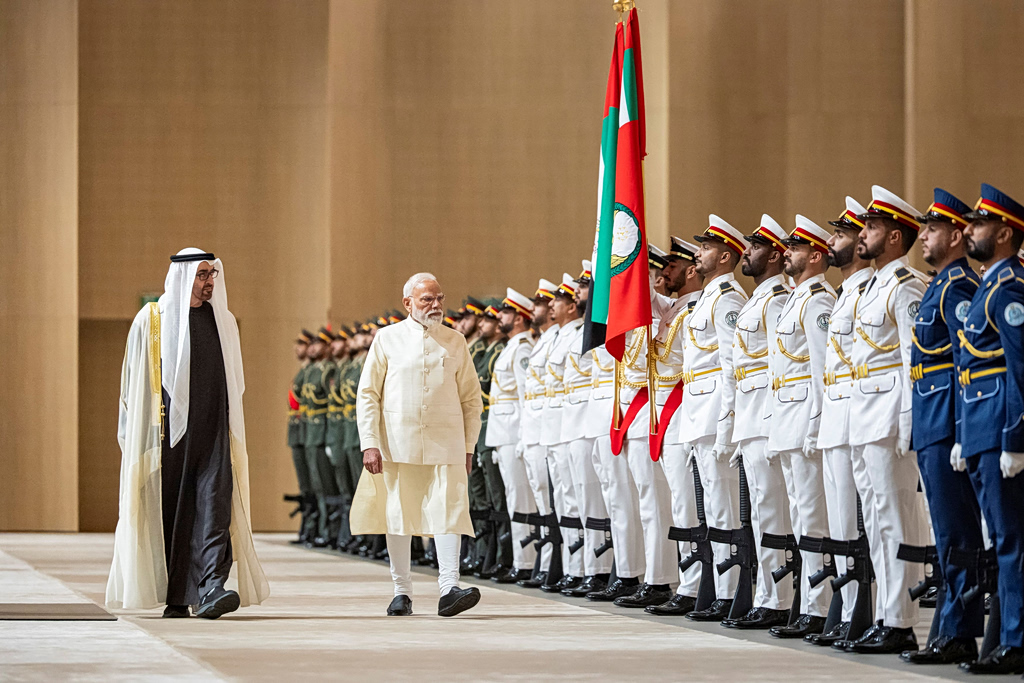
President of the United Arab Emirates Mohamed bin Zayed Al Nahyan and Indian Prime Minister Narendra Modi inspect the UAE Armed Forces honour guards during an official visit at the Presidential Airport, in Abu Dhabi, United Arab Emirates May 15, 2026. Ryan Carter/UAE Presidential Court/Handout via REUTERS THIS IMAGE HAS BEEN SUPPLIED BY A THIRD PARTY