
 Μake us preferred on Google
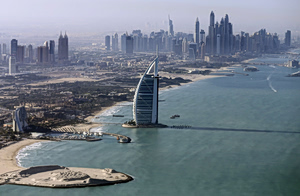
 President Trump chose to look the other way after Iran launched three salvos of missiles and drones into the United Arab Emirates, one of America’s main Middle Eastern partners, despite a cease-fire he negotiated nearly a month ago.
The likely conclusion in Tehran, Gulf governments fear, is that further escalation pays off because Trump is so intent on extricating himself from the war that he will ignore renewed Iranian attacks on America’s regional allies.
European and Asian nations—allies and strategic adversaries alike—are watching this closely, too.
Ever since the war began on Feb. 28, Iranian leaders have frequently repeated a phrase, attributed to the deposed Egyptian president Hosni Mubarak , that “those who wrap themselves in America are naked.” The feeling in the U.A.E. and fellow Gulf monarchies after Tehran restarted the missile and drone strikes on Monday is that Mubarak might have had a point, diplomats and analysts say.
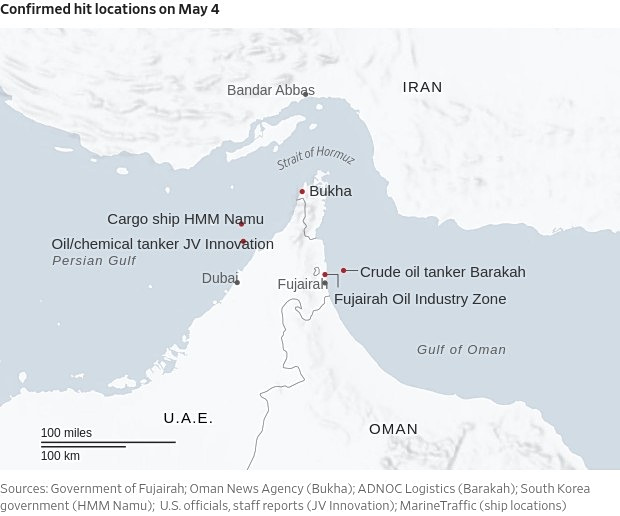
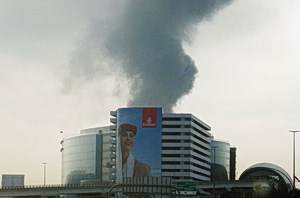
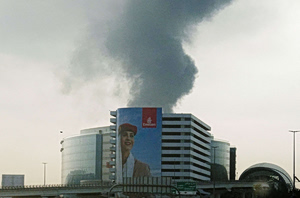
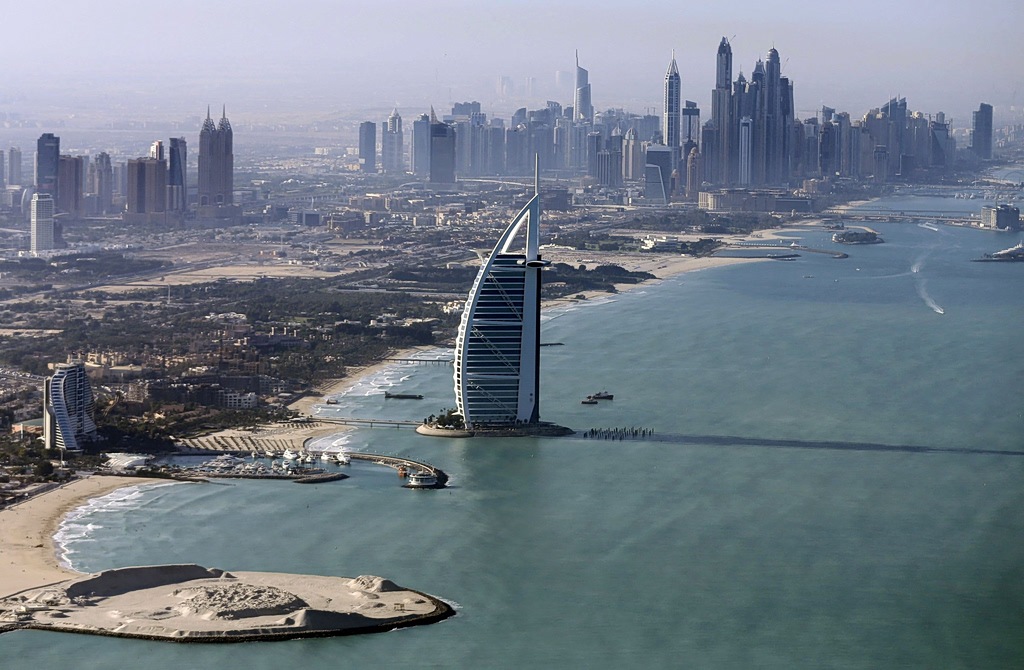
Iran struck the U.A.E.’s only functioning oil export port, Fujairah, causing a fire and injuring three people, and fired ballistic and cruise missiles at other Emirati targets. In total, the attacks involved 15 missiles and four drones.
Trump characterized the attack as minor , though it disrupted flights and forced the U.A.E. government to close schools for the rest of the week.
On Tuesday, Defense Secretary Pete Hegseth said that, as far as Washington is concerned, “the cease-fire certainly holds.”
A few hours later, Iran launched another attack, according to the U.A.E.’s ministry of defense.
“Iran seems ready for the cease-fire to be broken down, and the U.S. is not, so it is a unilateral cease-fire at this point,” said Mahdi Ghuloom, a fellow at the ORF Middle East think tank in Dubai.
The U.A.E.—attacked by 2,838 missiles and drones since February—and other Gulf states are in the line of fire because of the U.S. and Israeli decision to strike Iran, says Dania Thafer, director of the Gulf International Forum think tank.
“From the perspective of the Gulf states, it looks like the U.S. is not prioritizing their security and basically threw the Gulf states under the bus,” said Thafer. “If the U.S. doesn’t respond, then the Iranians will conclude that the U.S. doesn’t want to go back to war—and this affects deterrence.”
With negotiations between Iran and the U.S. remaining stalled, it isn’t clear that Trump’s restraint will endure, says Jason Greenblatt, who served as White House envoy to the Middle East in the first Trump administration.
“Iran’s attacks show they are testing the limits. The question is how far they will push before triggering a U.S. response,” he said. “That is a risky game with a president who has clear expectations and enforces them.”
The fear among friendly governments in Europe and Asia is that Trump—just as with the U.A.E.—might similarly choose to ignore attacks on their own territory by Russia or China or North Korea, if that suits him.
Long-term, this attitude raises the question of whether U.S. bases around the world represent a security asset—or a liability—for the host nations.
“If you thought you were buying American loyalty, now you’re going to think that all that an American base does is make me a target, while the U.S. is just as likely to sell me down the river,” said retired Air Marshal Edward Stringer, the former head of operations at the British ministry of defense.
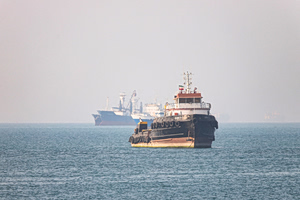
So far, Iran appears confident that time will work in its favor as the blockade of the Strait of Hormuz persists, and that the more it pushes the Trump administration, the more concessions it will garner.
“We know full well that the continuation of the status quo is intolerable for America, while we have not even started yet,” Iran’s parliament speaker and chief negotiator Mohammad Bagher Ghalibaf said on X.
The younger, more hard-line leaders steeled in Iran’s Islamic Revolutionary Guard Corps have concluded that their predecessors’ cautious approach—such as the limited strikes at U.S. bases in response to U.S. and Israeli bombing last year—was misguided, said Ellie Geranmayeh , Iran expert at the European Council on Foreign Relations. Faced with the choice of whether to continue enduring the American naval blockade, or to escalate, they have decided to escalate, though still stopping short of a full-blown war.
“The rules of the game have changed. Strategic patience is over and, in Tehran, they are no longer limiting themselves in terms of pulling the first punch,” Geranmayeh said. “It’s perhaps an experimentation phase, where they are trying to see to what extent this escalatory cycle can set their own redlines, and draw a line in the sand for how far Trump will go.”
The U.A.E., of course, isn’t just a passive observer taking the blows. The country has a powerful air force that is able to strike deep inside Iran, and it has said that it reserves the right to respond to “unprovoked Iranian aggression.” Still, diplomats said, it was unlikely to act militarily against Iran without American support—at least not in the immediate future.
“There is a strategic calculus as to what can be achieved out of any action. Reaction by itself is a knee-jerk reaction. The U.A.E. doesn’t operate like that,” said Mohammed Baharoon, director of the B’Huth Dubai Public Policy Research Center.
Iran has focused its ire on the U.A.E. because of the country’s growing cooperation with Israel, and because it is trying to take advantage of the rift between the U.A.E. and Saudi Arabia over wars in Yemen and Sudan, said Mehran Haghirian, director of research at the Bourse & Bazaar Foundation think tank.
“The view from Tehran is that the U.A.E.-Israeli alliance is the factor, and the only reason why the U.A.E. was the only of the six GCC states that was targeted,” he said, referring to the Gulf Cooperation Council.
The strategic Iranian threat—and the fear of American intentions—is likely to offset the longstanding rivalries within the Gulf in the foreseeable future, said Hamad Althunayyan, a political science professor at Kuwait University.
“Iranian actions are a test to the cease-fire, to GCC unity and to U.S. resolve,” he said. “But tolerating the kind of behavior that the Iranians are trying to normalize is not something that the Gulf states would accept.”
Write to Yaroslav Trofimov at yaroslav.trofimov@wsj.com