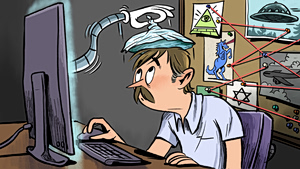
Twenty-nine years after that dark, damp Paris night in 1997, when Princess Diana, her partner Dodi Al-Fayed and their driver Henri Paul died after their black Mercedes slammed into the 13th pillar of the Pont de l’Alma tunnel, conspiracy theories about her death keep resurfacing, or new ones keep being born. Her death effectively launched one of the most durable and profitable conspiracy industries of the 21st century, with the image of the dead princess haunting collective memory with an almost mythic inevitability.

In Epstein’s Shadow
In the age of digital overload and algorithms, the narrative doesn’t fade so much as mutate. The latest chapter in this endless story tries to pull Diana into a completely new and unsettling web: that of convicted sex offender and financier Jeffrey Epstein.
Tabloid reports abroad, including recent pieces in OK! magazine, claim a new theory is circulating that Diana may have known too much about Epstein’s elite network, and that this knowledge sealed her fate, according to conspiracy theorists. Sources cited in these reports say there’s no confirmed evidence directly linking Diana to Epstein, but his ties to people in her circle have reignited questions about what she may have known.
This isn’t coming from nowhere. It feeds off Epstein’s well-documented ties to the British royal family, most notably the downfall of Prince Andrew, who was stripped of his titles following an out-of-court settlement with Virginia Giuffre, as well as his connections to Sarah Ferguson.

Back in 2025, Ghislaine Maxwell claimed Diana was someone Epstein had wanted to charm. Maxwell, 64, currently serving a 20-year sentence for recruiting underage girls for Epstein, said the two met at a high-profile event organized by Diana’s close friend, Baroness Rosa Monckton. Maxwell reportedly wasn’t sure if it was meant as a romantic introduction for Epstein, but according to The Sun, she was reluctant to say anything negative about Diana.
Diana And Britain’s Own “Epstein”
Diana’s proximity to trafficking circles allegedly wasn’t limited to the Palace. Her partner Dodi Al-Fayed was the son of disgraced Egyptian tycoon Mohamed Al-Fayed, who has himself faced allegations from women claiming they were trafficked to him, with some claims linking that network back to Epstein. Al-Fayed, who died in 2023, denied everything throughout his life, but for conspiracy theorists, the overlapping connections are simply too convenient to ignore.

The Architecture of Suspicion
To understand why these theories endure, it helps to look back at their origins. Two extensive investigations, one by French authorities and one by British police (the well-known 832-page Operation Paget report), reached the same firm conclusion: Diana’s death was a tragic, entirely preventable accident, caused by Henri Paul’s reckless driving while impaired by alcohol and medication, at high speed, trying to outrun the paparazzi.
Yet official findings rarely satisfy a public hungry for mystery. Distrust in institutions turns every gap or ambiguity into presumed proof of wrongdoing. Alasdair Spark, a researcher at the University of Winchester’s Centre for the Study of Conspiracy Culture, told Reuters that at the heart of it is a deep-seated belief that we’re always being lied to, that no government ever tells the full truth. People believe conspiracy theories the way they believe advertising, he said: a loose kind of faith, sometimes just a refusal to hesitate, but one that leaves room to accept something might be true.

Missing Puzzle Pieces
Every conspiracy theory feeds on small, unexplained details. In Diana’s case, that detail was, for years, the so-called white Fiat Uno, a car that forensic reports say brushed the Mercedes seconds before the crash but was never identified or located. To official investigators, it was a minor factor in a chain of misjudgments. To skeptics, it became proof of MI6 involvement acting on Palace orders.
Even Al-Fayed’s own father spent his life promoting his own politically charged version of events, insisting to the press that Diana and Dodi were killed in a deliberate plot by people who didn’t want her to marry his son and feared what she might reveal.
Other theories have surfaced too: arms dealers allegedly angered by her anti-landmine campaigning, tales of ritual killings by secret orders, claims she was murdered for refusing to marry Bill Clinton, or even that she faked her own death and lives on incognito.

The Psychology Of A Myth
Psychology offers some insight into why these stories won’t die. Research by Dr. Karen Douglas at the University of Kent found that people exposed to conspiracy theories are influenced by them at a deep level, often without realizing it, which makes them more likely to repeat, nurture, and pass the theories on to others, helping the myths persist over time.
The internet accelerated all of this. Within hours of her death being confirmed in 1997, early online forums were already filling with murder theories. Today, social media just speeds up the same process, tying Diana’s name to any story going, as long as death is involved somewhere.
As Spark put it, the questions and doubts surrounding that August night reveal far more about our own society than about the crash itself: an obsession that reflects deep public distrust of governments and institutions. He noted that even when official inquiries are held to address these doubts, people often dismiss the findings as part of the cover-up itself, keeping the cycle going indefinitely.
The public’s refusal to accept that one of the world’s most glamorous, powerful, and beloved women could be lost so simply, to a drunk driver and a handful of reckless photographers, leaves an unsettling void. Human nature, it seems, prefers a grand, sinister plot to the bare, blunt randomness of tragedy. Even now, Diana remains the ultimate symbol of an era that craved fairy tales but was fed a steady diet of tragedy instead.