 Μake us preferred on Google
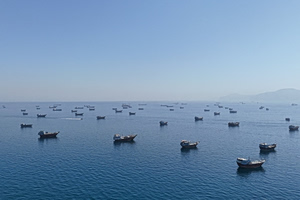
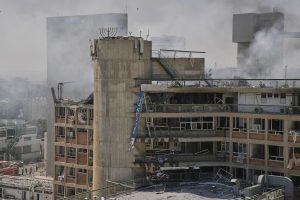
 Deadly missile attacks shut down Riyadh airport. Russian strikes on Ukraine kill more than 100 civilians across the country. Poland warns of the danger of Russian attacks inside the EU causing fatalities. China begins a six-day live-fire exercise along its coast.
All of these events took place over the past week. Collectively, they are part of a growing sense of global insecurity. Regions and countries that have for decades taken peace for granted — western Europe, east Asia, the Gulf states — now have to wrestle with the prospect, or the reality, of war.
As a journalist, I can date quite precisely when war changed how I understood the world. It was at the three-day Munich Security Conference that ended on February 20 2022 — just four days before Russia’s full-scale invasion of Ukraine. The US and British security and intelligence establishments at the conference were absolutely unequivocal in insisting that Vladimir Putin’s forces were about to march on Kyiv.
Over dinner in a Munich hotel, Andrew Shearer, then head of Australia’s Office of National Intelligence, recounted a conversation he had just had with Antony Blinken. The two men had been going over Russia’s invasion plans when Shearer had turned to the then US secretary of state and said: “I can’t believe we’re having this conversation in the 21st century.”
It was a remark that captured the conflicting emotions of that moment. On the one hand, there was an absolute certainty that Russia was about to launch a full-scale invasion. On the other, incredulity that this kind of thing could take place in modern Europe. Some of the Ukrainians and Europeans in Munich simply refused to believe that it was about to happen — clinging to the hope that it was all a gigantic bluff by Putin or that the intelligence was faulty in some way.
That refusal to believe that Europe’s peace was about to be shattered reminded me of a saying that is widely attributed to Trotsky: “You may not be interested in war, but war is interested in you.”
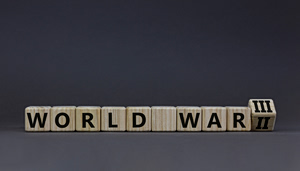
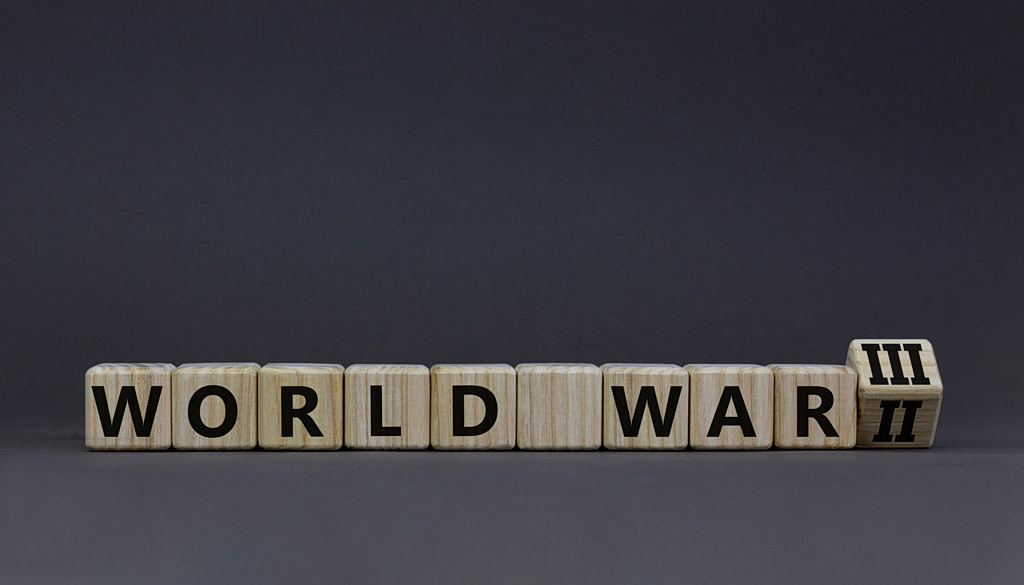
More than four years have passed since Putin launched his “special military operation”. In that time, the global political atmosphere has been transformed. Indeed, it has become commonplace for world leaders to speculate publicly about the outbreak of a third world war.
The International Crisis Group recently counted 65 ongoing conflicts around the world — the highest number since the end of the second world war
In the famous televised confrontation with Volodymyr Zelenskyy in February 2025, Donald Trump accused the Ukrainian president of “gambling with World War III”. Trump believed then — and probably still believes now — that western support for Ukraine risked dragging the US into a war with Russia. Zelenskyy has also frequently argued that the world is on the brink of a global conflict. But for the Ukrainian leader, the real danger stems from a failure to defeat Russian aggression. He has argued that “The whole world [has to] decide whether we want to stop Putin, or whether we want to start the beginning of a third world war.”
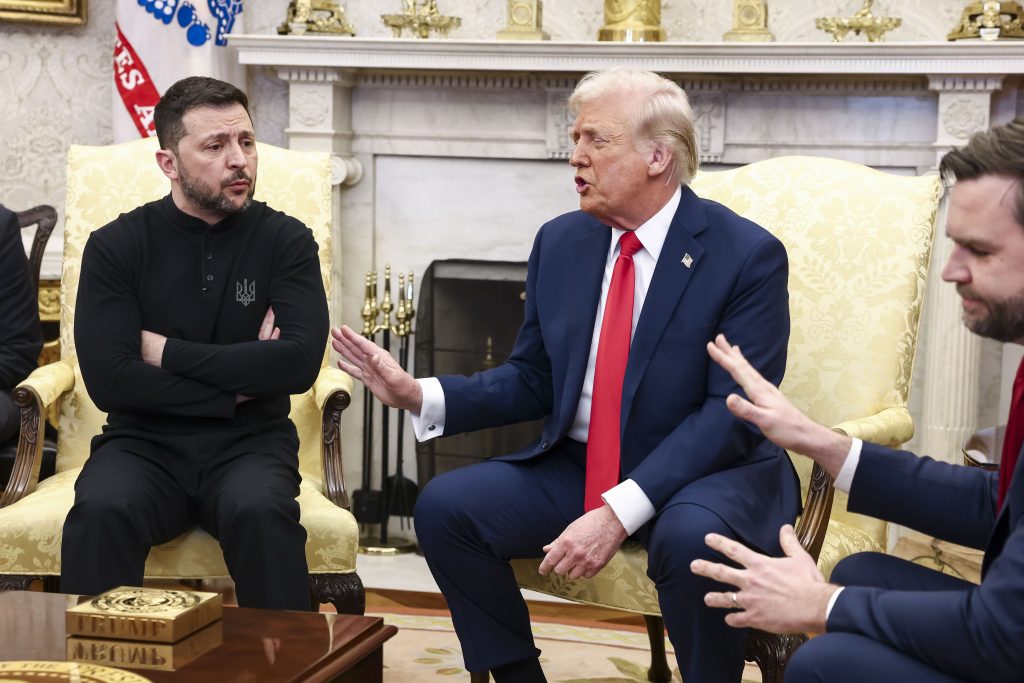
Ukrainian President Volodymyr Zelensky (L) talks with US President Donald Trump (C) and US Vice President JD Vance (R) in the Oval Office of the White House in Washington, DC, USA, 28 February 2025. EPA/JIM LO SCALZO / POOL
One might expect a wartime leader, desperate to rally support for his country, to dramatise what is at stake for the wider world. But western European leaders also take the threat from Russia very seriously. In the days that followed Russia’s full-scale invasion, the German government announced a Zeitenwende — a historic turning point — that would lead to Germany pouring billions into rearmament. Mark Rutte, Nato’s secretary-general, warned European leaders in 2025: “We are Russia’s next target . . . and we must be prepared for the scale of war our grandparents or great-grandparents endured.”
The fear that a global conflict may be brewing extends well beyond Europe. Xi Jinping consistently warns of the dangers of the US and China falling into a “Thucydides Trap”. The Chinese leader is picking up on a theory advanced by Graham Allison, a Harvard academic, that throughout history the dominant global power has tended to end up at war with the rising power.
Yet Xi’s own policies are contributing to the same great-power tensions that he warns of. Under his leadership, China has poured money into its military. It now has a larger navy than the US. Beijing is also steadily increasing the military and political pressure on Taiwan, which it has vowed to take by force if necessary. As US president, Joe Biden said four times that America would defend Taiwan in the event of a Chinese invasion.
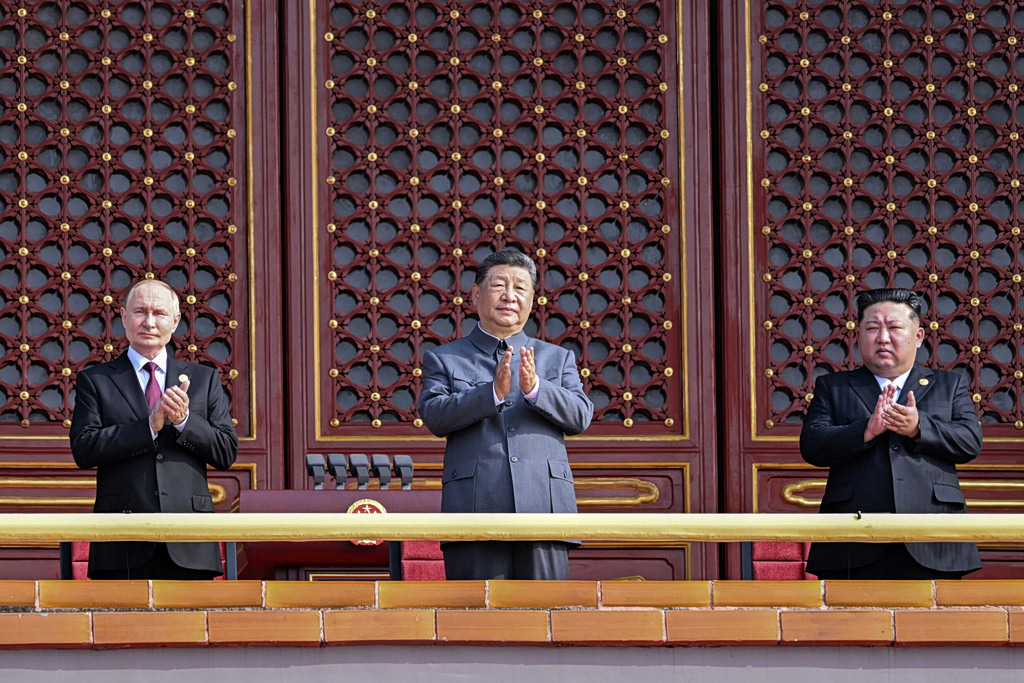
North Korean leader Kim Jong Un, Chinese President Xi Jinping and Russian President Vladimir Putin attend a military parade marking the 80th anniversary of the end of World War II at Tiananmen Square in Beijing Wednesday, Sept. 3, 2025. The content of this image is as provided and cannot be independently verified. (Korean Central News Agency/Korea News Service via AP)
Although world leaders have got used to chucking around the phrase “third world war”, they rarely stop to define the term. But, broadly speaking, a world war would have two defining characteristics.
The first would be that the world’s most powerful nations would have to be in direct conflict — as they were in the first and second world wars. The second is that the conflict would have to span continents.
So far, neither threshold has been crossed. However, the possibility has always been there. Russian hybrid warfare against the European backers of Ukraine — including sabotage, arson and assassinations — greatly increases the risk of accidental escalation. As Friedrich Merz, the German chancellor, put it last year: “We are not at war, but we are no longer at peace either.”
But could the Russia-Ukraine war turn into a truly global conflict? In the eyes of some of the participants, it already has. When North Korean troops arrived on the frontline to support the Russians in their fight against Ukraine, Zelenskyy called the development “the first step to a world war”. The war between the US and Iran has also overlapped with the Ukrainian conflict. The Iranians are widely believed to have received assistance in targeting US bases in the Middle East from Russia. Ukraine, meanwhile, has offered its expertise in counter-drone warfare to the Gulf states.
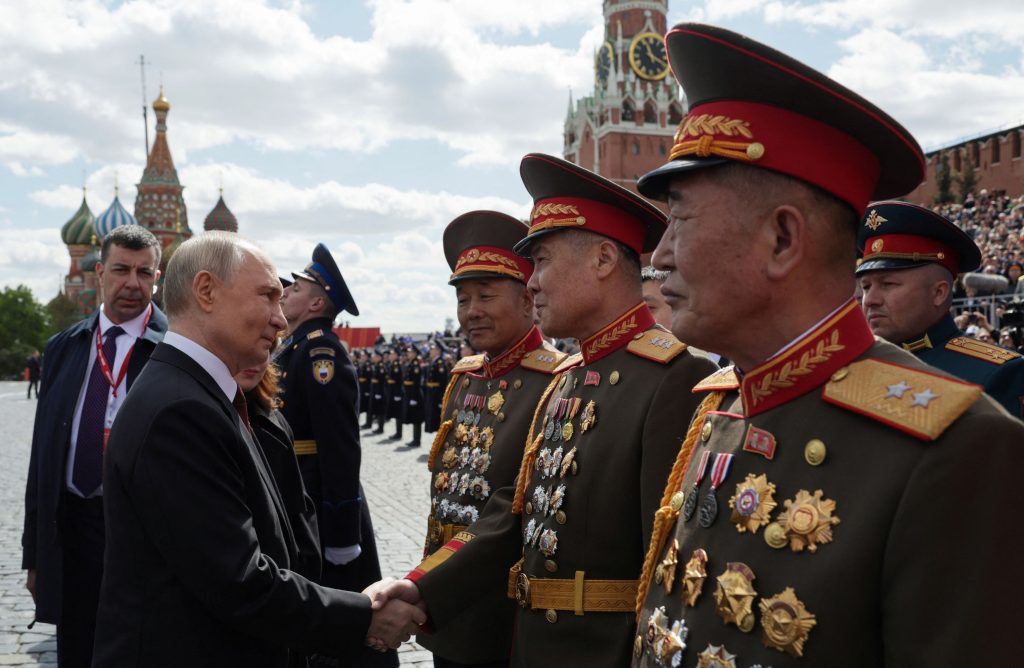
Russian President Vladimir Putin greets North Korean army generals after a military parade on Victory Day, marking the 80th anniversary of the victory over Nazi Germany in World War Two, in Red Square in central Moscow, Russia, May 9, 2025. Sputnik/Gavriil Grigorov/Pool via REUTERS
Western security officials are increasingly worried about the close ties between an “axis of adversaries” centred around Russia, China, Iran and North Korea. The word “axis” makes some analysts wary. Nonetheless, the ties are clearly there and are openly proclaimed. Russia and North Korea signed a mutual defence treaty in Pyongyang in 2024. Shortly before Putin’s full-scale invasion of Ukraine, the Russian president visited China and the two countries announced a “no limits partnership”. Chinese economic and technical help has been critical to allowing Russia to cope with western sanctions and to keep fighting in Ukraine.
In 1989, the G7 nations accounted for around two-thirds of global economic output. By 2022, the G7 represented about 43 per cent of global GDP
The four countries of the axis are united by their discontent with the US-led world security order. Russia resents Nato expansion and wants to see the alliance pushed back. Iran has attacked US military bases across the Middle East. North Korea threatens South Korea, which relies on the US for protection. China claims Taiwan and most of the South China Sea as its territory — and seems intent on displacing the US as the dominant power in the Pacific. Mark Rutte of Nato has frequently discussed the idea that China and Russia might launch co-ordinated military offensives in Asia and Europe at the same time.
Bleak warnings are being issued against the backdrop of a steady increase in warfare and battle deaths around the world. The Russia-Ukraine war has now been going on longer than the USSR’s war against Nazi Germany. The British government says that Russia has sustained 1.5mn casualties — killed or wounded — since the invasion began. Ukrainian casualties are less publicised but will run into the hundreds of thousands.
The war in Gaza is estimated to have led to 70,000 Palestinian deaths, as well as 2,000 Israelis — in addition to the 1,200 who died as a result of the Hamas attack of October 7 2023. The death toll from the current wars in the Gulf is lower than previous conflicts such as the war in Iraq. But the fighting has threatened the peace and security of states that were, until recently, regarded as relatively safe havens in the Middle East, such as Saudi Arabia and the United Arab Emirates.
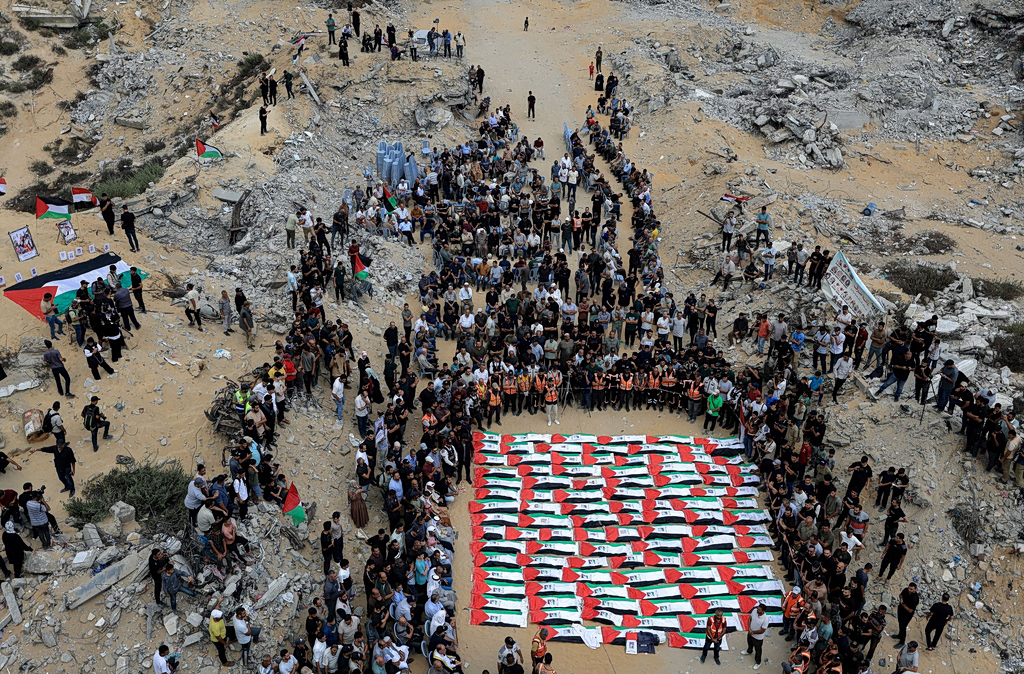
Mourners attend a mass funeral for Palestinians whose bodies were recovered from the rubble of a residential building hit in an Israeli strike in October 2023, according to the Civil Defence, in Gaza City October 1, 2026. REUTERS/Dawoud Abu Alkas TPX IMAGES OF THE DAY
The Iran and Ukraine wars dominate the global headlines. But the International Crisis Group recently counted 65 ongoing conflicts around the world — the highest number since the end of the second world war. The conflict in Sudan, fuelled by outside powers, is particularly bloody — punctuated by massacres of civilians and the displacement of more than 14mn people.
So what is driving this surge in conflict and bloodshed?
One important factor is a shift in the global balance of power that is encouraging revisionist powers to challenge the global dominance of the US and its allies. In 1989, the year of the fall of the Berlin Wall, the G7 nations — the US, UK, Germany, France, Italy, Canada and Japan — accounted for around two-thirds of global economic output and about the same percentage of international military spending. By 2022, the G7 represented about 43 per cent of global GDP and about half of global military spending.
The relative decline in the power of the western alliance has created an opening for revisionist powers that are unhappy with the current world order. So too has the growth of anti-war sentiment in the US, driven by disillusionment with the outcomes of the wars in Afghanistan and Iraq. Successive American presidents — Obama, Trump in his first term and Biden — promised to be peacemakers who would end forever wars.
This change in the international balance of power encouraged Russia, Iran and China to take more risks. Russia’s all-out invasion of Ukraine did not emerge from nowhere; it was preceded by Russian military aggression against Georgia in 2008, as well as the annexation of Crimea in 2014 and military intervention in Syria in 2015. China meanwhile has constructed military bases on artificial islands it created in the South China Sea — and pushed the Philippines out of Scarborough Shoal, which is much closer to the Filipino coast than to China.
If it came to it, would Trump’s America fight to defend the Baltic states? Or Poland? Or Japan or Britain? Nobody can be sure of the answer to those questions any more
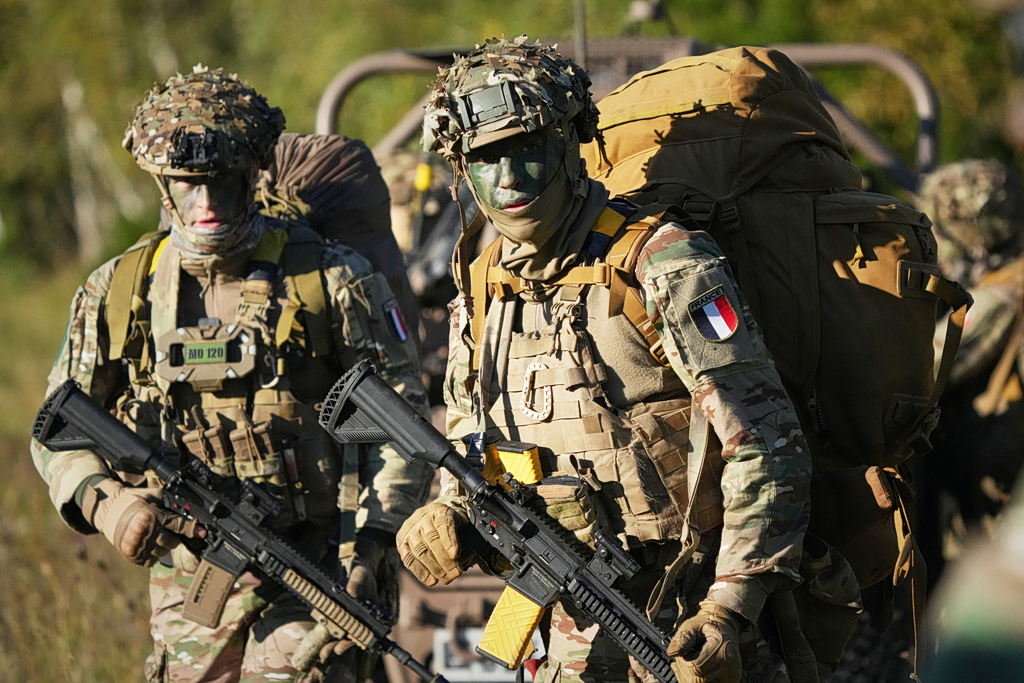
French service members participate in multinational military Exercise Pikne (“Lightning”) on Saaremaa Island, Estonia, Friday, Sept. 26, 2025. (AP Photo/Sergei Grits)
The emergence of a new generation of strongman leaders has contributed to this new atmosphere of international insecurity. Leaders such as Putin, Xi, Trump and Benjamin Netanyahu are nationalists and self-styled men of destiny. Asked from whom Putin was taking advice in the run-up to the full-scale invasion of Ukraine, Russian foreign minister Sergei Lavrov reportedly replied: “Ivan the Terrible, Peter the Great and Catherine the Great.”
In different ways, all these strongman leaders have embraced the idea of a “might makes right” world — and turned their back on the idea of a rules-based international order. Stephen Miller, Trump’s deputy chief of staff, gave a chilling summary of this view when he told an interviewer, “you can talk all you want about international niceties and everything else. But we live in a world, in the real world . . . that is governed by strength, that is governed by force, that is governed by power.”
Perhaps the most important international rule — or “nicety”, to use Miller’s term — is the prohibition on the forcible annexation of another nation’s territory through invasion. This was the principle that the western alliance rallied around after Saddam Hussein’s invasion of Kuwait in 1990 — and again after Putin’s attack on Ukraine in 2022.
But the second Trump administration has itself embraced the idea of US territorial expansion — even at the expense of its allies. Early in his second term, the US president laid claim to Greenland, an autonomous territory of Denmark. The Danes took the threat sufficiently seriously to mine the main runways on the island as protection against a possible US invasion.
Trump’s repeated aspirations to turn Canada into the US’s 51st state may be dismissed as mere trolling by some. But the Canadian government and people have reoriented their country’s foreign and economic policies in response — and let it be known that they have drawn up plans to fight a war against the US if it comes to it.
The embrace of the idea of territorial annexation by the world’s major powers — alongside the gleeful embrace of a “might makes right” philosophy — clearly increases the risk of international conflict.
There is a theory of peace, nonetheless, that lies behind some of Trump’s proclamations — as well as the territorial aspirations of Putin and Xi. This is the idea that great powers should be allowed to dominate a “sphere of influence” in their immediate neighbourhoods. Their smaller neighbours — such as Ukraine, Taiwan, Canada or Cuba — must accept the domination of the regional hegemon. What is more, if all great powers respect each other’s spheres of influence, then global peace can be maintained.
According to the theory, it is this kind of brutal realpolitik — rather than some imaginary rules-based order — that is the best guarantee of world peace. This idea may sound superficially plausible but it does not really withstand scrutiny. It ignores the views and interests of neighbouring countries. Must Canada meekly submit to the will of Trump? Is it inevitable and right that democratic Taiwan must simply submit to China’s one-party state? As Russia has discovered in Ukraine, smaller countries have rights and agency and can put up a fight.
Even when only the interests of the so-called “great powers” are considered, a world divided into spheres of influence cannot guarantee peace. The US is unlikely to accept the absorption of Taiwan into China, as long as the Taiwanese produce 90 per cent of the world’s most advanced semiconductors. The EU will never accept that member states such as Poland or Romania should be returned to Moscow’s orbit.
If the Trump-Putin vision of a world order based on spheres of influence does not work, other methods to keep the peace are needed. Since the late 1940s and the foundation of Nato, the US and its allies have relied on military deterrence. The idea is that any country that is tempted to expand its territory through military aggression must know that it will be met with a united and forceful response.
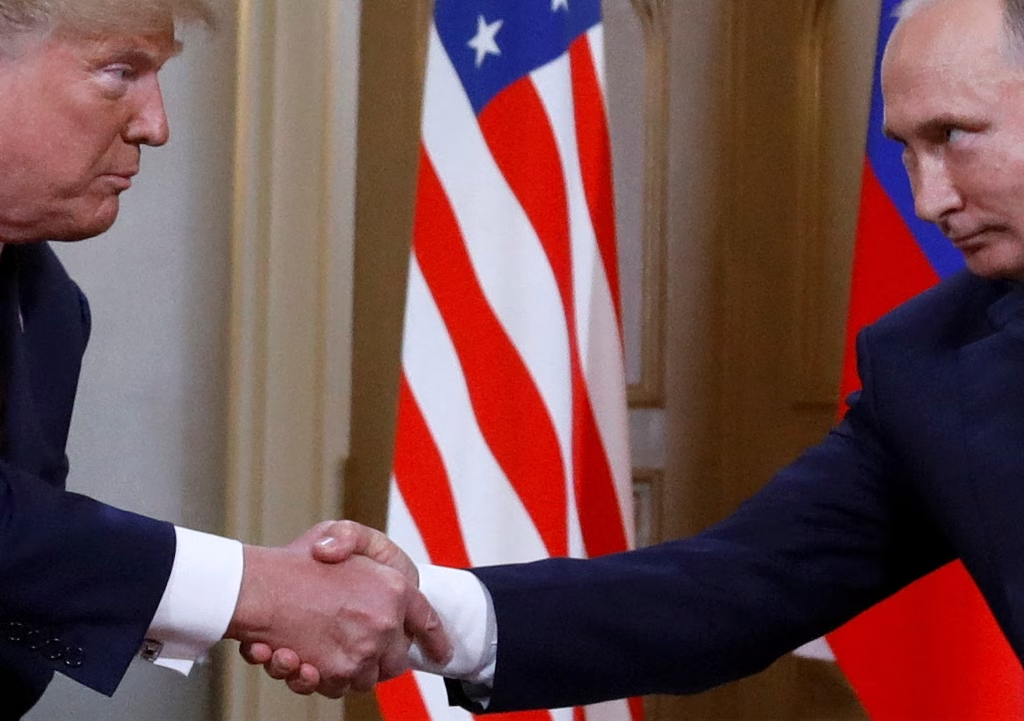
U.S. President Donald Trump and Russia’s President Vladimir Putin shake hands as they meet in Helsinki, Finland July 16, 2018. REUTERS/Kevin Lamarque/File Photo
By and large, deterrence — underpinned by the fear of nuclear war — worked. Direct conflict between the US and the USSR was avoided throughout the cold war — despite some near-misses, notably during the Cuban missile crisis of 1962. But Trump is clearly attracted to the idea that the US should retreat from its security commitments to its allies — whom, at various times, he has denounced as freeloaders and cowards.
If it came to it, would Trump’s America fight to defend the Baltic states? Or Poland? Or Japan or Britain? Nobody can be sure of the answer to those questions any more.
History suggests that the greatest risk of a third world war may lie in that very uncertainty. The final crises that led to the first and second world wars both involved alliance systems and security commitments that had lost credibility. In 1914, Britain had guaranteed the neutrality of Belgium but the German government believed that the UK would not go to war over a “scrap of paper” that had been signed in 1839. That was a miscalculation. In 1939, Britain and France extended a security guarantee to Poland in an attempt to deter the Nazis. But Hitler’s previous encounters with British and French leaders convinced him that they would back down again. He was wrong.
Today, Xi has to consider whether America’s Taiwan Relations Act — which commits the US to opposing the use of force against the island — still means something. Putin must make a similar calculation about Nato’s Article Five — which commits all 32 alliance members to defend each other. Is it still an ironclad commitment — or just another “scrap of paper?”
These are the questions on which the peace of the world may depend.
Gideon Rachman is the FT’s chief foreign affairs commentator. His new book ‘War is Interested in You’ is published by Bodley Head on October 22
Link to FT.com: https://www.ft.com/content/3a56575e-ecfb-4fa9-af70-01aebd869729
Copyright The Financial Times Limited 2026
© 2026 The Financial Times Ltd. All rights reserved. Please do not copy and paste FT articles and redistribute by email or post to the web.