 Μake us preferred on Google
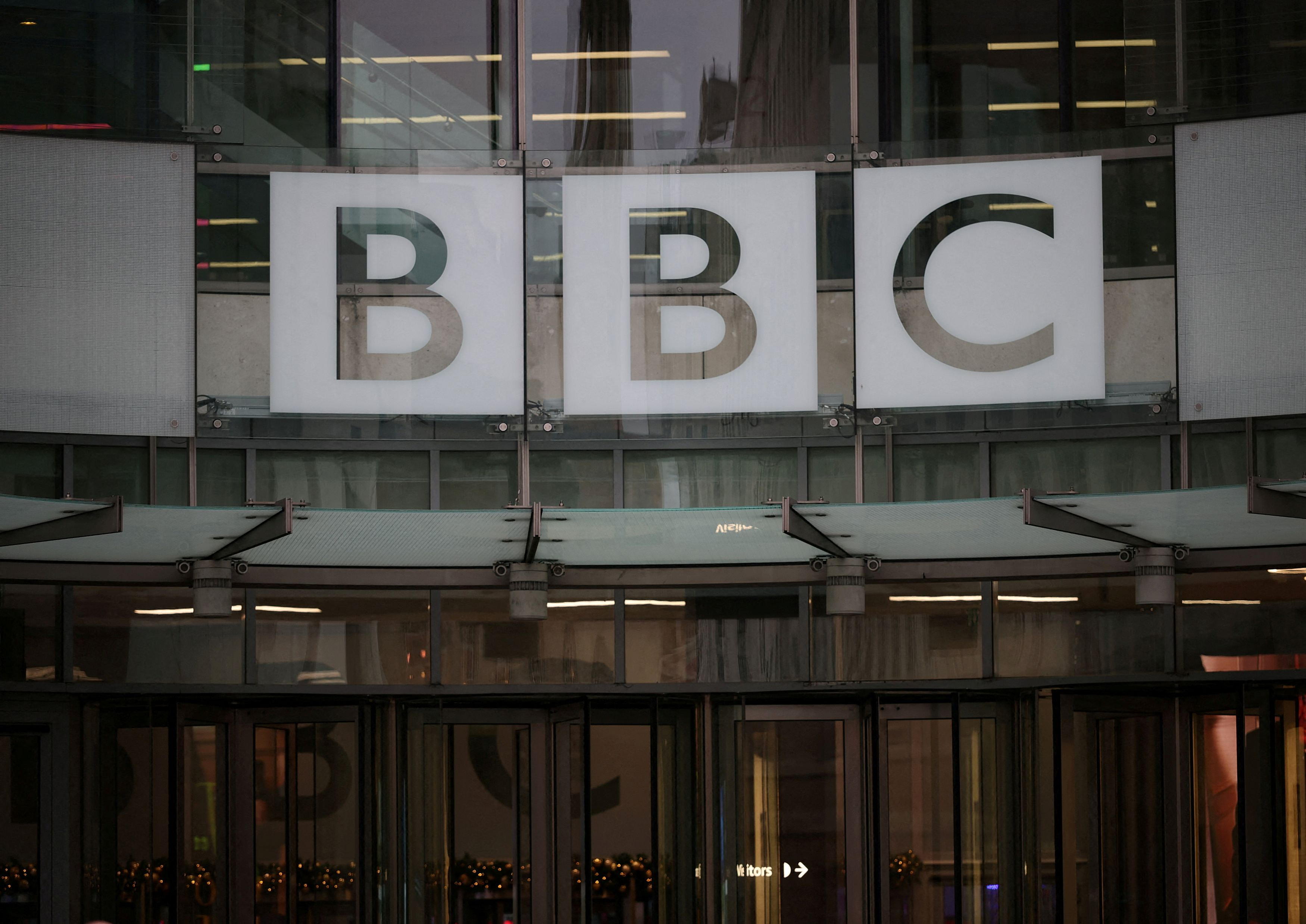
 On 18 October 1922, a group of British wireless manufacturers, including Marconi, established the British Broadcasting Company. Few could have imagined that their venture would become one of the world’s most influential media institutions, shaping British culture, transforming international journalism and establishing a model of public service broadcasting that would endure for more than a century.
Daily broadcasting began on 14 November 1922, from Marconi’s 2LO studio in London’s Strand. The early programmes consisted of news bulletins supplied by an agency, music, drama and talks, broadcast for only a few hours each day.
In December, a 33-year-old Scottish engineer, John Reith, was appointed General Manager. He later recalled: “I hadn’t the remotest idea as to what broadcasting was.”
Yet Reith would establish the philosophy that came to define the BBC: to inform, educate and entertain. In 1927, the company became the British Broadcasting Corporation, operating under a Royal Charter.
Today, as the BBC marks its 104th anniversary, that founding vision faces an increasingly uncertain future.
The broadcaster is confronting controversies over editorial standards and workplace culture, accusations of political bias, financial pressures and competition from global technology companies. Its traditional funding model is under scrutiny as Britain prepares for the renewal of its Royal Charter in 2028.
Speaking to TO VIMA, four British-based academics offer contrasting assessments of whether the BBC can preserve the values that made it a global institution.
‘A uniquely British product of the Enlightenment’
For Jean Seaton, Professor of Media History at the University of Westminster, the BBC’s contribution extends far beyond its original ambitions.
“It’s created a mission far beyond the visionary imagination of the founders,” she tells TO VIMA.
Seaton argues that the BBC has shaped British identity while simultaneously influencing how the country is understood internationally.
“It’s shaped a British temperament and a British understanding,” she says, emphasising the importance of the BBC World Service and internationally recognised programming, including David Attenborough’s natural history documentaries.
She contrasts the BBC’s public service philosophy with the commercial priorities of technology giants.
“If only Meta or X was led by a visionary who had a sense of the public value of communications,” she remarks.
For Seaton, the BBC’s defining characteristic is its accountability to the public rather than shareholders or political interests.
“It operates not in the interests of people making money, not in the interests of people who wish to ideologically persuade the nation one way or another, or indeed the world, but in the interests of the entire British public.”
She describes the organisation as “a uniquely British product of the Enlightenment”, rooted in values of rationality, knowledge and democratic participation.
From the trauma of war to a trusted institution
Dr Alban Webb, Professor in Media and Cultural Studies at the University of Sussex, believes the BBC’s origins offer important lessons for its present difficulties.
Speaking to TO VIMA, he explains that radio emerged in Britain against the backdrop of widespread distrust of information following the First World War.
Public confidence in newspapers had been damaged by the disparity between wartime reporting and the experiences of families whose relatives never returned from the front.
“The distrust in the way that the war was reported in the British papers meant that when this new medium arrived in the British context, there was a desire, both political and public, for a more controlled public service that could be trusted,” he says.
Unlike the advertising-driven broadcasting model that developed in the United States, Britain established a system prioritising public service.
Reith’s vision, Webb explains, was shaped by a belief that broadcasting should provide audiences with what they needed, rather than simply what they wanted.
A century later, the BBC continues to operate according to that principle, although the environment in which it functions has changed dramatically.
“We are in the middle of a crisis of trust in our sources of information,” Webb warns.
Artificial intelligence and the proliferation of digital content have intensified the challenge of distinguishing reliable journalism from misinformation.
Scandals, editorial failures and the battle for credibility
The BBC’s reputation has nevertheless been damaged by controversies involving prominent personalities and editorial decisions.
The Huw Edwards scandal, concerns about workplace culture and the editing of a Donald Trump speech in a Panorama documentary have raised questions about institutional accountability.
Petros Iosifidis, Professor of Media and Communication Policy at City St George’s, University of London, believes these episodes have exposed serious organisational weaknesses.
Speaking to TO VIMA, he argues that the Edwards scandal revealed problems within the BBC’s internal hierarchy and its treatment of influential presenters.
He warns that unless the organisation addresses a culture in which powerful individuals can escape proper scrutiny, further scandals may follow.
Iosifidis also considers the controversy surrounding the editing of Trump’s speech particularly damaging because of Panorama’s longstanding reputation for investigative journalism.
He believes the combination of workplace controversies and editorial failures has contributed to an erosion of public confidence.
Seaton offers a markedly different assessment.
“I am not saying that the BBC is perfect,” she says, acknowledging that it has made serious mistakes throughout its history.
However, she argues that the institution’s governance arrangements distinguish it from commercial digital platforms.
“The absolute key thing about the BBC and public service broadcasting is that it is held to account by the governance that it’s got.”
She also rejects suggestions that the Trump controversy constitutes an existential crisis for the broadcaster.
Webb similarly stresses the importance of distinguishing editorial failures from wider institutional safeguarding problems.
He argues that the controversy over Trump’s speech illustrates a paradox: the BBC’s internal editorial scrutiny can expose errors that subsequently become politically damaging.
“The kind of standard of editorial review that the BBC practises is way above most of its competitors and in an entirely different sphere from social media platforms,” he says.
Nevertheless, he acknowledges that workplace misconduct and safeguarding failures require transparent investigation and accountability.
The World Service: More than British soft power
Beyond domestic controversies, the BBC’s international influence remains central to its identity.
Marie Gillespie, Professor of Sociology at The Open University, argues that the BBC World Service’s historical significance cannot be reduced to promoting British interests overseas.
Speaking to TO VIMA, she explains that its enduring contribution lies in fostering intercultural dialogue and relationships of trust across linguistic, cultural and political boundaries.
For generations, the World Service provided reliable information to audiences living under censorship, conflict and authoritarian rule.
From occupied Europe during the Second World War to Cold War Eastern Europe, Somalia and Afghanistan, its broadcasts offered connections to the outside world.
During the Second World War, the BBC expanded its foreign-language broadcasting to more than 40 languages, including Greek.
Gillespie highlights the essential contribution of multilingual journalists, refugees and political exiles who brought intimate knowledge of their audiences’ societies.
These broadcasters were not merely translating British perspectives, she explains, but actively shaping international journalism through cultural understanding.
Her research with Webb, including Diasporas and Diplomacy, demonstrates that the World Service’s international credibility was built through collaboration rather than one-way communication.
“The World Service has often advanced Britain’s international standing most effectively precisely because it has been perceived as independent of the British government,” she tells TO VIMA.
Such influence, she warns, is difficult to manufacture and vulnerable to political interference.
“It takes decades to build but can be rapidly undermined when editorial independence or public trust is compromised.”
A funding model under pressure
The BBC’s financial future presents another major challenge.
The television licence fee, which has historically provided the foundation of its public funding, is increasingly contested as audiences move towards streaming services and online platforms.
Seaton argues that successive Conservative governments significantly reduced the BBC’s financial resources over the preceding 15 years.
She nevertheless expresses confidence that a new Royal Charter will be agreed and hopes that a more durable settlement will provide greater institutional stability.
Webb identifies the recurring Charter renewal process itself as a structural weakness.
Although the BBC is editorially independent, periodic political intervention creates uncertainty over its long-term direction.
“The future of the BBC can never get beyond short-term planning, because it might be reorganised every five or ten years,” he explains.
Iosifidis takes a more pessimistic view of the current funding system.
“I would say that it’s not sustainable today,” he tells TO VIMA.
He argues that the broadcaster must develop new funding arrangements while protecting its public service obligations.
For Gillespie, financial sustainability cannot be separated from editorial independence, institutional diversity and democratic accountability.
The challenge, she argues, is not simply to preserve an existing organisation but to demonstrate its continuing value to increasingly diverse audiences.
‘A generational time bomb’
Perhaps the most immediate challenge comes from changing audience behaviour.
Netflix, YouTube, TikTok and other global platforms have transformed how people consume news and entertainment, particularly among younger generations.
Iosifidis describes the situation as a “generational time bomb”.
He believes audience fragmentation represents the BBC’s most profound long-term challenge.
Its survival, he argues, depends on engaging younger audiences without abandoning the public service mission that distinguishes it from commercial competitors.
“If it fails, in my view, to bridge its generational divide, the funding model will collapse and the BBC consequently will fracture.”
Webb, however, cautions against treating the BBC simply as another competitor in the digital attention economy.
He describes the broadcaster as an interconnected institution in which news, drama, entertainment and education reinforce one another.
Dismantling commercially successful programming to concentrate exclusively on services neglected by the market could, he argues, undermine the organisation as a whole.
The crucial distinction is between the circulation of information and the provision of credible, evidence-based journalism.
“When there’s a problem or there’s a disaster or an emergency, people turn to the BBC to find out what’s going on,” he says.
What would the world lose without the BBC?
The anniversary ultimately raises a question extending beyond Britain’s broadcasting industry: what happens if one of the world’s most established public service media institutions can no longer fulfil its mission?
Iosifidis offers a stark assessment.
“For me, Britain will lose its cultural mirror and the wider world will lose one of the most resilient beacons of trusted journalism.”
Seaton believes the greatest threat is broader than funding or technological change.
“The biggest threat to us all is the threat to the Enlightenment and democracy,” she says.
She argues that governments and citizens must defend the principles of reliable information, rational debate and democratic accountability.
Gillespie is less optimistic about the BBC’s prospects.
“The current political, economic and media environment do not seem conducive to sustaining an institution of its scale and ambition,” she warns.
Yet she believes the BBC’s public service principles have become more important precisely because they are increasingly difficult to maintain.
“I fear that, without a renewed political and public commitment to the value of public service broadcasting, we risk gradually losing something that has taken more than a century to build, and that would be extraordinarily difficult to recreate.”
A century after Reith began experimenting with an unfamiliar new medium, the BBC faces another moment of transformation.
Its survival may depend not simply on adapting to technological change, but on convincing a new generation that independent, accountable journalism remains a public good worth protecting.