Chinese President Xi Jinping’s first trip to Washington in more than a decade was long on spectacle and short on results, and analysts say that is exactly the outcome Beijing was hoping for.
The three-day state visit began with a break from protocol. Instead of receiving Xi at the White House, as presidents typically do with foreign leaders, Donald Trump and first lady Melania Trump traveled to Joint Base Andrews in Maryland to greet Xi and his wife, Peng Liyuan, on the tarmac. The days that followed featured a tour of Trump’s new helipad and Marine One, an exchange of gifts and compliments, a 90-minute meeting Trump later described as great, and a formal state dinner. One of the few tangible announcements was that China would send two giant pandas to Zoo Atlanta.
Held four months after Trump’s state visit to Beijing in May, the summit was widely seen as a subdued rerun of that trip: plenty of symbolism, few concrete agreements. Expectations were modest going in, yet the results still managed to fall short of them.
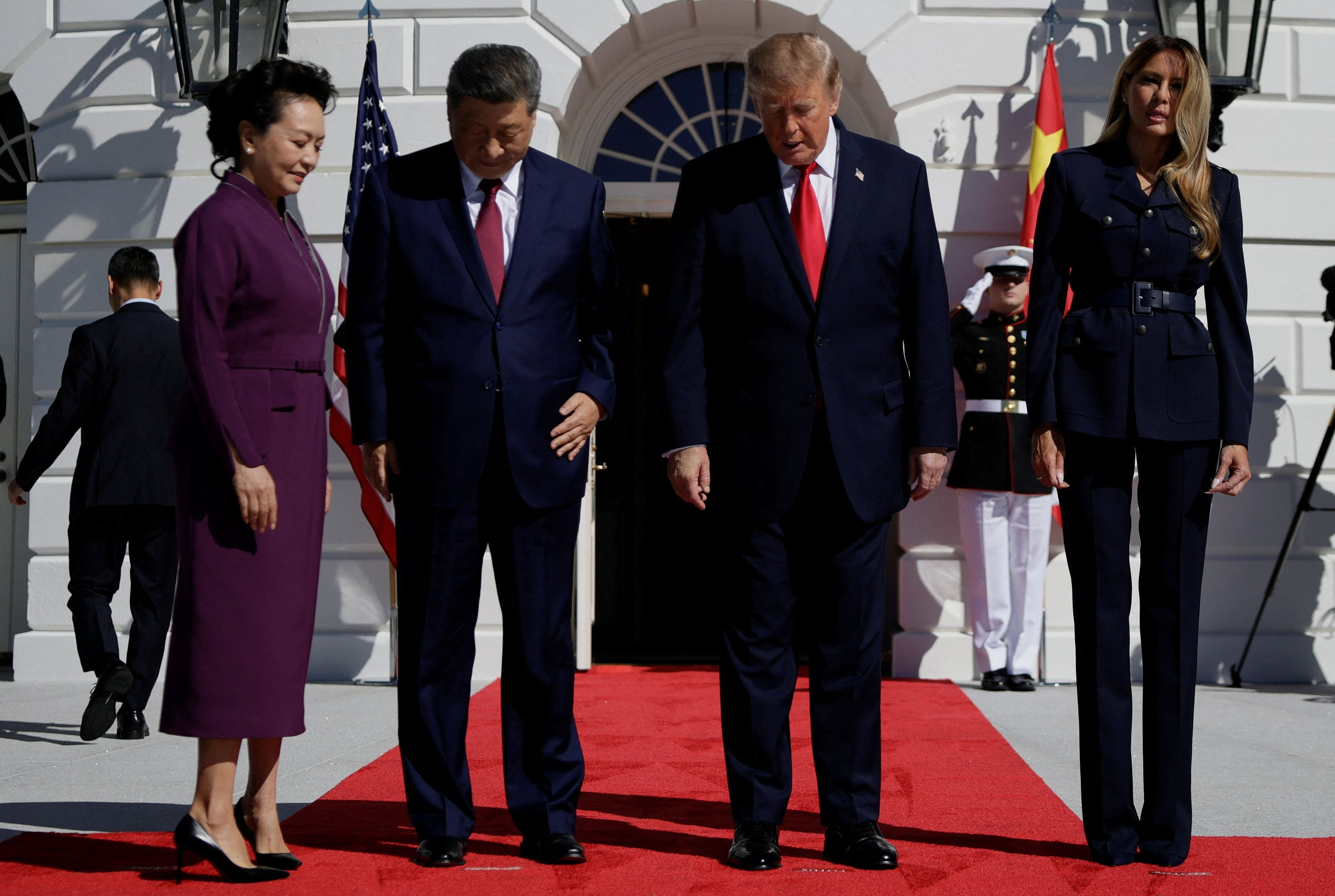
US President Donald Trump and first lady Melania Trump greet Chinese President Xi Jinping and his wife Peng Liyuan at the White House in Washington, DC, US, September 25, 2026. REUTERS/Evan Vucci
A brief truce extension
Trade was the only area where the two sides reached any agreement, and even that was limited. The tariff truce negotiated in Busan last year was set to expire in November. Beijing, whose economy relies heavily on exports, pushed to extend it through the end of Trump’s term in January 2029. It got two more months. Analysts said the short extension showed both how little preparation went into the summit beyond the ceremony and how deep the divisions between the two countries still run.
Trump’s tariffs have had some impact. The US trade deficit with China shrank from nearly $300 billion in 2024 to roughly $200 billion in 2025. But some of that decline reflects Chinese goods being routed to the US through third countries, and China’s overall trade surplus topped $1 trillion last year. Beijing’s most effective response, cutting off exports of rare earth minerals critical to American manufacturing and defense, appears to have made the administration more reluctant to take risks in dealing with China.
Xi also came without the sizable business delegation that joined Trump in Beijing. A Chinese international relations scholar said the absence signaled that no real breakthrough on business or trade had yet occurred, and that both governments were still focused on stabilizing political ties.
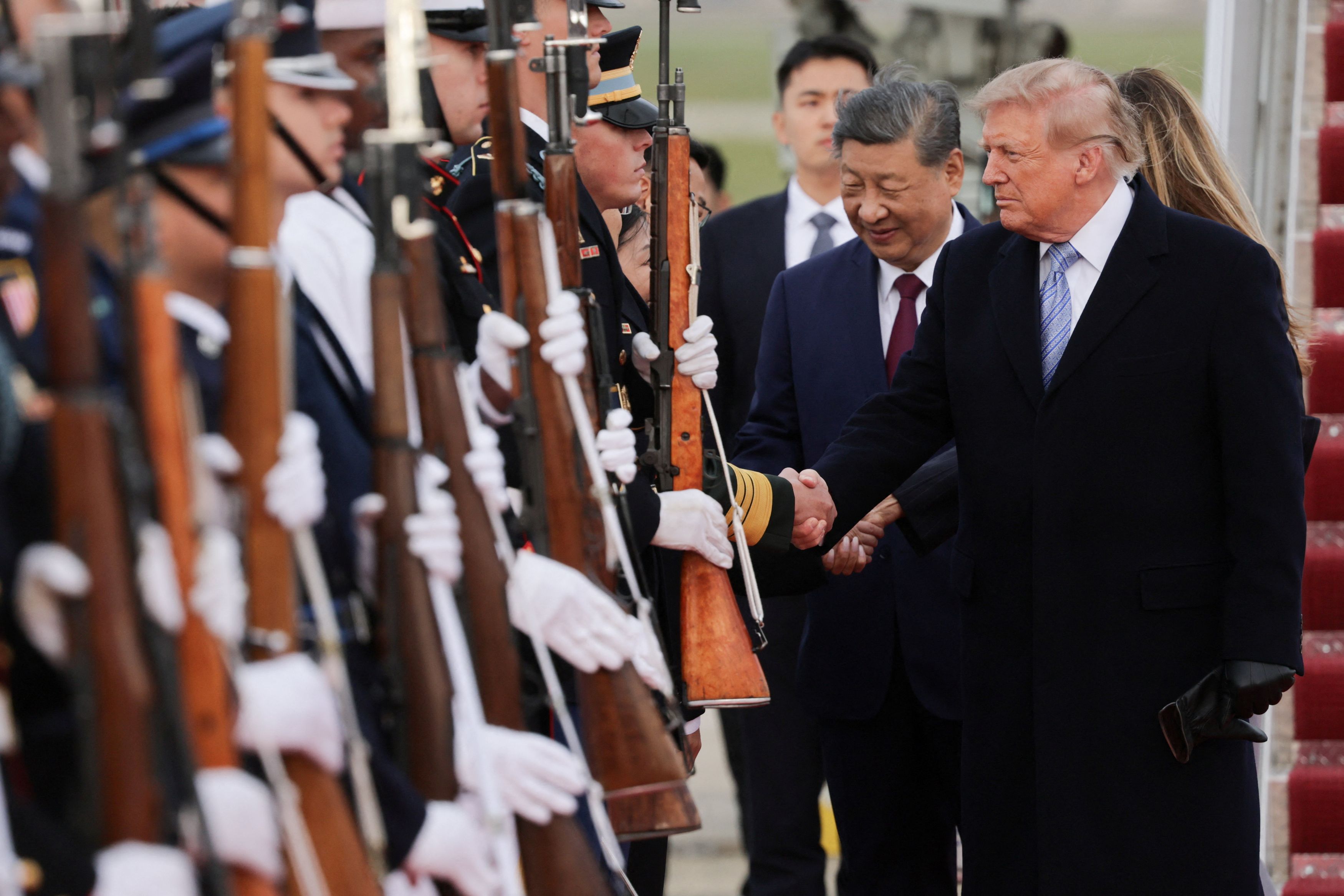
US President Donald Trump, first lady Melania Trump, Chinese President Xi Jinping and his wife Peng Liyuan review an honor guard as they arrive ahead of a state visit at Joint Base Andrews, Maryland, US, September 23, 2026. REUTERS/Jonathan Ernst
Xi’s pitch: cooperation over rivalry
At the state dinner, Xi presented China’s rise as an opportunity for the United States rather than a danger, calling for the two peoples to move forward together. He drew a parallel between Trump’s “Make America Great Again” slogan and his own long-term agenda of national rejuvenation, which aims to make China a world-leading military, industrial and technological power. He also urged the US to welcome Chinese companies. Trump, in turn, highlighted the long history of trade and friendship between the two nations and said relations had never been better.
Xi arrived with considerably more leverage than on his last Washington visit. Despite US limits on Chinese imports, investment and access to American technology, China has kept exports at record levels, made rapid gains in AI and robotics, and maintained control over materials the US depends on.
Core disputes left unresolved
Beyond the trade extension, the summit produced no meaningful progress on AI, Taiwan, the wars in Iran and Ukraine, or human rights.
On Taiwan, which Beijing regards as the most important issue in the relationship, Xi pressed Trump behind closed doors to “oppose” Taiwanese independence, according to Chinese state media. That would mark a notable shift from Washington’s current stance that it does not support independence, a deliberately ambiguous position that coexists with a legal commitment to sell Taiwan weapons for self-defense. Trump has not said whether he agreed, but he appears no closer to approving a pending $14 billion arms package for the island. The White House did not release a statement on the meeting.
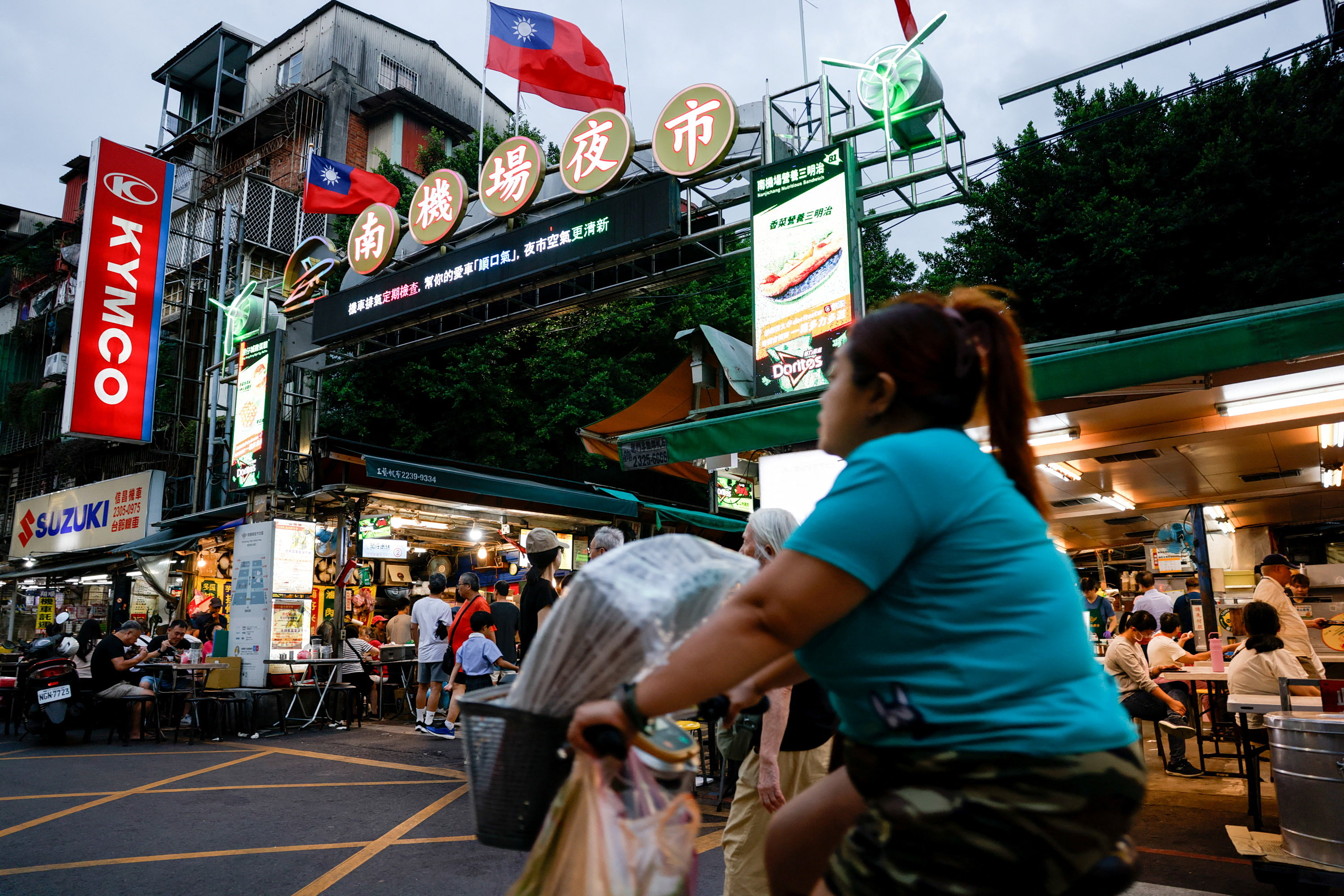
A person rides a bike past Taiwan flags, above the entrance to Nanjichang Night Market, in Taipei, Taiwan, September 24, 2026. REUTERS/Ann Wang
On AI, Xi called for the two countries to jointly manage the technology’s development responsibly. US officials have been alarmed by how quickly Chinese AI has advanced despite export controls and have accused Chinese firms of copying American models, while Beijing has warned of countermeasures if Washington tries to hold back its AI industry. Trump, who has called fears about AI a hoax that benefits China, posted during the visit that he wanted to keep AI policy as it is and that China shared that view.
Criticism at home, satisfaction in Beijing
The visit was also overshadowed by Trump’s decision to bar reporters from CNN, MS Now and Politico from the White House press pool. A court later struck down the ban, but major networks did not broadcast the meeting, and officials in both countries reportedly worried about how the summit would be perceived. The trip comes as Trump faces growing pressure over the prolonged war with Iran and rising inflation ahead of the November midterm elections.
Senate Democrats accused the president of putting pageantry ahead of purpose. A former senior China official in the Biden administration said the summit’s most striking feature was Trump’s deference toward Xi.
For Beijing, the lack of headlines was a win in its own right. As one Asia Society analyst noted, Xi received full state honors and powerful images of himself standing as the American president’s equal on the world stage, all without offering any significant concessions.
Sources: CNN analysis by Stephanie Yang and Sylvie Zhuang; The Guardian, Amy Hawkins, September 25, 2026.