Anthropic filed a lawsuit Monday against the Trump administration for designating the artificial-intelligence company a security threat and trying to cancel its federal contracts, bringing the battle between the two sides to the court system.
In designating Anthropic a supply-chain risk for the Pentagon and directing agencies to cut ties with the company, the administration went beyond its statutory authority with harsh retaliation because Anthropic didn’t agree on how AI should be used by the Defense Department, the company argued.
“Defendants are seeking to destroy the economic value created by one of the world’s fastest-growing private companies, which is a leader in responsibly developing an emergent technology of vital significance to our nation,” Anthropic said in its complaint filed in the Northern District of California. The company asked the court to declare the moves unlawful and said that the case is critical for other businesses that may disagree with the government.
Anthropic listed the Defense Department, Defense Secretary Pete Hegseth , a host of federal agencies and many other administration officials as defendants. The Defense Department declined to comment.
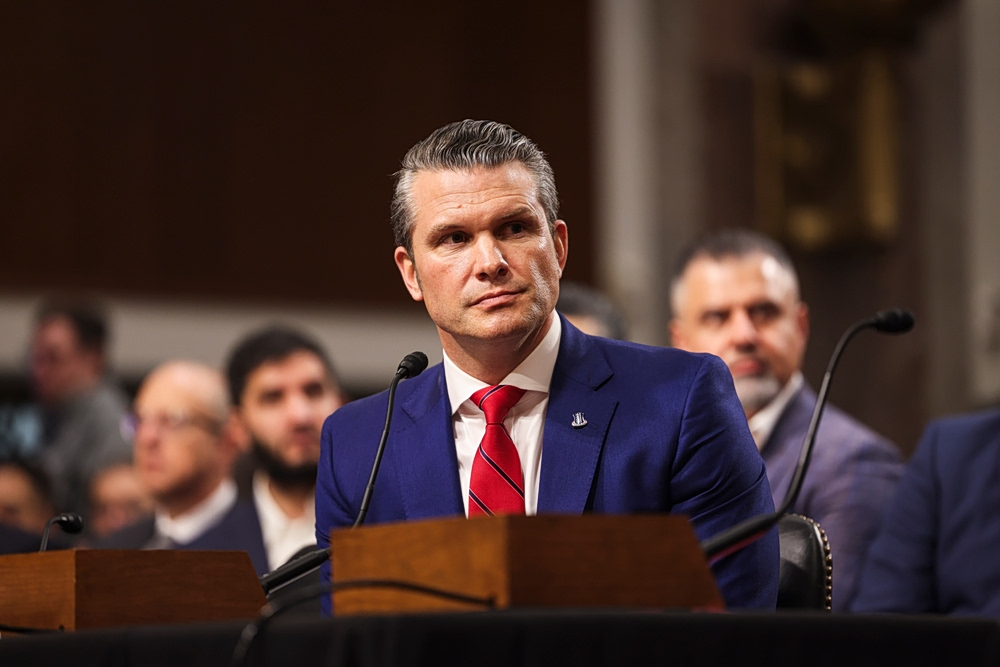
Pete Hegseth, U.S. Secretary Of Defense
The legal battle signals a new front in the fight between Anthropic and the Trump administration, which are feuding over what AI guardrails are needed at the Pentagon and in society broadly. In contract negotiations with the Defense Department, Anthropic wanted explicit guarantees that its AI tools wouldn’t be used for mass domestic surveillance or autonomous weapons. The Pentagon said it wouldn’t do those things and always follows the law, so the company should trust it to use AI in all lawful scenarios.
They have also clashed over President Trump’s decision to allow AI chips to be exported to China and Anthropic’s ties to organizations that have donated to Democratic causes.
The conflict has made Anthropic a lightning rod for criticism from allies of the Trump administration but boosted the company’s business , with many consumers and Anthropic partners using its AI models and praising it for fighting Trump.
The clash escalated on Feb. 27 when Hegseth said he would designate the company a supply-chain risk, an action normally used on businesses from overseas adversaries. The designation requires top Pentagon officials to demonstrate there is a security threat.
It means that Anthropic customers who also work with the Pentagon may have to show they didn’t use the company’s Claude models in their Defense Department activities, potentially hurting Anthropic’s business.
“Seeking judicial review does not change our longstanding commitment to harnessing AI to protect our national security, but this is a necessary step to protect our business, our customers and our partners,” an Anthropic spokeswoman said. “We will continue to pursue every path toward resolution, including dialogue with the government.”
The Pentagon has said formal negotiations between the two sides have ended.
Anthropic investors and partners including Microsoft and Google have said they will continue working with the company on commercial projects that don’t involve the Pentagon.
Anthropic supporters say the company can’t be a serious national-security threat while the Defense Department uses its Claude models in its Iran operations. The company was the only AI model developer with approval to be used in classified settings until recently.
Hegseth and administration officials have argued that Anthropic’s refusal to let the Pentagon use its AI tools in all lawful use cases presents a security risk because the company is trying to exert control over how the military uses technology. Such moves can put operations at risk if a company decides to turn off its tools or change settings, they have said.
The same day Hegseth said he would use the supply-chain risk designation, Trump told all federal agencies to stop using Claude and that they would have six months to transition to models from other AI companies.
Anthropic said in the complaint that the six-month timeframe highlights how essential the company’s tools are to the government.
The company said Trump didn’t follow the proper steps for canceling a company’s government contract and went beyond his authority.