Pastor Ezra Jin was just finishing dinner with his elderly mother-in-law in the Chinese city of Beihai last October when more than a dozen police appeared at the door.
They stormed the apartment, confiscated his phones and computer, and hauled him off to jail.
Since then, he’s been confined to a dank cell at Beihai’s No. 2 Detention Center, cut off from his flock and his family, 8,000 miles away in the U.S. His sin: leading a church that Xi Jinping couldn’t bring to heel.
For years, Jin built a thriving Protestant congregation in the heart of Beijing, known as Zion Church, that operated outside the government’s system of tightly controlled official churches. Authorities once tolerated Jin and others like him, back when China’s economy was thriving and the country was gradually opening up to the world.
Then Xi took power and began tightening the screws. Officials interrogated churchgoers, threatened they could lose their jobs and pressured landlords who rented space to churches. Authorities demanded surveillance cameras be installed at Zion. Some of Jin’s assets were frozen, and he was barred from leaving China.
Jin refused to back down . After authorities raided Zion in 2018 and shut it down, he took his preaching online using Zoom and other digital tools—and reached more followers than ever, placing the pastor on a dangerous crash course with Xi’s government.
His arrest was part of one of China’s biggest crackdowns on Christianity in decades. Jin is being held for suspected “illegal use of information networks” related to Zion’s online ministry, along with 17 others associated with the church.
The struggle is about more than one man’s stubborn refusal to surrender his faith.
To a degree many observers thought impossible when China’s leader took power more than a decade ago, Xi has succeeded in using digital surveillance and tough jail sentences to silence activists, lawyers and business leaders who speak out of turn. But he still can’t fully control Christians, who number in the tens of millions in China.
In fact, many believers say the more authorities seek to suppress Christianity in China, the more the faith will spread and grow stronger.
“It’s the highest honor for a Christian, for people like Pastor Jin, being put in prison,” said Sean Long , another pastor at Zion. “That’s exactly the mark of following Jesus.”
Zion has continued to operate, its prominence has grown and the crackdown has galvanized support for the church in the U.S.
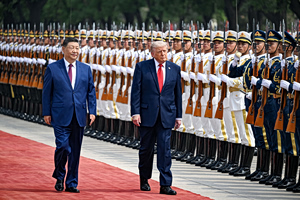
President Trump promised to raise Jin’s case during his state visit to China, and said at the conclusion of the trip Friday that Xi was giving serious consideration to releasing the pastor. A White House official said Trump cares deeply about Christians around the world.
Jin’s daughter, now an American citizen, is fighting to keep her father’s struggle in the public eye. Grace Jin Drexel has rallied support in Congress. She said Trump raising the case with Xi is an important step in winning her father’s release but a difficult road lies ahead.
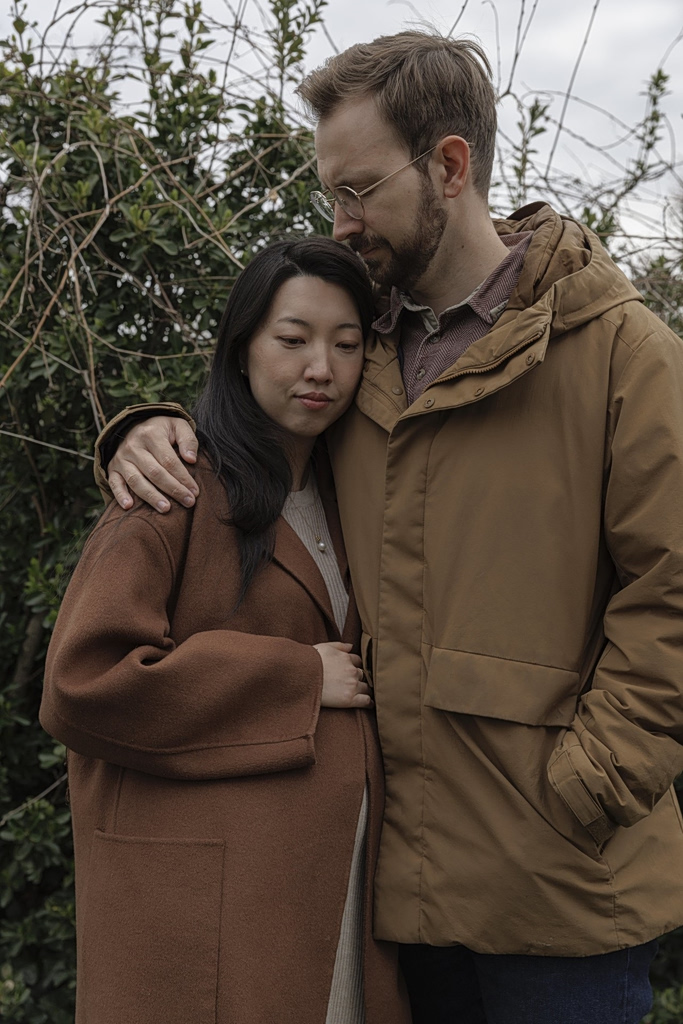
Grace Jin Drexel and her husband, Bill Drexel, are working to keep her father’s case in the spotlight. Moriah Ratner for WSJ
China’s Foreign Ministry said the country handles judicial cases and religious affairs in accordance with its laws and it opposes the U.S. using religious issues as a pretext “to interfere in China’s internal affairs.”
Chinese officials didn’t respond to requests for further comment.
Tiananmen awakening
Jin’s path to the pulpit was forged in the aftermath of a different crackdown: Tiananmen Square . A student of geophysics at Peking University, China’s equivalent to Harvard, Jin was plunged into a crisis of meaning after the military’s violent suppression of pro-democracy protests that swept the country in 1989—until he found Christianity.
“I began to realize these Christians were different,” Jin said in one of several video recordings about his life made before his arrest. “They had God and a home they could sometimes return to, and they could be sure God loved them.”
He enrolled in seminary and began preaching within China’s official church system. The country allows Christianity when practiced in state-approved churches that align with Communist Party ideology and submit to government surveillance.
But Jin said he grew frustrated by the state’s controls. In 2002, he left China to pursue a doctorate at Fuller Theological Seminary in California.
Returning to China, he founded Zion in 2007. It was a moment of rapid growth for Christianity, as more people sought spirituality to balance their lives amid the country’s economic boom. Many turned to evangelical “house churches,” small congregations that operated outside the system of official churches but were often tolerated so long as they didn’t create trouble.
Jin’s personal warmth and Zion’s community outreach—including organizing events for Beijingers to meet up to practice their English—helped propel the church’s growth.
The pastor possesses the charisma of an American televangelist, with expressions that shift dramatically with the tone of his sermons. Jin smiles broadly as he preaches on the joy of the Christian faith, only later to launch into a full-throated roar against perceived injustices.
At times, he gives off the air of a professor, donning blue blazers and short-sleeved button-down shirts as he quotes the political theorist Hannah Arendt. His daughter says the 57-year-old also has a touch of vanity, insisting on visiting Korean barbers whom he believed styled his hair the best.
From a congregation of around 20, Zion grew to more than 1,500 over the next decade, making it one of the largest unsanctioned churches in Beijing.
Pressure grows
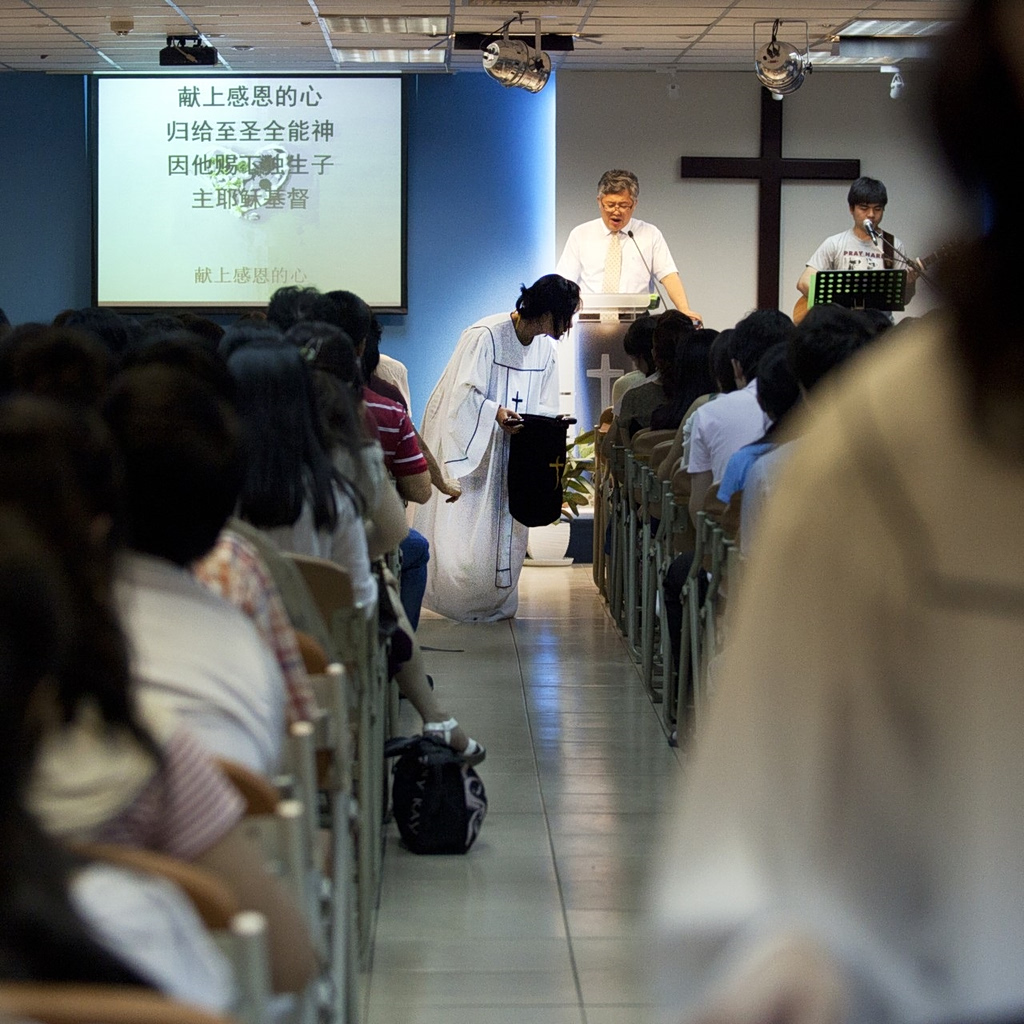
Zion grew from a small house church into a thriving congregation. Sim Chi Yin for WSJ
The church began renting space in a former nightclub, with seating for hundreds of worshipers as it convened multiple services a weekend.
Five miles south, at the Communist Party’s leadership compound, Xi was consolidating power and rooting out any resistance to his authority in the party and culture. He made it clear that the controls on Christianity up until that point hadn’t gone far enough.
In 2018, authorities demanded that Zion install around two dozen surveillance cameras to allow them to track the church’s activities. While Zion’s leaders said they welcomed officials to attend their services, they objected to the cameras as a form of intimidation of church members.
Beijing’s pressure intensified as Zion resisted, according to church members. In one case, Jin said, police flew a drone over the rural home of a young preacher’s parents, prompting them to beg their son to move home.
Authorities ultimately installed several cameras near the entrance and other parts of the building not controlled by Zion. Amid the dispute, Beijing appeared increasingly unsafe for Jin and his family. In June 2018, they flew to the U.S., settling in Wheaton, Ill.
Jin soon felt compelled to return to his church. For his family, the decision and separation was painful, knowing the danger he faced in China, said his daughter, Drexel.
Shortly before he left, Jin’s wife, Anna Liu, pressed her husband about whether he’d clearly thought through his decision.
“Yes,” Liu said her husband responded.
Within months of Jin landing in Beijing, on a Sunday afternoon in September, government officials and police descended on the church. Police cars, fire engines and other vehicles blocked the roads outside.
Jin wasn’t arrested, but officials informed the church that its activities had been banned. Zion’s logo was scratched off the wall, its guitars were seized and the site was sealed.
Walking worshipers
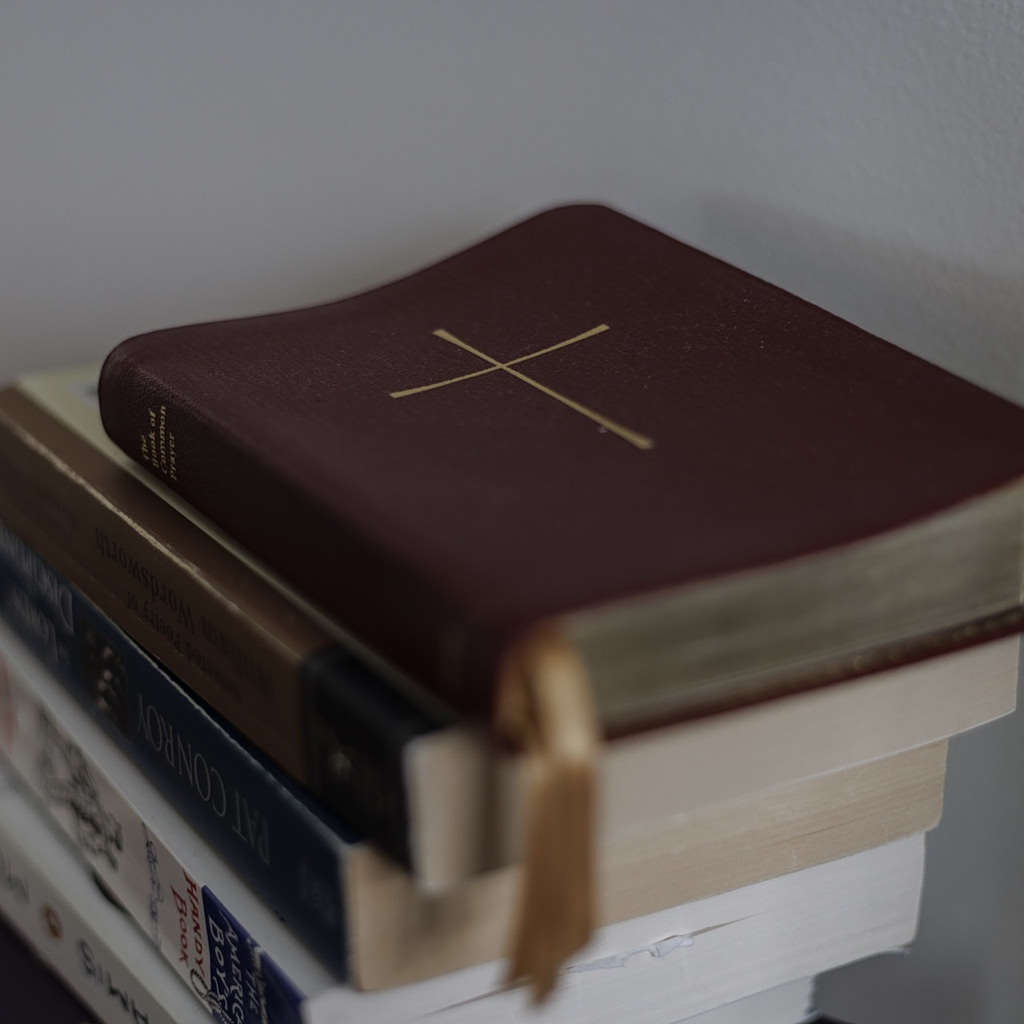
The Book of Common Prayer sits at the Drexel home. Faith has sustained the family, and church, through Jin’s detention. Moriah Ratner for WSJ
To keep the church going, Jin and Zion’s other pastors began experimenting with technology.
The weekend after the raid, Zion’s leaders distributed audio files that members could listen to on their phones. Congregants, calling themselves walking worshipers, strolled through the streets surrounding the shuttered church as they followed along with the sermon. Pastor Long called it a peaceful form of “spiritual warfare.”
Zion’s faithful say they see parallels to the experience of the early church during the Roman Empire, when the faith spread widely despite efforts to crush it.
In a moment of darkness in China, “they feel they have to be the light,” said Fenggang Yang, a Purdue University sociologist who researches the country’s house churches.
By late 2018, Jin had been banned by the government from leaving China, cutting him off from seeing his wife, daughter and two sons. When he tried to sell his home in Beijing to raise cash to help pay for his children’s education, he learned authorities had also frozen the asset, according to his wife and a letter he wrote around that time.
The pressure only mounted. After Drexel flew to Beijing to see her father in 2019, authorities also blocked her from leaving the country. Jin alleged the government had abused its power.
“I feel uneasy and angry by this disregard of law and justice,” he wrote in a letter to Zion’s faithful at the time. “This is not only a matter of my personal experience, but also I worry for the future of this country.”
When the ban was finally lifted in early 2020, allowing Drexel to depart China, the pastor instructed his daughter not to come back until he, too, was allowed to leave.
Church 3.0
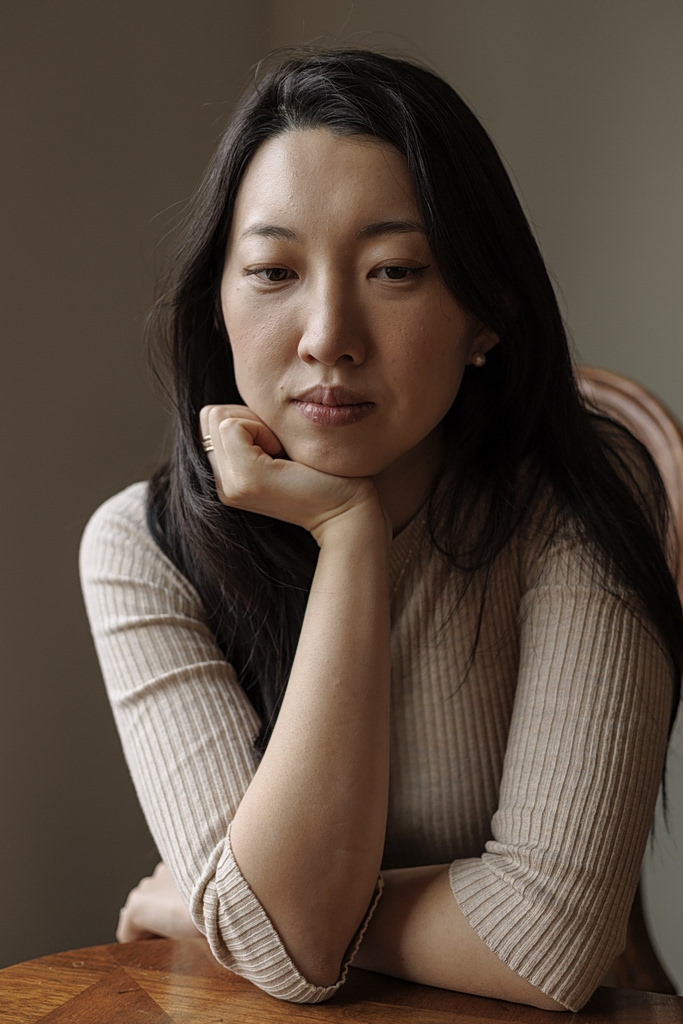
Drexel has been lobbying the U.S. government to push for her father’s release. Moriah Ratner for WSJ
One of the biggest limitations of the “walking worship” model was that it didn’t allow for the practice of communion—the ritual breaking of bread, symbolizing the body and blood of Jesus, that Long said Zion typically celebrated once a month.
So Zion began pursuing a hybrid approach, church leaders said, with small groups meeting in person in multiple locations for services led by pastors on Zoom. It allowed congregants to find community and take communion—with the added benefit that the decentralized services made it virtually impossible for authorities to shut down.
The church had a 300-person Zoom line. It filled up instantly, Jin recalled. Then it was 500, before quickly jumping to more than 1,000 devices. Jin called it Church 3.0.
Rather than merely keeping Zion alive, Jin began to see technology as a chance to dramatically expand its mission nationwide. Through online training, Jin also sought to lay the groundwork for the next generation of house-church pastors to keep the movement growing.
In dozens of cities, believers gathered in living rooms for Zion’s digital services.
In one hourlong sermon in April 2022 posted online, Jin’s delivery shifted from just above a whisper to a hollering crescendo as he preached on the concept of justice, citing a passage from the book of Micah as he argued that China had lost its way.
“The fundamental problem of China as a country is not the relationship between China and the international community,” Jin said, “but the relationship between the people and the regime.”
The technology was fundamentally changing another relationship: China’s unsanctioned churches were now able to cooperate in unprecedented ways, providing them with new staying power in the face of Beijing’s crackdown. Congregations across the country sought Zion’s advice on how to build out their own digital infrastructure.
A daily prayer gathering dubbed “Morning Dew” was organized with house churches across China. Simulcast on multiple platforms including Zoom and WeChat, it reached as many as 10,000 devices.
“We were forced, from a local Beijing church, to be a national church,” said Geng Pengpeng, whose husband, another pastor at Zion, was also arrested last year.
Gathering storm
The government’s surveillance followed Zion online, church leaders said. Security agents interrogated people suspected of participating in its activities. Once, a uniformed police officer joined one of the services but momentarily forgot to turn off his video, a clumsy reminder for Zion’s faithful that they were being watched. The government later unveiled new regulations that restricted online preaching.
Sensing that Beijing was no longer safe, Jin left the capital and eventually settled in the southern coastal city of Beihai, ramping up his work online.
He returned to the capital last June to renew his U.S. visa, so he’d be ready if authorities ever lifted their ban on him leaving China. Before Jin could make it to the U.S. Embassy, a dozen police intercepted him, his family said. He was taken in for questioning before being driven to the airport and forced on a plane out of town.
As the pressure grew, more than 100 members of Zion were taken in by police for questioning, the church said, a signal that authorities might be planning a bigger move against Zion.
Preparations at the church for possible arrests were already under way. A few years earlier, Pastor Long was dispatched to pursue a doctorate of theology in the U.S., in part so he could continue to lead hybrid services from abroad if other Zion leaders were arrested.
In one of their final conversations last year, Long had a pointed question for Jin: What if the church’s worst-case scenario came to pass, and Zion’s entire team was thrown in jail?
“Hallelujah,” Long said Jin responded. “A new wave of revival will follow.”
Freedom fight

Drexel shows a photo taken with her father during her college graduation in 2015. Moriah Ratner for WSJ
Within hours of Jin’s arrest in October, scores of others involved with Zion were rounded up in a coordinated police campaign across the country. Less than 48 hours later, the church’s faithful gathered online for Sunday services. Long struck a note of defiance.
He likened Jin to Dietrich Bonhoeffer, a German pastor and anti-Nazi dissident who left the safety of the U.S. to return to Germany in 1939, only to be arrested and executed a few years later.
During the service, a video was broadcast of Jin and others singing a hymn adapted from a poem Bonhoeffer wrote shortly before his execution.
In Washington, Drexel got to work lobbying the U.S. government to push for her father’s release. Secretary of State Marco Rubio condemned the crackdown and demanded China let the pastor go.
Weeks later, Drexel was told her father’s case was included in a briefing packet for Trump ahead of his meeting with Xi in South Korea. She said it was her understanding that the president ultimately didn’t raise the issue.
Members of Congress of both political parties have continued to offer support, passing resolutions criticizing China’s actions and urging Trump to prioritize securing the release of Jin and other people it says have been wrongfully jailed in China.
The most encouraging sign for Jin’s family came at the conclusion of Trump’s state visit to China last week, when the president told reporters he believed Xi was considering letting the pastor go.
“The fact that the president feels optimistic about getting my father out was just so incredible, like a miracle for us to hear,” Drexel said.
It isn’t known when Jin will stand trial or the defense he will be able to mount. Some attorneys representing him and others from Zion have had their legal licenses revoked or suspended, according to Jin’s family and a lawyer familiar with the case, in what Zion has called the Chinese government’s trampling of the rule of law.
From his cell, Jin has sought to energize his congregants, reminding them of ideals that have outlasted political regimes for centuries as he defies Xi’s pursuit of total ideological control.
“The Lord calls us to be overcomers, giving us the courage that David had when he faced Goliath,” Jin wrote in a letter shortly after his arrest. “May this persecution, like the thorns that afflicted Paul, sharpen our courage and make our faith as solid as a rock.”
Write to Brian Spegele at Brian.Spegele@wsj.com