 Μake us preferred on Google
 A House committee has advanced bipartisan legislation that would extend U.S. military training assistance to Greece for five years, a limited but politically significant step in Congress’s broader effort to deepen defense ties with Athens at a time of growing instability in the Eastern Mediterranean and the Middle East.
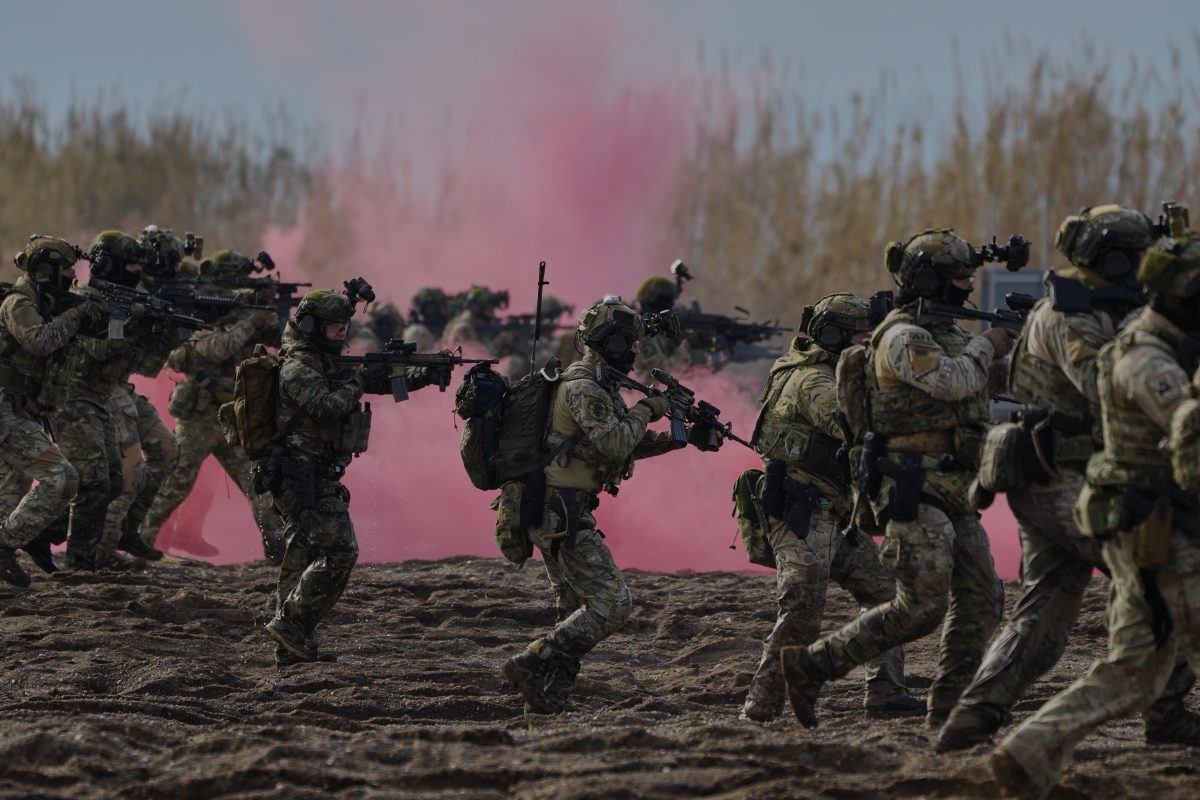
The bill, the U.S.-Greece Defense Cooperation Advancement Act, would reauthorize International Military Education and Training, or IMET, assistance for Greece. The program helps foreign military officers receive U.S. training and education, with the aim of strengthening long-term military relationships and improving coordination between allied armed forces.
The measure cleared the House Foreign Affairs Committee this week with bipartisan support, according to its sponsors. It was introduced by Representatives Chris Pappas, Democrat of New Hampshire; Gus Bilirakis, Republican of Florida; Dina Titus, Democrat of Nevada; and Nicole Malliotakis, Republican of New York, all senior members of the Congressional Hellenic Caucus.
The legislation does not represent a major new weapons package or a dramatic shift in U.S. policy. But it reflects the increasingly favorable view of Greece in Washington, where lawmakers in both parties have come to see Athens as a reliable NATO ally, a useful military partner and a strategic foothold near several overlapping crises.
Greece’s importance to U.S. planning has grown in recent years as Washington has focused on NATO’s eastern flank after Russia’s invasion of Ukraine, instability in the Middle East after the Hamas attacks on Israel on Oct. 7, and tensions involving Iran. Greek military facilities, including Souda Bay in Crete and Alexandroupoli in northern Greece, have reinforced the country’s role as a logistical and operational hub for the United States and NATO.
Mr. Pappas said the bill would help strengthen cooperation between the two countries’ armed forces.
“IMET assistance is a critical component of our bilateral relationship that strengthens cooperation, training, and interoperability between our Armed Forces,” he said.
Mr. Bilirakis described Greece as “a reliable NATO ally and a key partner in the Eastern Mediterranean,” while Ms. Titus said the U.S.-Greece defense relationship was “too important to be overlooked.” Ms. Malliotakis said the legislation would help support deterrence and bolster Greece’s security capabilities.
The bill builds on earlier congressional measures intended to expand U.S. cooperation with Greece, including the Eastern Mediterranean Security and Energy Partnership Act and the United States-Greece Defense and Interparliamentary Partnership Act, which was enacted as part of the fiscal year 2022 defense policy bill.
Those laws reflected a broader reassessment in Congress of Greece’s role in the region, particularly as relations with Turkey have often been strained and as the United States has looked for dependable partners in southeastern Europe and the Eastern Mediterranean.
The new legislation has been endorsed by several Greek American organizations, including the American Hellenic Institute (AHI), AHEPA and the Hellenic American Leadership Council (HALC).
Committee approval is only an initial step. The bill would still need to pass the full House and move through the broader legislative process before becoming law. But its bipartisan backing suggests that support for a closer U.S.-Greece defense relationship remains one of the more durable areas of agreement in Washington.