 Μake us preferred on Google
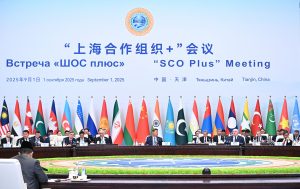
 TIANJIN, China—The leaders of China, Russia and India held hands at a regional summit and promised to cooperate, a display of unity that aimed in part at President Trump—and that underscores the challenges faced by his unorthodox approach to world affairs.
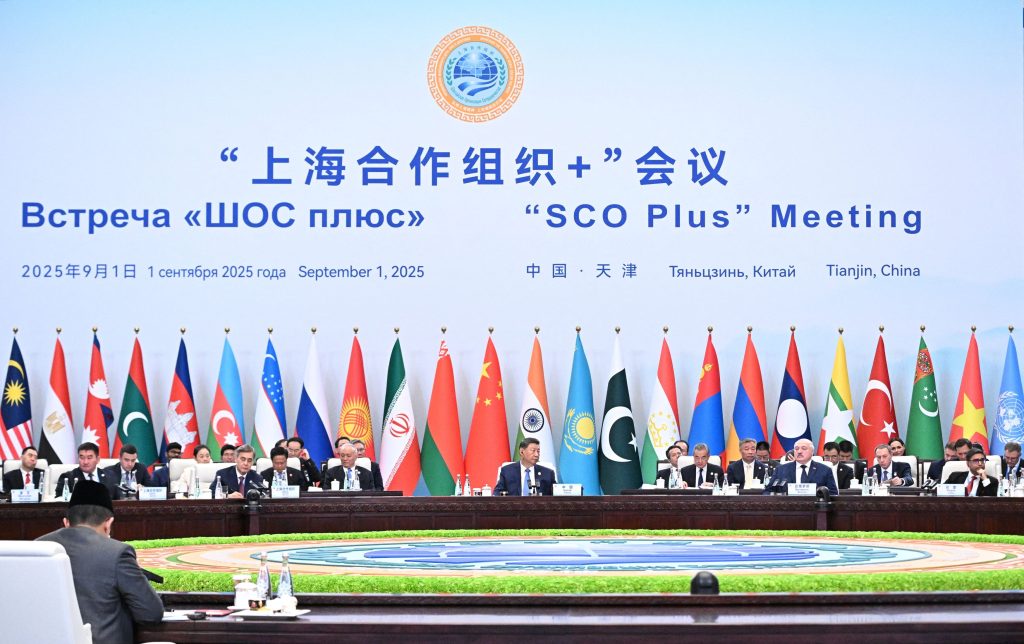
No major decisions were adopted at the Tianjin summit of the Shanghai Cooperation Organization, which was also attended by the leaders of Iran, Pakistan, Turkey, Belarus and Central Asian and Caucasus states.
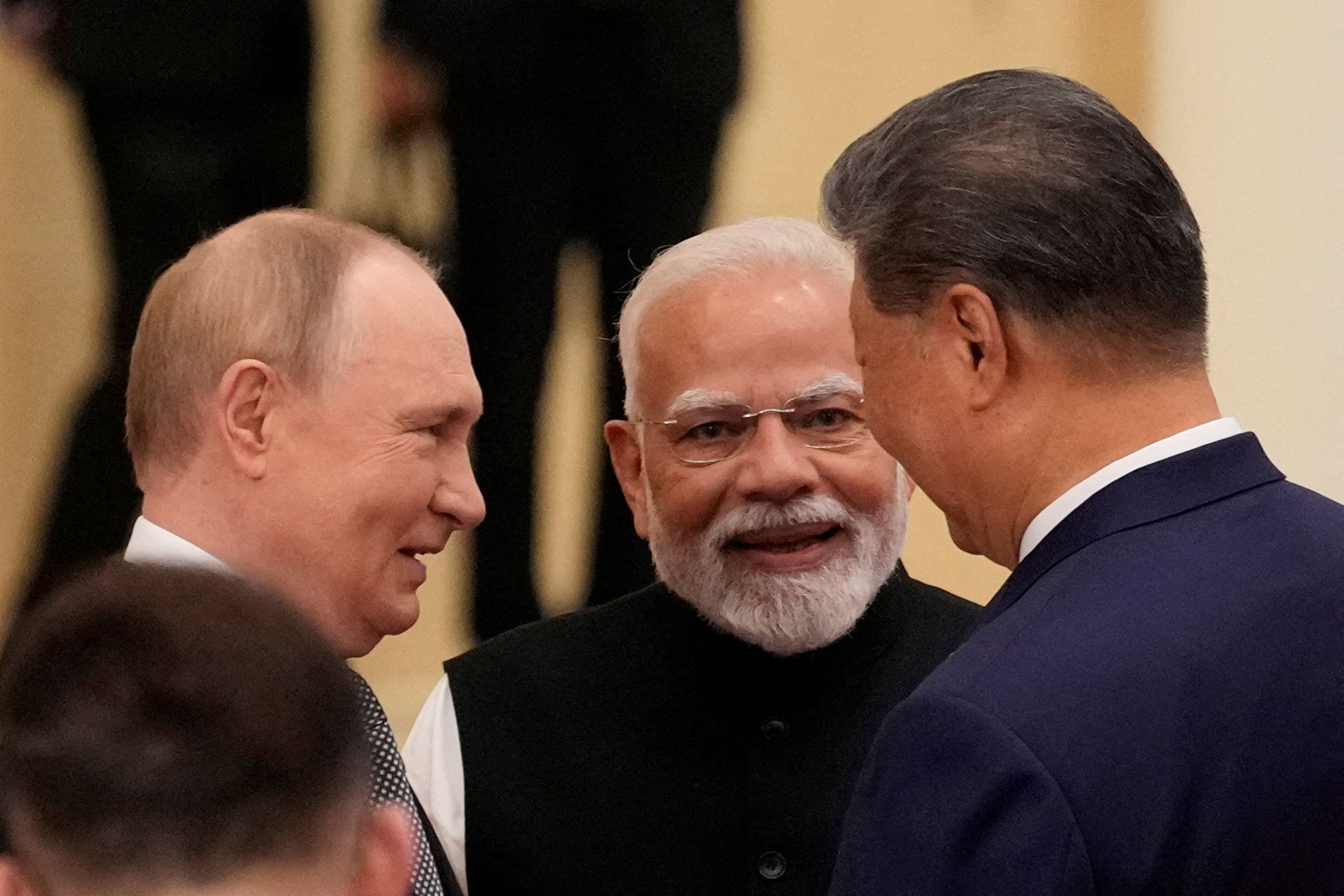
But the carefully choreographed imagery of Chinese leader Xi Jinping , Indian Prime Minister Narendra Modi and Russian President Vladimir Putin embracing each other sent a powerful message to Washington as Trump seeks to contain Beijing, to break Russia’s bond with China, and to pry India away from Russian oil.
The cordiality of the Tianjin confab will sound alarm bells in Western capitals, said Michael Fullilove , executive director of the Lowy Institute think tank in Australia. “President Trump’s gentle treatment of Vladimir Putin has done nothing to pull Russia away from China,” he said. “His rough treatment of Narendra Modi, on the other hand, is pushing India closer to Russia and warming up its relations with China.”
India is the cornerstone of America’s strategy to prevent a Chinese domination of Asia. Sino-Indian relations have remained nearly frozen since deadly clashes along the two giants’ disputed border erupted in 2020. Modi traveled to China for the first time in seven years after Trump’s abrupt move to impose 50% tariffs on India, half of them as punishment for New Delhi buying cheap Russian oil, sparked widespread outrage in India.
These tariffs are higher than those enacted against China, America’s strategic rival, and have been accompanied by many statements by Trump administration officials that amplify Indian anger. Trump’s trade adviser, Peter Navarro , caused particular outcry in recent days by using caste terminology as he said that Indian “Brahmins are profiteering at the expense of the Indian people” with the Russia oil trade. The Trump administration so far hasn’t enacted any additional sanctions on Russia itself, despite repeated threats to do so.
The meeting in Tianjin represented a reset between China and India, and a message for Washington that India cherishes its strategic autonomy, said Kabir Taneja, deputy director of the Observer Research Foundation, a think tank in New Delhi. “Washington is not backing down in any shape or form, and no prime minister of India, which is the world’s largest democracy, can ignore public opinion. This means you have to stare down the U.S. and say we will not be cowed,” he said.
Still, Taneja added, the current spat was an “aberration” caused by Trump’s erratic approach that won’t cause a strategic shift of India away from the U.S. over the long term. Chinese analysts also don’t expect New Delhi to pull away from Washington, given the many intractable problems between the two neighbors—including the border dispute.
“Of course, the stabilization of India-China relations was helped very much by Trump. But the relations are only stabilized—which is a substantial progress compared to the worst moments,” said Chinese strategist Shi Yinhong , a distinguished professor at Renmin University in Beijing. “The issues are all still there, and they will not be solved. Every major problem, every dispute, and even the psychological hostility between the two nations are still there.”
In his remarks at the talks with Modi, Xi said that the world’s two most populous nations should be friends, enable each other’s success, and choose “the cooperative pas de deux of the Dragon and the Elephant.” The Indian leader highlighted “the positive momentum” in bilateral ties, and New Delhi has described the relationship with Beijing as “partners rather than rivals.”
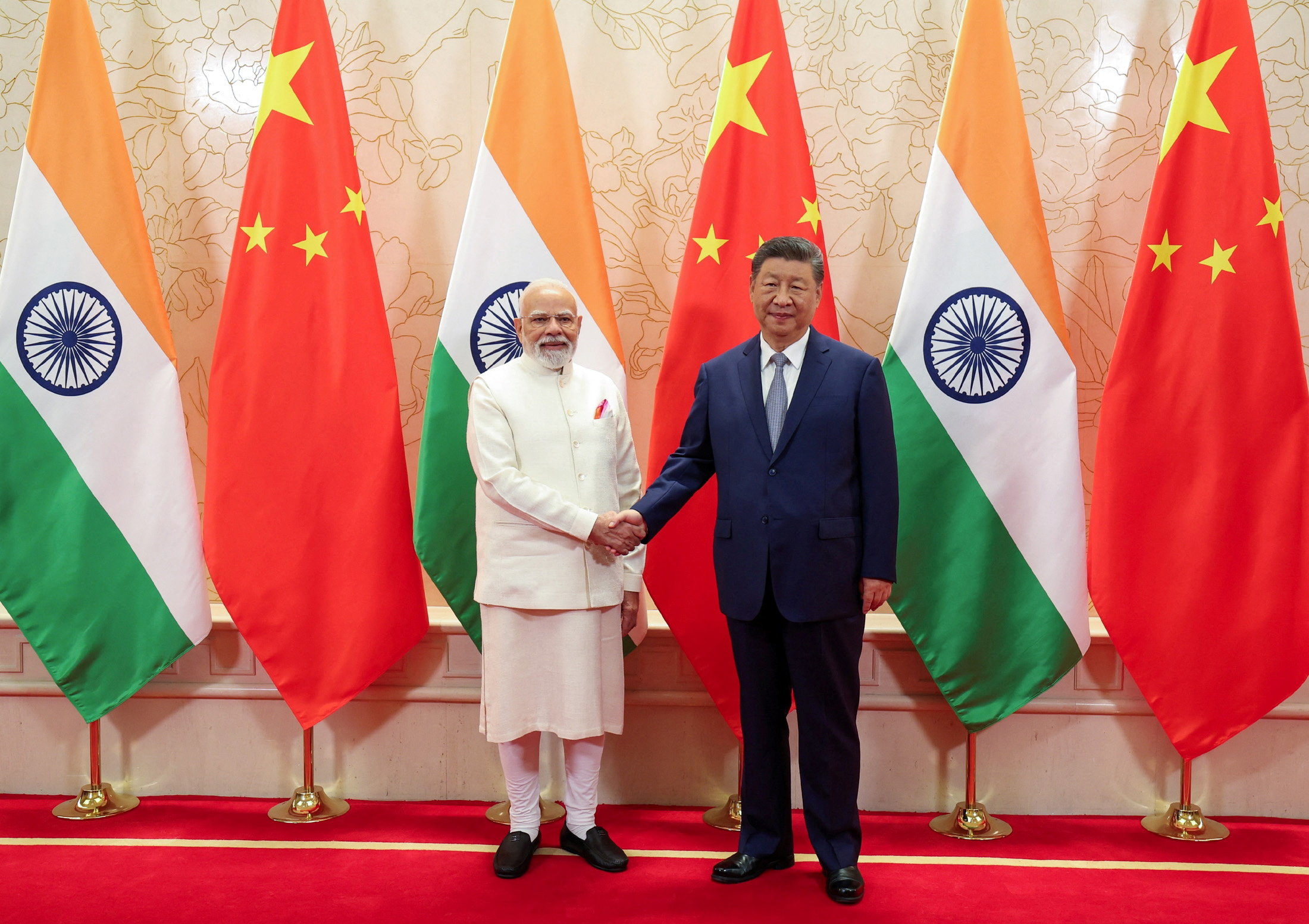
India’s Prime Minister Narendra Modi shakes hands with Chinese President Xi Jinping during a meeting on the sidelines of Shanghai Cooperation Organisation (SCO) Summit in Tianjin, China, August 31, 2025. India’s Press Information Bureau/Handout via REUTERS THIS IMAGE HAS BEEN SUPPLIED BY A THIRD PARTY. NO RESALES. NO ARCHIVES.
For Putin, whose country exports most of its oil to China and India, Monday’s summit was just the first leg of a multiday trip to China that will include standing next to Xi and North Korean leader Kim Jong Un at a military parade in Beijing on Sept. 3. This is Putin’s first foreign visit since meeting Trump in Alaska on Aug. 15. Modi and Putin rode in the same car to their Monday meeting and the Indian leader, who described the talks as “excellent,” said he expected his Russian counterpart to visit India in December.
“Even in the most difficult situations, India and Russia have always walked shoulder to shoulder,” Modi said. “Our close cooperation is important not only for the people of both countries but also for global peace, stability and prosperity.”
Putin’s key adviser Kirill Dmitriev tweeted the footage of the Russian leader hobnobbing with Xi and an assortment of world leaders in Tianjin with a sardonic comment: “ ‘Isolated Russia.’ And no one remembers [former U.S. President Joe] Biden the failure.”
While Xi didn’t mention the U.S. in his remarks, he called for “an equal and orderly multipolar world and a universally beneficial and inclusive economic globalization” and for making “the global governance system more just and equitable.”
Trump administration officials have explained their opening to Putin as part of a so-called reverse Kissinger strategy that would pry Moscow away from its growing dependence on Beijing, which has provided an economic lifeline to Russia after Western sanctions were imposed because of the 2022 full-scale invasion of Ukraine.
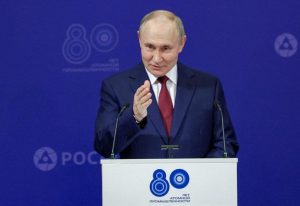
While the final statement of the summit didn’t mention Ukraine, Putin dedicated much of the speech to the war, saying that the “crisis” didn’t begin with the Russian Invasion but with what he described as a Western-backed coup in 2014. He added that, for the war to end, the supposed root causes must be addressed—a Kremlin shorthand for Ukrainian aspirations to pursue policies independent from Moscow.
“The ‘reverse Kissinger’ doesn’t work. India’s alignment with the Russia-China dynamic, even partially or pragmatically, would signify the strengthening of a new world order led by China, and a narrowing of the strategic room for maneuver available to the United States and its allies in Asia,” said Marko Mihkelson, chairman of the foreign-affairs committee of the Estonian parliament.
Write to Yaroslav Trofimov at yaroslav.trofimov@wsj.com