
CALI, Colombia—They see themselves as the cowboys of the drug trade, highly experienced crews that ferry narcotics on small boats across the open seas, running on a mix of bravado, skill and dreams of a massive payday.
Now, designated as terrorists by the Trump administration, they face not only the perils of a capricious sea but the new danger of getting blown out of the water by the U.S. military. The trade’s unofficial motto—“deliver or die”—has never rung so true.
Three men who have manned these drug boats, known as “go fasts,” spoke to The Wall Street Journal, describing a once little-known but essential part of the narcotics trade that is now in President Trump’s sights.
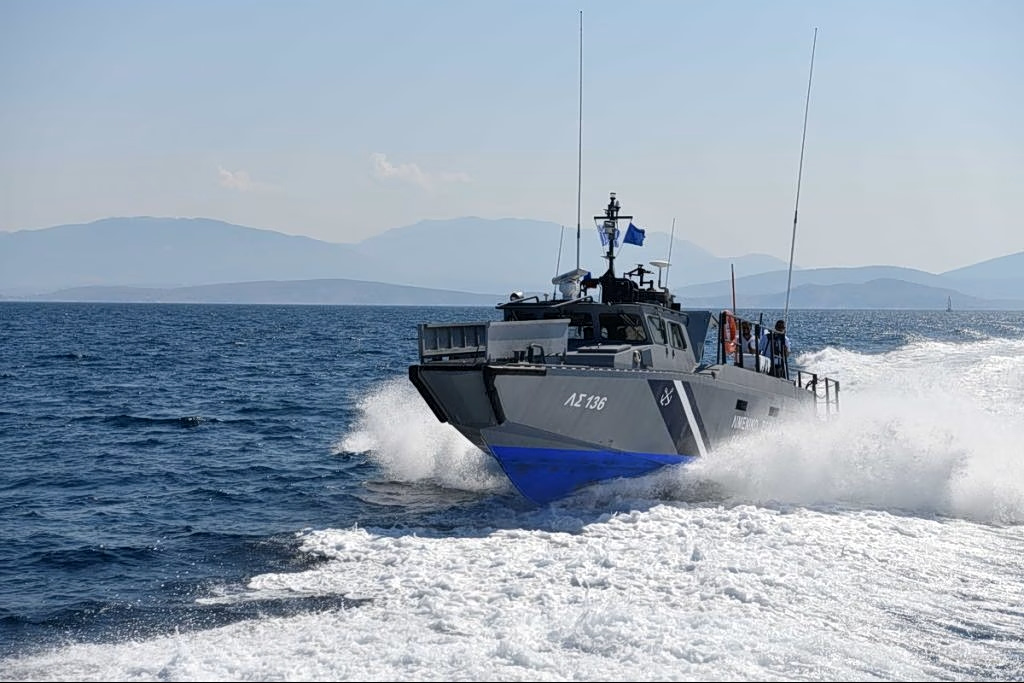
They run drug cargoes worth as much as $70 million on the sleek 40-foot-long boats, often built from fiberglass and powered by oversize outboards. These boats are the workhorses for the traffickers along 2,000 miles of Colombian coastline—and hundreds more miles in Ecuador and Venezuela.
“These people are experts at sea,” said a Colombian prosecutor who has tried members of drug-boat crews. Pursuing drug cases is so dangerous that the country’s attorney general doesn’t allow prosecutors to be quoted by name. “They have to know it perfectly,” the prosecutor said. “They need to understand how waves move, how to move a boat through them.”
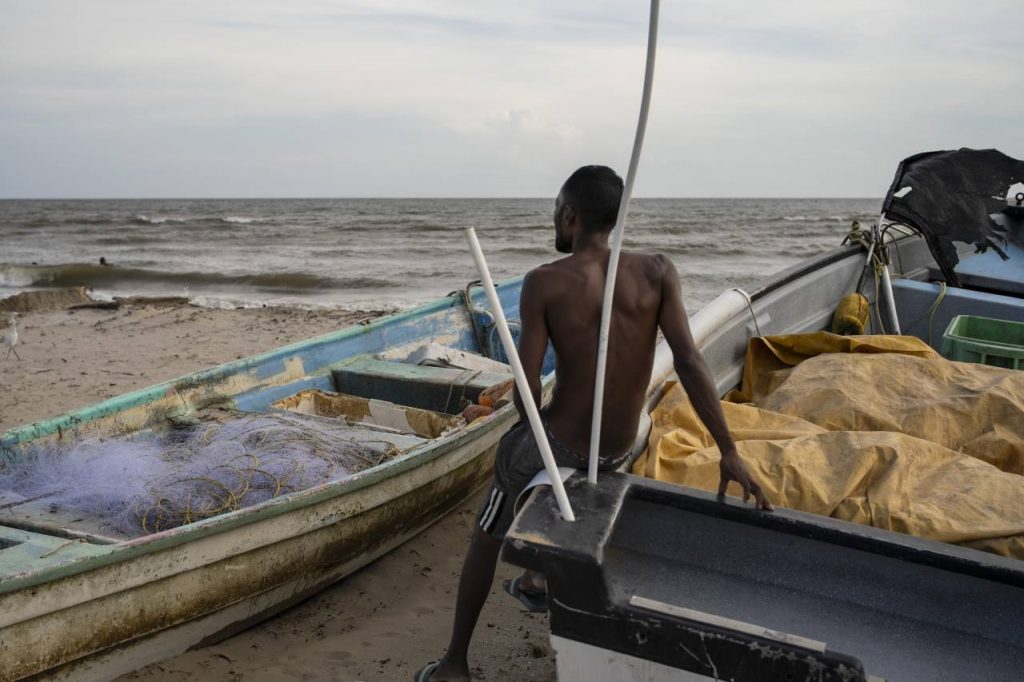
Prosecutors and former naval officials say many of the pilots and crew of the go-fast boats got their start as fishermen before transitioning into smuggling. The crews are usually made up of three or four men: a pilot, the most experienced and best paid; a mechanic who troubleshoots and keeps the boat’s fuel tanks full; a guarantor trusted by the buyer and seller; and sometimes a navigator to chart the way.
One Colombian pilot who plies the Caribbean said crews look for any advantage, from sailing at night or in rough weather, even in storms when Colombian government patrol boats might stay in port. Before the U.S. military strikes, he said, his main concerns were capsizing, drowning and arrest.
Even with the new threats, the incentives remain huge. The pilot said a clean run of two or three tons can mean $100,000 for a day’s work. With that kind of money at stake, he said it wouldn’t be hard to find willing men to keep running the boats, even with the threat of military strikes.
“The ocean is very big, very big,” said the pilot. “These drug organizations live from trafficking. They will continue to do this. This doesn’t end. This will continue even if the United States continues its bombings.”
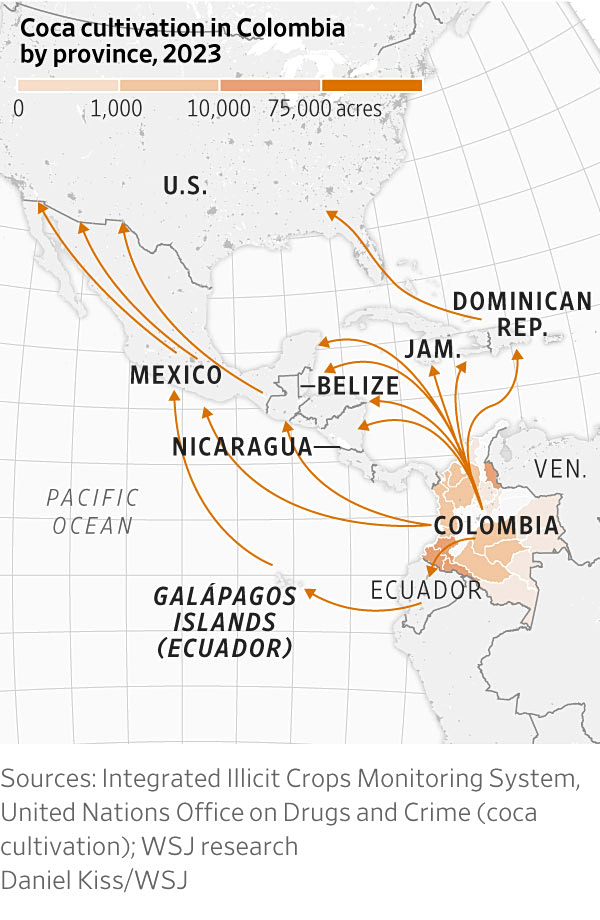
Smuggling runs are mapped out weeks ahead, the Colombian navy says, with the cocaine often making its way north in stages. The boat crews try to slip past or outrun whatever Colombia and the U.S. put in front of them: coastal patrol boats to frigates and helicopters farther out.
Some crews run the entire route themselves—from Colombia to Honduras or even Mexico—24 hours or more depending on the size of the cargo, the power of the engines and weather conditions. With speed of the essence, they don’t stop for anything; even bathroom breaks are handled as the boat rockets forward.
In another strategy, crews toss tightly wrapped bundles of cocaine into the water marked with brightly colored buoys or hidden GPS beacons so another crew can retrieve them.
Another involves a meeting at a fixed point in the open ocean, with smugglers using geolocation to find each other. The cocaine is passed from one vessel to the other, which embarks north.
A drug-boat crew member who operates in the Pacific Ocean described such a rendezvous in August.
In an interview in the southwestern Colombia city of Cali where he lives, the slim, soft-spoken 29-year-old Colombian recalled how the operation began with the speedboat shooting out of a mangrove swamp, twin 250-horsepower engines roaring as the pilot next to him gunned the craft under a night sky.
The pilot kept the throttle down, never slowing as the vessel raced offshore, far beyond the inlets where the drugs were loaded, past Colombia’s territorial limit and into international waters, 200 nautical miles from land.
The crewman, whose job was to keep the fuel flowing into the engines, said he scanned the horizon for Colombian navy patrols as the boat slammed on the water, the pilot pushing for speed in a violent ride that unnerved the crew.
“Traveling that fast is not easy. I tried not to pay attention,” he said. “And the waves were huge.”
Twelve hours later, the craft idled—ever so briefly—until what counterdrug officials call a “narco sub” appeared and stopped alongside. The boat’s three crewmen then transferred a half ton of cocaine—worth $12 million on the street—onto the semisubmersible. Skimming along the waterline, the new craft and crew headed north to Mexico, the next link before reaching America’s cocaine market.
The 29-year-old said he earned about $10,000—good money in Colombia but far below what pilots pocket. He said he was unlikely to ever see those crew members again.
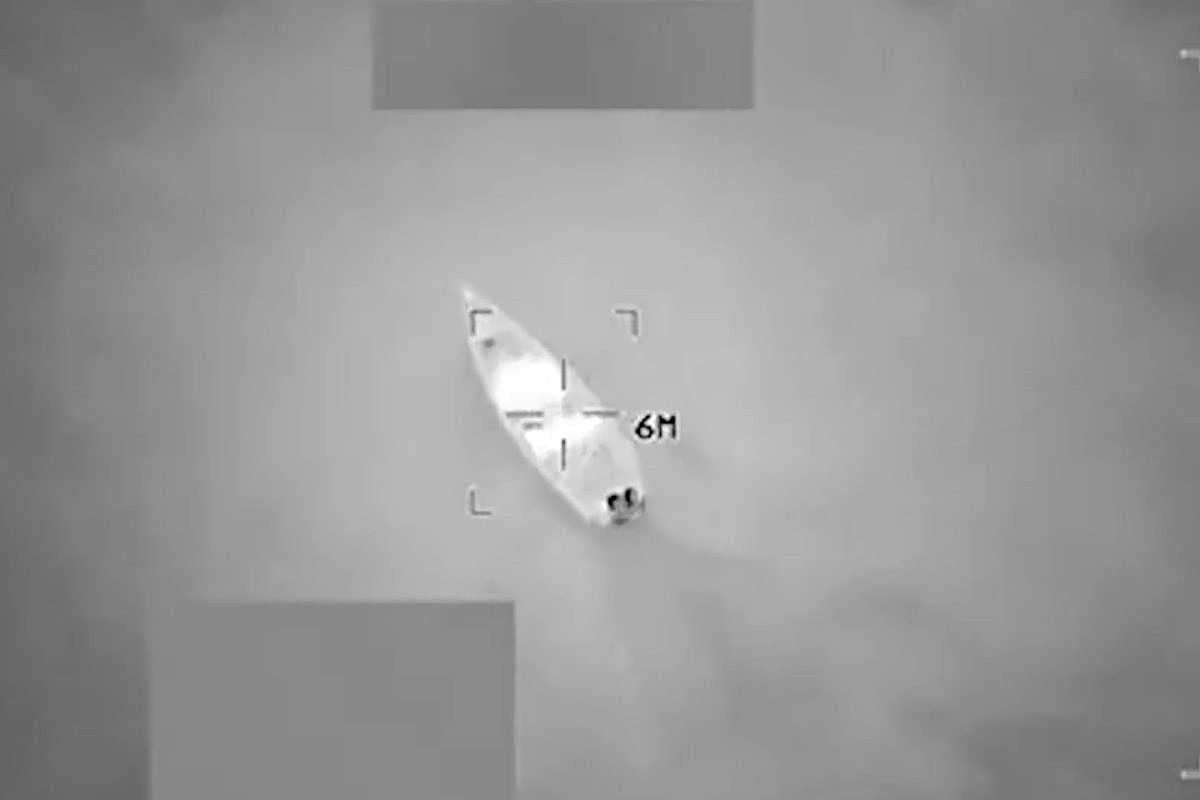
Trump and Defense Secretary Pete Hegseth have called the traffickers terrorists and legitimate targets as part of a strategy to choke the flow of drugs into the U.S. The American military says it has killed 83 people in more than 20 strikes on boats allegedly carrying drugs, attacks critics say amount to extrajudicial executions.
“If you are a narco-terrorist smuggling drugs in our hemisphere, we will treat you like we treat Al-Qaeda,” Hegseth recently said on X.
The crew members are a link in a production and supply chain that includes an array of workers, from drug-crop farmers to cocaine-lab workers, enforcers to middlemen, a web of subcontractors paid by the load. It isn’t a hierarchical system.
Crew members like the 29-year-old are more like freelancers—young men recruited for a job.
Now, he is being asked to make another crossing. He is spooked by the airstrikes but hasn’t ruled it out. “It scares me but, yeah, I could do it,” he said. “If they put $13,000 in front of me, I’ll go.”
His calculation underlines the hard reality that counterdrug officials face: Dozens of speed boats, submersible vessels, fishing boats and other craft move cocaine on the high seas every month, many times more than what the U.S. has attacked since first launching an airstrike in early September, former Colombian naval officials say.
Colombia offers ideal launching points: small fishing villages along 1,000 miles of Caribbean coastline, and an additional 800 miles along the Pacific, where 128 channels and rivers let traffickers sprint into the ocean after loading up in mangrove swamps. Those Pacific launching points aren’t far from the myriad jungle labs where cocaine is produced.
“Just imagine, you have these estuaries, these channels, all interconnected and they permit you to quickly move in your boat,” said Antonio José Martinez, a former rear admiral who, until three years ago, oversaw the Colombian navy’s operations in the Pacific. “And these young men know the routes. They know them perfectly.”
Take the case of Ricardo Pérez, who Colombian prosecutors said had a lucrative business on the country’s Caribbean coast. What began as a small outfit grew into a network of speedboats sending large loads, according to prosecutors, who built a case after a series of seizures tied to Pérez. One of the speedboats seized last year carried a ton and a half of cocaine worth $42 million.
To operate, payoffs were made to a powerful drug-trafficking militia, the Gulf Clan. The cocaine they shipped didn’t belong to any one narco group but to a collection of traffickers—from gangs to freelance investors buying space to transport a few pounds, a common practice in the business. Determined to deliver for his clients, Pérez hired the most seasoned pilots to ensure the cocaine arrived unhindered.
“Pérez was the standout leader, the one who coordinated the stockpiling for various organizations and the shipments,” said the prosecutor on the case. Pérez was charged in August with overseeing smuggling of cocaine to Panama, Costa Rica and Honduras, countries that served as a first leg before transport to the U.S. Neither he nor his lawyer could be reached for comment.
In the country’s remote seaside hamlets, some experienced crew members are thinking twice about whether to take to sea with cocaine, calculating whether the big payout is worth the increasingly lethal risks.
“I think it’s a serious situation,” said a drug-boat crew member who has ferried cocaine north along Colombia’s Caribbean coast. “What really worries me is them bombing us, you know? We’ve got families, kids—all of that.”