Μake us preferred on Google
 LAS CUEVAS, Trinidad and Tobago—Fear is rippling through this Caribbean island nation off the coast of Venezuela.
Fishermen say they are staying home or sticking close to shore amid a massive buildup of American firepower in the region. Heading out into deeper water, where the fishing is better is too risky, they say, after the U.S. carried out at least 10 airstrikes on boats—allegedly carrying drugs—that have killed 43 people, some of them off the Trinidad coast.
Protesters have gathered outside the U.S. Embassy in Trinidad, decrying the airstrikes and its government’s cooperation with the Trump administration’s antinarcotics campaign.
Reports of local men killed in the airstrikes have begun circulating. Fishermen and local media outlets here have named two men killed in U.S. airstrikes, but families in coastal towns worry there are more.
Their anxieties highlight how the narcotics trade has washed over this English-speaking former British colony of 1.5 million people, centered on a Delaware-size island where drug-related homicides are on the rise. The narrow waterways between Trinidad and Venezuela have long been used for smuggling not only cocaine but also cheap Venezuelan products—subsidized fuel, cigarettes, cheese and even bushmeat like armadillo.
Here in the cliff-side village of Las Cuevas, one family is mourning Chad Joseph, 26 years old, whom relatives described as a fisherman and handyman desperate to find a steady job. Earlier this month, his relatives said, Joseph told friends and family he was sailing home after visiting relatives and working as a farmhand in Venezuela, an hour-long trip.
It was the last time anyone heard from him. The family believes he was killed in a strike earlier this month.
Joseph’s family held a small service for him in a church overlooking the Caribbean’s azure waters. With no body recovered, family members and neighbors wept in front of a photo collage of Joseph and listened to a priest who asked God to forgive Joseph for his sins.
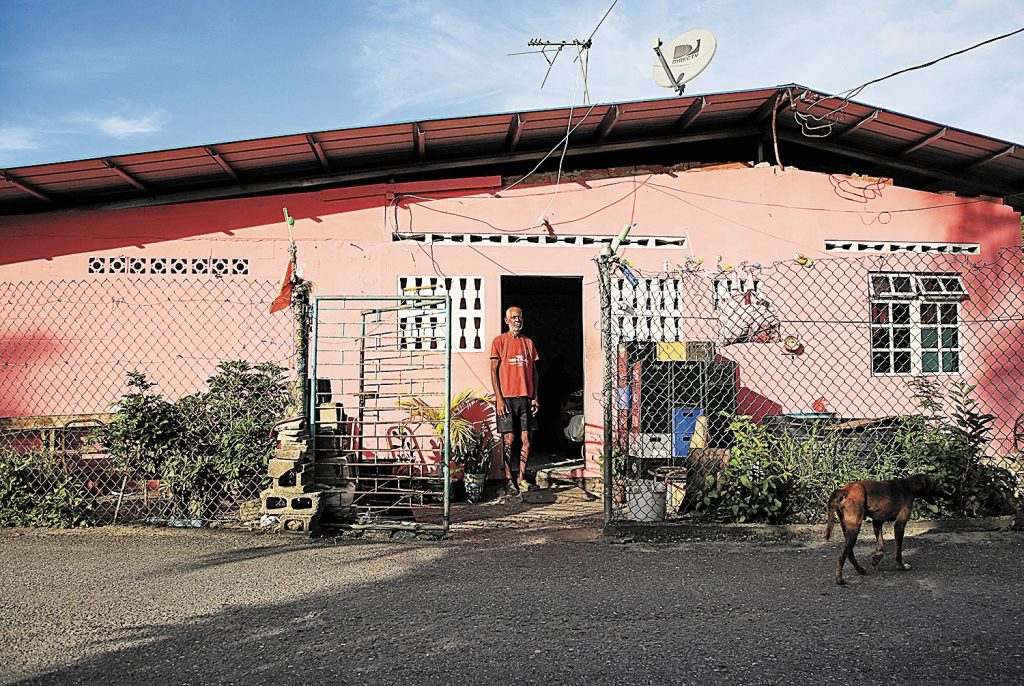
Cornell Clement, who believes his grandson Chad Joseph was killed in a U.S. military strike on a boat in the Caribbean, poses for a photograph outside his home as Joseph’s family demands evidence to support President Donald Trump’s claim that the victims were drug traffickers, in Las Cuevas, Trinidad and Tobago October 16, 2025. / Reuters Andrea de Silva
Joseph’s family denies he had any links to drug smuggling. And while they support efforts to fight the narcotics trade, they say it is poor fishermen who are paying the price of overzealous enforcement.
Joseph’s aunt, Lynette Burnley, said she wanted to tell President Trump to end the attacks. “I’m sure he wouldn’t want this to happen to his family,” she said. Her family has been one of the first to publicly speak on people believed to have been killed in a U.S. airstrike.
The Trump administration says the military buildup and airstrikes are necessary to counter what it calls a crisis of drug smuggling to the U.S. from Venezuela via small boats that hopscotch up the Caribbean island. To justify the legality of the strikes, the U.S. has designated several Latin American gangs and cartels as terrorist organizations, potentially opening the way for strikes on land in Venezuela, Trump has said.
“All of these decisive strikes have been against designated narcoterrorists bringing deadly poison to our shores, and the president will continue to use every element of American power to stop drugs from flooding into our country,” said White House spokeswoman Anna Kelly.
Trump has alluded to the effect of the campaign on Caribbean fishing industries. “I don’t know about the fishing industry, if you want to go fishing. A lot of people aren’t deciding to even go fishing,” he said.
Most drug shipments from South America carry cocaine, though the Caribbean is used far less than the Pacific, where boats originating from Colombia and Ecuador traffic narcotics to Mexico. The U.S. military has begun striking boats in the Pacific in recent days, though experts note most drugs enter the U.S. from the south via cargo ships and heavy trucks, not small vessels.
Trinidad’s government, led by Prime Minister Kamla Persad-Bissessar , supports the U.S. military buildup and says it encourages strikes on drug vessels traveling from Venezuela, trips that her government says have grown more common.
“The U.S. military should kill them all violently,” Persad-Bissessar said last month, adding she had no sympathy for drug smugglers.
Trinidad’s government has given the U.S. access in territorial waters for military maneuvers.
The USS Gravely, a guided-missile destroyer, is scheduled to dock in Port of Spain from Sunday until Thursday while U.S. Marines conduct training exercises with Trinidad’s defense forces, the government here said. On Friday, the Pentagon ordered an aircraft carrier group to the Caribbean, multiplying Trump’s military options. Robert Ramsubhag, chief executive of the port, said commercial container traffic would be limited while the Gravely is docked.
The offices of Trinidad and Tobago’s prime minister and defense and foreign affairs ministries didn’t respond to requests for comment. The U.S. didn’t immediately respond to a request to discuss the specific strike that might have killed Joseph.
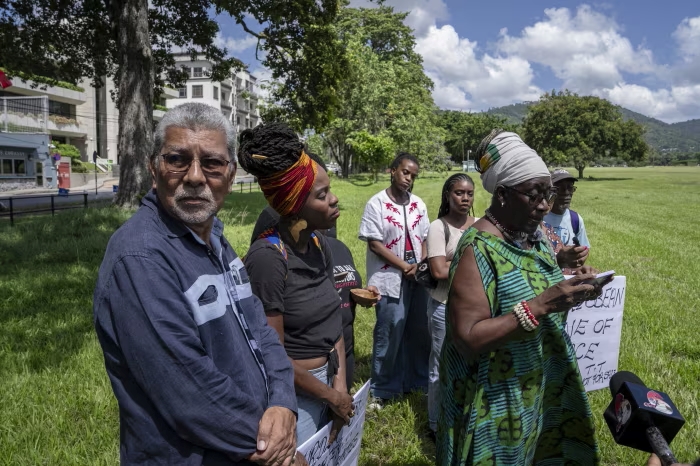
Protesters, including Abeo Jackson, second from left, gathered Friday outside of the U.S. Embassy in Port of Spain, Trinidad and Tobago. / Photography by Christian Monterrosa for WSJ
Trinidad and Tobago is more developed and has fewer tourists than most of the Caribbean. It has a large oil-and-gas industry to fuel its economy and has long cooperated with the U.S. in its fight against drug trafficking.
The growing American military presence has been controversial. On Friday, a group of labor unionists and activists gathered outside the U.S. Embassy to protest the American military presence, holding up signs saying “Caribbean Zone of Peace” and “TT not for sale.”
“This is not protection, this is recolonization,” said Abeo Jackson, a protester who fears her country is being dragged into a larger conflict.
For the country’s fishing industry, the airstrikes have been catastrophic.
Brian Keuer hauled in a small catch of red snapper and barracuda on a small, single-engine fishing boat on Thursday. It was disappointing.
“We’re stuck,” he said. “You can’t go out too far now.”
He lamented that much of the good fishing is closer to Venezuela. “On the one side the Venezuelan Coast Guard tries to rob you,” Keuer said, “and here the Americans come and smash you up.”
Keuer wonders if the work is worth it, noting how hard he toils for little pay. And the capital needed is big: the motor on his boat costs about $15,000, a hefty sum for an ordinary fisherman.
It isn’t uncommon for fishermen to supplement their income with smuggling.
Years ago, fisherman Kavash Dan said he had been approached to move small parcels of contraband. But he refused, fearing they were drugs and would make him a target of police and rival drug gangs.
“I don’t want to die for this,” he said, “but a lot of people will do whatever they have to do to eat.”
Write to Kejal Vyas at kejal.vyas@wsj.com