 Μake us preferred on Google
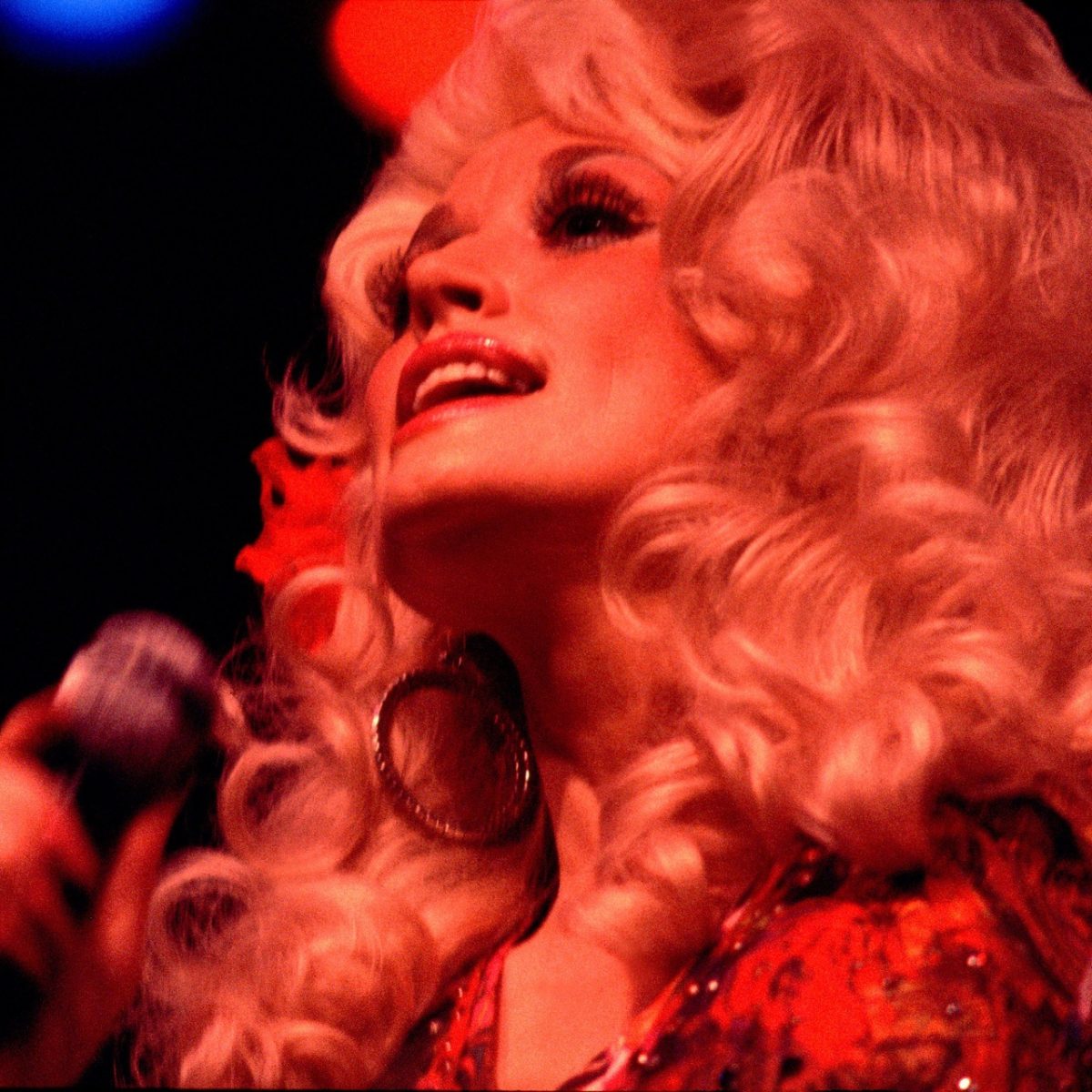
 One night in 1973, Dolly Parton had a song on her mind. She was thinking about a bank teller who had been flirting with her spouse.
“She got this terrible crush on my husband,” Parton told NPR in 2008. “And he just loved going to the bank because she paid him so much attention.”
Needing a name for this tall, redheaded temptress, she thought of another flame-haired girl, an 8-year-old who approached her for an autograph after a taping of “The Porter Wagoner Show,” the TV series on which she was featured. That child’s name was Jolene.
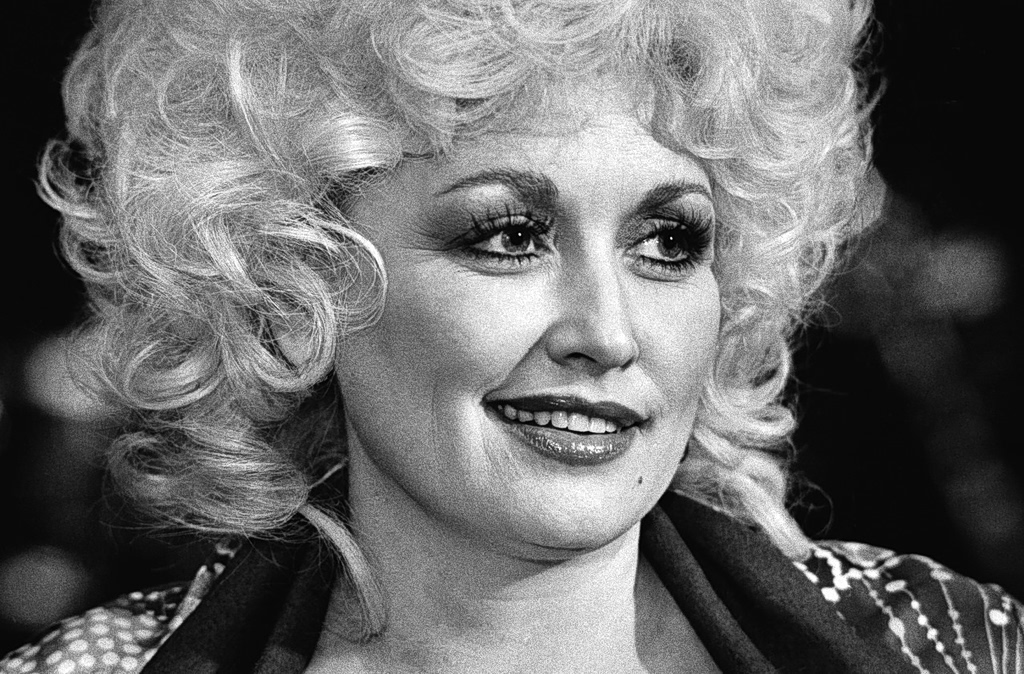
Parton died Tuesday at age 80 in Nashville, Tenn., according to her family. The cause of death wasn’t released. In May, Parton canceled a Las Vegas residency because of health issues.
When the song “Jolene” was finished, legend long had it, Parton wasn’t done working. The same evening, she composed another that she would present to Wagoner as her way of letting him know that she would be leaving the show (and their partnership singing duets) to concentrate on her solo career. She called this one “I Will Always Love You.”
Both songs became classics. “Jolene” was a No. 1 country hit and has been covered dozens of times over the years, by artists from Olivia Newton-John to the White Stripes to Lil Nas X. “I Will Always Love You,” after becoming a hit on its own, was recorded by Whitney Houston for the 1992 film “The Bodyguard,” and that version is the bestselling single of all time by a female solo artist.
In recent years, Parton conceded that the story of how those two classics came to be might not be entirely accurate. “I don’t really know that they were written the same night,” she said on the WorkLife podcast in 2022. “When we found an old tape, they were on the same cassette. That could have been a few days apart.”
“But they also wound up on the same album,” she added. “So they were certainly written within a very short span of time.”
Whether or not they were composed on the same day, Parton remains one of the most prolific songwriters who ever lived. By her estimation, she wrote more than 3,000 songs—more than 1,000 of which were recorded and released.
“The most I’ve ever written in a day and a night is 20 songs,” she once said, “and out of those 20 songs, 15 have been recorded.”
Parton put out more than 50 studio albums, resulting in 27 gold and platinum albums and total sales over 100 million worldwide, including 113 charting singles.
“There are few finer songwriters, male or female, that have ever lived,” said the pop singer Pink in her 2022 speech inducting Parton into the Rock & Roll Hall of Fame. She called her “one of the greatest storytellers of our time, of any time.”
“She crafted heartbreaking and soul-stirring stories about the lives of people often overlooked,” Pink added. Parton’s songs, she noted, make up “a narrative of painful, beautiful, poetic melodic commentary on what it’s like to be human, and what it’s like to be a woman in America.”
Parton’s work blazed a trail for such genre-defying superstars as Shania Twain, the Chicks and Taylor Swift, but her accomplishments went far beyond her music.
As an actress, she starred in films including “9 to 5” (later adapted into a Broadway musical), “The Best Little Whorehouse in Texas” and “Steel Magnolias.” In addition to 11 Grammy Awards (out of 50 nominations), she received nominations from the Academy, Tony and Emmy Awards. In 1999, she was inducted into the Country Music Hall of Fame; in 2001, into the Songwriters Hall of Fame; and in 2005, she received the National Medal of Arts.
Her entertainment empire, worth more than $500 million, spanned multiple venues including the Dollywood theme park in Pigeon Forge, Tenn., which draws more than two million visitors annually.
Parton’s philanthropic efforts were legendary. To honor her father, Robert Lee Parton, who never learned to read and write, she started the Imagination Library, which donated more than 200 million books to children around the world. In 2020, she contributed $1 million to Vanderbilt University for virus research, which helped kick-start Moderna’s Covid-19 vaccine.
“Everything I do,“ she told the Guardian in 2023, “whether it’s my personality, how I conduct myself and business, or whatever, if I do it my way, according to what I understand and believe, there’s a strength in that.”
Sharecroppers’ daughter
Dolly Rebecca Parton was born Jan. 19, 1946, in a two-room cabin in Pittman Center, Tenn., a town bordering Gatlinburg, Tenn., and the Great Smoky Mountains. She was the fourth of her sharecropper parents’ 12 children. She wrote her first songs at age 5, and when she was 10, she became a regular on Knoxville’s “The Cas Walker Farm & Home Show.”
Parton cut her first single, “Puppy Love,” (which, notably, she co-wrote) in 1959, and made an appearance on the Grand Ole Opry before returning home to finish high school—becoming the first in her family to graduate. The next day, she took a bus to Nashville. Fred Foster, founder of Monument Records and Combine Publishing, took notice of Parton and released a series of pop singles, even booking her on “American Bandstand.”
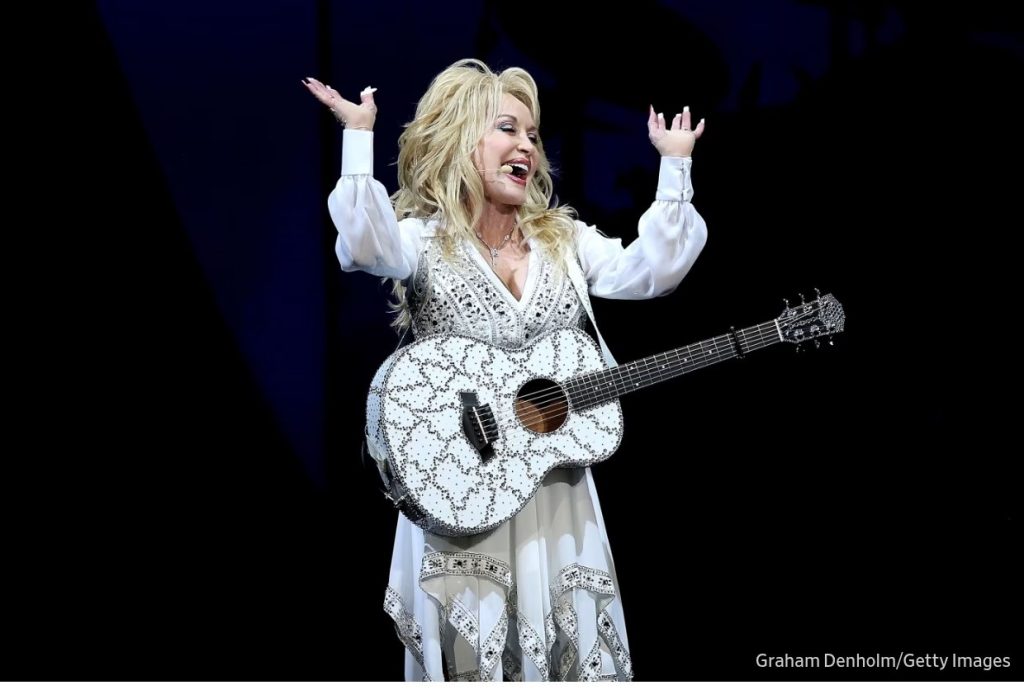
“It just seemed to me that Dolly had too much talent to be confined to any one field of music,” Foster later said. “I thought she could go across the board, and the best way to break her and to get the biggest rewards seemed to be in the teen market.”
When this direction didn’t pan out, Parton wasn’t deterred. In her 2023 book “Behind the Seams,” she wrote that she remembered thinking “I’ve got the talent if somebody hangs with me long enough.” She added, “I knew I had some other things going too. I had a nice personality, and I had a good sense of humor. I could talk to people, and I loved to write and sing. I took my music more seriously than anything!”
‘Dumb Blonde’
Turning her focus to more traditional country music, she wrote hits for other artists and finally made the charts in 1967 with the song “Dumb Blonde.” That same year, Porter Wagoner—known for his flashy suits and towering pompadour—hired her as his sidekick and duet partner for his syndicated show and touring company. Together, they recorded 13 albums and scored 20 hit duets over the next seven years.
Parton also continued to release solo material, including the 1968 hit “Just Because I’m a Woman,” a commentary on gender double standards. Her first No. 1 single was “Joshua” in 1971, which was soon followed by the breakthrough “Coat of Many Colors.”
Weaving together her memory of a childhood jacket her mother made from rags with the biblical tale of Joseph, “Coat” was a statement of identity and purpose.
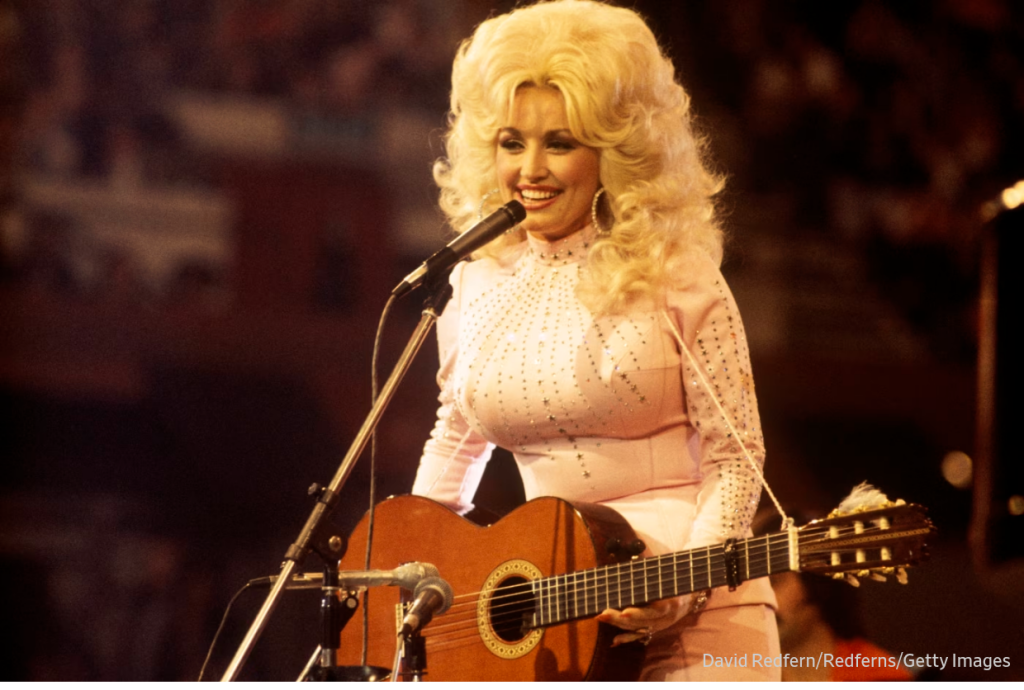
“It tells how a poor kid from the Blue Ridge Mountains has to make sense of life if she has ambitions, as we know Dolly Parton most certainly did, to get out of those mountains one day and conquer the world,” wrote David Cantwell and Bill Friskics-Warren in their 2003 book “Heartaches by the Number: Country Music’s 500 Greatest Singles,” in which they placed the song in the top 10.
She left Wagoner in 1974 (“We were on a dead-end street,” she wrote in her 1994 memoir “Dolly: My Life and Unfinished Business”), concurrent with the one-two punch of “Jolene” and “I Will Always Love You.” Elvis Presley wanted to record the latter, but when his manager, Col. Tom Parker, insisted that Parton hand over a cut of the publishing royalties, she refused.
Crossing over
Parton began reeling off No. 1 country hits—eight in the next six years—but after “Jolene” grazed the pop charts, she had visions of reaching a wider audience. She recorded covers of R&B classics and began working with new producers, paying off big in 1977 with the “Here You Come Again” album, which included two Top Ten pop singles with the title track and “Two Doors Down.”
She was becoming a cultural icon, posing with Arnold Schwarzenegger for Rolling Stone, and grew to be known for her curvaceous figure and outrageous style at least as much as for her music. “Dolly didn’t just get the joke, she wrote it,” said Pink—or, as Parton often put it, “it takes a lot of money to look this cheap.”
It was the title song to her 1980 screen debut that secured her status as a superstar. She wrote “9 to 5” on the movie’s set, and it went to No. 1 on the pop, country, and adult contemporary charts and received an Oscar nomination.
“Islands in the Stream,” her 1983 duet with Kenny Rogers, was another pop smash, but it was a different collaboration that gave Parton’s music new momentum. She recorded 1987’s acclaimed “Trio” album with Linda Ronstadt and Emmylou Harris, and it spun off four top 10 country hits; both “Trio” and its follow-up, 1999’s “Trio II,” won Grammy awards.
“When we heard our voices, it was like injecting some kind of serum into your veins,” Parton said of the project. “It was like a high like you’ve never felt.” Elsewhere, she fondly noted that Ronstadt’s perfectionism about their vocals could be “a pain in the ass sometimes.”
She continued writing songs, balancing a more commercial country sound with frequent returns to a more traditional approach. In 1999, she began a series of bluegrass-inspired albums with “The Grass is Blue,” followed by “Little Sparrow” in 2001 and “Halos & Horns” in 2002 (which included a cover of Led Zeppelin’s “Stairway to Heaven”); each won or was nominated for multiple Grammys.
Secular American sainthood
Throughout the 21st century, Parton continued releasing new music, putting out a dozen studio albums between 2000 and 2023 and remaining a steady presence on the country charts. Meanwhile, her reputation and influence continued to grow, bolstered by celebrated performances including her 2014 debut at England’s massive Glastonbury Festival and an unannounced appearance at the 2019 Newport Folk Festival.
Tributes such as the popular podcast “Dolly Parton’s America” and a Netflix series which dramatized a selection of her songs helped amplify her legend; a 2021 headline on Vox read “How Dolly Parton Became a Secular American Saint.” When she was nominated for the Rock & Roll Hall of Fame in 2022, she initially declined the honor, saying she didn’t feel like she belonged—but when she was voted in, she responded with the 2023 album “Rockstar,” a mix of original songs and classic rock covers featuring a huge list of collaborators including Paul McCartney, Steven Tyler, Lizzo and even Rob Halford from Judas Priest.
Parton married Carl Dean in 1966 and they remained together until his death in 2025. “We’re really very proud of our marriage,” she said in 2011. “It’s the first for both of us. And the last.” Dean avoided the spotlight and was seldom seen with Parton in public. The couple never had children but helped raise several of Parton’s younger siblings; she was also a godmother to Miley Cyrus, with whom she recorded and performed on multiple occasions.
Though Parton’s groundbreaking songs were often based on her own remarkable life, she also insisted that her music went beyond her own experience.
“I can write a song as if I had a house full of kids,” she said. “I can write a song as if I’ve got a cheating husband, even though I never did. But I know what it’s like; I’ve seen it, been around it. There’s nothing in this world that’s foreign to me, that I don’t get or understand.”
Write to reports@wsj.com