For four generations, the Sartori family of Plymouth, Wis., has been making Asiago cheese in a tradition that dates to patriarch Paolo Sartori, who hailed from a town near Asiago, Italy.
But, under pressure from Europe, many countries around the world are blocking American producers such as the Sartoris from using the Asiago name, saying it can be used only for cheese made the right way in Italy. The same goes for Parmesan and Romano cheese made by the Sartoris. To avoid generic descriptions such as “Italian-style hard cheese,” the company restricts where it sells its products outside the U.S.
“Consumers should decide what cheese wins in the marketplace, not European lawyers,” says Paolo’s great-grandson, Bert Sartori.
Now the Trump administration is trying to make the world safe for Wisconsin’s Asiago cheese—as well as American Parmesan, feta, Gorgonzola, brie and Munster.
In trade deals around the globe, the administration is requiring countries to accept America’s view about generic food names. Governments including Taiwan, Malaysia and Argentina are promising to let U.S. companies market their cheeses under the names everyone recognizes.
“The past year marked a real breakthrough,” said Shawna Morris, who heads trade policy at the National Milk Producers Federation.
The U.S. campaign has prompted a rebuke from the Consorzio del Formaggio Parmigiano Reggiano, which represents hundreds of Italian producers. It is opposed to cheese being labeled as Parmesan unless it is produced in the designated region in northern Italy, according to strict production standards.
In 2023, an American business marketing grated cheese was caught by the Consorzio’s enforcers using the word Parmesan at a German food fair. A court officer removed the word “Parmesan” from the advertising panel. The Consorzio said that in the European Union, “it is absolutely forbidden to sell or advertise these counterfeit products.”
The Consorzio estimated in 2025 that “fake Parmesan” sales outside the EU exceeded 2 billion euros annually, or about $2.3 billion.
The group’s president, Nicola Bertinelli, said the issue was transparency for cheese lovers. “Consumers may believe they are purchasing a product linked to a specific Italian origin and production method, when in fact they are not,” he said.
American dairy operations are large and efficient, with generations of experience making European-style cheeses, so they can sometimes offer better prices than European rivals. American cheese exports rose 20% last year to a record 613,000 metric tons.
There are no hard-and-fast rules about when a place name or other traditional description attached to a product becomes generic. Almost everyone agrees that at some point long ago, cheddar became a style of cheese, not a product that has to come from Cheddar, England. On the other end of the spectrum, even the U.S. acknowledges that Champagne can generally refer only to sparkling wine from a specific region of France.
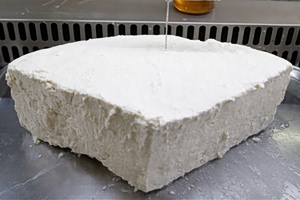
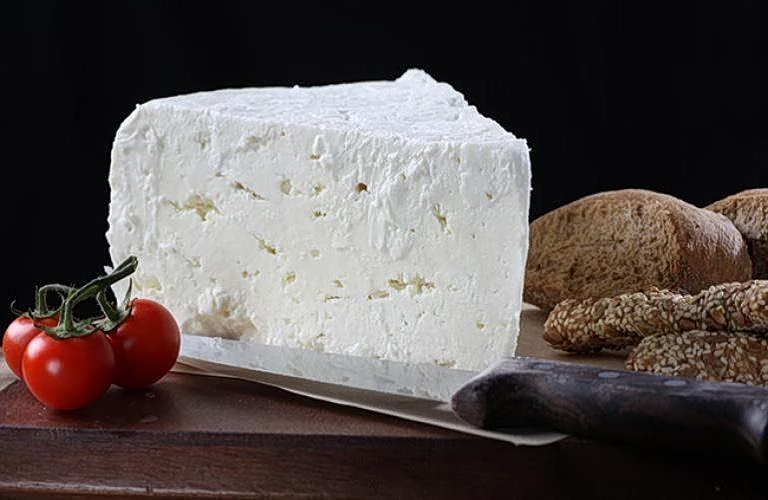
In between, it is a free-for-all. To Americans, feta is a crumbly cheese. To the European Union, Feta, though not a place name, can come only from a region of Greece that has millennia of tradition making that kind of cheese. The EU says a primitive form of feta is mentioned in the Odyssey, when the hero of the ancient epic takes cheese from the cave of the cyclops Polyphemus.
For the most part, the U.S. and EU have hit a stalemate over how each side treats cheese on its own home turf. That leaves the rest of the world for the two to battle it out.
Take Indonesia, an archipelagic country of 285 million people that lacks grazing land for cattle. It buys $220 million a year of dairy from the U.S.
In September, the EU announced a trade deal with Indonesia that required the Southeast Asian nation to protect over 200 food products. An annex specified that, as far as Indonesia is concerned, feta comes only from Greece and Gorgonzola from Italy.
In February, the Trump administration struck back with its own trade deal. This time Indonesia said it would allow American producers to use their preferred names—the opposite of what it had just promised the Europeans. Neither the U.S. deal nor the European one has been formally ratified by Indonesia’s government.
European Commission spokesman Olof Gill said Indonesia needed to respect the cheese names or there would be a stink. Trade deals with other countries “must not undermine the EU’s bilateral agreements,” he said. The U.S. trade representative’s office and the Indonesian government didn’t respond to requests for comment.
In March, the EU concluded a trade agreement with Australia which includes protections for 396 European products. Under the deal, all Australian cheesemakers will have to stop calling their product “fontina” after five years. Existing Australian producers will be allowed to call their product feta, but new dairy companies won’t be able to.
Australia said the concessions were necessary to secure an agreement with the EU.
Ian Schuman, a senior executive at New Jersey Parmesan and Asiago exporter Schuman Cheese, hailed Washington’s successes. “The deals in Southeast Asia and Latin America are particularly exciting given their growing populations and increased appetite for cheese,” he said.