Ghislaine Maxwell , the longtime associate of Jeffrey Epstein , declined to answer questions from Congress, invoking her right against self-incrimination.
Maxwell had been subpoenaed to testify Monday before the House Oversight Committee, which is investigating the government’s handling of the Epstein case. The British socialite was convicted in 2021 and is serving a 20-year prison sentence for helping recruit and groom underage girls. She joined Monday morning’s closed-door deposition virtually from prison.

“She answered no questions and provided no information,” said Rep. Robert Garcia (D., Calif.), the top Democrat on the committee.
David Markus , one of Maxwell’s lawyers, previously told lawmakers she would require immunity for questioning so she wouldn’t risk further criminal exposure. Markus said Monday she was prepared to speak if granted clemency by President Trump .
“Only she can provide the complete account,” Markus said. “Some may not like what they hear, but the truth matters.”
Oversight Committee Chair James Comer (R., Ky.) said after the deposition that he doesn’t think Maxwell should be granted any kind of clemency or immunity. “She committed a lot of crimes,” he told reporters.
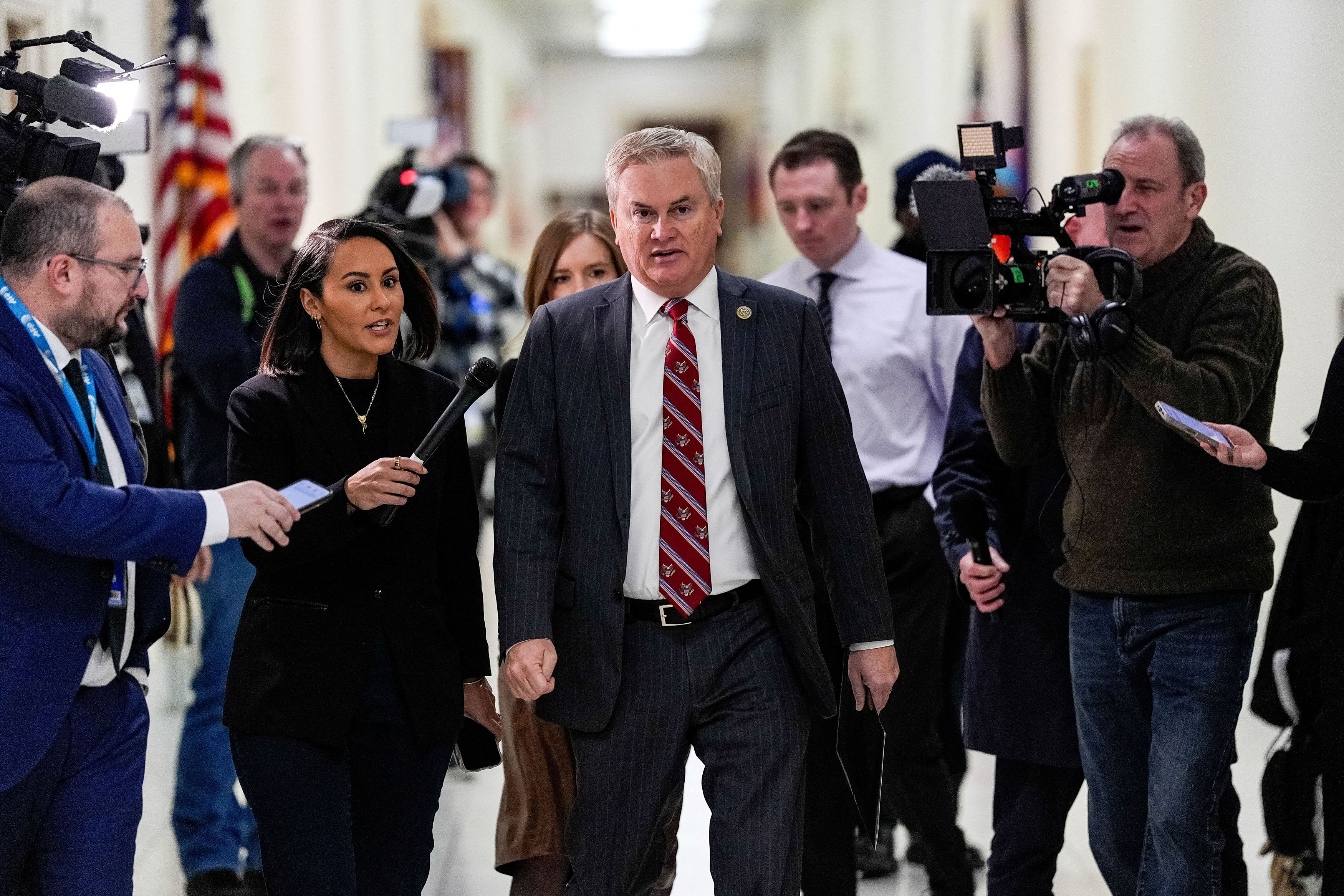
U.S. Representative James Comer (R-KY), arrives for a House Oversight Committee closed-door video deposition of Ghislaine Maxwell, convicted and jailed associate of the late financier and convicted sex offender Jeffrey Epstein, on Capitol Hill in Washington, D.C., U.S., February 9, 2026. REUTERS/Kent Nishimura
Maxwell has filed a habeas petition seeking her release. In a recent court filing, she had claimed that Epstein had four other co-conspirators and 25 men who reached settlements with Epstein’s victims. Their identities aren’t public.
Maxwell sat for two days to answer questions under oath for Deputy Attorney General Todd Blanche last summer. Blanche told Maxwell she would receive immunity for what she discussed. She was transferred shortly afterward to a lower security facility in Texas.
Lawmakers are examining prosecutorial decisions across multiple administrations, including the 2008 nonprosecution agreement Epstein reached with federal prosecutors in Florida, a deal that later drew bipartisan criticism. Epstein died in jail in 2019 while awaiting trial on sex-trafficking charges. His death was ruled a suicide by New York City’s medical examiner.
Reps. Ro Khanna (D., Calif.) and Thomas Massie (R., Ky.), the bipartisan duo that co-sponsored the legislation to force the release of the Epstein files last fall, visited the Justice Department on Monday to view unredacted versions of the documents.
“What I saw that bothered me were the names of at least six men that had been redacted that are likely incriminated by their inclusion in these files,” Massie told reporters afterward. He said one of the men is “pretty high up” in a foreign government and another is a “prominent individual.”
Write to Joseph De Avila at joseph.deavila@wsj.com and Anvee Bhutani at anvee.bhutani@wsj.com