 Μake us preferred on Google
 Hamas’s popularity has edged up among Palestinians in Gaza since the cease-fire, ending a slide during the war and posing a challenge to President Trump ’s plan to bring peace to the enclave by disarming the militant group.
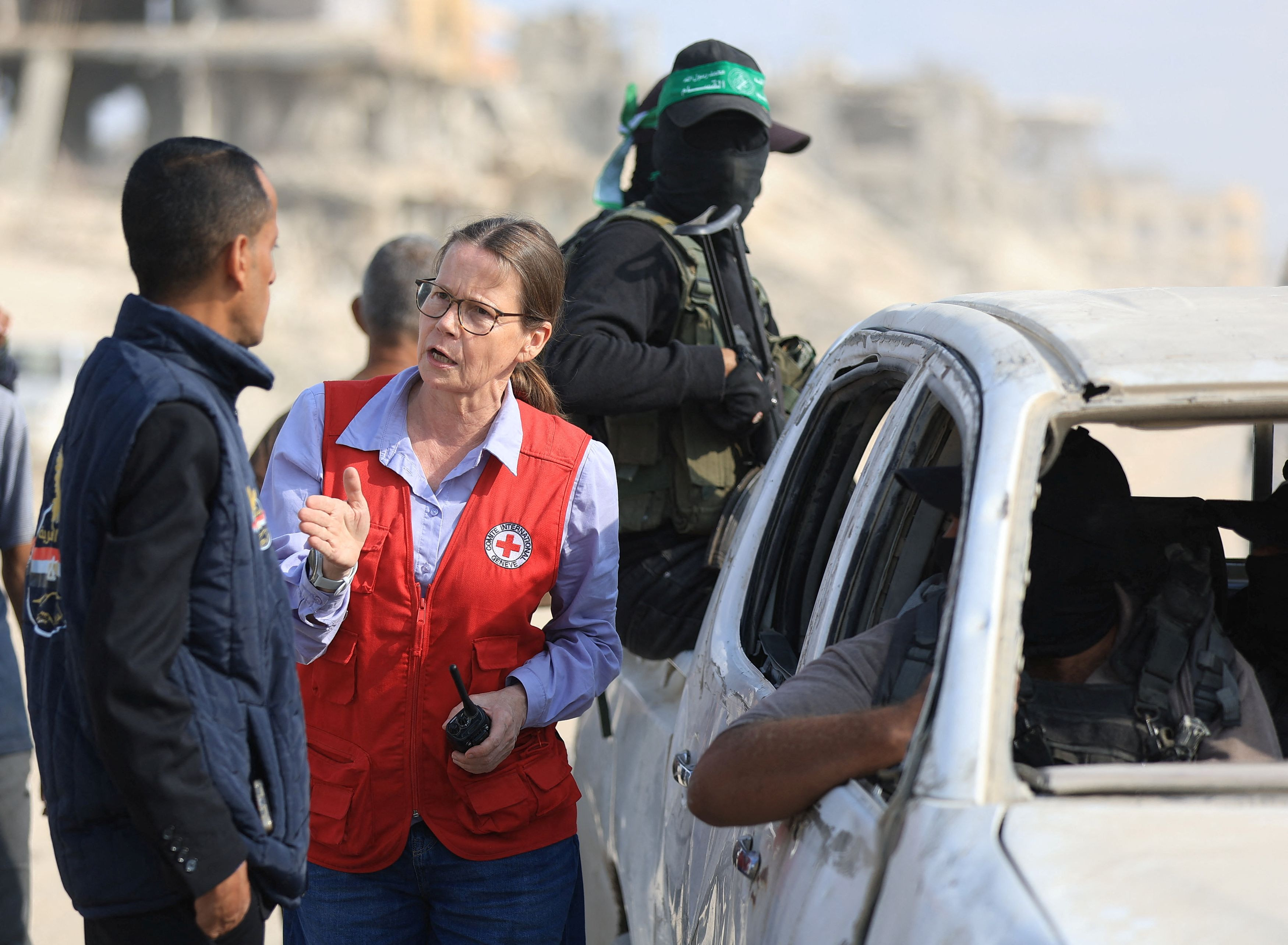
A major reason is security. Last month, as a cease-fire took root and Israeli forces pulled back, Hamas fighters re-emerged on the streets as police and internal-security forces, patrolling and targeting criminals along with rivals and critics. While many Gazans have a dim view of the U.S.-designated terrorist group and don’t like seeing the group reassert itself, Palestinians have welcomed a reduction in crime and looting.
“Even those who oppose Hamas, the idea of security is something people want,” said Hazem Srour , 22, a businessman in Gaza City. “It’s because we had a security breakdown with thefts, thuggery and lawlessness.”
“No one could stop it except Hamas, and that’s why people support them,” he said.
Before the truce, more than 80% of humanitarian aid from the U.N. and its partner agencies was intercepted by desperate Gazans or seized by armed gangs, according to the United Nations Office for the Coordination of Humanitarian Affairs.
In the past month, thefts are down to around 5% of deliveries, according to the agency. That is because more aid is flowing and Hamas’s “blue police” are preventing criminality, a UNOCHA spokesperson said.
The reduction in crime and lingering support for armed resistance to Israel has allowed Hamas to rebuild its image and exert tighter control over the enclave, as many Palestinians now perceive the militant group in more pragmatic terms, according to pollsters, analysts and Palestinians across Gaza.
In a poll published last month by the Palestinian Center for Policy and Survey Research, based in the West Bank, 51% of Gazans surveyed expressed positive views of Hamas’s performance during the war, up from 43% in May and 39% just over a year ago. The poll had a margin of error of 3.5 percentage points. On a separate question about support for political parties in theoretical elections, 41% of Gazans said they aligned with Hamas, up 4 percentage points from five months prior and the highest level of support since December 2023.
Polling is difficult in Gaza’s wrecked cities. Surveyors interviewed people face to face on the Hamas side of the cease-fire dividing line as the militant group was engaging in battles with armed clans and carrying out public executions.
Khalil Shikaki , the director of the center that produced the poll, said that his pollsters interviewed Gazans in their tents using tablets and phones, and that results were directly sent to his servers. Many Gazans who were surveyed criticized Hamas, he said.
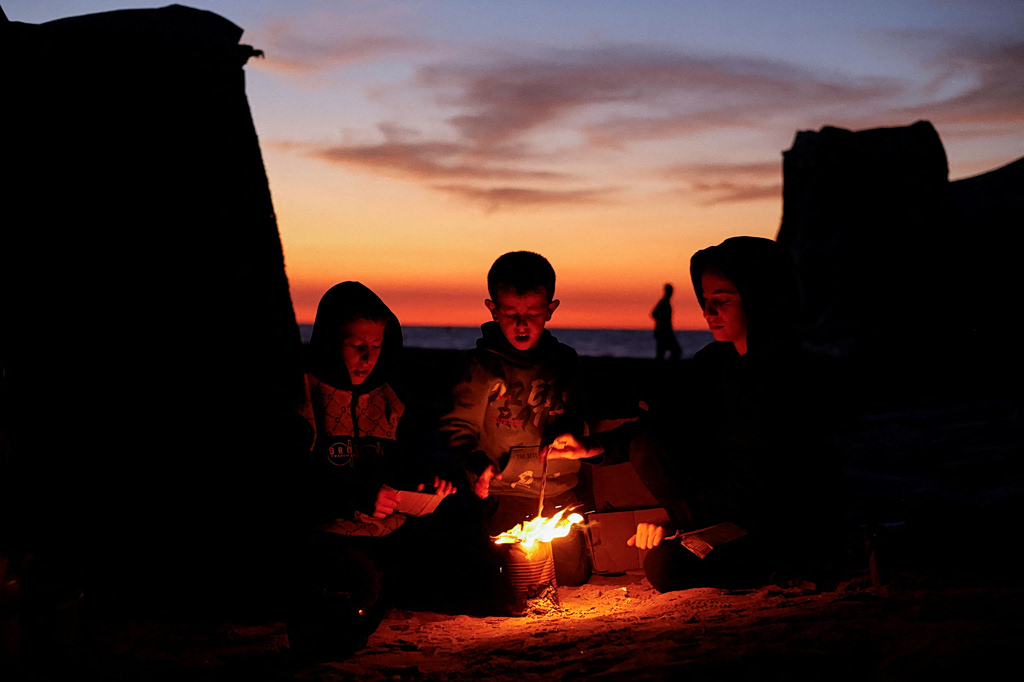
Palestinian children sit next to a fire, amid a ceasefire between Israel and Hamas, in central Gaza Strip, November 17, 2025. REUTERS/Mahmoud Issa
Still, the pollsters were surprised by the results. The trend over the past 12 months in previous polls has been declines or weakness in Hamas’s popularity, particularly in Gaza.
“To some extent, this war has proven to Gazans and others that Israel has failed to defeat it,” Shikaki said of the militant group. “Hamas isn’t going to disappear tomorrow. We have to live with that.”
Earlier this year, hundreds of Gazans tired of being homeless and hungry protested against Hamas , which launched the Oct. 7, 2023, attack on Israel that left around 1,200 dead and 251 taken hostage and sparked the war. Many Gazans criticized Hamas for waiting too long to end the subsequent two years of fighting. The enclave was left in ruins, and more than 69,000 people died, according to Palestinian health authorities, who don’t say how many were combatants.
Many people in Gaza remain frustrated with Hamas and appalled by its violent crackdown.
“Hamas are the ones creating this chaos,” said Mohammad Burno , 33, an anti-Hamas activist who supports the rival Fatah party underpinning the Palestinian Authority, which governs much of the West Bank. “From their perspective, they call it maintaining security, but true security cannot be achieved through brutality.”
Early this month, the U.S. Central Command, which is helping monitor the cease-fire, released what it said was drone footage of suspected Hamas operatives stealing a truckload of aid after attacking its driver. Hamas denied any involvement in the incident.
Hamas today controls roughly 47% of Gaza, the area west of the so-called yellow line that marks the withdrawal limit for Israeli troops under the first phase of Trump’s plan. The other side of the yellow line, roughly 53% of the enclave, is controlled by Israel’s military.
The rise in Palestinian support for Hamas could complicate efforts to move the Trump plan into the second phase, which calls for Hamas to disarm and give up any role in a future Gaza government in exchange for a withdrawal by Israeli troops and their replacement by an international security force.
Palestinians surveyed in Gaza were split on the Trump plan’s call for disarming Hamas, with a slight majority of 55% opposed and 44% in support, according to the poll.
A slim majority of 52% of Gazans opposed the entry of an international force tasked with disarming Hamas, according to the poll.
“This majority means that a lot of people want Hamas to continue to have arms despite the fact that they don’t support Hamas,” Shikaki said. “There is fear of the ultimate Israeli objective in this war and, in the short term, fear of anarchy.”
Gazans have regularly complained about looting and violence as armed groups operated across the enclave during the war. Almeqdad Meqdad , a 31-year-old researcher who works with local aid organizations and lives in Gaza City, said the risk without a controlling authority is that Gaza would be divided up by 10 or 20 different militias.
As the cease-fire removes the fear of being killed in bombardments, Meqdad has returned to his home and said he feels safer now that order has been restored in the streets.
“When weapons spread unchecked and there was no system or authority to enforce control, these groups began operating freely,” Meqdad said. “People don’t necessarily want Hamas to remain in power forever. They simply want stability until a new government is formed.”
Ebrahim Mqead , 47, who lives in central Gaza’s Deir al Balah, said people no longer feel adrift with Hamas running things. He wants the militant group to keep its weapons so that it remains capable of standing up to Israel “until rights are restored to their owners and Palestine is recognised as a land.”
The Trump plan has successfully halted most of the fighting in Gaza, but it has also opened the door for Hamas to consolidate its control. On the militant group’s side of the yellow line, there is currently no viable alternative.
Israel’s government came under heavy criticism during the war, including from its own security services, for failing to empower an alternative to Hamas. Kobi Michael , a senior researcher at the Institute for National Security Studies, in Tel Aviv, and the Misgav Institute, an Israeli think tank, said Palestinians will continue to support Hamas—or at least not oppose it – until an alternative emerges.
Many Gazans agreed, saying they don’t want Hamas to play a role in a future government—if there is a credible alternative to maintain order.
“If there were a government or system capable of keeping order in the country, like Hamas did before, people would support it,” said Srour, the Gaza City businessman. “What people want at this stage is simply order, safety and a normal life—nothing more than that.”
Write to Sudarsan Raghavan at sudarsan.raghavan@wsj.com