 Μake us preferred on Google
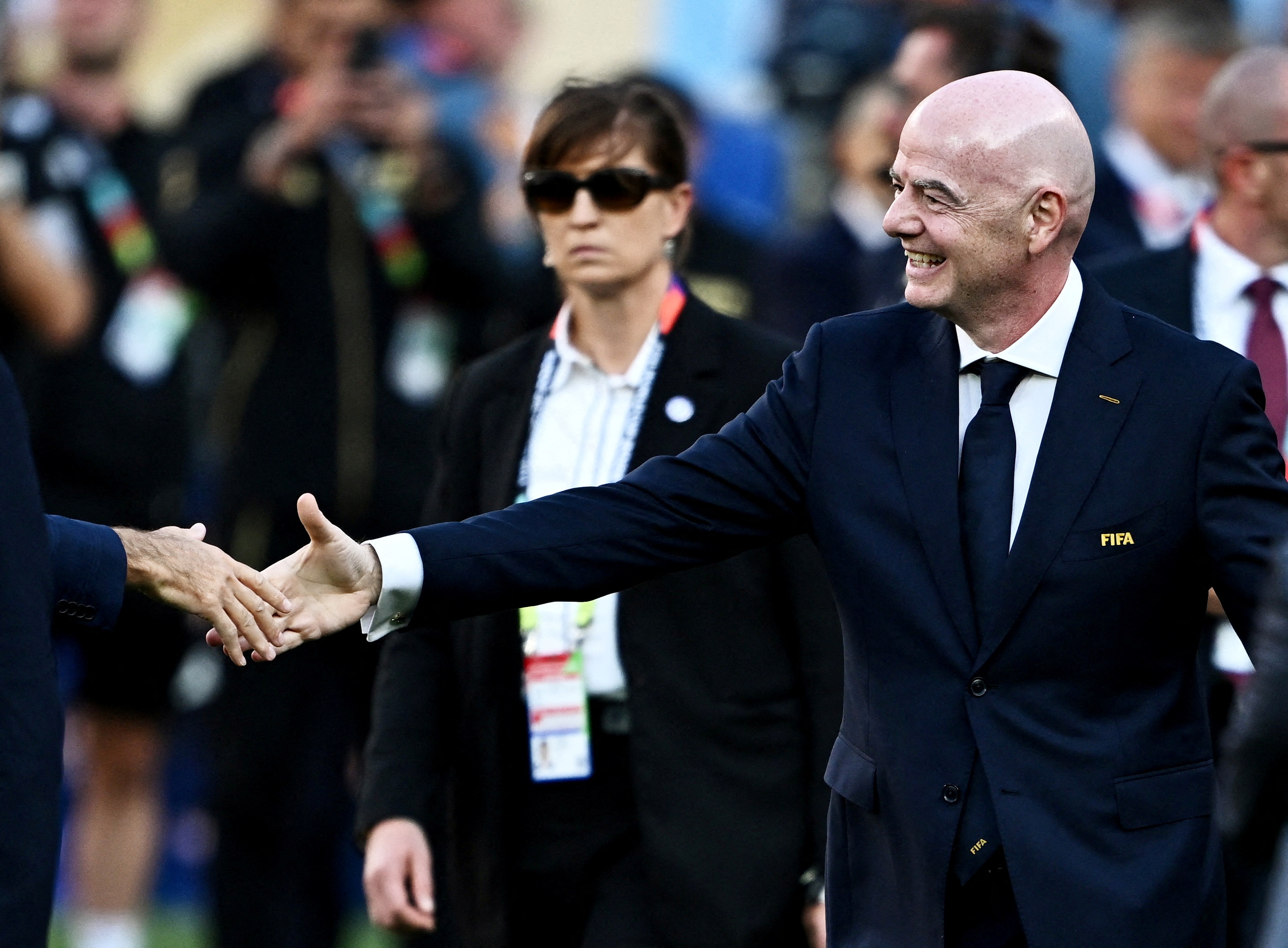
 On the Saturday morning of World Cup final weekend, Gianni Infantino invited all 211 nations that make up the FIFA membership to breakfast. The delegates piled into a ballroom at New York’s Waldorf Astoria hotel, FIFA’s de facto headquarters for the tournament, as if it were an old-money wedding.
Infantino, the organization’s 56-year-old president, proceeded to trumpet how successful his North American World Cup had been. Record revenue, record ticket sales, and record ratings. As he closed his valedictory speech, Infantino looked ahead to next spring, when he expected to be re-elected to a third full term as FIFA president. Infantino didn’t think it would even require a formal vote.
As he reminded the members in New York, according to people in attendance, he had already received more than 200 letters of endorsement. But his comment went down with the delegates like a lead balloon. Many of them felt that Infantino saw them as little more than nomination letters.
By that point, trust in Infantino at the highest levels of global soccer had been eroding for months, according to high-ranking officials who spoke on condition of anonymity. They had seen him belittle the FIFA members by turning up late to their annual Congress last year so he could spend longer traveling with President Trump. They had watched in amazement as Infantino invented a FIFA Peace Prize last fall, just to award it to the U.S. President. And they had been shocked during the World Cup when Infantino allowed an expedited disciplinary process to delay a suspension for an U.S. player after Trump asked him to review the call.
Finally, the tinder box exploded last week.
That’s when news emerged of Infantino’s ill-fated plan to spin off FIFA’s commercial operations and sell stakes to private investors—while he tried to jam through a motion to expand the World Cup from 48 teams to 64. FIFA Forward Enterprise would have earned him around $30 million a year after his presidency ended in 2031, according to people familiar with the arrangement. FIFA denied that this was ever discussed.
Faced with open revolt, Infantino scrapped the plan and convened a meeting of his senior staff in Rabat, Morocco, on Wednesday. Only then was he able to engineer a stunning reversal in which he apologized to the FIFA membership and emerged with renewed support from executives who had publicly called for change just days earlier. That included FIFA Secretary General Mattias Grafström, who had described a “sad and reproachable series of events” in an email to staff on Tuesday, that he said created “turmoil which is difficult to comprehend and accept.”
By Wednesday night, however, the organization had fallen into line behind Infantino.
“FIFA’s top management is fully confident that the outcomes of today’s meeting will strengthen FIFA’s governance, help restore confidence in the organization and enable us to prepare for the major events and challenges ahead in a united and transparent manner,” FIFA said.
The meeting bought Infantino some peace by quelling the revolt inside his own offices, but his long-term fate still resides with the 211 member associations. Ahead of an election next March, they remain bitterly divided and could yet name a candidate to run against him.
And if the past week has made one thing clear, it’s that the global outrage and calls for Infantino’s resignation are more than the result of any isolated incident. They are the product of a secretive and Jupiterian presidency that this Swiss lawyer has crafted for himself over a decade leading the world’s most popular sport.
During interviews in recent days, those closest to his administration painted a picture of a fast-moving dynamo, who became obsessed with his own legacy, compensation, and proximity to power. The man who once called himself the “King of Soccer” circumvented FIFA processes, these people said, fell out with his own Secretary General, and routinely kept FIFA’s ruling Council in the dark as he reshaped the global game.
“He’s the master of silos,” one senior official said. “Nobody has his ear.”
When Infantino was elected president in 2016, he inherited an organization still reeling from the U.S. Department of Justice investigation into allegations of widespread corruption at FIFA. The probe had done catastrophic reputational damage to the institution and eventually led to the fall of longtime president Sepp Blatter. But Infantino, who had come up through the legal department at UEFA, European soccer’s governing body, appeared on the scene as a safe, popular choice.
He promised radical transparency. He vowed to put the game back at the heart of FIFA’s mission. He even made a show of flying on European budget airlines instead of private jets. (Ten years later, he spent the World Cup crisscrossing North American on a private aircraft lent to him by Qatar Airways, a FIFA sponsor. FIFA said that all travel was “in line with company policy.”)
But as he closed in on a second full term in 2023, which he ran for unopposed and won by acclamation, parts of the FIFA staff had noticed a shift.
In late 2022, he launched an Instagram account and memos about boosting his follower count soon circulated through the Zurich headquarters—he is now up to 5.7 million while averaging more than 1,000 posts a year. Infantino also began making appearances at global events that had nothing to do with soccer, such as the World Economic Forum in Davos or, later, Trump’s second inauguration in Washington. He continued to promise increased revenue and greater distribution of funds to soccer federations around the world, which helped bolster support for him through FIFA’s one country-one vote system. Yet sections of FIFA’s membership started to believe that they were no longer his top priority.
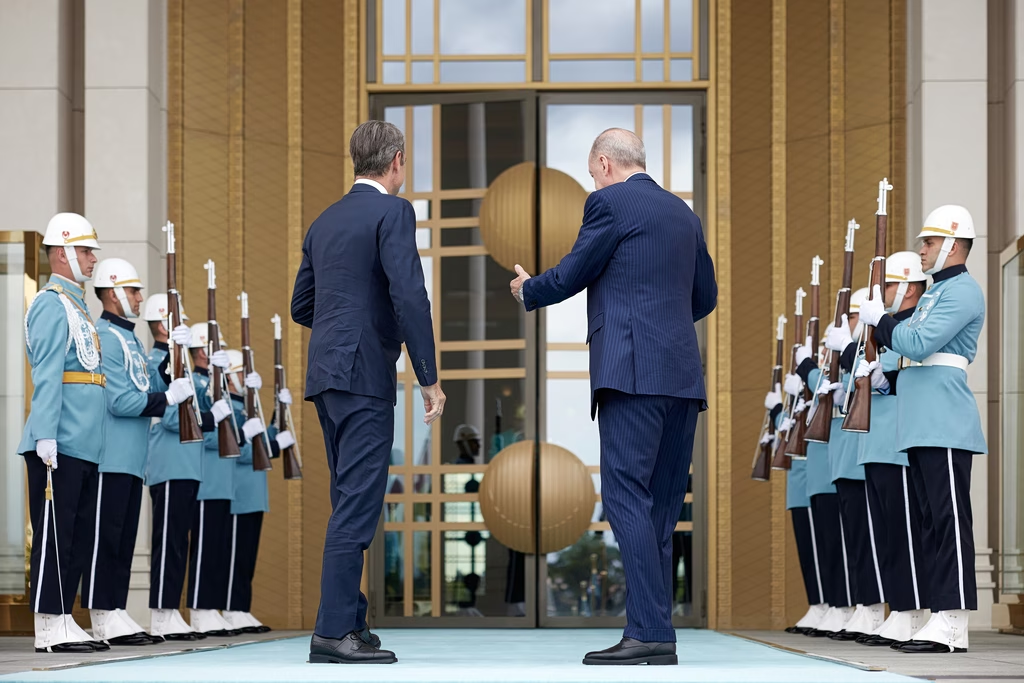
In May 2025, the 211 associations gathered in Asunción, Paraguay for their annual congress. Infantino, due to preside over it, showed up late—not because of any logistical mishap, but because he had chosen to spend extra time traveling with Trump through Saudi Arabia and Qatar.
Infantino missed the official opening dinner and a soccer game he had personally organized. After he landed, he delayed the start of the Congress by more than two hours, communicating it through a printout slid under the doors of delegates’ hotel rooms. When Infantino finally walked into the hall, he apologized, but sentiment in the room had turned against him. A group of UEFA members marched out in protest.
“People started questioning,” the senior executive said. “You don’t come around with us, but you seem to always go to the World Economic Forum every year. You seem to go to the U.N. every year and shoot pictures with some head of state [for] your Instagram.”
Infantino has insisted that these appearances were part of his job as a global ambassador for the sport. Maintaining good relations with Trump, he has said, was also essential to the smooth running of the 2026 World Cup co-hosted by the U.S., Canada, and Mexico.
What no one had seen coming were the lengths to which Infantino was prepared to go to keep Trump onside.
The two men regularly spent time alone during official visits to the White House, according to a person familiar with their meetings. And it was during one of those tête-à-têtes that Infantino suggested the idea of a first annual Peace Prize. Infantino had heard Trump’s frustrated campaigning for a Nobel. This was a way to further ingratiate himself to the man who called him “Johnny.”
“He deserves to get it,” Infantino told people close to him, according to a person familiar with the conversations. “He’s making an effort in the Middle East and Gaza and you have to give people recognition for effort.”
By the time the project for the Peace Prize reached the FIFA Council, it was already in the works. Certain members thought it might be a joke. But Infantino had tapped a small group of people to work on it and picked out the physical award. There would be a medal and a sculpture depicting hands reaching out toward a globe—a miniature replica of a piece that stands in front of the U.N. offices in Geneva. FIFA didn’t comment on the process.
The original and the copy were both crafted by an artist from Azerbaijan named Selhab Mammadov, who was selected without a public process. He happened to be the father of a FIFA director.
No single project, however, saw more unilateral decisions than this World Cup.
Unlike previous editions of the men’s tournament, 2026 was orchestrated directly by FIFA instead of a local organizing committee. A special management group, based in Miami and chaired by Infantino, became the tournament’s central authority. But that too turned into Infantino’s domain, several people involved with the committee said. FIFA said that all decisions were made democratically.
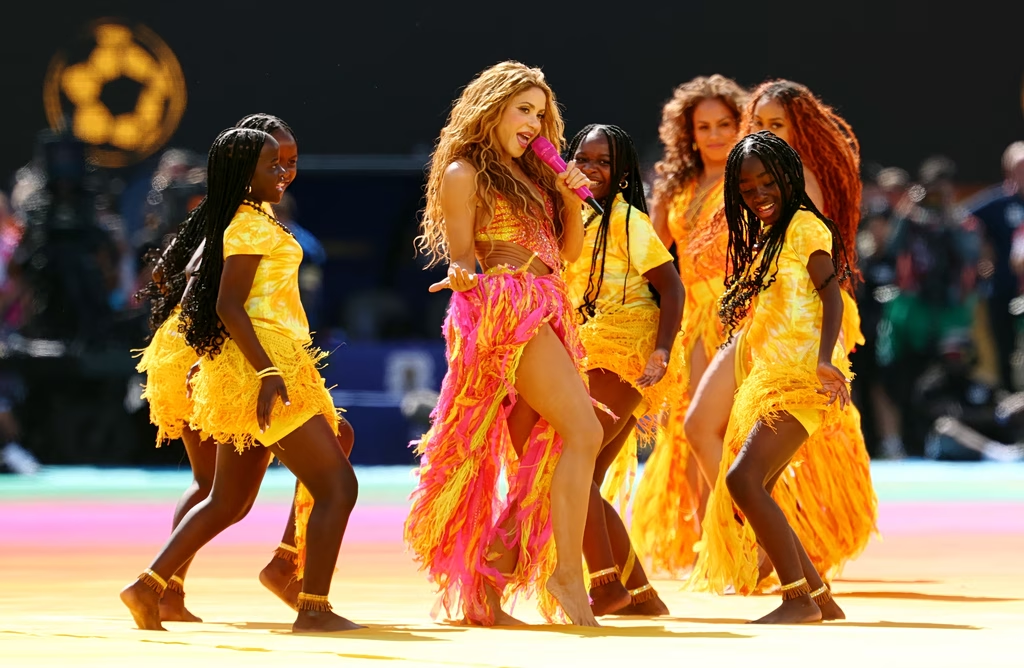
The controversial hydration breaks and the extended halftime show for the final were Infantino calls. Even the final list of 16 host cities, whittled down from 23, came down to his personal preferences.
“This World Cup, really, Gianni ran absolutely everything,” said a person familiar with the meetings.
The same was true during the tournament, right down to the moment Infantino took a call from Trump asking him to review an automatic one-game suspension following a red card for U.S. striker Folarin Balogun. FIFA denies that Infantino put his thumb on the scale. But through an expedited process, a single member of FIFA’s Disciplinary Committee saw fit to delay the ban, according to people familiar with the inner workings of the reversal. (Under normal circumstances, any call would have required at least two members of the committee.) Asked about the ruling, FIFA referred back to a statement from the Disciplinary Committee, which stated that “reviewing the legal consequences of red cards in football is nothing new in the modern game.”
That decision reverberated throughout the world soccer community as the moment Infantino went too far. Political interference, critics argued, was now overruling what happened on the pitch. UEFA, which had been at loggerheads with FIFA for years, said it “crossed a red line.” Parts of the FIFA bureaucracy also objected to the decision, but remained silent.
“That certainly left a bad aftertaste,” one close associate of Infantino’s said, “not just to that match but really to the rest of the tournament.”
Infantino had originally planned to launch FIFA Forward Enterprise, conceived with Joshua Kushner, straight into the wake of the Balogun incident. But the brewing storm over the reversal and the halftime show caused him to hold back. By that stage, Infantino was more concerned by leaks from his inner circle.
In New York, days before the final, he gathered his senior staff and lost his temper, according to a person briefed on the conversation, though FIFA disputes the characterization. The tenor of the meeting, the person said, was “You’re either with me or against me.”
Infantino would soon find out that his ranks of allies were dwindling. After he launched FFE last week, he was rebuked by every corner of the game. UEFA threatened to boycott the World Cup, and all other FIFA events, as long as the plan remained alive. The confederations that oversee North America, South America, and Asia all expressed serious concerns.
What seemed even stranger now was that FIFA didn’t even need outside financing. Run as a nonprofit out of Zurich, the organization has no debt and reported cash reserves approaching $3 billion at the end of last year, according to FIFA’s financials. Infantino, who contracted JPMorgan to assist with the sale of a roughly 20% stake in the new entity, argued that FIFA was undercommercialized, despite unprecedented revenue of $15 billion from this year’s World Cup.
But critics saw another motivation. With the opportunity to make tens of millions as the head of FFE after his presidency, far exceeding his current salary of roughly $6 million a year, Infantino had a chance to put himself in the class of sports leaders he felt he belonged in, alongside NFL commissioner Roger Goodell, whose annual pay reportedly exceeds $60 million.
“This was clearly a deal that was driven by compensation,” one senior figure said.
And by promising up to $40 million to each of the 211 member associations, Infantino hoped he would be applauded back into office next spring. Instead, more than one member association described it as “a bribe,” according to a person briefed on their thinking. Around the world, federations have begun the process of retracting their letters of support for him. In response, FIFA referred back to Infantino’s comments at the start of the World Cup.
“Well, tell me, where should the money go otherwise? Where?” he said in Mexico City. “To finance corrupt practices? I don’t think so. It has to go to the federations.”
Meanwhile, Infantino has spent recent days reposting new letters on his Instagram from federations doubling down on their support for him, including Morocco, Qatar, Kuwait, the U.A.E., Bhutan, and Sri Lanka. Elsewhere, Infantino’s opponents continue to believe that his time has run out.
“Individuals, unstable moments and unfortunate episodes come and go,” Grafström said in his note to FIFA staff before Wednesday’s shift in tone. “The institution, its mission and its responsibility towards world football continue.”
Write to Joshua Robinson at Joshua.Robinson@wsj.com