Since Jeffrey Epstein’s death, a parade of powerful people who associated with him have insisted they were ignorant of the true nature of his crimes. Many have issued carefully worded statements of regret.
But private correspondence recently made public in government releases and email leaks tells a different story.
Some prominent people in politics, business and academia didn’t just maintain ties with Epstein after his 2008 conviction for soliciting a minor for prostitution. They actively consoled him, cast him as a victim and in some cases offered advice on how to rehabilitate his image.
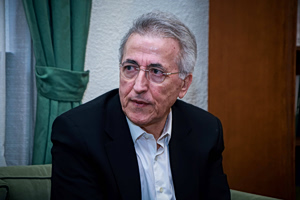
In February 2019—long after Virginia Giuffre went public with her sex-trafficking allegations and newspaper investigations put a spotlight on Epstein’s activities—the political activist and professor Noam Chomsky sent Epstein a message.
Responding to Epstein’s request for advice on how to handle his “putrid press,” Chomsky counseled him to stay silent: “What the vultures dearly want is a public response, which then provides a public opening for an onslaught of venomous attacks, many from just publicity seekers or cranks of all sorts.”
He went further, dismissing the broader reckoning with sexual abuse: “That’s particularly true now with the hysteria that has developed about abuse of women, which has reached the point that even questioning a charge is a crime worse than murder.”
Five months later, Epstein was arrested on federal sex trafficking charges.
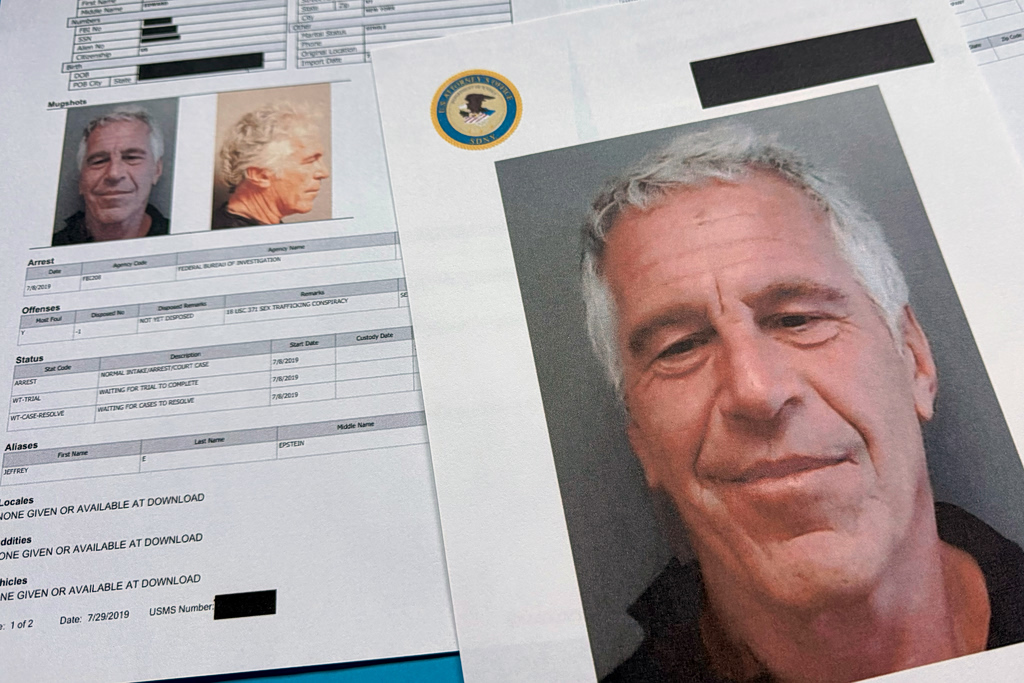
FILE – Documents that were included in the U.S. Department of Justice release of the Jeffrey Epstein files are photographed Friday, Jan. 2, 2026. (AP Photo/Jon Elswick, File)
Chomsky, now 97, was hardly the only famous associate who was privately consoling Epstein or giving him advice to rehabilitate his public image. Their messages, however, were hidden until the recent release of the FBI’s files into the Epstein case and other document disclosures last year.
‘Your friends stay with you’
Months after Epstein’s 2006 arrest in Palm Beach on charges of unlawful sex acts with a minor, Epstein received an email that was signed by Stanley Pottinger, a New York attorney and former assistant attorney general for civil rights under Presidents Richard Nixon and Gerald Ford .
“It’s been awhile since we’ve seen each other, but reading about the excesses of the Palm Beach cops, I had to drop you a line of support,” Pottinger wrote in a note forwarded to Epstein in September 2006. “The small minded of the world don’t like thinkers and doers, especially when they succeed.”
He told Epstein the situation would pass and that he looked forward to “hearing the funny side of this thing.”
Pottinger, who went on to represent victims against Epstein, died in November 2024.
By 2007, Palm Beach police had built a detailed case documenting Epstein’s abuse of dozens of underage girls. Yet as he entered his guilty plea and faced sentencing, several of his associates wrote to express solidarity.
In January 2008, Stephen Kosslyn, then head of Harvard’s psychology department—whose research had received $200,000 in donations from Epstein between 1998 and 2002—wished him well on his birthday: “May the coming year be infinitely better than the previous one.”
Epstein replied: “thanks but not a very high hurdle.”
By June, when Kosslyn wrote to update him about a new job, Epstein replied that “unfortunately jail starts monday.” Other emails show Kosslyn later working with Epstein on drafting scripts for reporters to help restore Epstein’s public image. Kosslyn didn’t immediately respond to requests for comment.
Peter Mandelson , then serving as the European commissioner for trade, wrote to Epstein in June 2008. “I think the world of you and I feel hopeless and furious about what has happened,” he told the convicted sex offender. “It just could not happen in Britain.”
The British politician urged Epstein to be “incredibly resilient” and to “fight for early release,” adding: “Your friends stay with you and love you.”
Mandelson’s relationship with Epstein went even further than emotional support. He appeared to forward confidential government information , including advance notice of a European Union bailout and details about then-Prime Minister Gordon Brown’s resignation. Metropolitan Police have now opened an investigation into allegations that Mandelson committed misconduct in public office.
Mandelson hasn’t publicly commented on the emails but has apologized to Epstein’s victims. He didn’t respond to requests for comment.
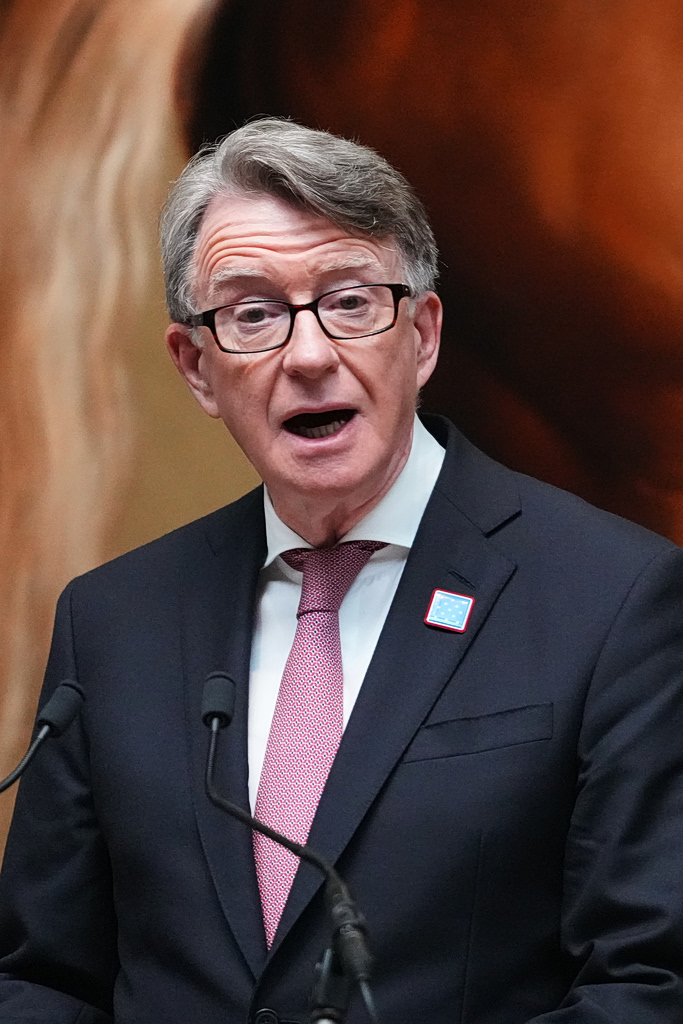
British Ambassador to the United States, Peter Mandelson speaks during the rededication ceremony of the George Washington Statue in the National Gallery in London, Wednesday, June 18, 2025. (AP Photo/Kirsty Wigglesworth)
In the summer of 2008, Epstein began serving his sentence at the Palm Beach County stockade. In June, Jes Staley , head of JPMorgan Chase’s private bank, wrote: “I hope you are hangin there.” Epstein replied the next day with career advice. By September, Staley wrote: “I miss you.” And then: “I hope you keep the island. We all may need to live there.”
Staley, who left his job as Barclays CEO in 2021 over a U.K. government investigation into whether he mischaracterized his Epstein ties , has since said he regretted his relationship. Staley didn’t respond to requests for comment.
Epstein was released in July 2009 after serving around 13 months. He returned to New York, registered as a sex offender.
Epstein told Prince Andrew that “the press is piling on me in the states” in February 2011. The Duke of York offered a tone of mutual reassurance: “I’m just as concerned for you! Don’t worry about me! It would seem we are in this together and will have to rise above it!” He signed off by suggesting they “play some more soon.”
The exchange came around the time the Mail on Sunday published a photograph of Andrew with his arm around a teenage Giuffre.
Giuffre went on to accuse Epstein of trafficking her to men including the prince, who was stripped of his royal titles last year amid new disclosures of his Epstein ties. The former royal has denied the abuse allegations and didn’t respond to requests for comment.
‘Nothing less than extortionists’
In March 2011, Faith Kates, the owner of a modeling agency, also wrote to Epstein. “I know you don’t believe this but I really do love you like a brother…and feel so sad this is happening,” she said. Kates also advised Epstein to “lay very low and quiet” and disparaged those who had distanced themselves from him.
“You should know who your friends are,” she wrote. “The rest are a piece of crap.” She also suggested he find a charitable project that would generate positive press, though she cautioned: “not yet because you are still a target for the press and not many big institutions will take your money at the moment but in time.”
Kates, who didn’t respond to requests for comment, retired late last year from her firm Next Management after some of her Epstein emails were released.
David Schoen, an attorney who represented Epstein after he was arrested in 2019, wrote to Epstein in 2011 after seeing a newspaper article about Epstein and Prince Andrew.
“These past couple of years you have to deal with horrible government agencies and folks who appear to be nothing less than extortionists posing as victims and that has to have been terrible,” Schoen wrote. “I hope there are nothing but good times now and ahead.”
In a statement on Friday, Schoen said he didn’t remember the exact context of the 2011 email to Epstein “but I can tell you that around that time frame many people who knew him well believed that he had been scammed by a number of young women.”
Schoen said he gave Epstein legal advice but didn’t take over his criminal case until August 2019, the month he died.
By 2013, Epstein was aggressively working to rehabilitate his reputation and maintain his social network. Journalist Michael Wolff , in a lengthy August 2013 memo to Epstein, offered an analysis of the risks and opportunities of Epstein’s association with Bill Gates and proposed writing a sympathetic profile.
“I believe that I could write a redefined Jeffrey Epstein story—personal, fond, complex, funny, smart—that would deal with all the issues in a nuanced enough way that might make it anti-climactic for anybody else to try to deal with them,” Wolff wrote. “We’d seize the narrative.”
Wolff has said some of his exchanges with Epstein are embarrassing and he would have worded them differently, but denied serving as a press adviser. He didn’t respond to requests for comment.
British billionaire Richard Branson wrote to Epstein in September 2013, after hosting him on Necker Island. “It was really nice seeing you yesterday. The boys in Watersports can’t stop speaking about it! Any time you’re in the area would love to see you. As long as you bring your harem!” Branson wrote.
Branson then outlined a public-relations strategy centered on Gates. He suggested Gates could say publicly that Epstein had been “a brilliant advisor,” that Epstein “slipped up many years ago by sleeping with a 17 1/2 year old woman and were punished for it,” and that Epstein had “more than learnt your lesson and have done nothing that’s against the law since and, yes, as a single man you seem to have a penchant for women. But there’s nothing wrong with that.”
A spokeswoman for Branson said Epstein used the word harem to refer to adult women he brought along and Branson wouldn’t have used it if he knew about his crimes. She said that Epstein had described his conviction as a consensual encounter with someone just shy of 18. “Richard believes that Epstein’s actions were abhorrent and supports the right to justice for his many victims,” she said.
‘There is abuse of power’
Attorney Kathryn Ruemmler’s messages with Epstein, which began around 2014 and span several years, reveal a close and casual relationship. They exchanged hundreds of messages, with Epstein calling her “my great defender” and seeking her help pushing back on media reports about his abuse of underage girls.
In November 2017, during the early days of the #MeToo movement, Ruemmler wrote to Epstein: “I hear you, sweetie, but there is abuse of power with your stuff too. I know you didn’t think about it that way, but it’s there. And, yes, please keep your head down.”
A spokeswoman for Ruemmler said that in her message to Epstein, she was “obviously patronizing him.” The spokeswoman also said Ruemmler never advocated on Epstein’s behalf and that they had a friendly working relationship but she had no knowledge about his criminal conduct. Ruemmler is now general counsel at Goldman Sachs .
Steve Bannon , the former Trump White House strategist, pushed a more aggressive approach. In June 2018, Bannon messaged Epstein with an urgent assessment.
“Who is running this op on u—something serious going on,” Bannon wrote in iMessages, characterizing increased scrutiny of Epstein as a coordinated operation. “It’s an op dude—I do this for a living—the pieces that are dropping are deeply researched. This is sophisticated op.”
Five months later, the Miami Herald published “ Perversion of Justice ,” interviewing Epstein victims on the record and raising questions about Epstein’s lenient plea deal.
By early 2019, Epstein and Bannon were in regular contact about strategy. Epstein asked Bannon whether to respond publicly. “Continue to ignore?” Epstein wrote. “Ann Coulter on hannity/. Attack? Op ed , ?”
Bannon counseled restraint, warning that public engagement would only extend the news cycle. Bannon, who hasn’t commented on his communications with Epstein, didn’t respond to requests for comment.
In February 2019, Epstein received the message from Chomsky, who also wrote: “Ive watched the horrible way you are being treated in the press and public. It’s painful to say, but I think the best way to proceed is to ignore it.”
Less than a year prior, Epstein had transferred about $270,000 to the former MIT professor, who said in 2023 the transfer involved movement of his own funds and wasn’t a payment from Epstein. When asked about his relationship with Epstein, Chomsky told The Wall Street Journal, “First response is that it is none of your business. Or anyone’s. Second is that I knew him and we met occasionally.” Chomsky didn’t immediately respond to requests for comment on the latest emails.
In April 2019, Epstein told Bannon that Christians he had met with were troubled that the media was portraying him as “beyond redemption.” Bannon replied that they needed to counter the narrative of Epstein as a trafficker of children, but acknowledged the difficulty: “Can’t redeem unredeemable—you are a lot of things—which we will show—but you are NOT that.”
Four months later, Epstein was arrested on federal sex-trafficking charges. He died in his cell in August 2019 in what a New York medical examiner ruled was a suicide.
Write to Khadeeja Safdar at khadeeja.safdar@wsj.com and Neil Mehta at neil.mehta@wsj.com
Corrections & Amplifications undefined An earlier version of this article incorrectly said Stephen Kosslyn sent a message to Jeffrey Epstein on New Year’s Day. It was sent on Jan. 20. (Corrected on Feb. 5)