
In the hours after the U.S. and Israel began an attack on Iran on Saturday, Declan Coady texted from Kuwait that he was safe and his family shouldn’t worry. He later called his older brother, Aidan, who is stationed in Italy. “I just talked to him, he’s OK,” Aidan told the rest of the family back in West Des Moines.
But when the family texted 20-year-old Declan on Sunday to check in, they never got a response.
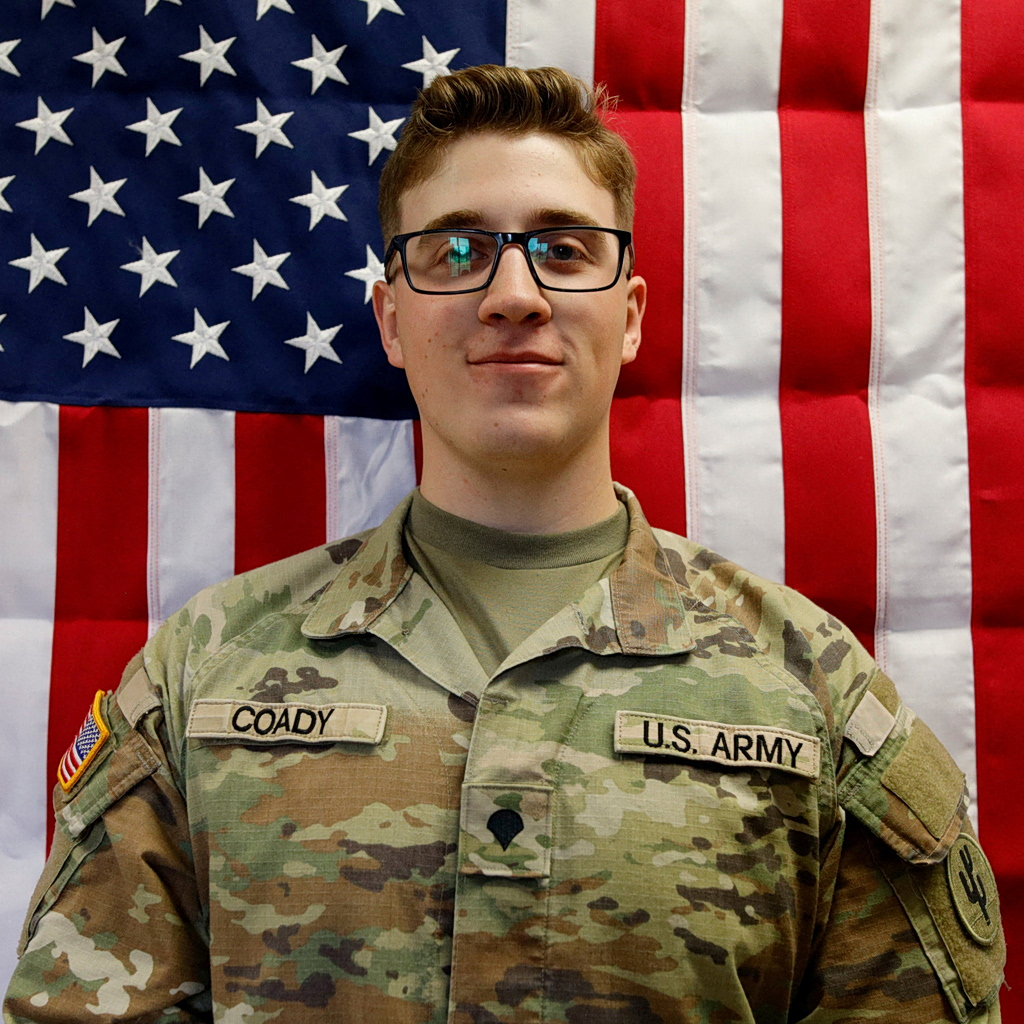
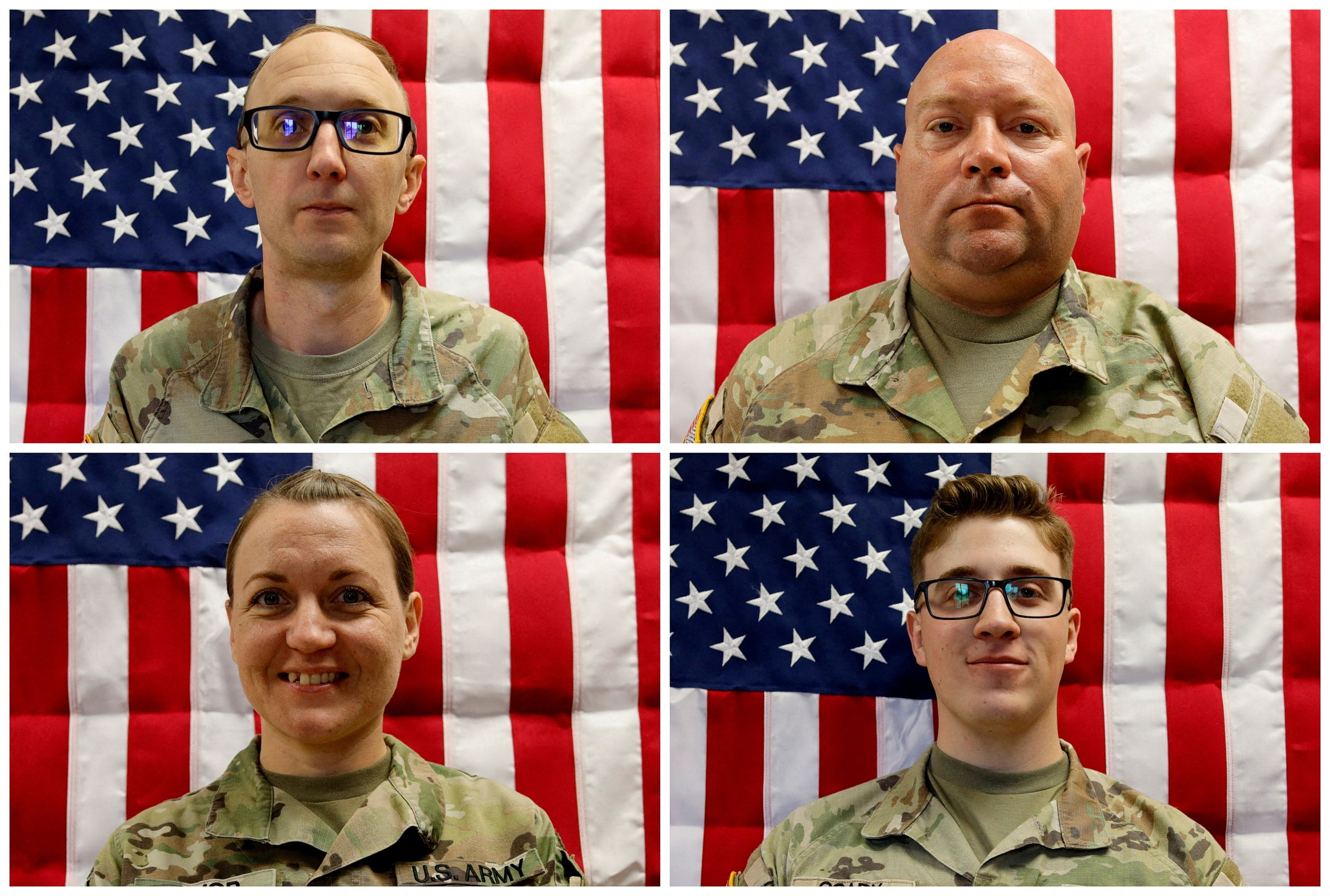
U.S. Army Reserve Sgt. Declan Coady, 20, of West Des Moines, Iowa poses in an undated photograph in his uniform. Coady was killed March 1, 2026, at the Port of Shuaiba, Kuwait during a drone attack. U.S. Army Reserve/Handout via REUTERS THIS IMAGE HAS BEEN SUPPLIED BY A THIRD PARTY. REFILE – CORRECTING LOCATION FROM “DES MOINES” TO “WEST DES MOINES”.
That evening, as the Coadys were preparing for bed, someone from the Army rang their doorbell. Declan, an Army soldier, had been killed.
“You never think it’s gonna be your family that it happens to, and then it does,” said his sister, Keira, 22. “He was so happy. It just can’t feel real.”
Iowans have long served with distinction in the U.S. military, and many have given their lives. But in recent months, the costs of America’s Middle East conflicts have landed with particular force across this heartland state.
The news that Sgt. Coady and the four other reservists assigned to a Des Moines-based unit were killed in Kuwait comes about 11 weeks after two young Iowa National Guard members died in Syria , including one from Des Moines. After that tragedy, flags flew at half-staff, the governor spoke of the fallen in her annual address and the adjutant general of the Iowa National Guard publicly acknowledged that many families were asking: What were their neighbors and relatives doing in Syria?
Now, Iowa is mourning as questions and bursts of bittersweet pride begin again.
On Wednesday, Andrew Coady , Declan’s father, stood on the front porch of the family’s home—dark-gray siding and stone on a quiet cul-de-sac—and spoke mostly of the pride. Declan, who enlisted in the Army Reserve in 2023, had interrupted his time at Drake University to deploy to Kuwait to pursue his dream of becoming an expert in computer networking and cybersecurity.
His father recalled a recent conversation. “‘I work 12-plus hour days, six to seven days a week,’” Declan had told him. “And he’s like, ‘It’s the happiest I’ve been.’”
But for the family, the pain was palpable. Their doorbell now has a Post-it note that says “do not use.” That’s because the doorbell now reminds them of the moment when they learned of Declan’s death. It’s “kind of a flashback for some of us,” Andrew said.
The strikes in Iran had already dominated conversation in Des Moines. Even before news of Coady’s death broke, Drake University had planned a panel on the topic. They went ahead with the event, but opened with tearful remarks about losing one of their own and a moment of silence.
Debra DeLaet , a Drake political science professor who participated in the panel, said Wednesday that the mood on campus was somber. “It’s heavy. It’s sad.”
Many students and faculty knew Coady or his sister, who were both students at the school. Many also knew Coady’s mother, who had worked in administration. “A lot of us are reeling,” DeLaet said.
Several students told her that Coady’s death has driven home a sense of unease about the global situation. DeLaet said students of varying political views on campus all “share a sense of sadness and fear.”
The news rippled through student life. “It hit the university pretty hard,” said Delaney Brackin , a 22-year-old English major who attended the same West Des Moines high school as Coady.
She said she didn’t know Declan personally but had friends who have joined the military for the financial benefits. “It’s very sad that this is where it’s ending up,” she said.
In the parking lots of grocery stores and other shops, locals voiced mixed reactions. Some said they were fully behind President Trump, and that Iowans were making the ultimate sacrifice because patriotism runs deep in the state.
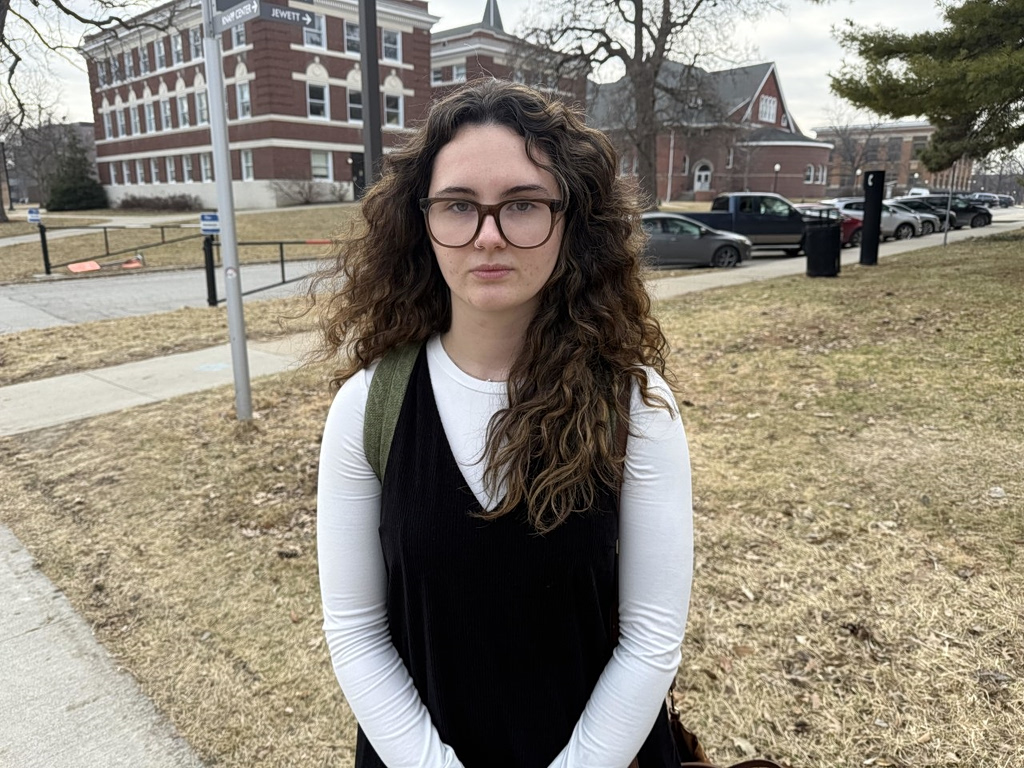
Others expressed more nuance about the military engagement in Iran. “Part of what I see is the celebrations that are happening over there, like we’re doing them a good service,” said Joshua Moon , a 33-year-old sales representative who previously voted for Trump but didn’t vote in the last election. “But then again, I have to think about our country. We can’t be the world’s police all the time. Why is that our priority when we have a lot of things happening here that need to be taken care of?”
Gary Wattnem , an Army Reserve ambassador in Iowa and a retired major general, said the deaths have only strengthened Iowa reservists’ resolve to serve.
“We are out there making a difference,” he said. “People [in Iowa] are patriotic and realize there is a mission to accomplish, and they want to be a part of it.”
The U.S. Army Reserve had 2,425 soldiers serving in units across Iowa in 2025, according to the Army.
Write to Joe Barrett at Joseph.Barrett@wsj.com and Cameron McWhirter at Cameron.McWhirter@wsj.com