ABU DHABI—Iran is heading into this weekend’s negotiations with the U.S. in a triumphant mood, having tested the limits of American power and emerging from the 40-day war in control of the Strait of Hormuz and, with it, the world’s energy markets.
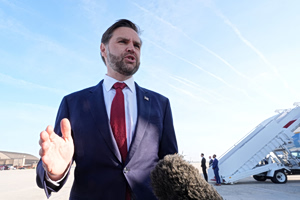
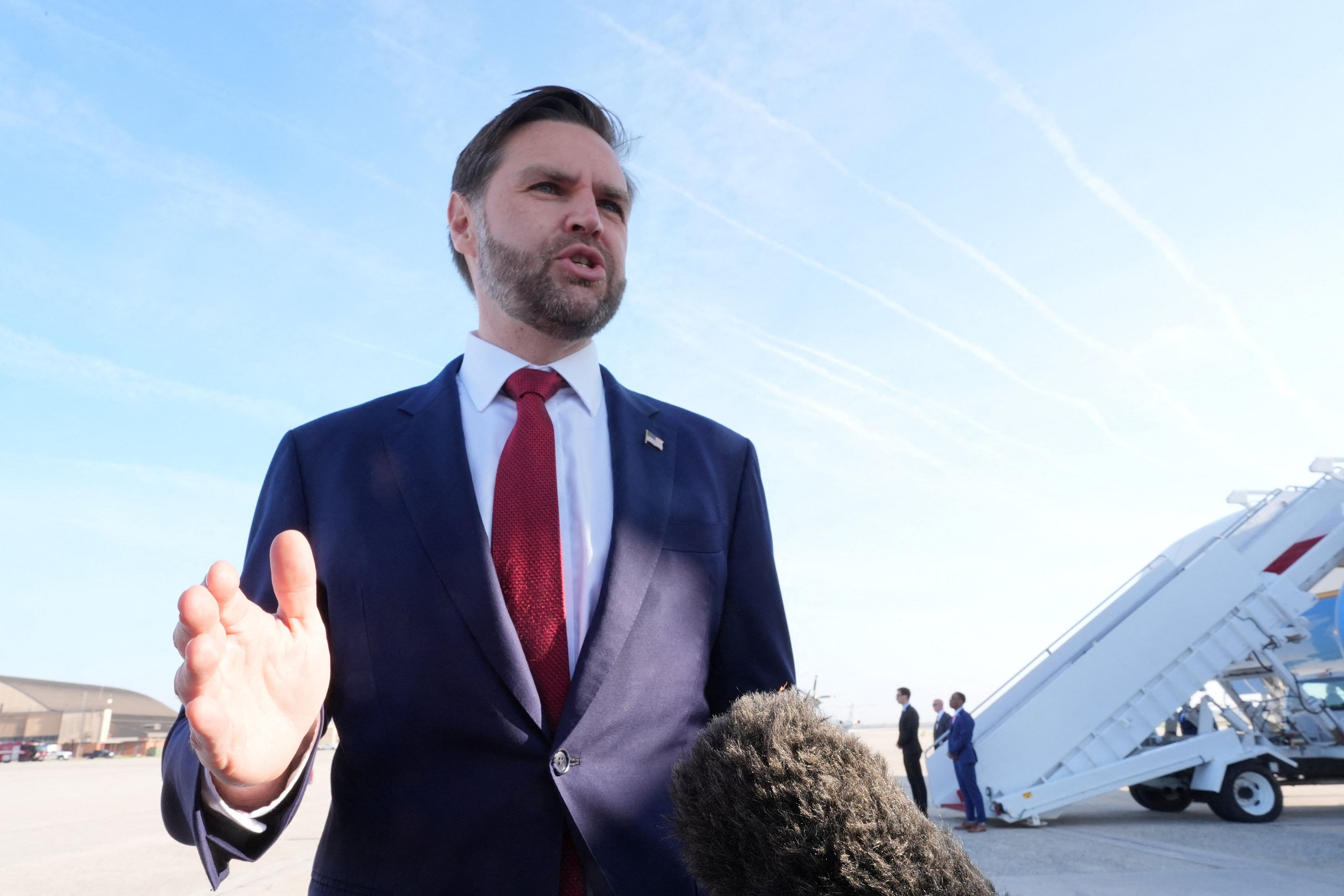
The question now is whether Iranian leaders will overplay this critical lever at the planned meeting in Islamabad, Pakistan, with Vice President JD Vance by insisting on maximalist demands despite losing much of Iran’s military and industrial base during the war. This is something that President Trump, despite all his apparent eagerness to wind down the conflict, will likely find impossible to accept.
“From Tehran’s point of view, they think that they have Trump over a barrel. They think they have weaponized the world economy, have taken everything that America can throw at them, and came out standing,” said William Wechsler , director of Middle East programs at the Atlantic Council and a former senior Pentagon official. “Trump blinked first. Now, the Iranians won’t take a deal unless it is a deal in which Trump and Vance completely abandon U.S. national security interests in the Middle East.”
The playing field is clearly stacked in Iran’s favor after more than a month of warfare that involved a dozen nations in the region. This is largely because the crucial component of any negotiation—the time factor—now works for Tehran.
Unlike the U.S. and the rest of the world, Iranian leaders can afford to drag out the talks as they insist on their demands. Iran’s very participation in the Islamabad meeting remained in doubt until the last moment, as Tehran demanded that Washington first unfreeze blocked Iranian funds and pressure Israel to stop strikes against Iran’s Hezbollah ally in Lebanon.
While the U.S. and Israel have suspended their bombing campaign in Iran, with every passing day Tehran tightens its chokehold on global oil and natural-gas supplies. As long as the Strait of Hormuz doesn’t reopen to free navigation, this is bound to translate into growing prices at the pump, including in the U.S., where gas already costs about 40% more than in February.
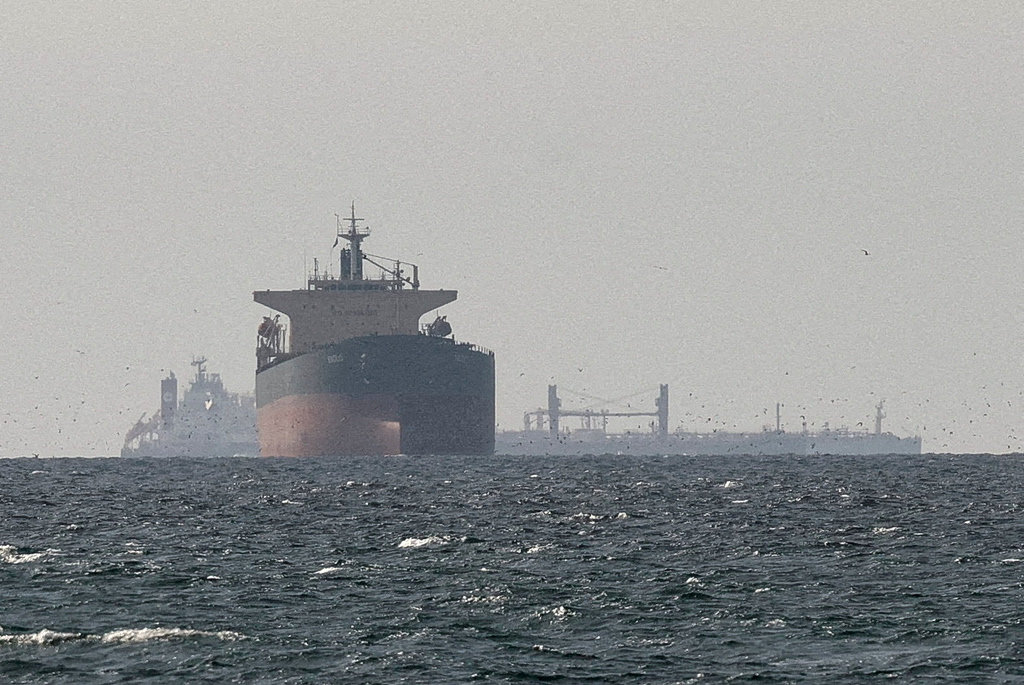
Cargo ships in the Gulf, near the Strait of Hormuz, as seen from northern Ras al-Khaimah, near the border with Oman’s Musandam governance, amid the U.S.-Israeli conflict with Iran, in United Arab Emirates, March 11, 2026. REUTERS/Stringer
“What pressure is Iran under at all now? None. The real pressure now is the Strait of Hormuz,” said Robin Mills , chief executive of the Dubai-based Qamar Energy consulting firm. “We are seeing oil storage draining in Asia, then in Europe and now in the U.S. because the markets are sucking it up. If this continues, the price rises are going to come to the U.S. pretty sharply within the next couple of weeks.”
While Trump said that the 15-day cease-fire announced Wednesday requires Iran to reopen the waterway, nothing of the kind happened—as Trump himself has acknowledged, complaining on Thursday night about Tehran’s “dishonorable” behavior. He returned to the theme Friday, posting on Truth Social that “The Iranians don’t seem to realize they have no cards, other than a short term extortion of the World by using International Waterways. The only reason they are alive today is to negotiate!”
So far, Trump has allowed Iran to keep the Hormuz Strait closed without consequences. The massive U.S. forces assembled in February remain in the region, though. If no deal is reached, then “the ‘Shootin’ Starts,’ bigger, and better, and stronger than anyone has seen before,” he threatened in an earlier post.
It’s a threat that can’t be fully discounted. But Iran—currently swept by nationalist euphoria, with state media hailing the country’s emergence as the fourth global superpower alongside the U.S., Russia and China—may be betting that Trump is so desperate to extricate himself from the unpopular war that he will keep extending the cease-fire no matter how hard of a bargain Tehran tries to drive.
“The Iranians believe that they won the war and Trump wants to move on,” said Karim Sadjadpour , senior fellow at the Carnegie Endowment. Some elements of the regime, he added, have another reason to push the U.S. to the limit: “Within the Islamic Revolutionary Guard Corps, there are those who don’t mind prolonging the war, because once the bombs stop, the people’s grievances return.”
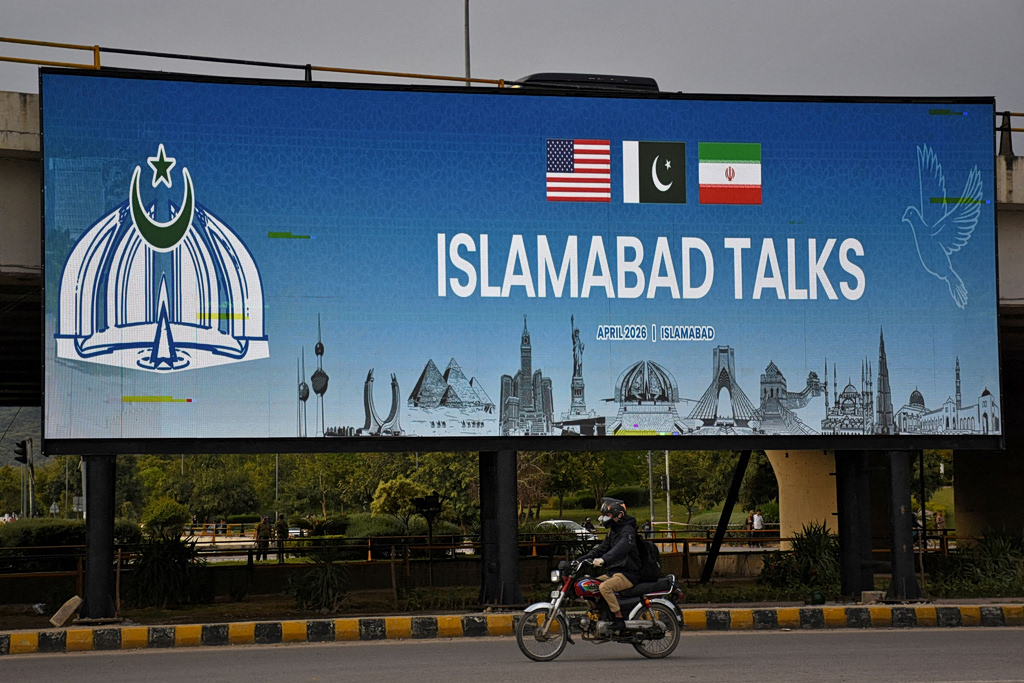
A man rides his motorbike past a billboard installed alongside a road as Pakistan prepares to host the U.S. and Iran for peace talks, in Islamabad, Pakistan, April 10, 2026. REUTERS/Waseem Khan REFILE
Ever since the Islamic Revolution of 1979, ideology usually prevailed over rational choices in Tehran, noted Alex Vatanka , a senior fellow at the Middle East Institute and author of a book on Iranian leadership. The new generation of IRGC commanders running the show in Tehran have clear choices to make in coming days, he said.
“If you are the regime, it is not such a clear-cut proposition to say: Time is on our side, and I should not give away anything major in terms of concessions. Trump could restart the war, which is probably unlikely, but could happen. And you could have protesters back on the streets again,” Vatanka said. “Iran is suffering, too. I don’t think that this bluster, this sense of euphoria, is going to last once they turn around and look behind them and see the devastation of this war.”
The lifting of economic sanctions is one of Tehran’s top demands going into the talks. It’s something Iran needs to rebuild the damage caused by the war and to revive an economy that was already in a deep crisis before the fighting began.
Diplomats say if Iranian and U.S. representatives show flexibility, this could eventually lead to be a framework agreement under which the U.S. lifts or eases these sanctions, the Strait of Hormuz reopens, and a compromise is found on the issue of nuclear enrichment that’s not too different from the Joint Comprehensive Plan of Action agreement struck by President Barack Obama in 2015, and scrapped by Trump as a “disaster” and “embarrassment.”
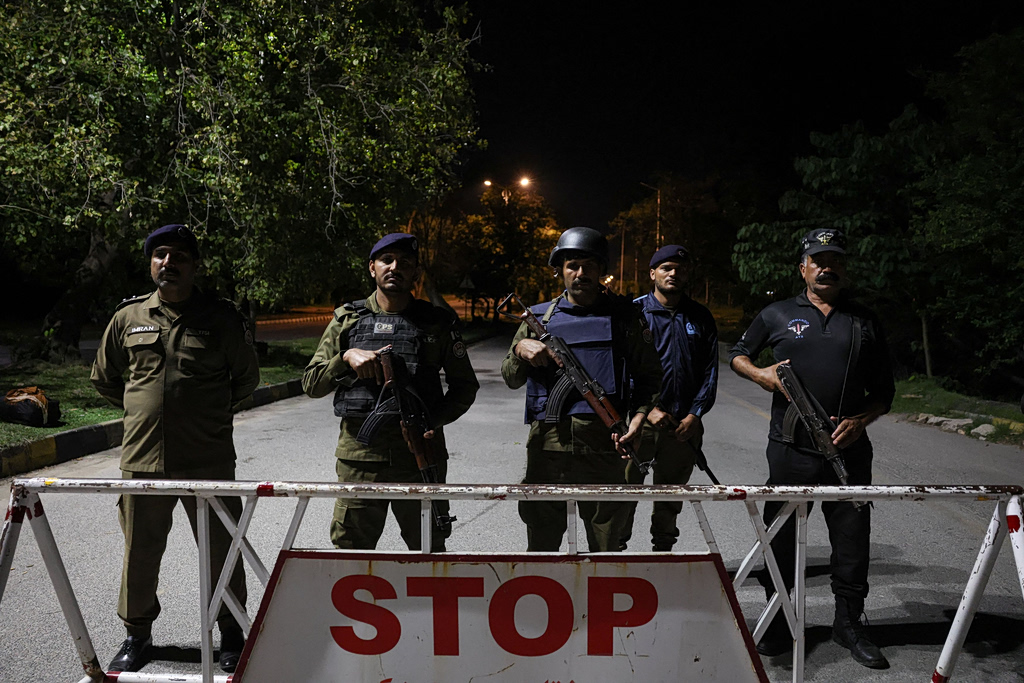
Police officers stand at a check post on a road leading to the Serena hotel, as Pakistan prepares to host the U.S. and Iran for peace talks, in Islamabad, Pakistan, April 10, 2026. REUTERS/Akhtar Soomro
Now, however, Iran has much stronger cards than during the last round of talks, just before the war began, or than in 2015.
“The miscalculation on the part of [Israeli] Prime Minister Netanyahu and President Trump has put the Strait of Hormuz on the table as a negotiating factor—and it wasn’t on the table before this war,” said Husain Haqqani , a former Pakistani ambassador to Washington who is now a senior fellow at the Anwar Gargash Diplomatic Academy in Abu Dhabi. “In the end, the U.S. and Israel, in cooperation with the Gulf states, will have to formulate a negotiating strategy in which Iran can be brought not only to give up what they wanted Iran to give up at the beginning of the war, but also to get them to make concessions on the Strait of Hormuz. It is not going to be easy.”
Since the cease-fire took effect Wednesday, only a handful of vessels pass through the Strait of Hormuz daily, most of them linked to Iran, down from over a hundred before the war, according to ship-tracking data. About 230 tankers remain bottled up in the Gulf, according to Sultan al-Jaber , the CEO of the Abu Dhabi-based Adnoc oil-and-gas giant.
“Let’s be clear. The Strait of Hormuz is not open,” said Jaber, who also serves as the U.A.E. minister of industry and advanced technology. “Every day that the Strait remains restricted, the consequences compound. Supply is delayed, markets tighten, prices rise.”
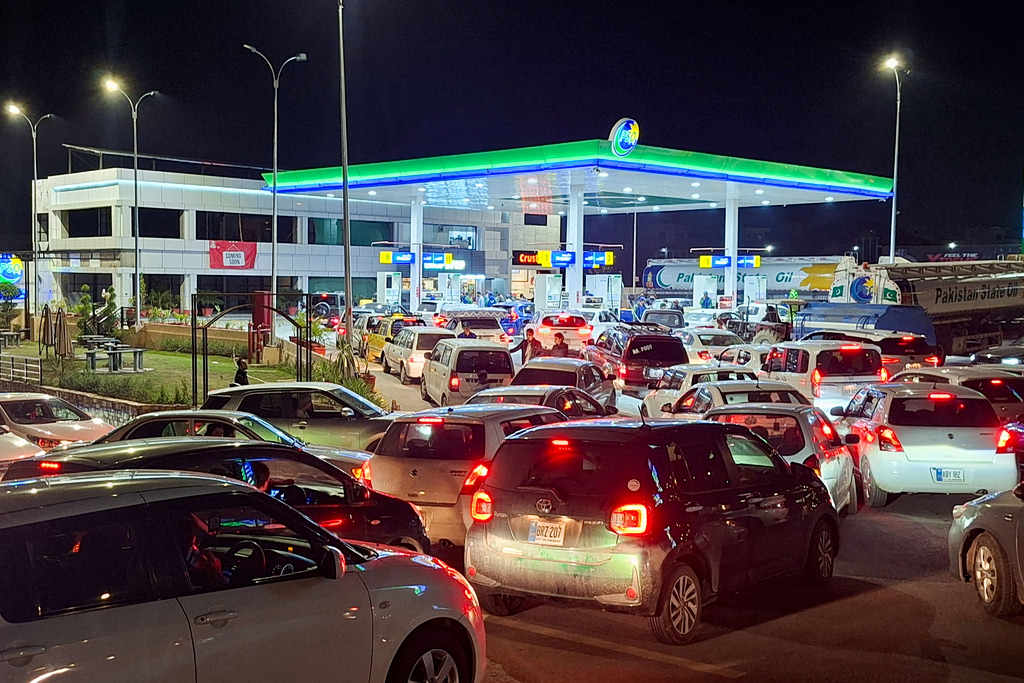
Vehicles wait for their turn to get fuel at a petrol station, as Pakistan raises fuel prices amid the U.S.-Israeli conflict with Iran, in Islamabad, Pakistan April 2, 2026. Picture taken with a mobile phone. REUTERS/Naveed Mirza
Iranian officials have ambitious plans to earn tens of billions of dollars annually by charging fees for the passage in the Strait of Hormuz, even though only one side of it is in Iranian waters. Iran this week declared the Omani part of the strait a danger zone, allegedly because of mines, and redirected limited traffic through Iranian waters, collecting hefty tolls from passing vessels.
Longer term, Tehran might find it might not have as much time as it likes. Keeping the strait closed can damage its own exports, and Gulf states have vowed to resist its tollbooth plans. This leverage, while critical in the coming weeks and months, may fade.
Saudi Arabia and the U.A.E. can still export oil via pipelines that bypass the Hormuz, with higher prices offsetting lower volumes. Refusing to ship Saudi and Emirati oil through the strait while it is under Iranian control—in a way, an informal oil embargo—would transfer the costs of this problem onto other nations, and force them to intervene, some Gulf officials calculate.
Tehran’s key partner, China, trades much more with the rich monarchies of the Gulf than with Iran—and is unlikely to sit idly as the Strait of Hormuz is closed for a prolonged period, said Meir Javedanfar , an expert on Iranian politics at Reichman University in Israel.
Other nations with influence over Iran are similarly affected, he added. “I don’t think the world is willing to live with such a change,” he said. “Resistance in the long term is going to be much greater than what Iran can withstand.”
Write to Yaroslav Trofimov at yaroslav.trofimov@wsj.com