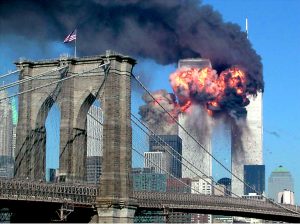
New York City officials released a trove of documents Tuesday detailing air-quality issues and what the city knew about the toxic conditions around Ground Zero following the Sept. 11, 2001, terrorist attacks that killed nearly 3,000 people more than two decades ago.
The records include around 170,000 pages of reports related to air quality and health issues as well as the city’s response to 9/11, the city said. The disclosure of these documents follows a yearslong legal battle led by advocacy group 9/11 Watch, which sued for their release.
The pages were made public just ahead of the 25th anniversary of 9/11. In the more than two decades since the attacks, more people have died from related illnesses than those who were killed on that day, New York City Mayor Zohran Mamdani said.
“People got sick because the leaders they trusted lied and told them they were safe to breathe in toxic air,” Mamdani said at a press conference Tuesday, flanked by city leaders and comedian Jon Stewart , who has long advocated for 9/11 survivors.
First responders and others who lived and worked in the area around the World Trade Center site have suffered from respiratory illnesses and chronic conditions , including cancer, as a result of their exposures to toxins following the attacks. Researchers have found first responders and other workers at the World Trade Center site have an elevated incidence of leukemia compared with the general population.
The documents expose how city officials knew the dangers of toxic chemicals in lower Manhattan and other areas near the World Trade Center after the towers fell despite stating that the air was safe, said Benjamin Chevat , executive director of 9/11 Health Watch. They include an October 2001 correspondence sent to the deputy mayor at the time—called the “Harding memo”—that detailed possible liability the city could face related to exposure to poor air quality and unsafe working conditions. The records also include those that were stored in 68 boxes and not discovered until last year, the city said.
One document includes a February 2002 memo from a city official detailing issues raised by Rep. Jerrold Nadler (D., N.Y.). The document states there was “at least a low level of asbestos” in many lower Manhattan buildings and the city’s health department had advised residents to “clean their buildings with wet mops and rags.”
Nadler, the memo said, raised that only licensed asbestos cleaners are allowed to handle such material. Exposure to asbestos can lead to conditions including lung cancer.
“If Nadler’s concerns are justified, we are not informing people of the real health risks in Lower Manhattan,” the memo said.
The documents now appear on a public portal operated by the city. The city earmarked $34 million for the creation and management of the portal and more documents will be added to it over the next year.