 Μake us preferred on Google
This is what one Emmanuel (Macron) said to another (the acclaimed writer Carrère) in 2025: “I was never a teenager. I don’t like teenagers. I don’t understand them.”
But do teenagers understand themselves? Do “Gen Z”, or whatever is the arbitrary cohort of the moment? Young people have a leftwing image and perhaps self-image. For a while now, I have suspected that it is false, that some of the bolshiest among them are in fact capitalists or at least conformists who don’t know it yet. Nothing over the past month has altered that view.
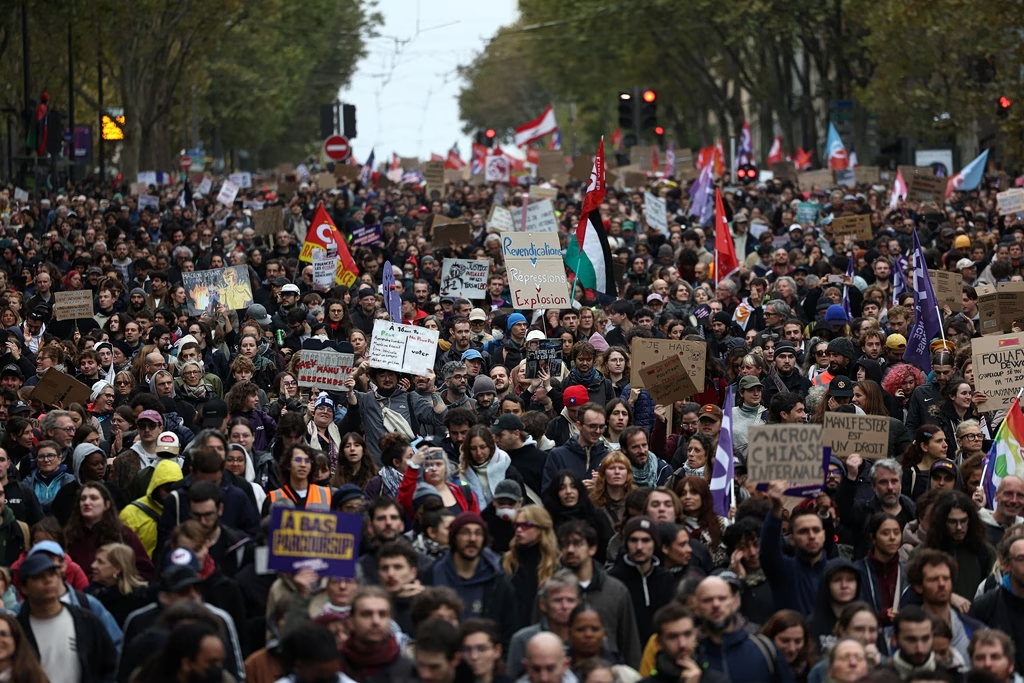
In France, the (peaceful) protesters demand better-funded schools and then a smoother link to universities, which in turn will determine their career prospects. You might regard this as an expensive request for an indebted state. But it is also an embrace of bourgeois values. What the students want is a proper functioning of the merit-based, study-and-work social order, not an alternative to it. A fairer rat race but a rat race. The contrast with the 1990s slacker ethic, let alone 1968, with its frontal attack on normie ways, is sharp. And lost on some of these purported rebels.
Or consider the “cockroach” movement in India. It got going after an exam leak ruined the matriculation of lots of medical students. The campaign then widened to encompass other grievances, such as bad schools and nepotism in elite jobs. Notice the theme here: thwarted ambition to advance within the system, not a rejection of it from first principles. (There shouldn’t, a radical would argue, be elite jobs.)

Activists shout slougans during a “Tiranga March” organized by the youth “Cockroach” movement, demanding the resignation of India’s chief election commissioner, in central New Delhi, India, Friday, Oct. 16, 2026.(AP Photo/Channi Anand)
The contrast with the 1990s slacker ethic, let alone 1968, with its frontal attack on normie ways, is sharp
In the 1770s, Edmund Burke said the American colonists just wanted their existing rights as free sons of the empire, not a new social order, and so weren’t revolutionaries at all, but in a sense more conventional than those who would refuse them. There is something Burkean about the non-violent protests of 2026. Honour the old social contract, is the gist of their message to the state. Make bourgeois aspiration easier. There were times when de Gaulle and LBJ would have given an arm for protesters like these.
Expect them to become more capitalist over time, and not because of age. The central grievance of young progressives, especially British ones, is expensive housing. It is sparking protests in Milan and Tirana too. For now, their preferred solutions, such as rent controls and more state-owned homes, are dirigiste. When these flop — Britain has vastly more social housing than the rich-world average as it is — the larger issue should dawn on them.
Not enough houses are built, due to legal trammels. Supply isn’t allowed to grow with demand. The interests of the young are more aligned with market forces than those of the “conservative” old, who profit from artificial housing constraints. There is no guarantee that young people will come to see it this way. The rhetorical fog about Thatcher and “neoliberalism” dies hard. But cold interest tends to tell in the end.
Also: by their deeds you shall know them. In practice, the young and high-minded seldom have a problem with capitalism. This column reaches you from Los Angeles, whose eastern districts have been gentrified over the decades, often by left-leaning twenty-somethings who regard that change as “problematic”. It is a global pattern. Frogtown is Williamsburg is Kreuzberg is Canal Saint-Martin. (“West End Girls”, though a pop jewel, takes some explaining to those below a certain age in London. Those “girls” would now live east and the “East End boys” out in Kent or Essex.)
The displacement of old communities does trouble these gentrifiers. But, to look around, not that much. To be at the vanguard of market-led change, and to shudder at it: that is the young to a T. As with the protests, I would mock the underlying conservatism, if I didn’t thank the stars for it.
Link To FT.com: https://www.ft.com/content/70280c68-2ae0-4656-b013-281eb75a197a
Find out about our latest stories first — follow FT Weekend on, and, and to receive the FT Weekend newsletter every Saturday morning
Copyright The Financial Times Limited 2026
© 2026 The Financial Times Ltd. All rights reserved. Please do not copy and paste FT articles and redistribute by email or post to