 Μake us preferred on Google
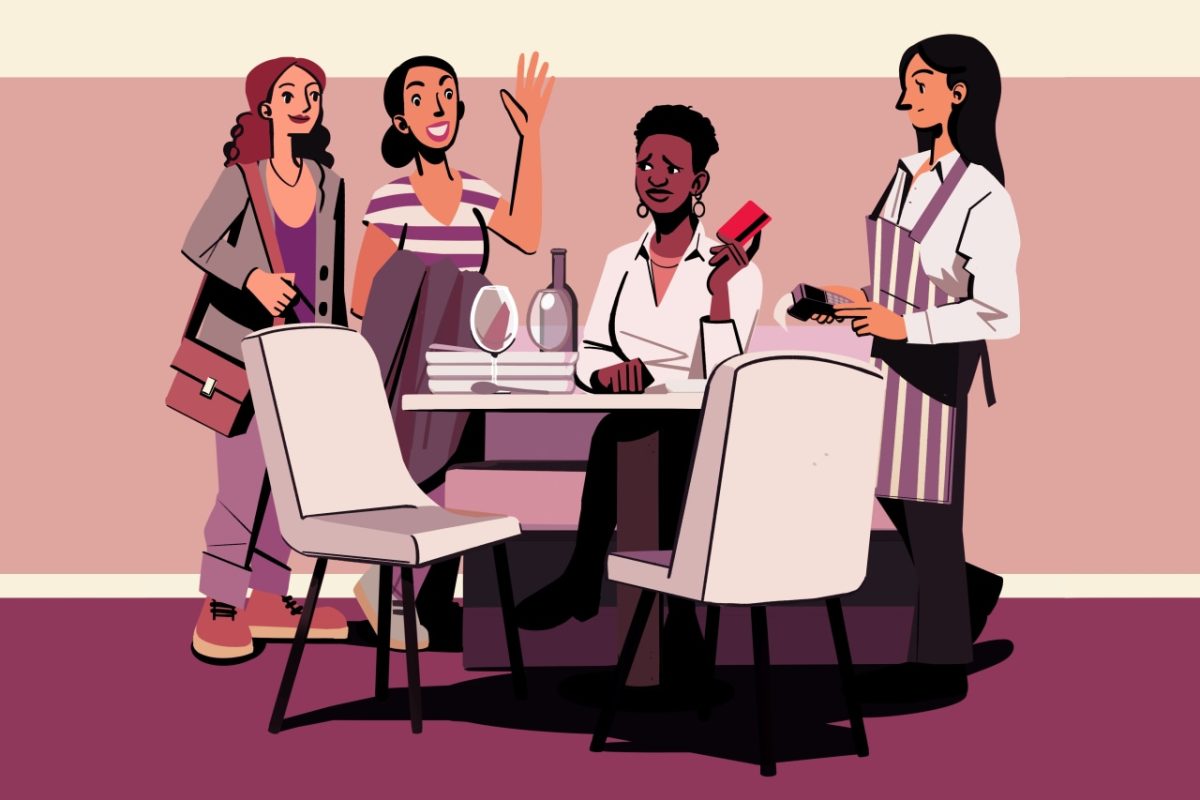
A few months ago, I went to dinner with a couple of friends and when the bill came, I put down my credit card.
It wasn’t the first time. I tend to be the friend who covers the tab in the moment and then waits to get repaid, even though I’m not always the one who makes the most money. But while it has become almost impulsive to at least suggest covering the group tab, nudging friends to pay me back hasn’t gotten any less uncomfortable.
At that recent dinner, for instance, we had tickets to see a play and were rushing to finish up our meals. We decided that it would be faster if just one person covered the tab and we settled up later. So, of course, I volunteered to pay. One friend sent me the money immediately. But by the next day, I still hadn’t heard from the other.
My generation is all about loud budgeting . We regularly talk to friends about how much money we make, our bills and our debts. No money topic seems off-limits. So why, then, is it so awkward for us to settle those tabs with each other?
Convenience has a cost
Young adults like myself are inclined to rely on one person to front the bill. In fact, Gen Z is twice as likely as millennials to say one person typically pays most group expenses and gets reimbursed later, according to the Zelle Avoidance Economy Report.
We find it more convenient. We avoid the eye rolls from waiters when they’re asked to split a check more than two ways. When it comes to travel or concert tickets, ordering everything on one card ensures that you get to sit with your friends. And payment apps make it easy to reimburse for the exact amount.
We’re also at the age—and my friend group is no exception—where we start having widely varying financial situations. Some are making six-figures at their corporate jobs while others are in between jobs or pursuing graduate school. Having one person put down a card provides others with needed flexibility when it comes to repayment.
But that creates a potential conflict. Nearly 20% of young adults say it can take up to one month to pay someone back, according to the Zelle report. And that delay can affect relationships, especially for those of us who are early in their careers with smaller paychecks and adult bills.
My friend Kate Bellows says she is caught waiting for a friend to send her money at least once a month. Last year, she purchased tickets to a college sports game for herself and a friend on the condition she would be reimbursed for the roughly $50 expense. Weeks of silence went by so she sent the friend a reminder on Venmo.
“The hope was that it would be immediate,” says Bellows about her repayment expectations. She was eventually paid back a few days before the game.
Typically, when I cover a group of people for a meal, drinks or an Uber ride, I end up having to nudge at least one person to pay me back. It can be anxiety-inducing and makes it harder for me to assess my budget, which I track monthly. My friend quickly paid me for the recent dinner after I casually nudged her in our group chat.
The part we don’t discuss
While we have myriad ways to pay each other today, we aren’t very good at discussing the expectations around the actual repayment.
This is due, in part, to “mental accounting,” where we treat money differently based on where it came from and what we’re using it for, says Mario DiFiore , the senior assistant dean of the Gabelli School of Business at Fordham University who also teaches a behavioral-finance course.
Gen Z is known for giving priority to experiences that give us immediate gratification over long-term financial well-being. And DiFiore argues that when one person covers the bill, it allows the others to compartmentalize the purchase, making it easier to avoid—at least in the moment.
But Timi Joy Jorgensen , a behavioral finance specialist who works with National Debt Relief, warns against being quick to assume someone who doesn’t pay you back right away is doing it on purpose. Most people don’t intend to be petty. And if it’s a recurring behavior, it’s best to bring it up at a time when the person doesn’t owe you money.
Jorgensen also recommends giving friends a window of time to pay you back. For instance, you can ask a friend to pay you back within a week as soon as the bill arrives to avoid the awkwardness later.
What’s my motivation?
This all brings me back to why I feel compelled to drop the card in the first place.
Maybe I feel a sense of obligation for the bill since I’m the one who typically initiates group hangouts. But it’s more than that.
DiFiore introduced me to the “Ocean” model, which splits people into five main personality types: openness, conscientiousness, extroversion, agreeableness and neuroticism. The framework has been around for a long time but, in the past decade or so, economists have been using it to explain personal-finance behaviors.
He accurately guessed that I would fit into the extroversion category and says this group is probably most likely to be the ones who put their card down for the table. According to the Ocean framework, extroverts tend to be greater spenders, overconfident and motivated by social goals.
That resonates with me. I don’t think I realize it when I’m paying in the moment, but putting my card down has become a way to financially people-please by postponing the conversation about the bill. It’s my attempt at trying to keep the social peace, but it’s not always the best thing for my wallet. And in some cases, my shortsightedness merely just delays the inevitable awkward conversations when I have to track down friends who haven’t paid me back.
My friend Julie Awad , who is a fellow self-proclaimed extrovert, says part of the reason she typically offers to put her card down during group events is because she doesn’t like to owe people money.
“I guess it’s a control thing,” she says.
But she acknowledges that it can be a hassle to get paid back, especially when you’re dealing with a big group. So, she has been using apps to facilitate that. When we were on a group vacation, she got everyone to download the Splitwise app. It keeps track of shared expenses and calculates an aggregate of what each person owes.
Yes, she still dropped the card. But having all the expenses spelled out in the app provided everyone else with some accountability.