WIMBORNE, England—They won’t say it out loud, but the English rather enjoy a revolt.
They are proud of their parliament, still known as the global standard. But England took some of its biggest leaps by other means. Its aristocrats had the Magna Carta drafted to protect their rights after they rebelled against King John in 1215. Wat Tyler led the Peasants Revolt some 150 years later to get a better deal for farm laborers.
Now the people who run the country’s pubs are dusting off the pitchforks to challenge a tax increase they say could force many of them to call last orders (aka “last call”) for good.
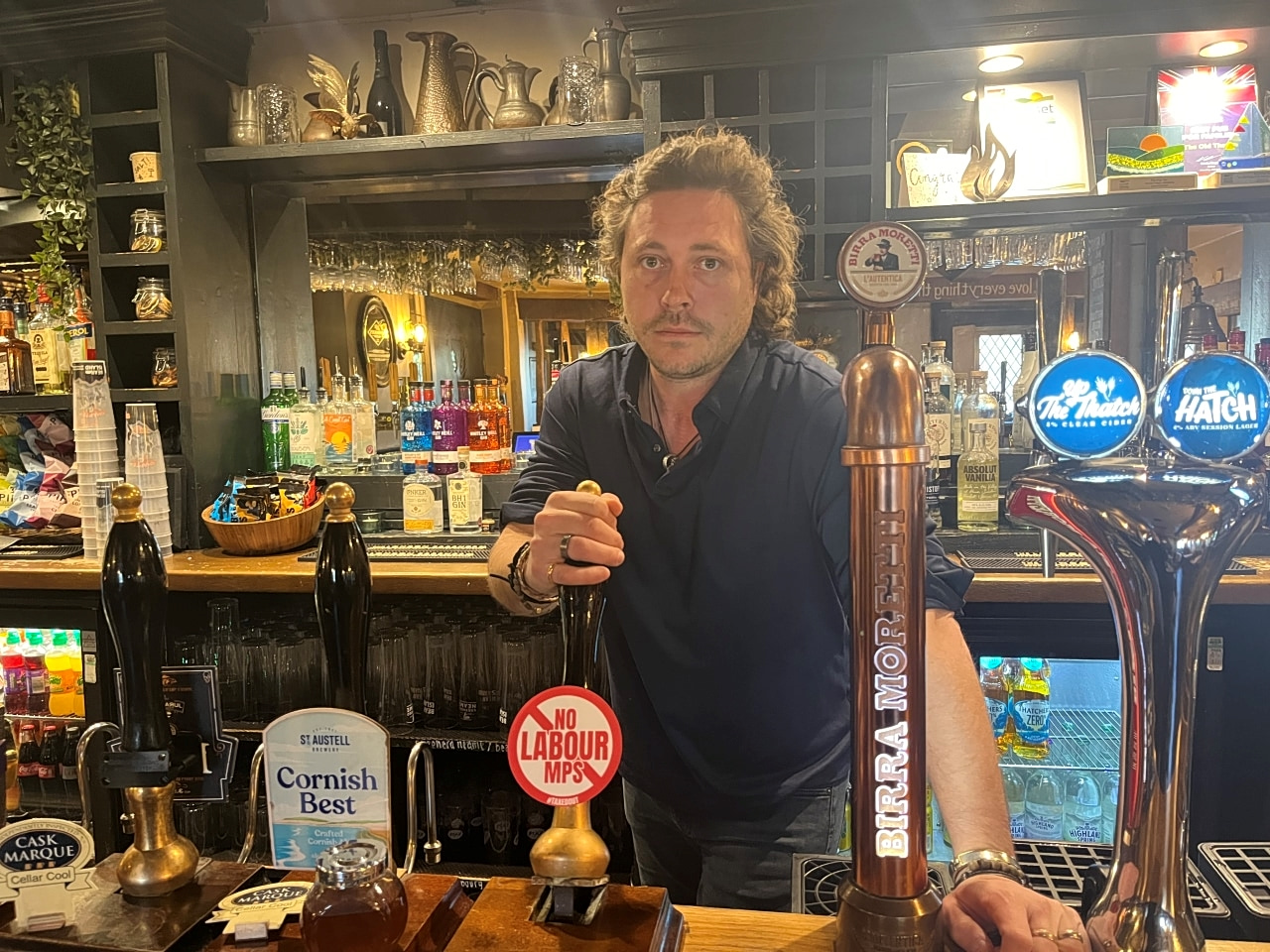
Led by Andy Lennox of the Old Thatch here on England’s south coast, they have barred members of parliament from the ruling Labour Party as if they were common troublemakers. Over 1,000 have put up “No Labour MP” signs. Prime Minister Keir Starmer was banned from one of his local pubs in London, as was his finance chief.
British newspapers have rushed to offer support, invoking George Orwell’s descriptions of pubs as a haven for the working class and a sacral space for free thinkers. Opposition politicians elbowed their way to bars to be photographed hoisting pints. Television host Jeremy Clarkson, of “Top Gear” fame, banned Labour MPs from his pub, the Farmer’s Dog.
Even the country’s hairdressers got involved.
“I’ve resolved that if a Labour cabinet minister asks for a cut and blow dry – and yes, they do come in from time to time – I will quietly but firmly tell them they’re not welcome and show them the door,” announced Michael Van Clarke, the former stylist to Princess Diana.
“It resonated with the public for whatever reason,” Lennox, 38, said, sitting back in a chair before his 17th century pub’s fireplace, old oak beams holding up the ceiling. “Maybe it was a bit funny just to say they’re banned.”
Not everyone agrees.
“How can proprietors be certain that the person who just slid into your salon’s chair or who has settled himself on the bar stool in your pub is definitely a Labour MP?” wrote Tom Harris, a former Labour MP himself turned newspaper columnist. Of course, they might feel worse if nobody recognized them, he noted.
“Some people thought it was a bit petulant,” said Dave Burns, a hotelier and publican in Christchurch who helped launch the campaign. “Before Christmas, the local Labour MP posted a video of himself saying it wasn’t in the Christmas spirit and we should keep politics off the high street, but that’s exactly where it should be.”
“He made himself look a bit of a plonker, I think,” Burns said.
The campaign seems to be working. The English have a soft spot for their pubs and Starmer said his government will offer them some help, though no one is sure exactly what it will be.
The fight started when the U.K.’s cash-strapped Treasury announced plans to roll back a Covid-era discount on a tax based on the size of a pub’s premises. It then said it would update the formula, doubling the tax due in many cases. The move further undermined the appeal of Starmer, whom opinion polls suggest is Britain’s most unpopular leader ever.
“It looks very shortsighted to me,” said Mark Green as he fed scraps of stale bread to a group of swans gliding along Christchurch’s waterfront. “This area is very dependent on tourists. They’re not going to come if there aren’t any pubs or restaurants to go to.”
Some 16,000 pubs closed between 2000 and 2025, according to the British Beer and Pub Association. Rising minimum wages and social security contributions have made it more expensive to hire students and other seasonal staff. The higher cost of living and a longstanding 20% sales tax have deterred regulars.
Michelin-starred chef Tom Kerridge told the LBC radio station this month that his tax bill for one of his four pubs would more than double if the new rates are applied. “What’s the point of being open?” he said.
Lennox said at the moment, the Old Thatch earns 14 pence from every pint of beer while the tax office gets £2.50, or about $3.34.
“There’s something wrong with the system when the tax man makes more than the pub,” he said.
Still, Lennox is energized by the attention his campaign has gained, pointing first to a picture of a front-page story a friend sent him, then to a portrait of George Washington on the wall.
His goal is get the sales tax on pubs and restaurants reduced to match far lower rates elsewhere in Europe.
“People find direct action so un-British, so when it happens they are so surprised, despite the fact that our whole history is built on it,” he said.
“We set up our own church when we didn’t like doing what we were told,” he said, referring to England’s break with Rome. In the nearby village of Tolpuddle, mass protests helped free six farm workers when they were shipped to Australia after trying to form one of the first trade unions nearly 200 years ago.
“I mean, the civil war ended with a king getting his head cut off,” Lennox said. “Just don’t get us started.”
Write to James Hookway at James.Hookway@wsj.com