The talks expected to start Monday in Cairo on President Trump’s peace plan for Gaza won’t bring an immediate end to the nearly two-year old war, Secretary of State Marco Rubio cautioned.
Delegations from the U.S., Israel, Hamas and Middle Eastern countries are set to meet in Egypt for highly anticipated cease-fire talks, where parties will try to come to agreements over key points, including Israeli military withdrawal lines in Gaza and the names of high-profile Palestinian prisoners to be released in exchange for the remaining 48 hostages, including up to 20 that Israel believes to be alive.
Asked Sunday on NBC’s “Meet the Press” whether the negotiations indicate the end of the war in Gaza, Rubio said, “Well, not yet. There’s some work that remains to be done.”
Rubio said the path to ending the war will come in two phases. The first includes the coming meetings and working out logistics of the hostage release. “But that work is happening even as I speak to you this very moment,” he said.
The second, harder part, he added, is working out what happens inside Gaza after Israel withdraws to the agreed-upon lines. The plan includes creating a Palestinian technocratic leadership in Gaza.
“You can’t set up a government structure in Gaza that’s not Hamas in three days,” he said. “I mean, it takes some time.”
Trump pushed on Saturday for a quick resolution. “Let’s get this done, FAST,” he wrote on Truth Social.
Trump is sending his top envoys Steve Witkoff and Jared Kushner to help seal the deal. Senior delegations from Israel, Hamas, Qatar, Turkey and Egypt will also be taking part in the talks.
The peace talks also come with a twist: The leader of the Hamas delegation is a man Israel tried to kill in a missile attack three weeks ago.
Khalil al-Hayya this weekend made his first public appearance since being wounded in Israel’s failed strike on a gathering of Hamas negotiators as they met to discuss efforts to end the war in the Qatari capital of Doha.
The strike caused a diplomatic uproar that ultimately set the stage for a deal to end the war. The attack underscored the risk of continuing the war to Arab countries and gave Trump the leverage he needed to put pressure on Israeli Prime Minister Benjamin Netanyahu to commit to ending the war.
Al-Hayya appeared on television Saturday, almost a month after the Israeli strike that attempted to kill him and successfully killed his son. Al-Hayya said the deaths of his son and all the Palestinians in Gaza who have been killed in the war were “both a harsh trial and a badge of honor.” Insisting he was unbowed, he said the deaths would be “the fuel of victory, the path to Jerusalem, and a stain that will forever haunt the occupation.”
Al-Hayya’s defiance underscores the challenges that could complicate talks despite optimistic statements from Trump. Hamas on Friday said it had broadly accepted Trump’s 20-point peace plan to end the war and rebuild Gaza, but the response came with caveats . The group is internally divided over accepting the terms for its disarmament and the conditions under which it would free hostages.
Al-Hayya and other senior political officials based outside of Gaza favor accepting the proposal despite significant reservations, Arab mediators said. But they have limited sway over the group’s armed wing, which remains in the enclave.
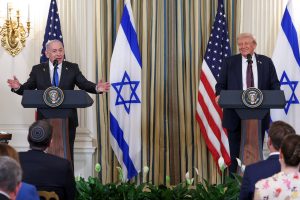
Israel’s Netanyahu said Saturday that he hopes a hostages-for-prisoners exchange agreement can be reached this week.
“Our intention, and the intention of our American friends, is to limit these negotiations to a few days,” Netanyahu said.
But negotiations could realistically take longer, Arab mediators and U.S. officials cautioned. While there is no official deadline for the talks, the goal is to get the hostages and prisoner swap done as soon as possible, a senior U.S. official said.
Acceptance of the deal could have consequences for Netanyahu’s coalition that might ultimately lead to elections. But two far-right ministers who have long opposed cease-fire deals haven’t explicitly threatened to topple the government. Finance Minister Bezalel Smotrich criticized a decision to ease the fighting in Gaza while the hostage release is negotiated, while National Security Minister Itamar Ben-Gvir said his party would leave the government if Hamas wasn’t destroyed after the release of all of the hostages.
More broadly, Trump’s peace plan has been largely welcomed by an Israeli public exhausted by the war and worried about the country’s growing international isolation . Most polls show a majority want the war to end.
Trump on Saturday shared a photo of Israelis protesting for an end to the war with a sign reading, “it’s now or never,” on his Truth Social account.
Write to Anat Peled at anat.peled@wsj.com and Summer Said at summer.said@wsj.com